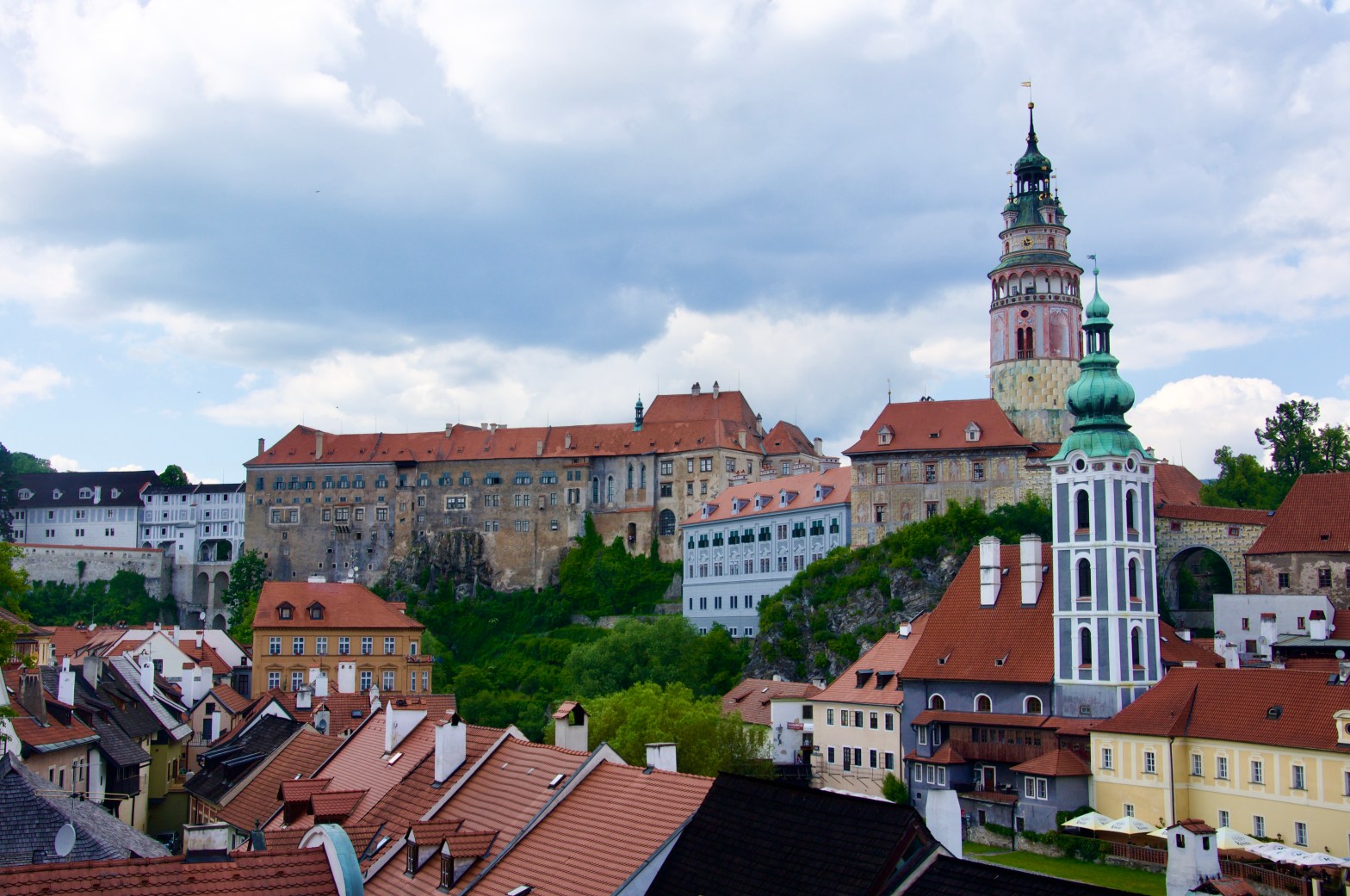
The rich are different from us – and were even more so in the past. Now they only have more money but in old times they had privileges – they struck their own money, had their own bearpit, and maintained their own army units.
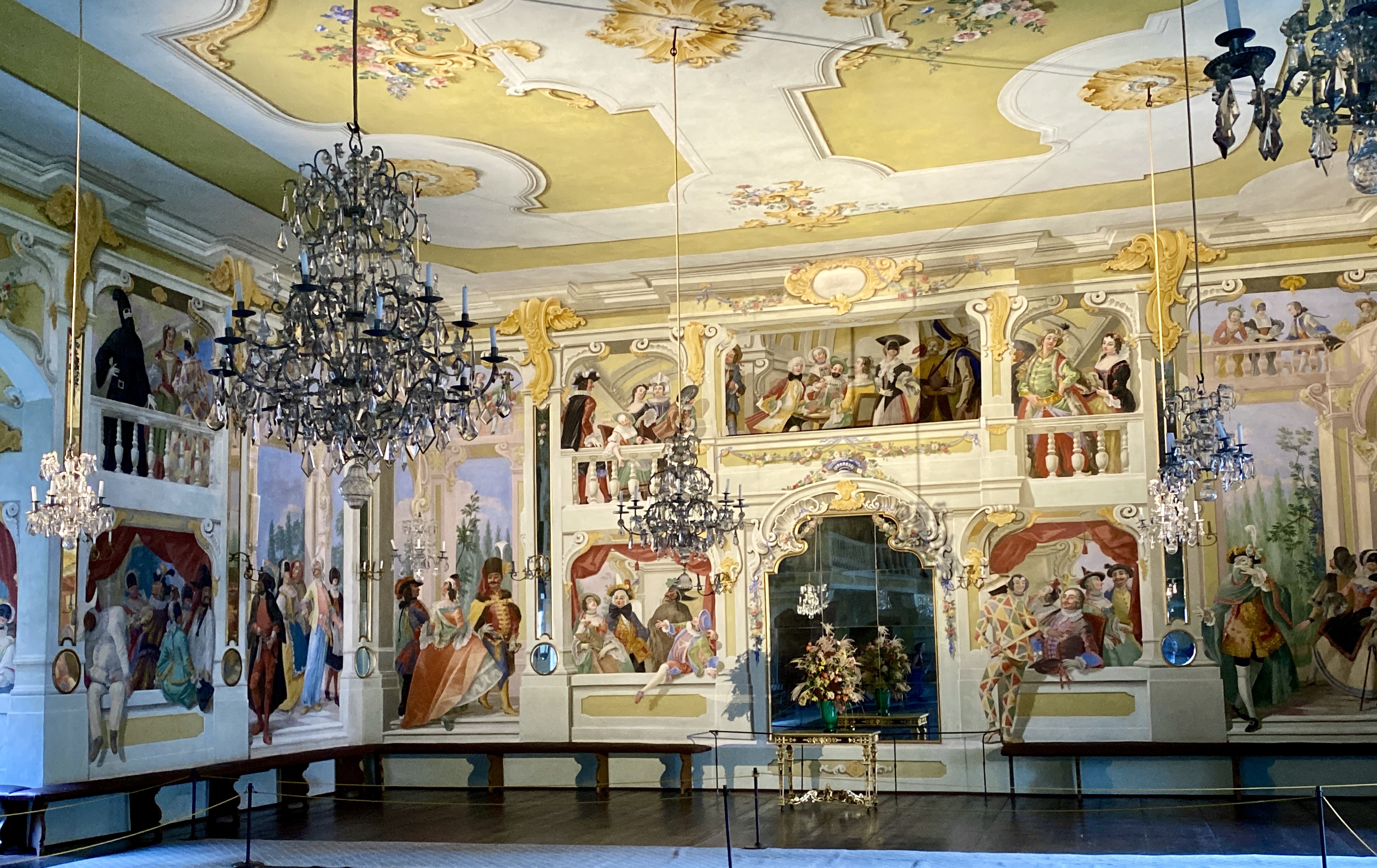
The castle at Ceský Krumlov has belonged to a series of noble families, the Rosenbergs, the Eggenbergs and the Schwarzenbergs. When one family died out, the property was given to or inherited by another. The owners’ coats of arms decorate the walls (below left), if there isn’t something more elaborate on them (below right, the ballroom).

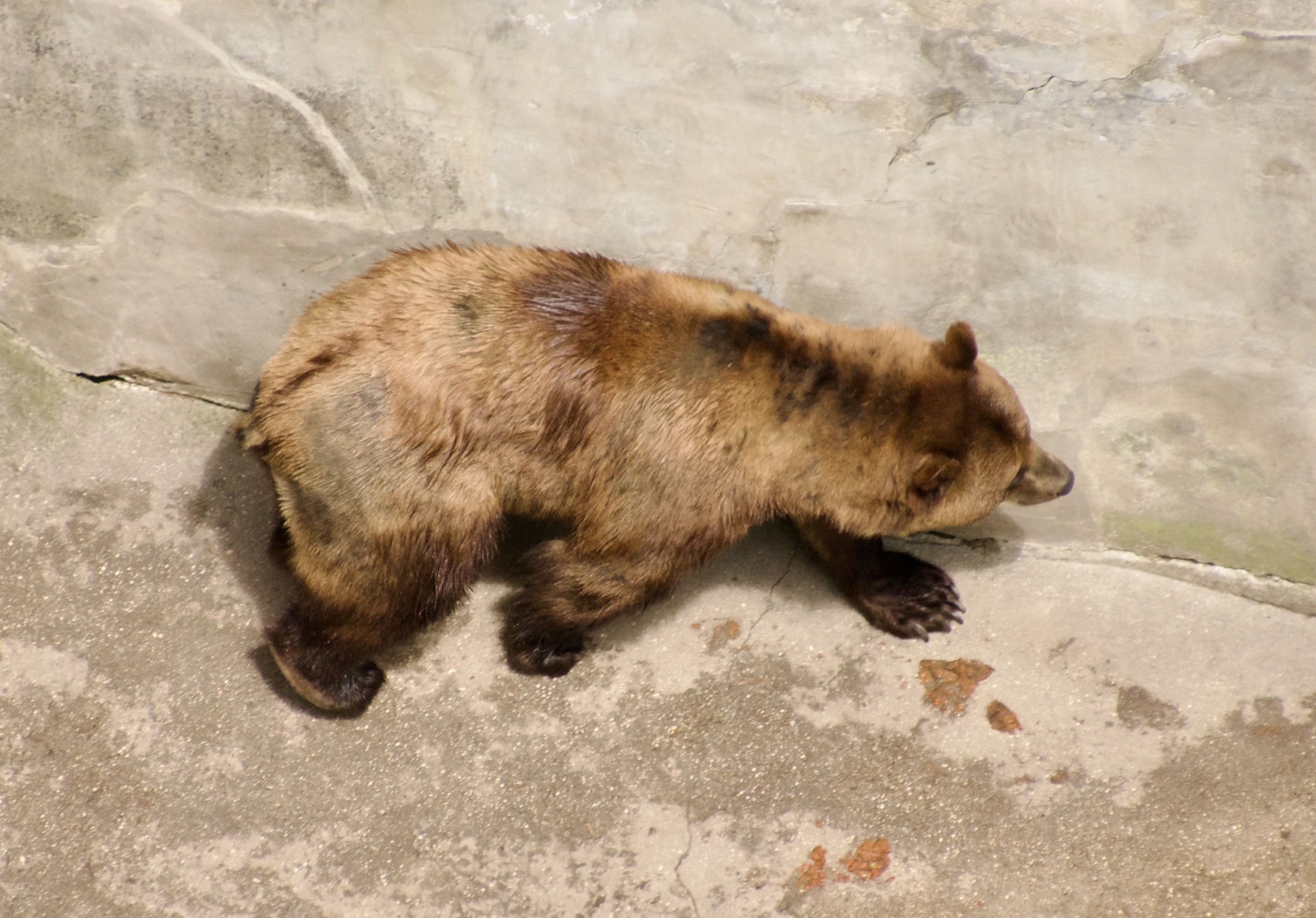
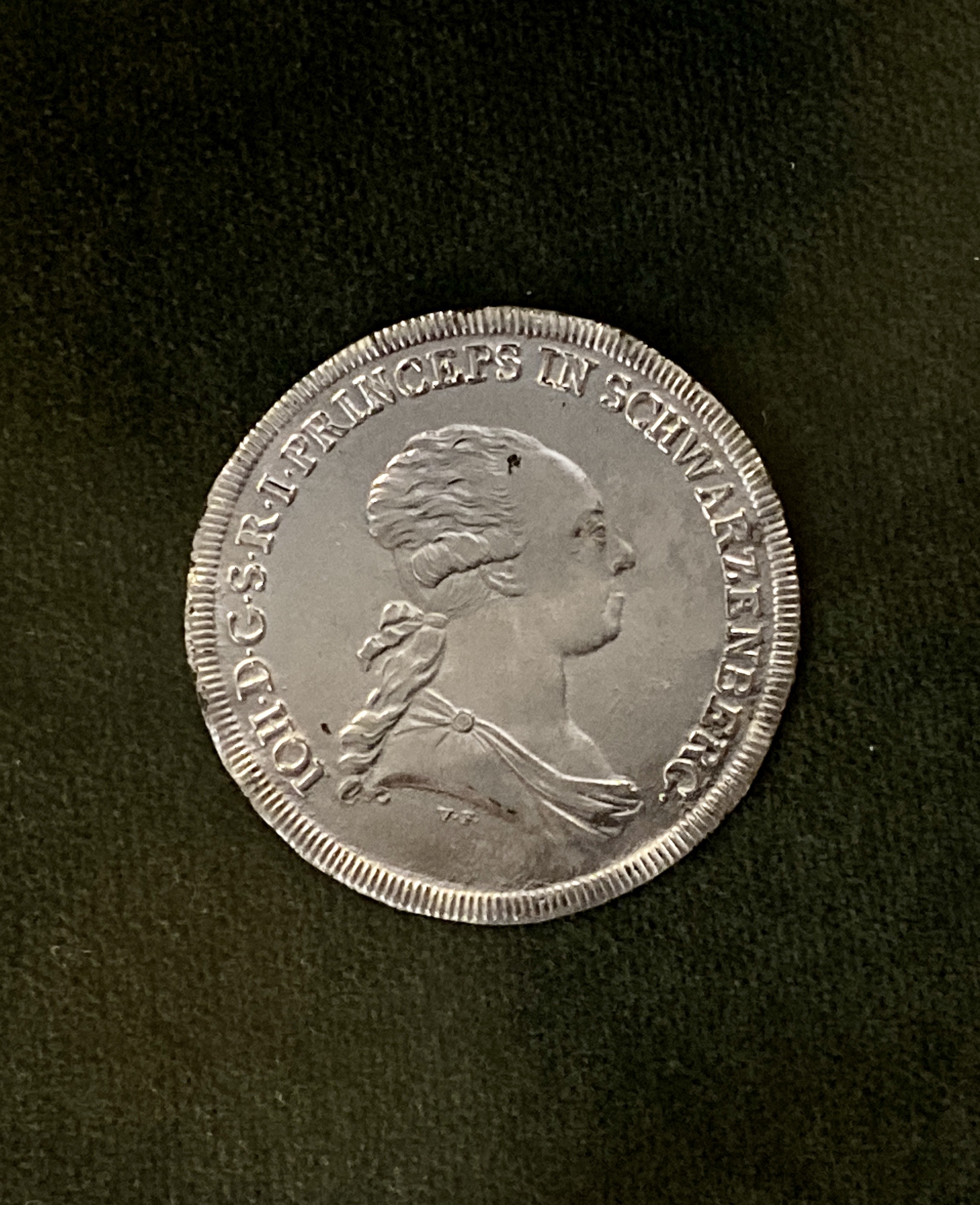
The bear pit comes from an attempt to tie the Rosenberg family to the Italian Orsinis (ursus – bear). The Orsinis were supposedly related to ancient Roman aristocracy, and in this way the Rosenbergs hoped to enrich their lineage. Consequently, the rooms are covered with many a bear skin, and the pit still has three live inhabitants (below left). The Schwarzenbergs featured on their own coinage (an imperial taler with a Schwarzenberg below right).
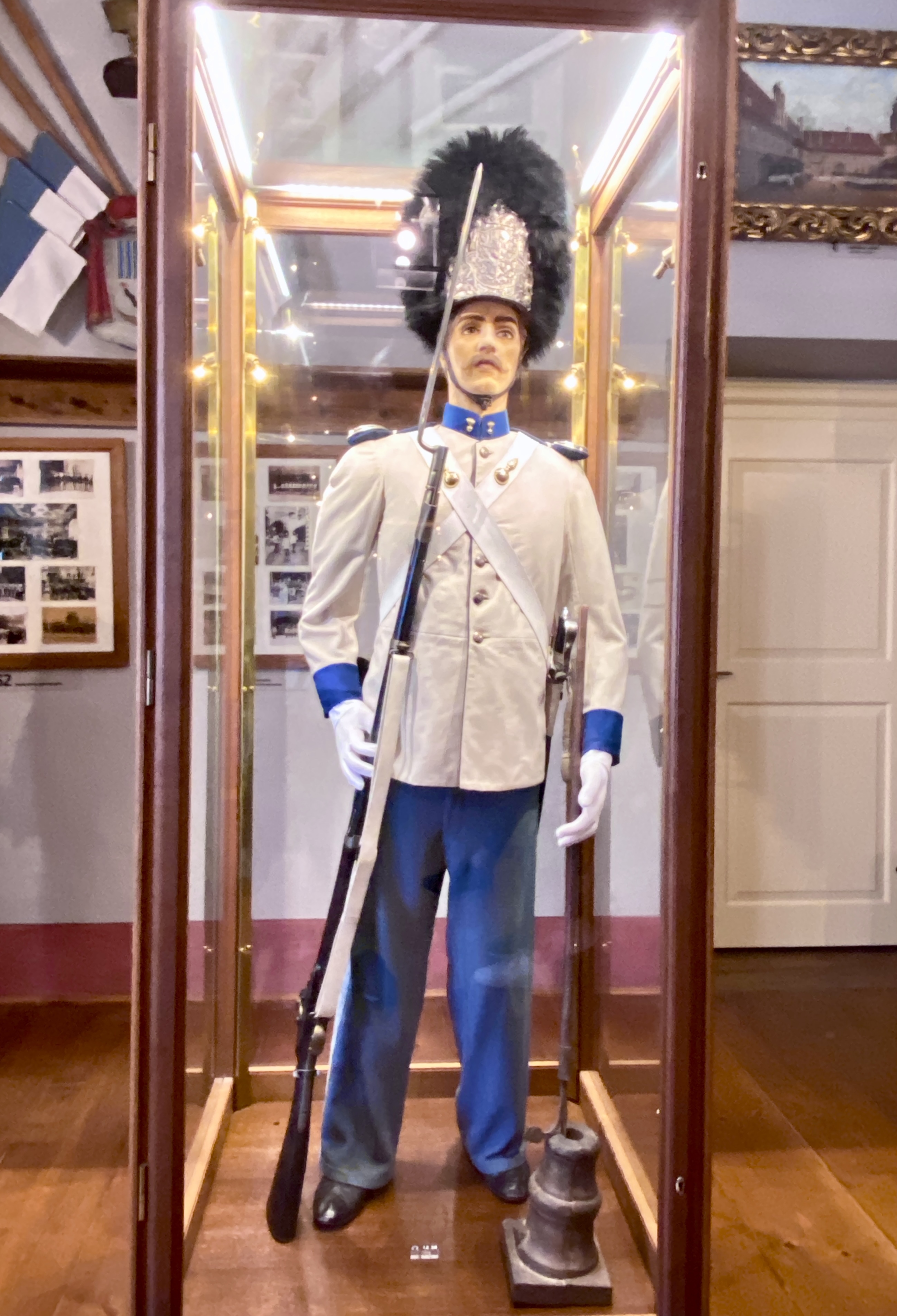
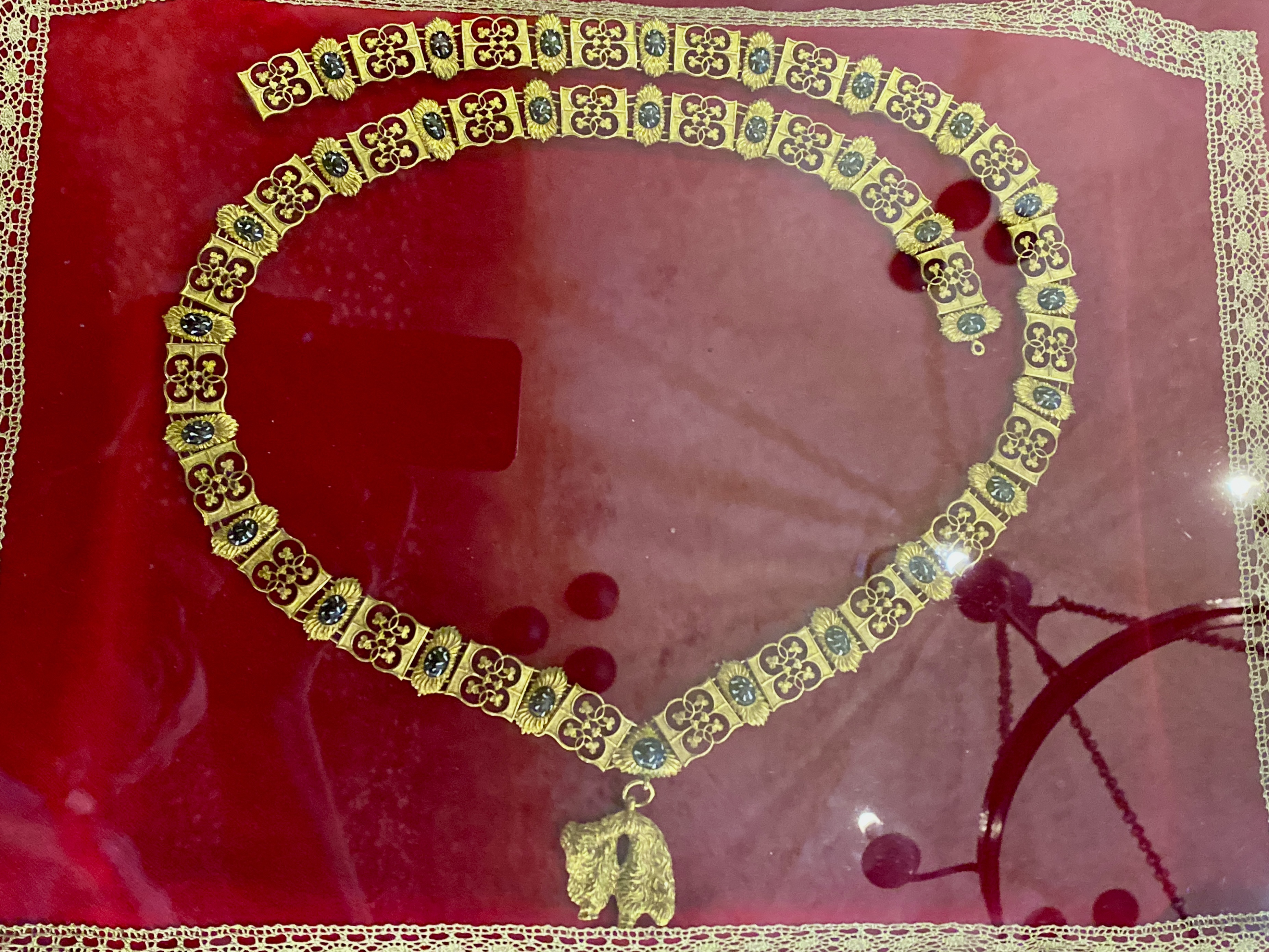
The uniform of the Schwarzenberg Guard is below left, naturally in the house colours of blue and white. All the three families were close to the Emperor, which means that you had to show it with your decorations – all three were knights of the Golden Fleece (below right).
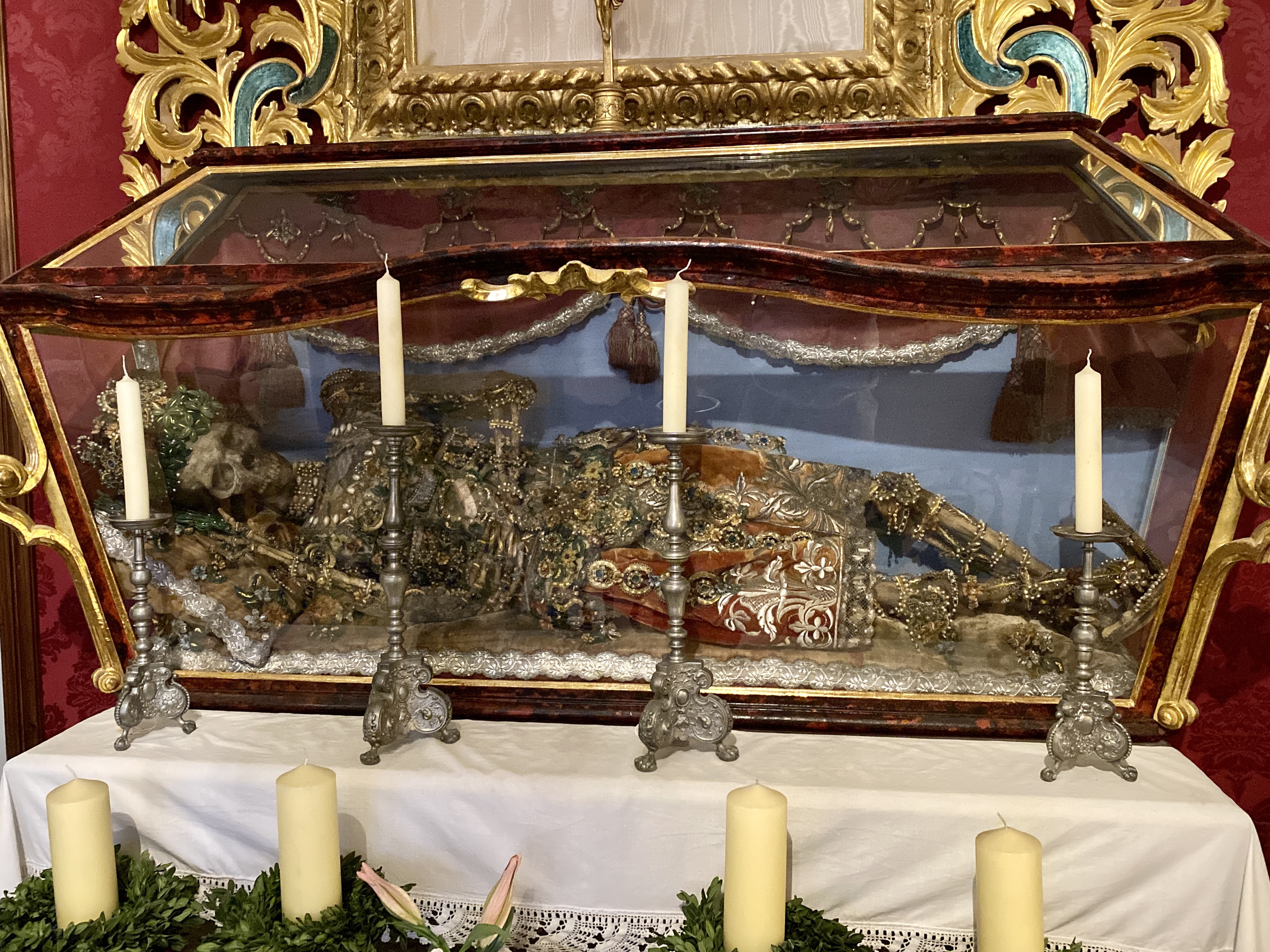
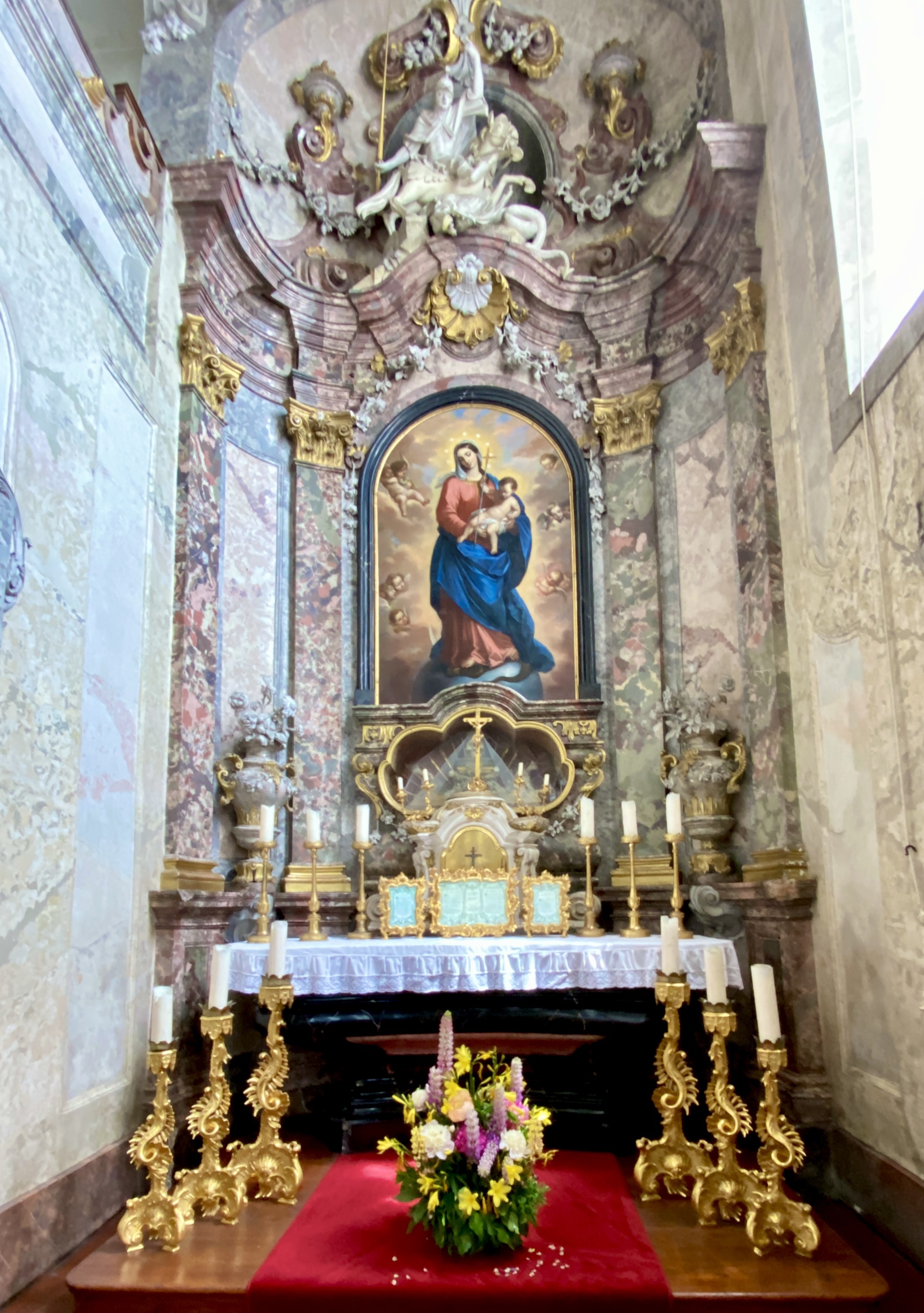
Furthermore, the house saints are still present. Unfortunately the older St. Reparata (below left) looks like something from the adventures of Tintin, but the newer reliquary of St Callixtus at the altar of the main chapel is a bit more high-class affair (below right).
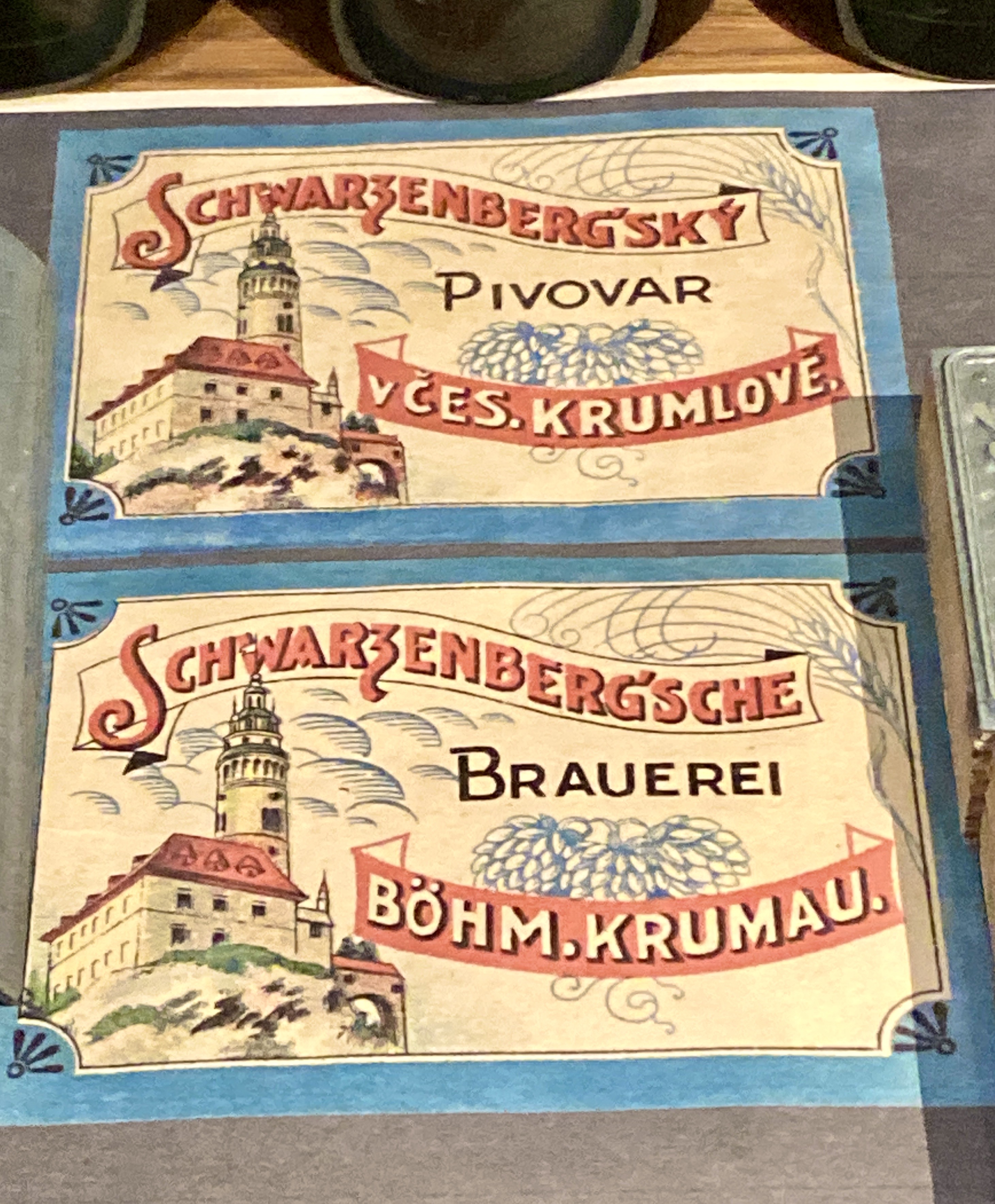
For entertainment you needed a theatre – this is one of the oldest in Europe (below left, in the building behind the courtyard). And in this part of the world, a brewery was naturally a must (below rght).
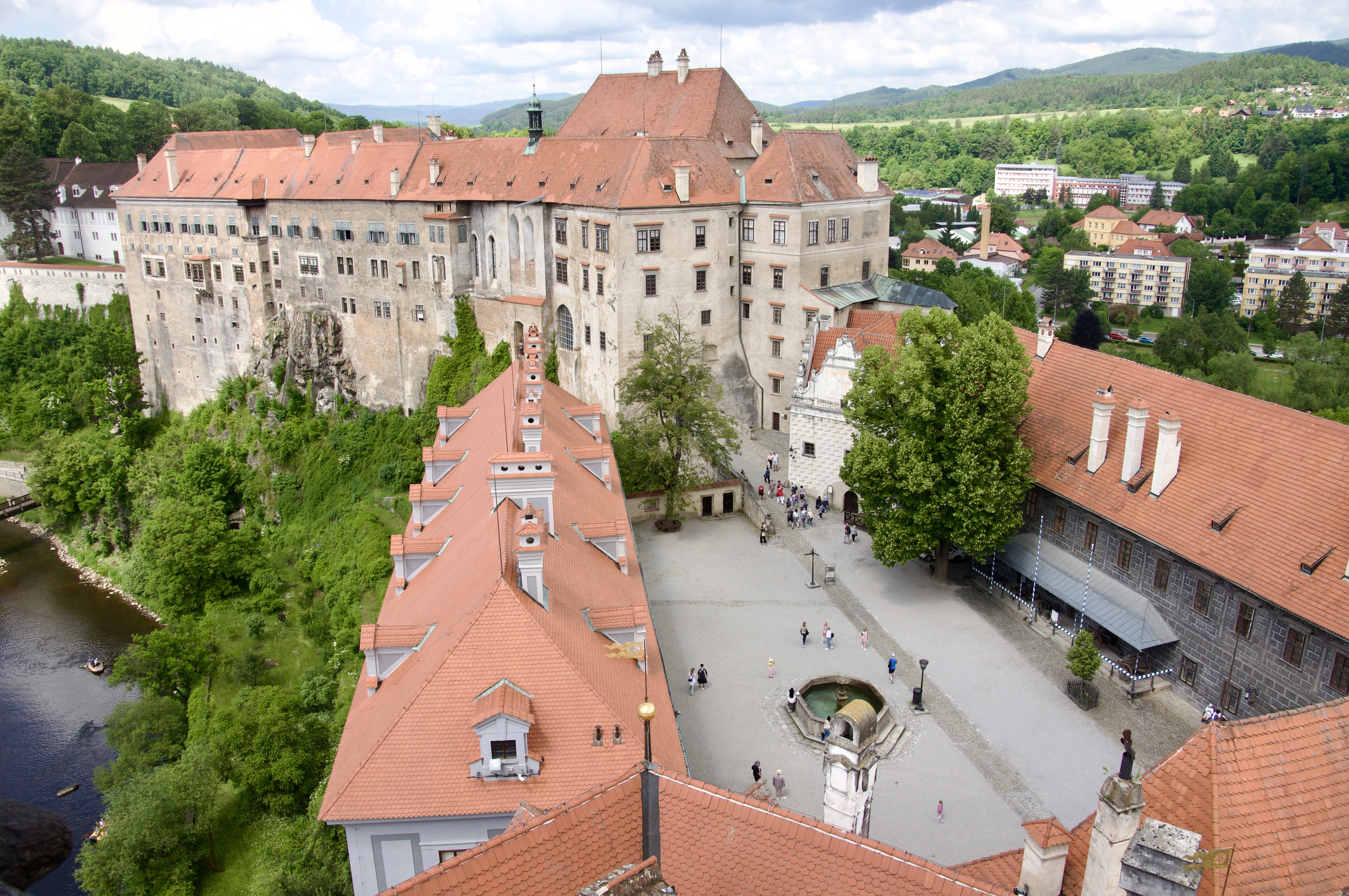
But even being filthy rich did not protect you from the vicissitudes of the 20th century. The Schwarzenberg properties were confiscated by Gestapo and nationalised by the Czechoslovak government after the war.
 Rails, wines, worlds