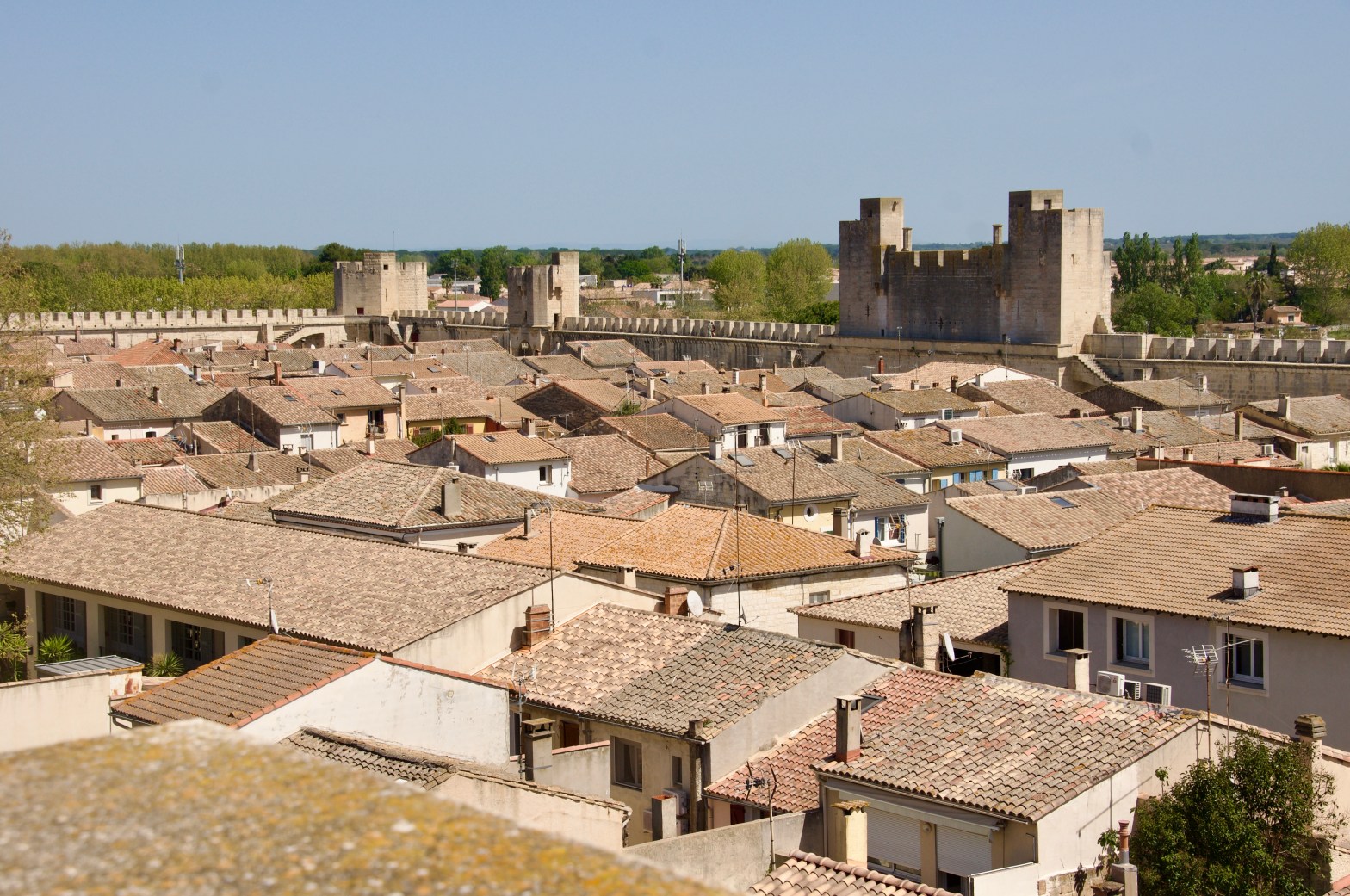
Aigues Mortes has preserved its medieval character because it was important back then, but not afterwards. It was the only Mediterranean port of the Kingdom of France in mid-13th century, and king Louis IX and his knights left for their crusades from here. The name of the town is Occitan and comes from the marshy and low grounds around the town, with the Rhône bringing fresh and the sea salty water. The growth of algae can be seen around the moats (below left). Salt water and low grounds have facilitated the production of salt over the centuries (still going on, below right).


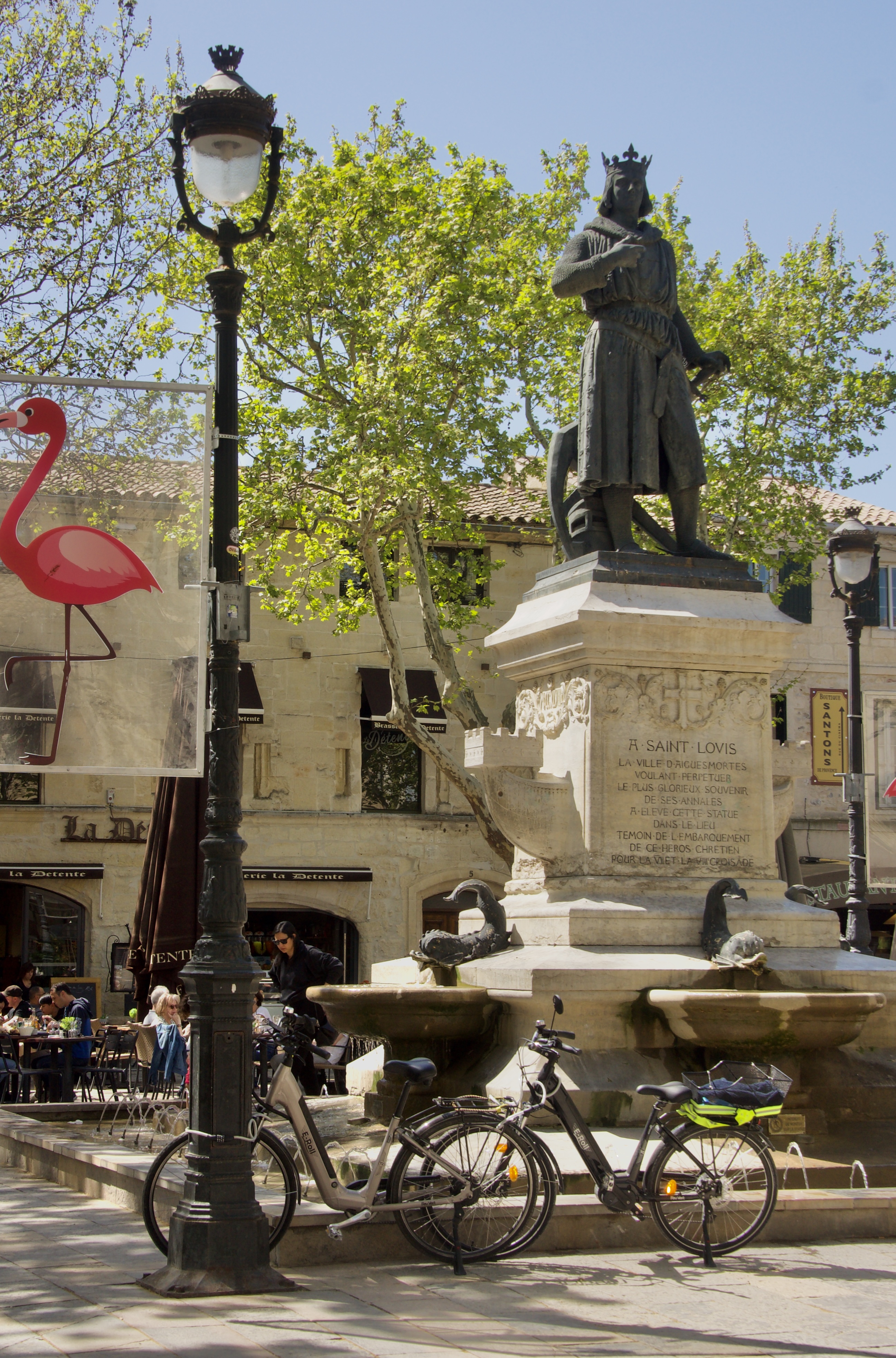
As Saint Louis wanted to have his own port to serve as the starting point, he constructed a road and a garrison to facilitate access, and used the port to embark for the seventh and eighth crusades. As these were hazardous exercises, he died during the eighth in Tunis, but looks still down from his pedestal in town (below left). The well-preserved walls of the town took thirty years and two further kings to finish (below right).
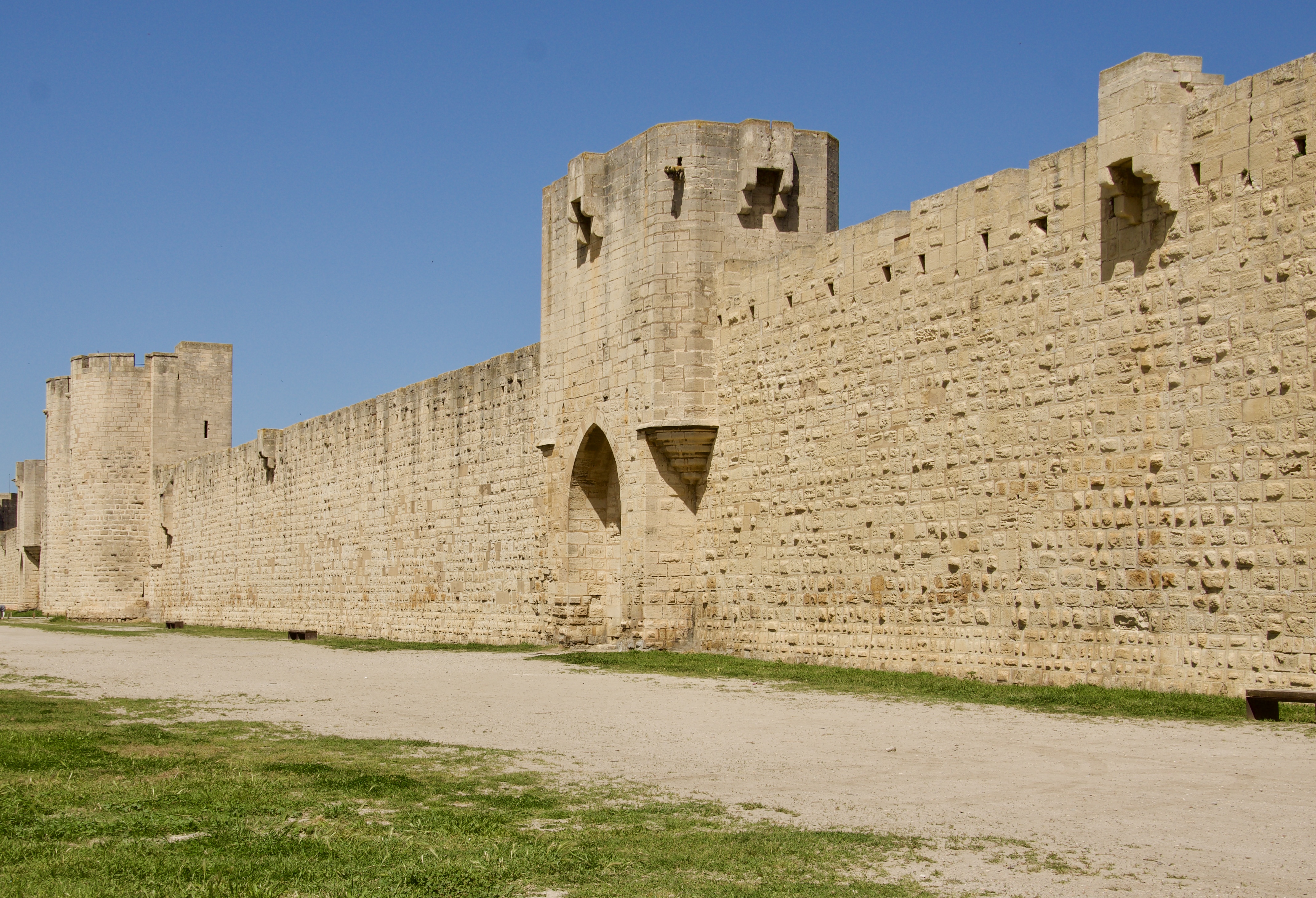
The fortified town served the king as a prison and interrogation point for the knights of the Temple after the organisation was declared illegal in early 14th century. Many were burned alive here. However, gradually the town lost its importance as the Rhône silted and other ports opened up.
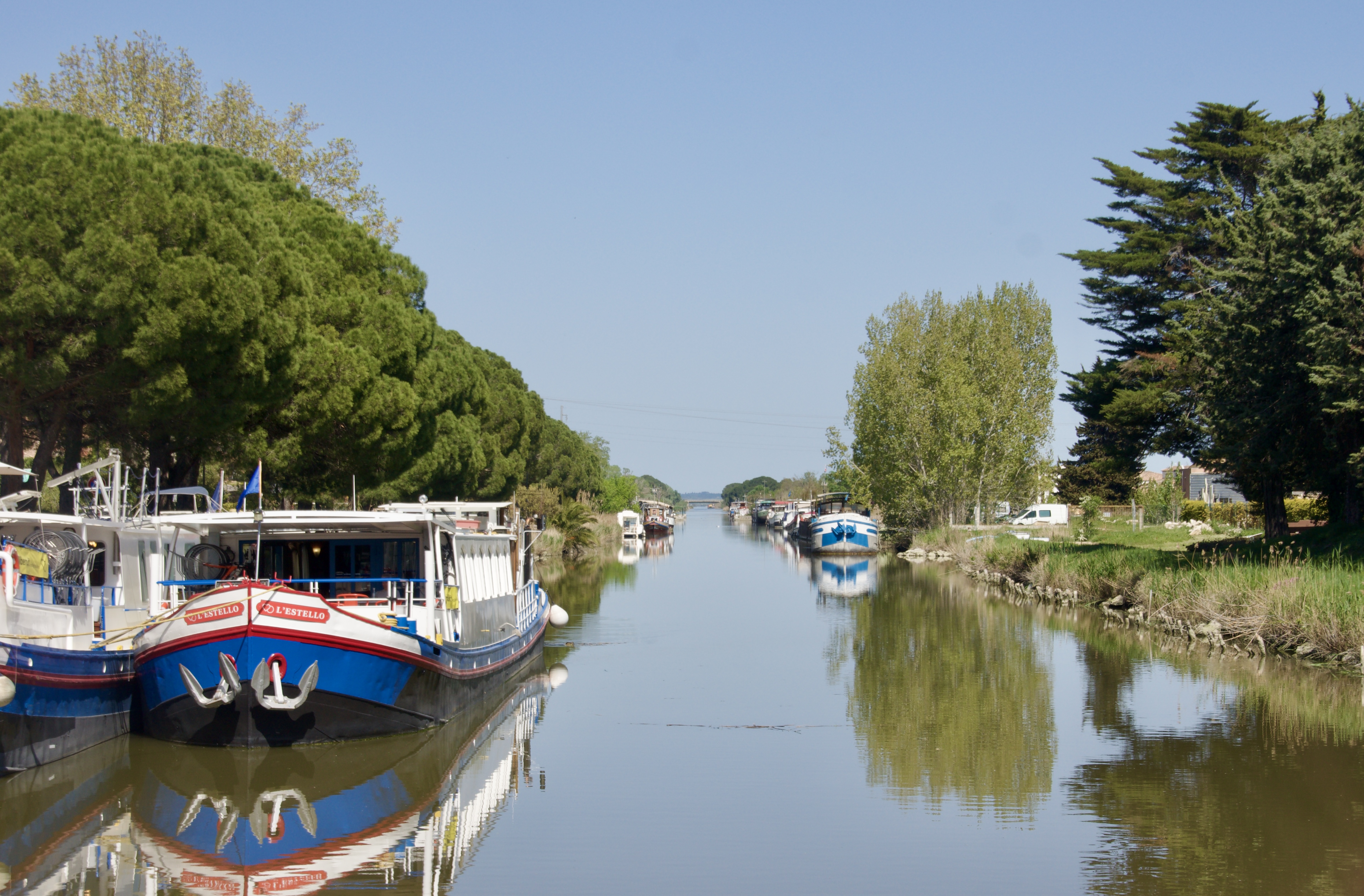
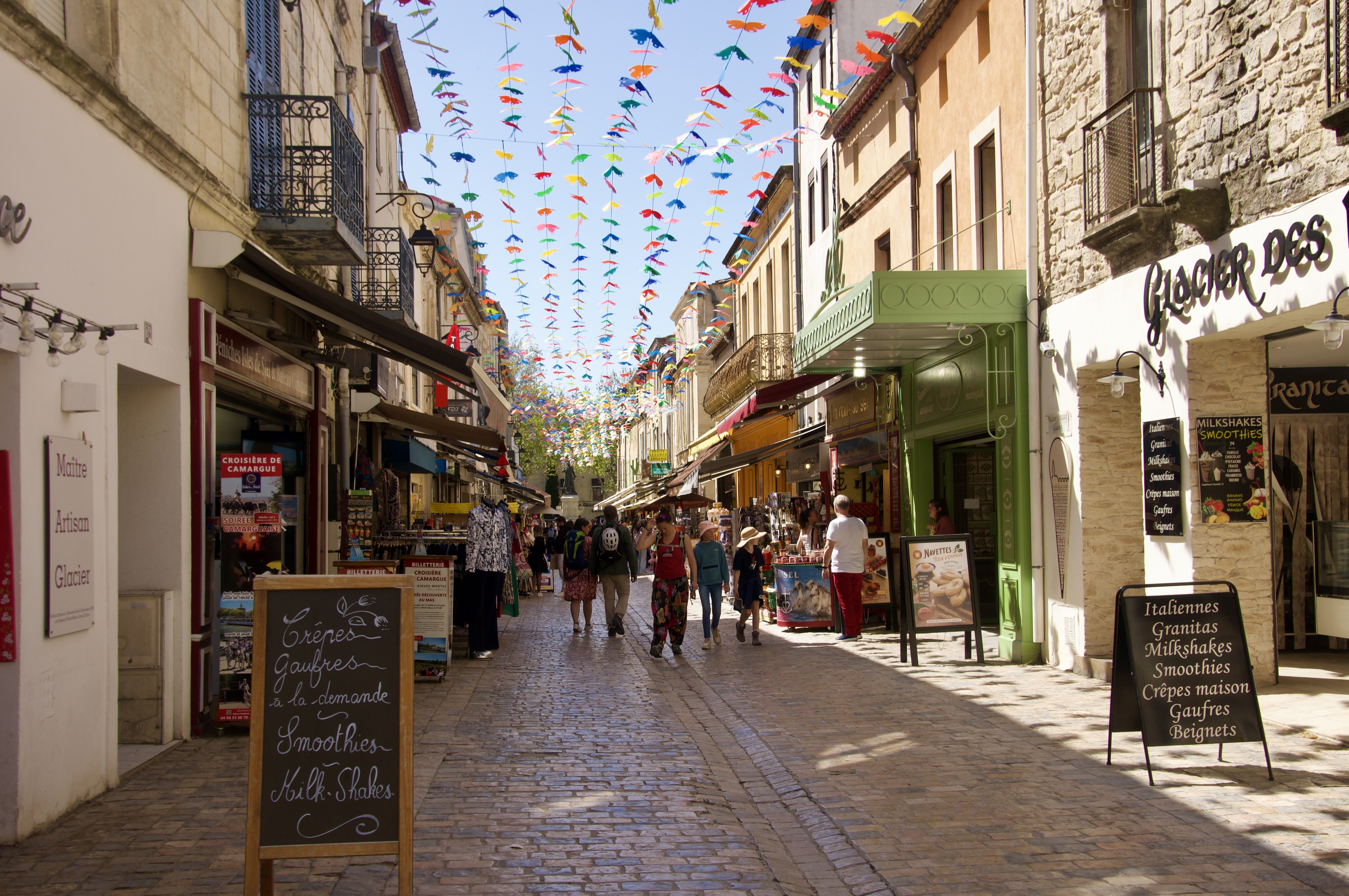
During the religious wars of the 16th century, both catholics and protestants were thrown into prison in turn. In a later flaring-up of violence, nationalists killed seven and wounded 50 Italian immigrants in town as late as 1893, but these days it provides a much more peaceful image with its houseboats (below left) and tourist services (below right). These days the whole region is an important nature preservation area.
 Rails, wines, worlds