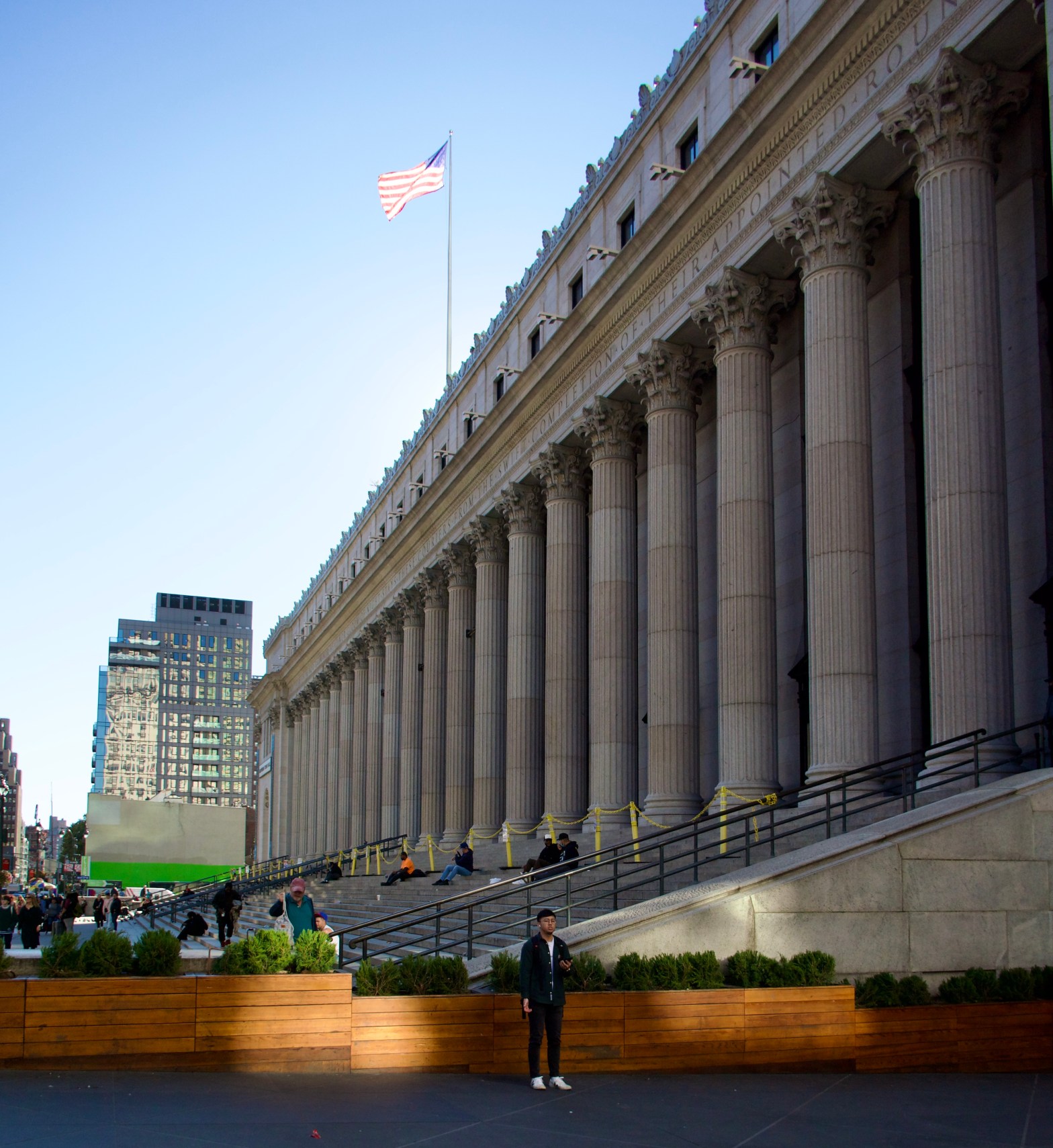
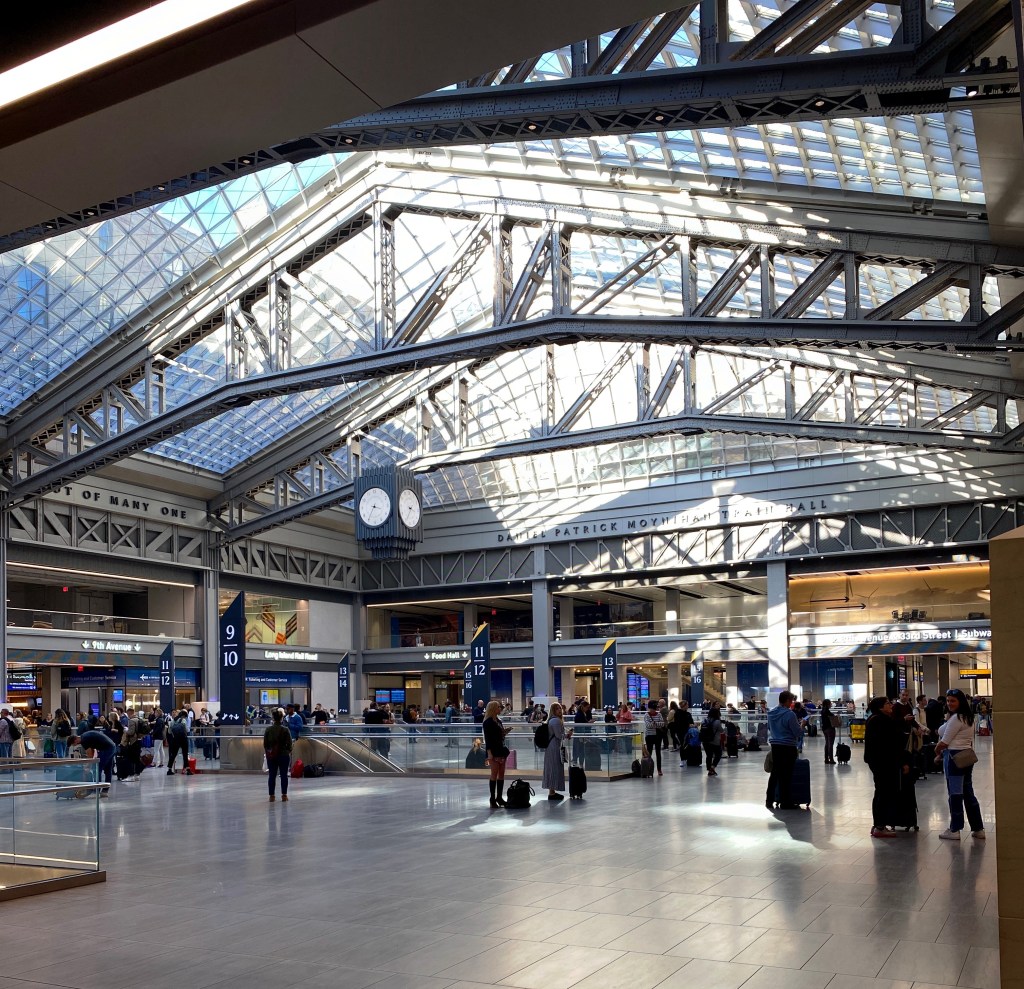
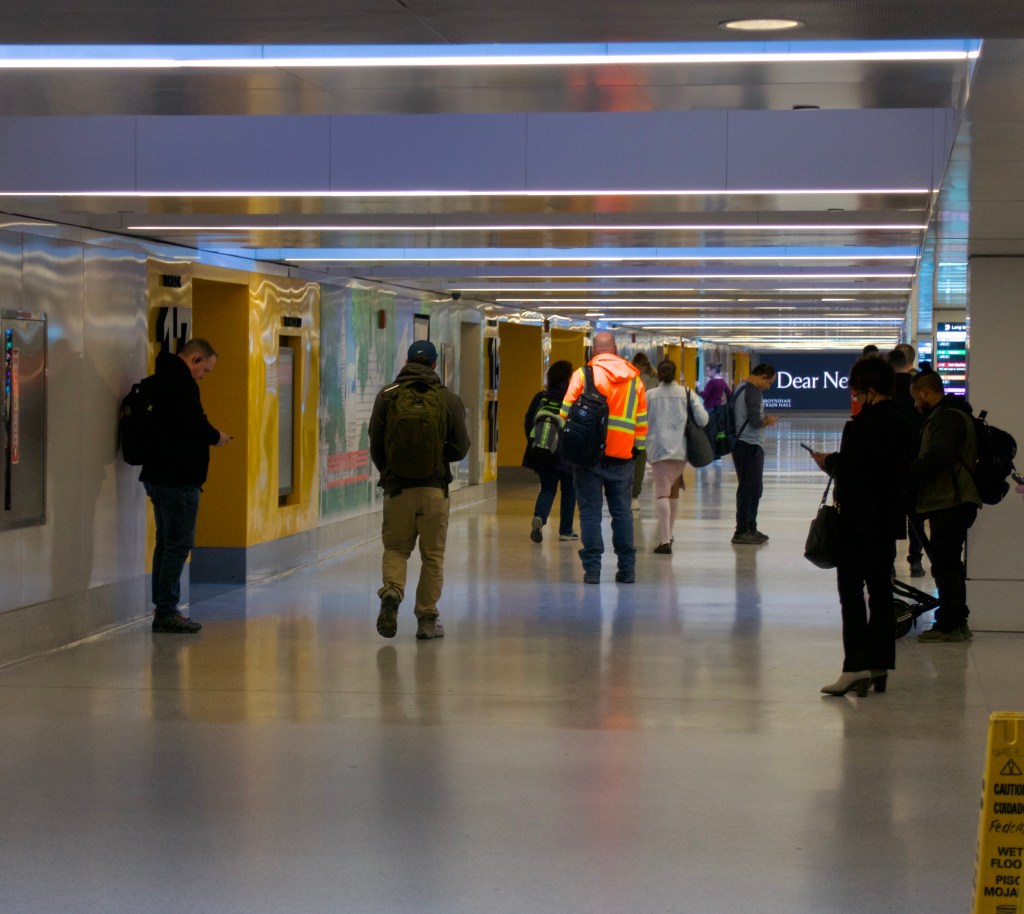
The destruction of the old Penn Station in New York in 1963 was pure vandalism – this 1910 structure was modelled after the baths of Diocletian, and provided a suitable combination of steel construction and Roman-inspired grandeur for the golden age of train travel. The rabbit warren of the modern Penn Station that followed was basically just corridors leading to platforms. However, the recent repurposing of the old Post Office across the street has provided a new focus point to the station – it is called Moynihan Train Hall after the erstwhile politician (below). It has some echoes of the 1910 structure.
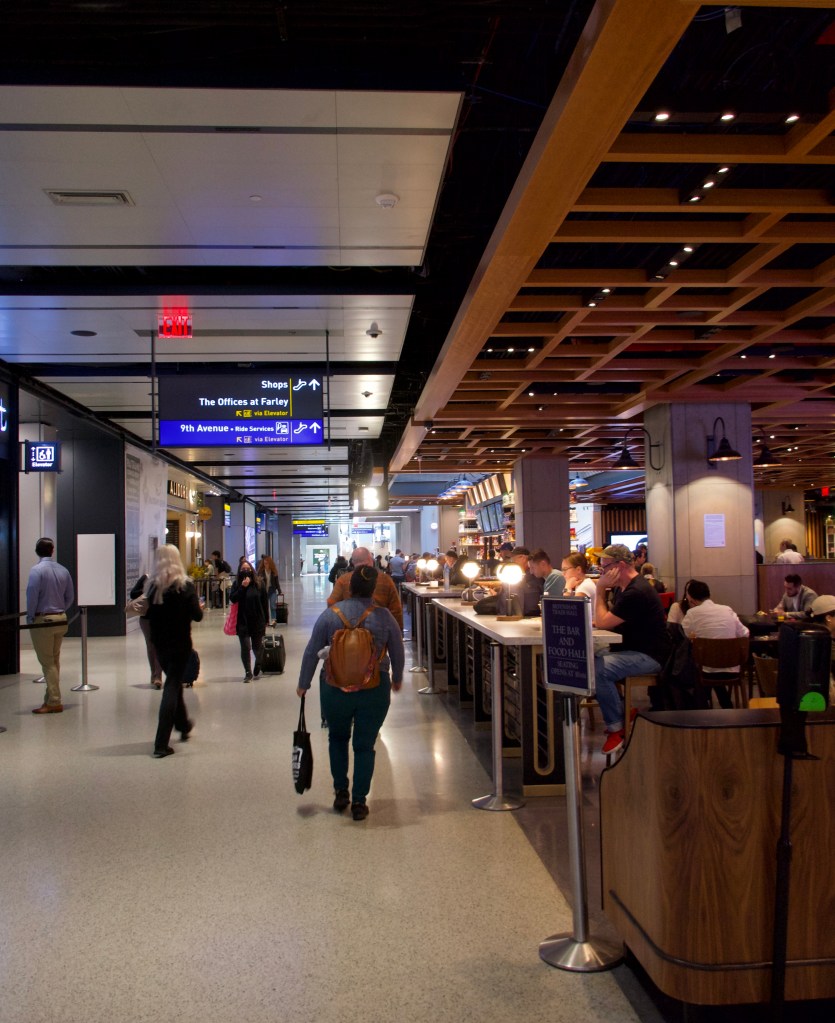
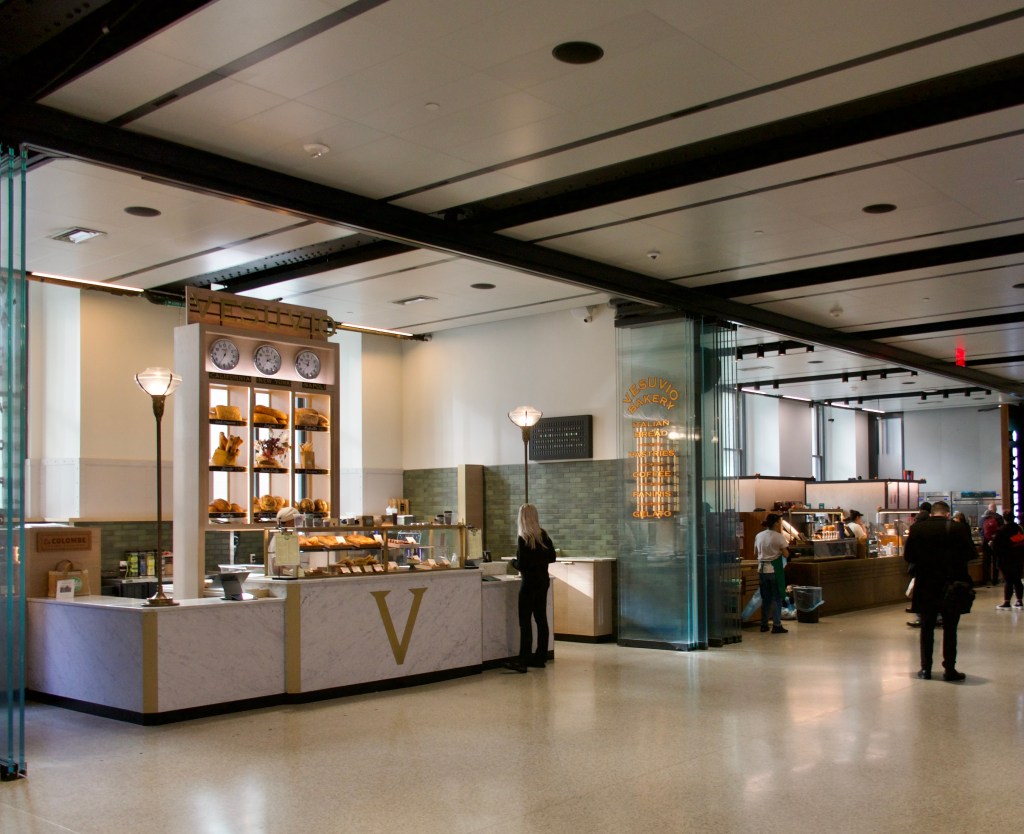
At least for the time being the catering areas are a bit sterile, but doubtless a couple of decades of remodelling will change that (below).
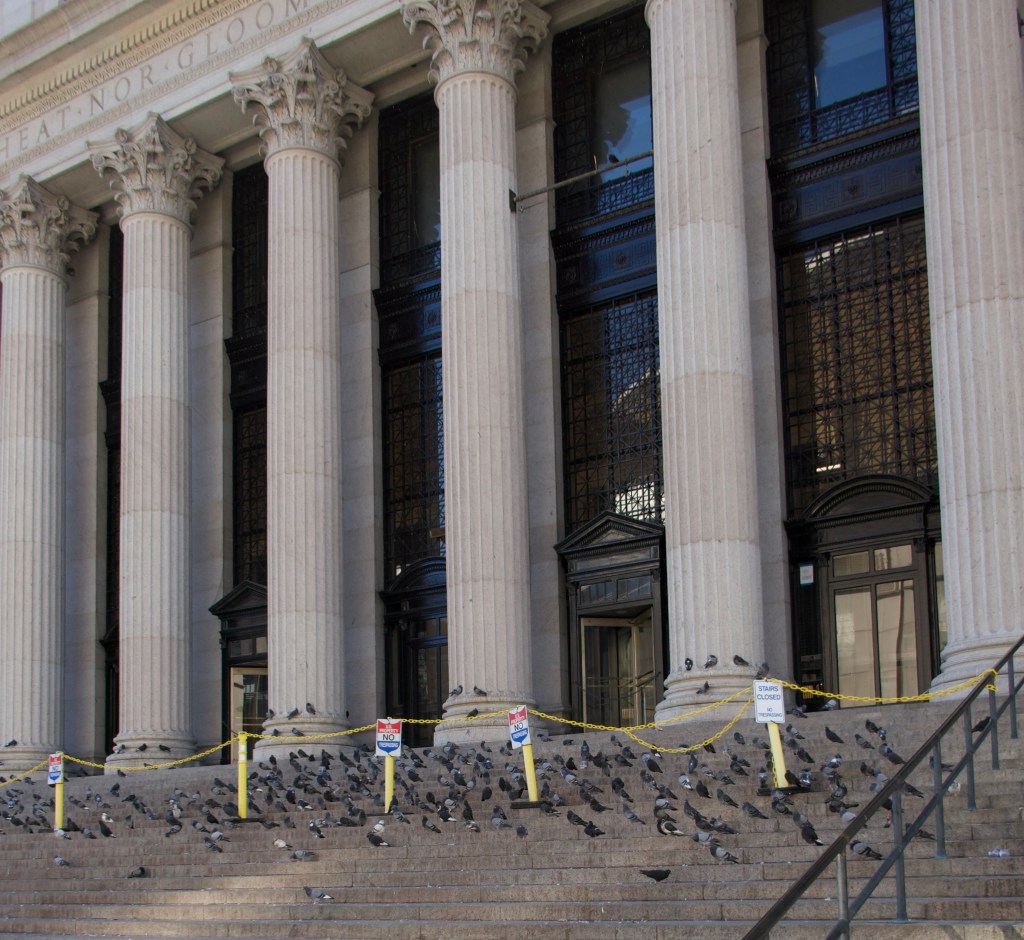
The Long Island Railroad tracks are tucked downstairs from the Amtrak hall, and the ceiling is low, but at least the layout is clear. Thus the new hall is an improvement, although the exterior requires some repurposing – reserving a waiting area for pigeons does not seem fully thought through.
Ribe is the oldest town – and had the first church – in Scandinavia. It was founded early in the 8th century and became quickly a thriving port.
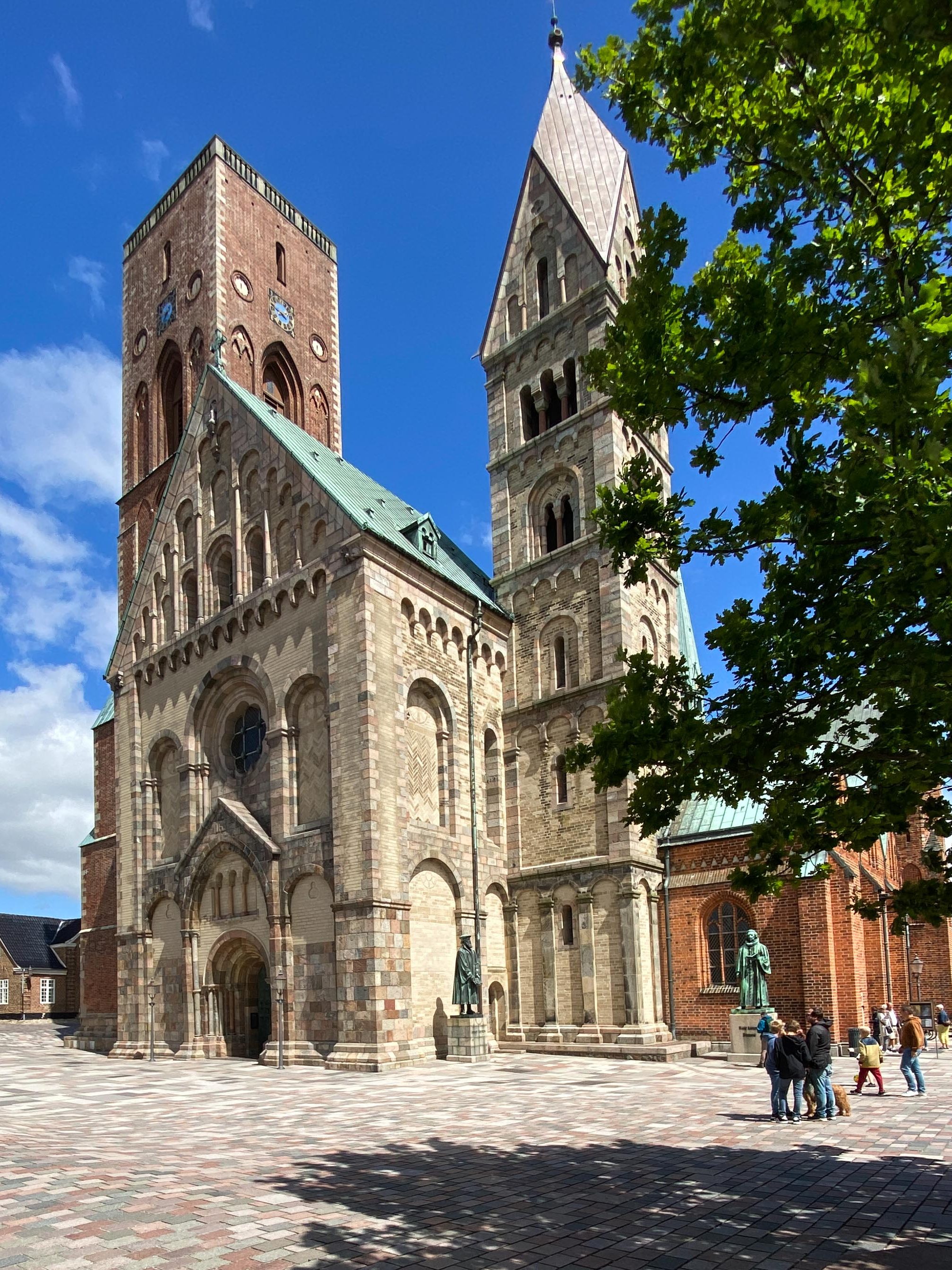
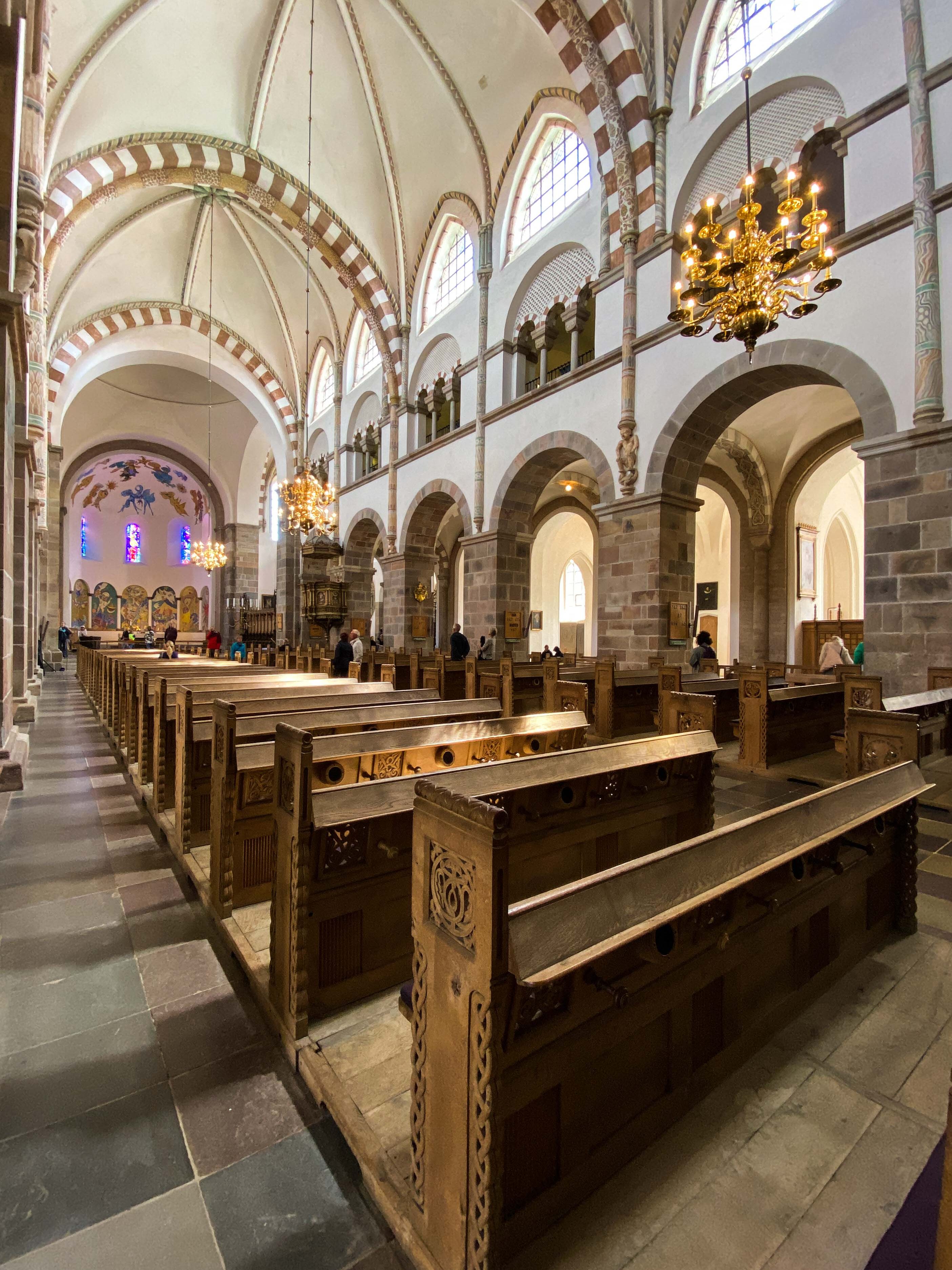
The current cathedral (below) was completed in 1250 after more than hundred years of works, although it sits in the place of an earlier church from the middle of the 9th century. The town used to have a castle from the early 12th century but that was destroyed by the Swedes in 1658.
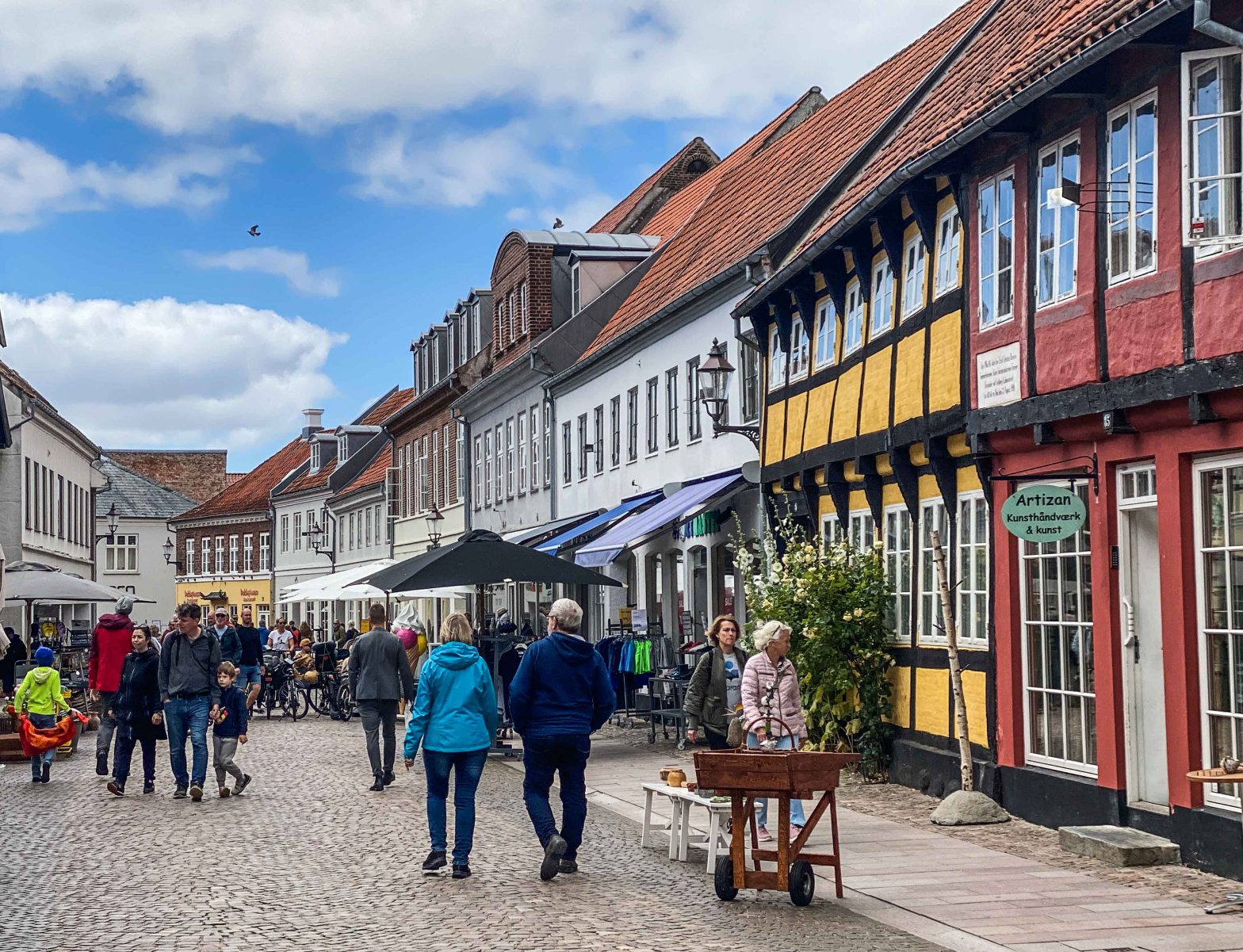
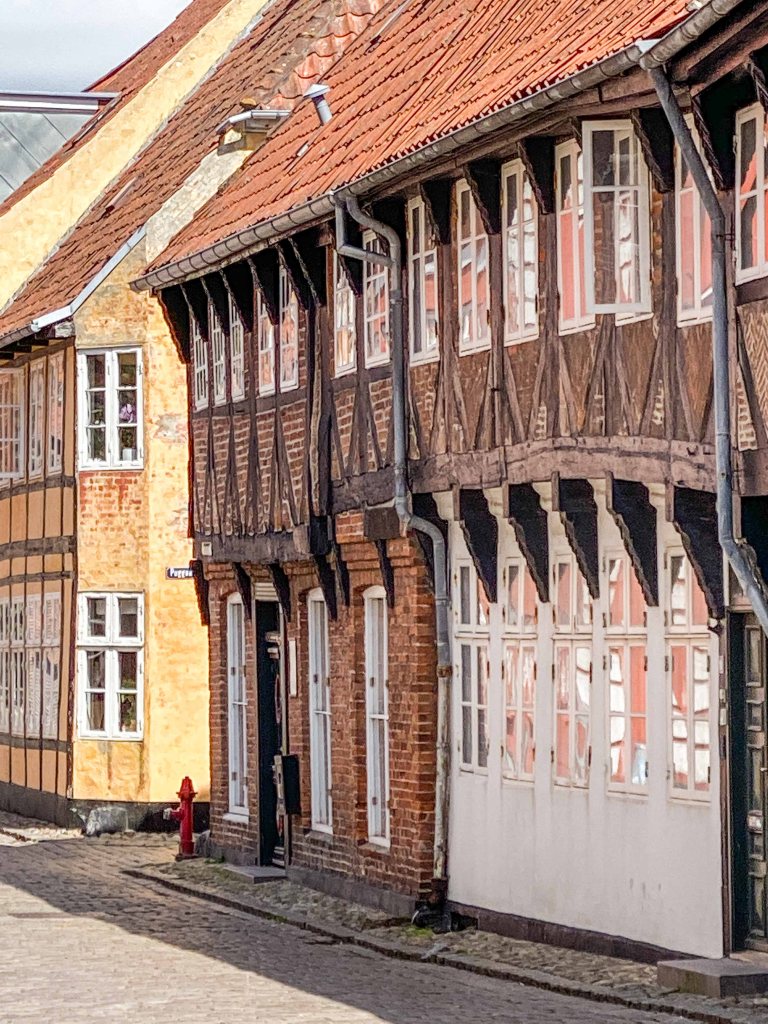
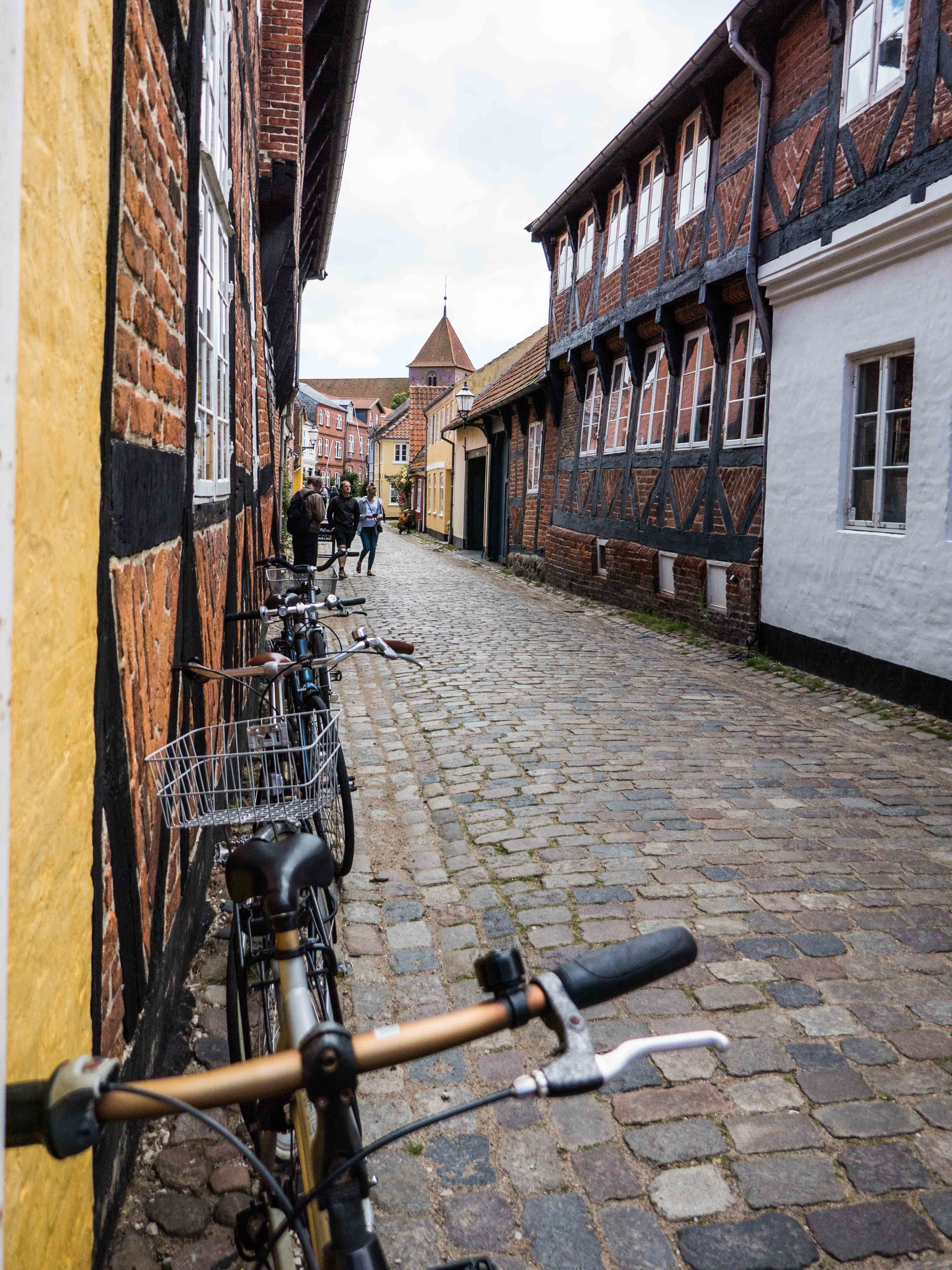
As the number of inhabitants was about 5000 in the year 1500 and about 8000 five hundred years later, there has been no particular modern growth spurt and the town has preserved its medieval character (below).
The Belgian town with many mineral springs – known already to the Romans – has given its name to all spas in English. In the 19th and the early years of the 20th century, it was the leading resort of its type, where aristocracy and crowned heads came to take the waters. Besides cures for the body, gambling was available, as were horse racing and later motorsports.
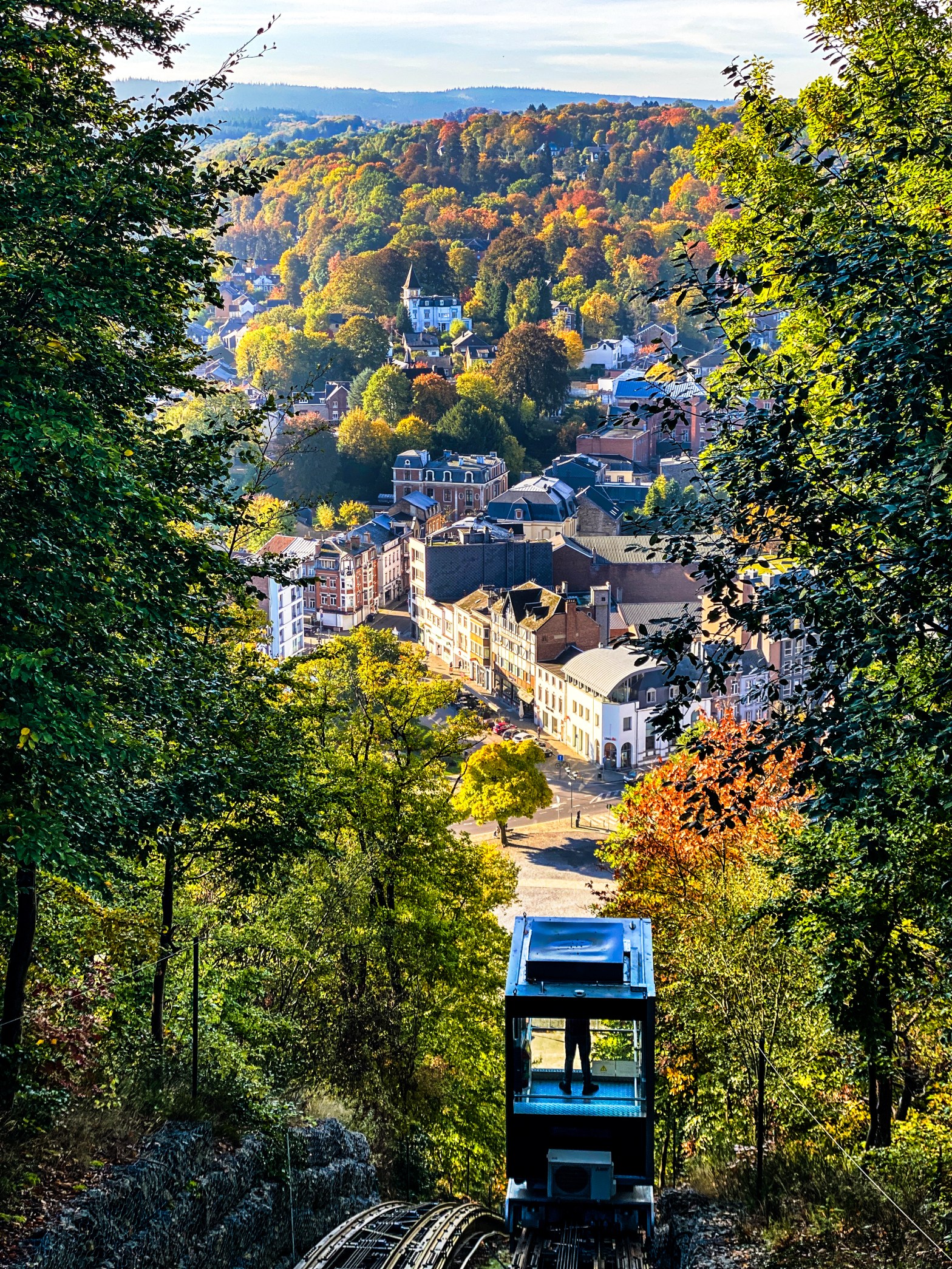
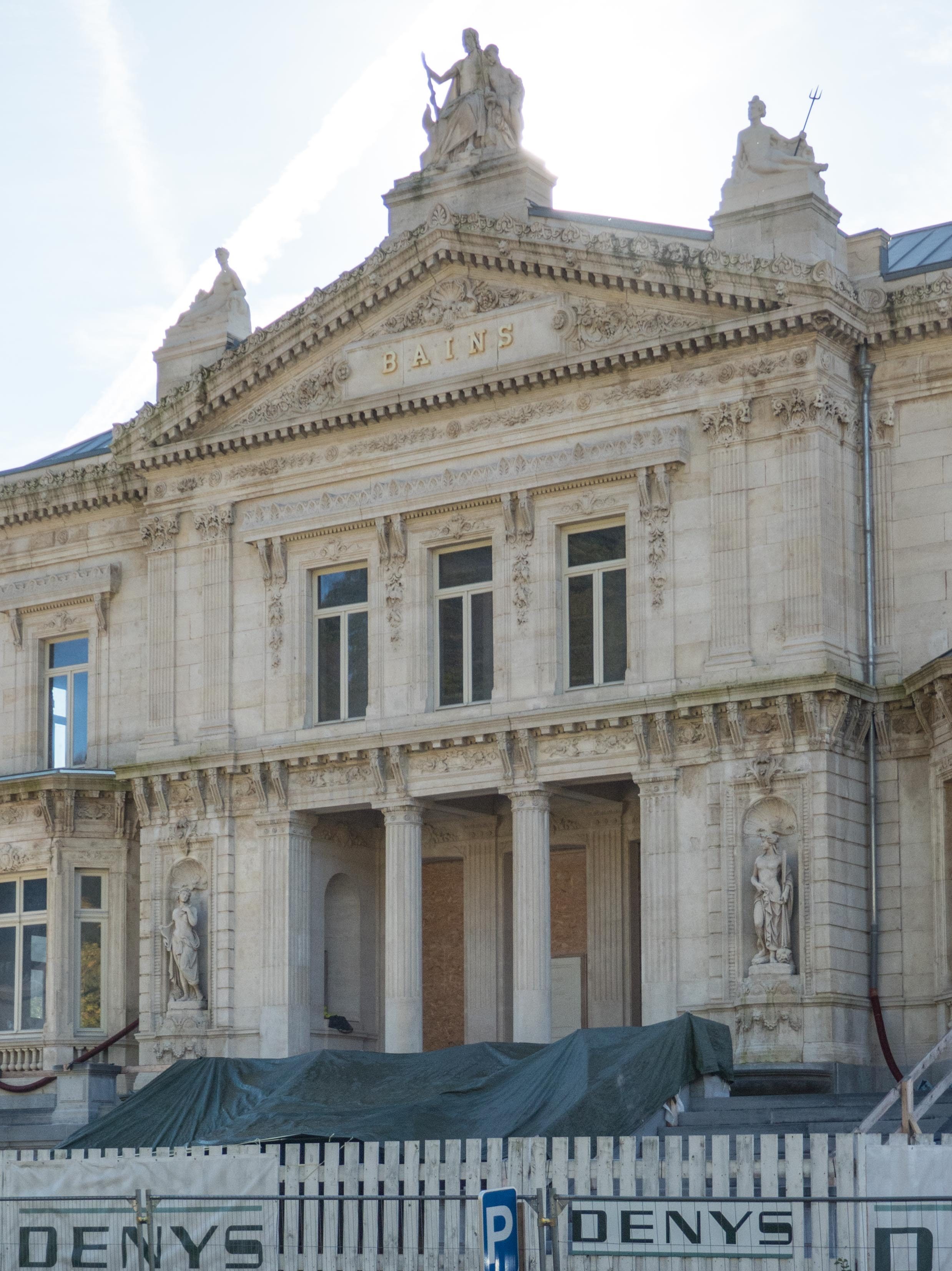
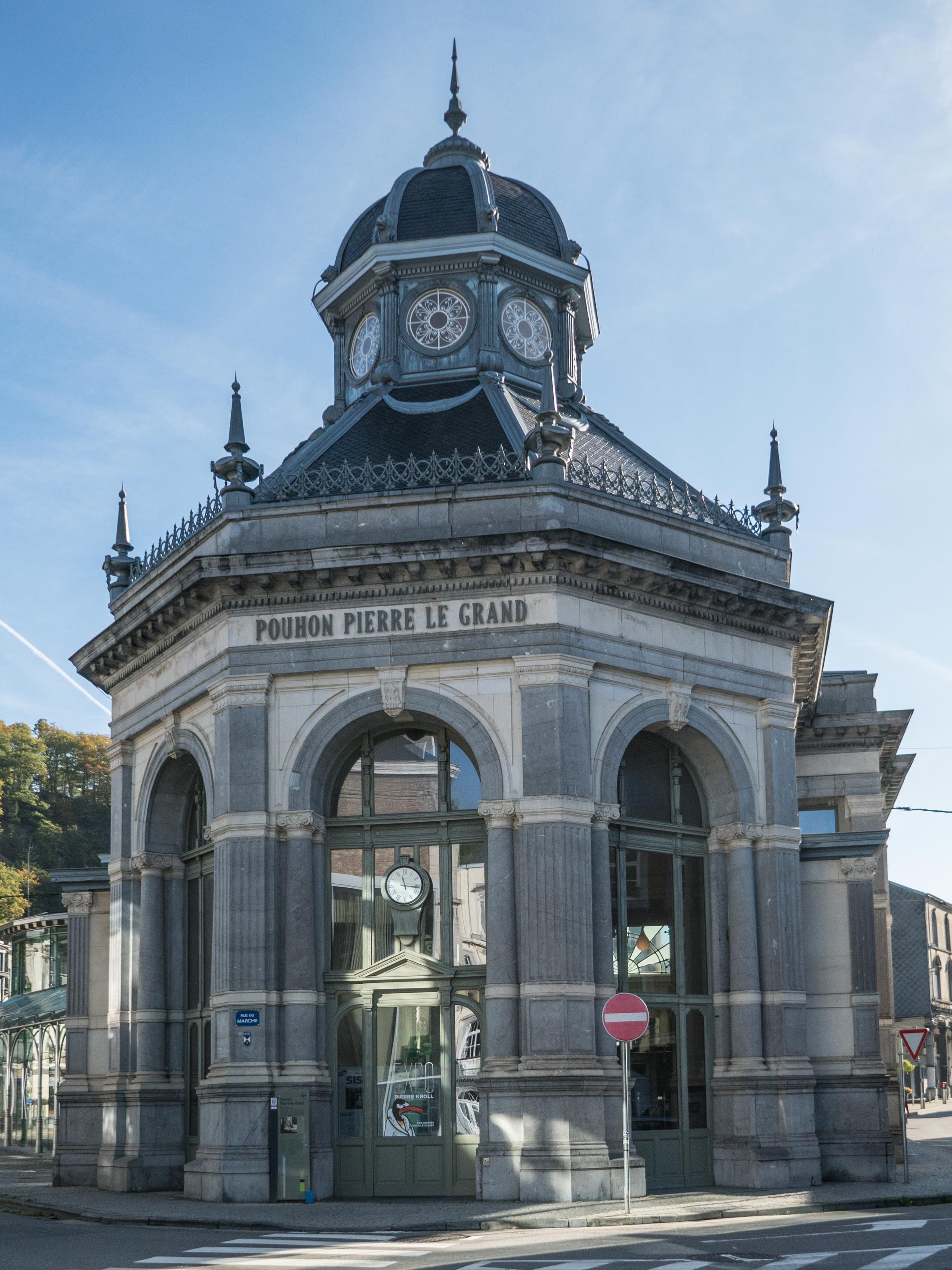
The current baths have a new building on top of a hill, accessible with a funicular (title picture), and the old building is being renovated for other uses (below left). One of the old water sources, ‘Pouhon Pierre Le Grand’ is these days the tourist office (below right).
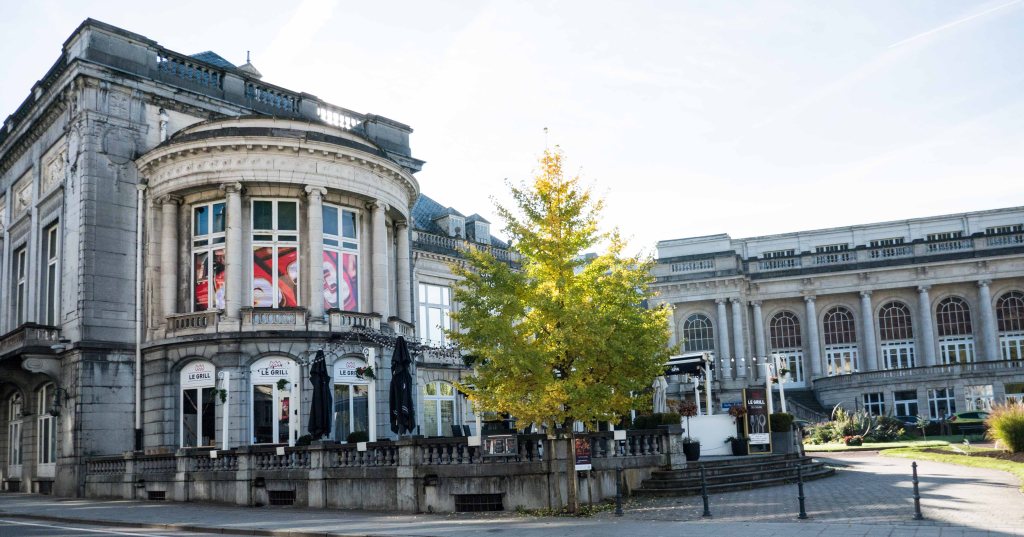
After taking the waters, some of the well-to-do withdrew to the Waux Hall (named after the Vauxhall Gardens in London) for evening entertainment (above), and others went to the casino (below).
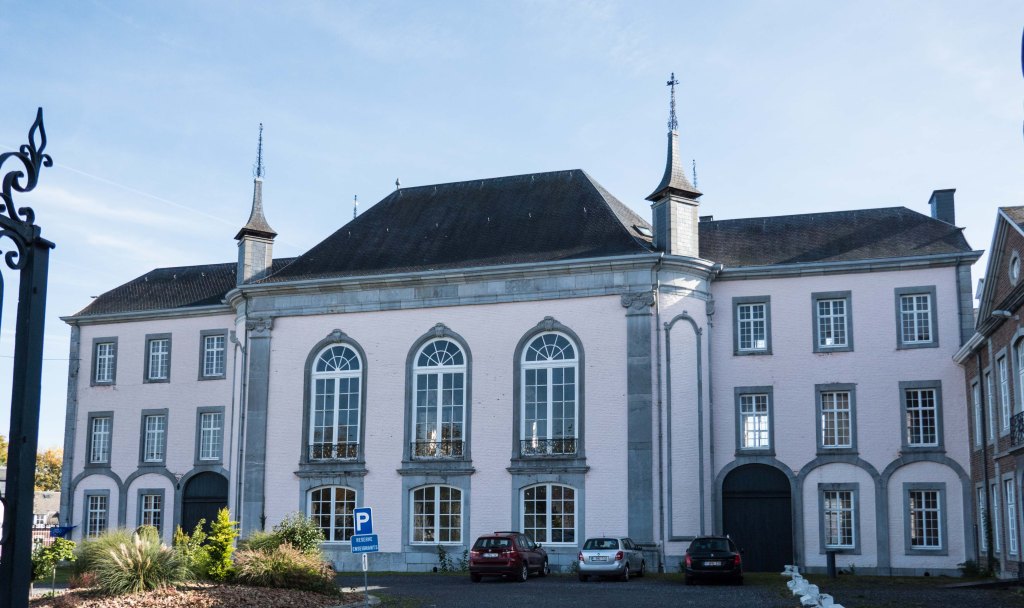
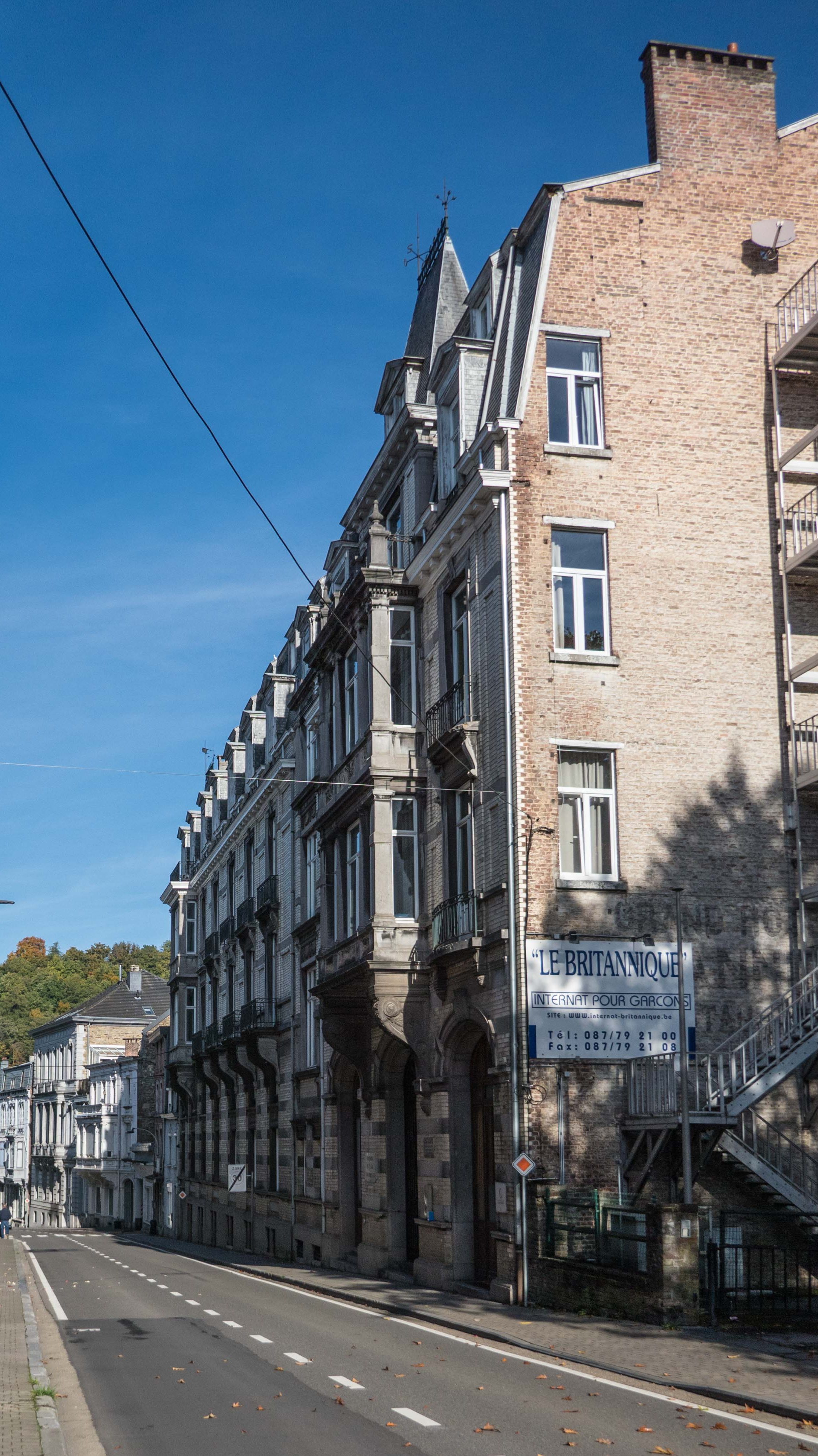
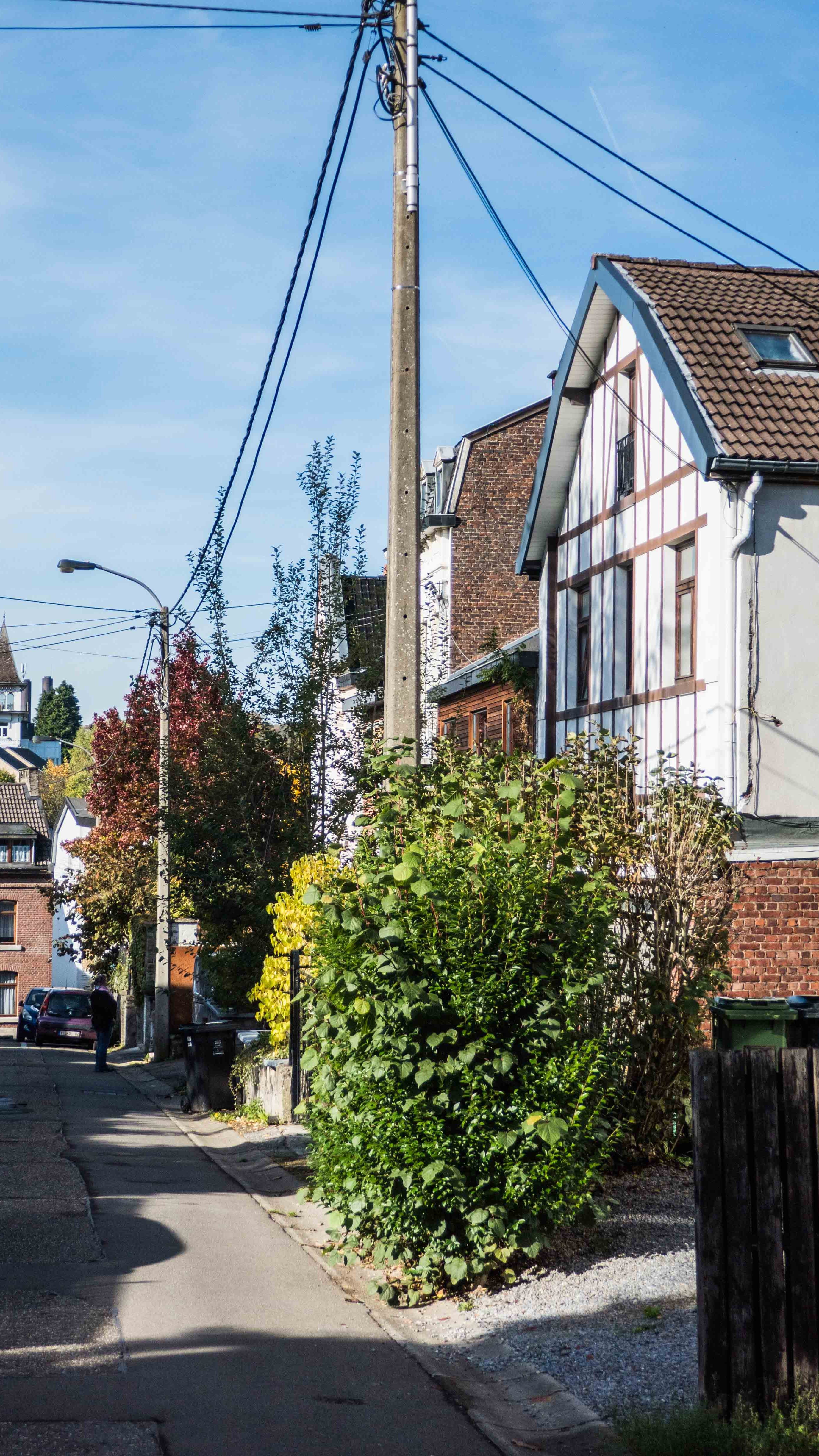
During the First World War the town was a convalescent center for German troops and Kaiser Wilhelm had his headquarters in the Hôtel Britannique (below left) in 1918. These days Spa has to do with the occasional visit of the King of the Belgians, and the usual tourists in the season. Otherwise the town maintains the air of your average Belgian small town (below right).
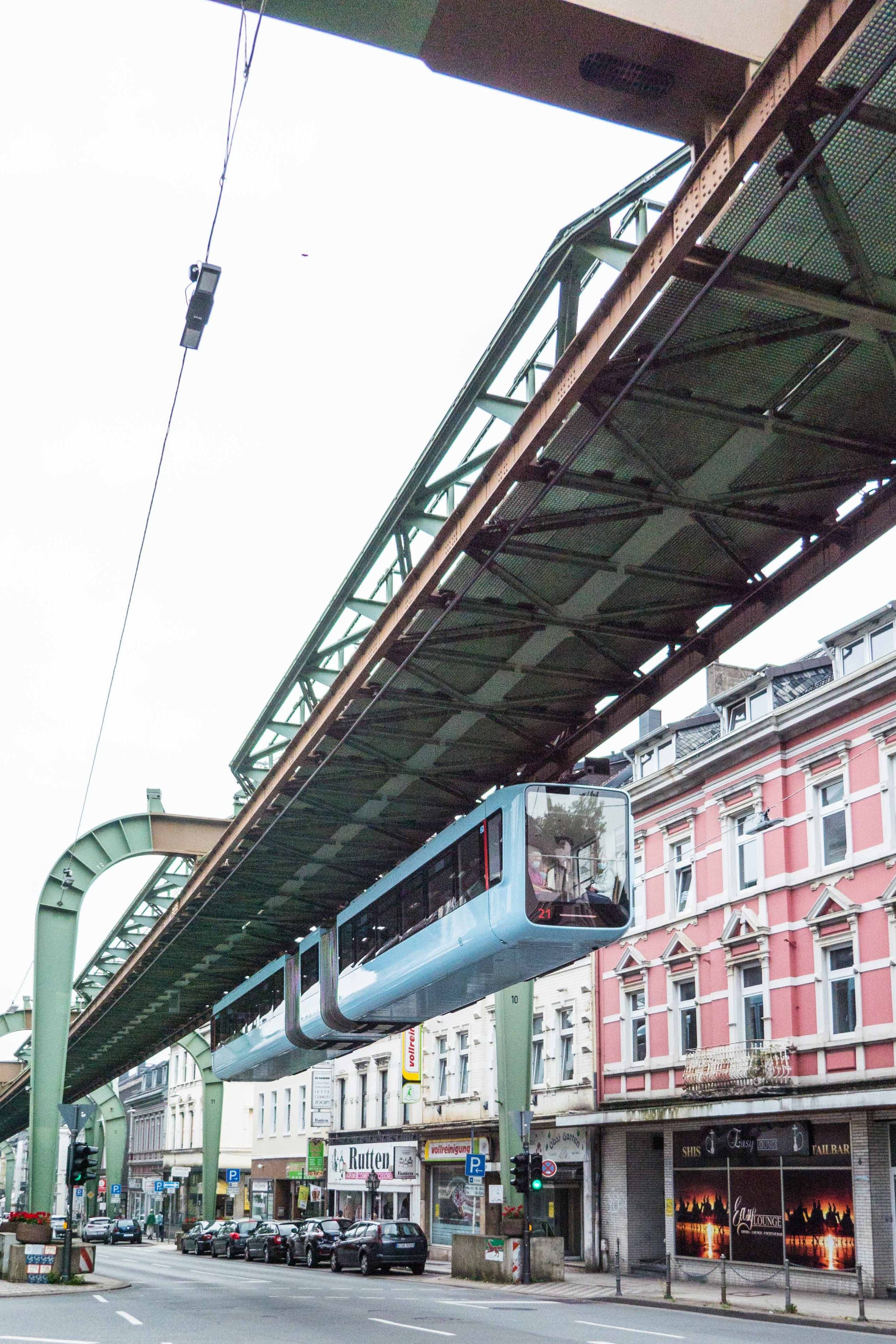
The city of Wuppertal is not particularly famous – a string of towns joined together administratively in 1929. However, it does boast one tourist attraction: the Schwebebahn – or suspension railway. This is the world’s oldest suspended railway and the only one in Germany.
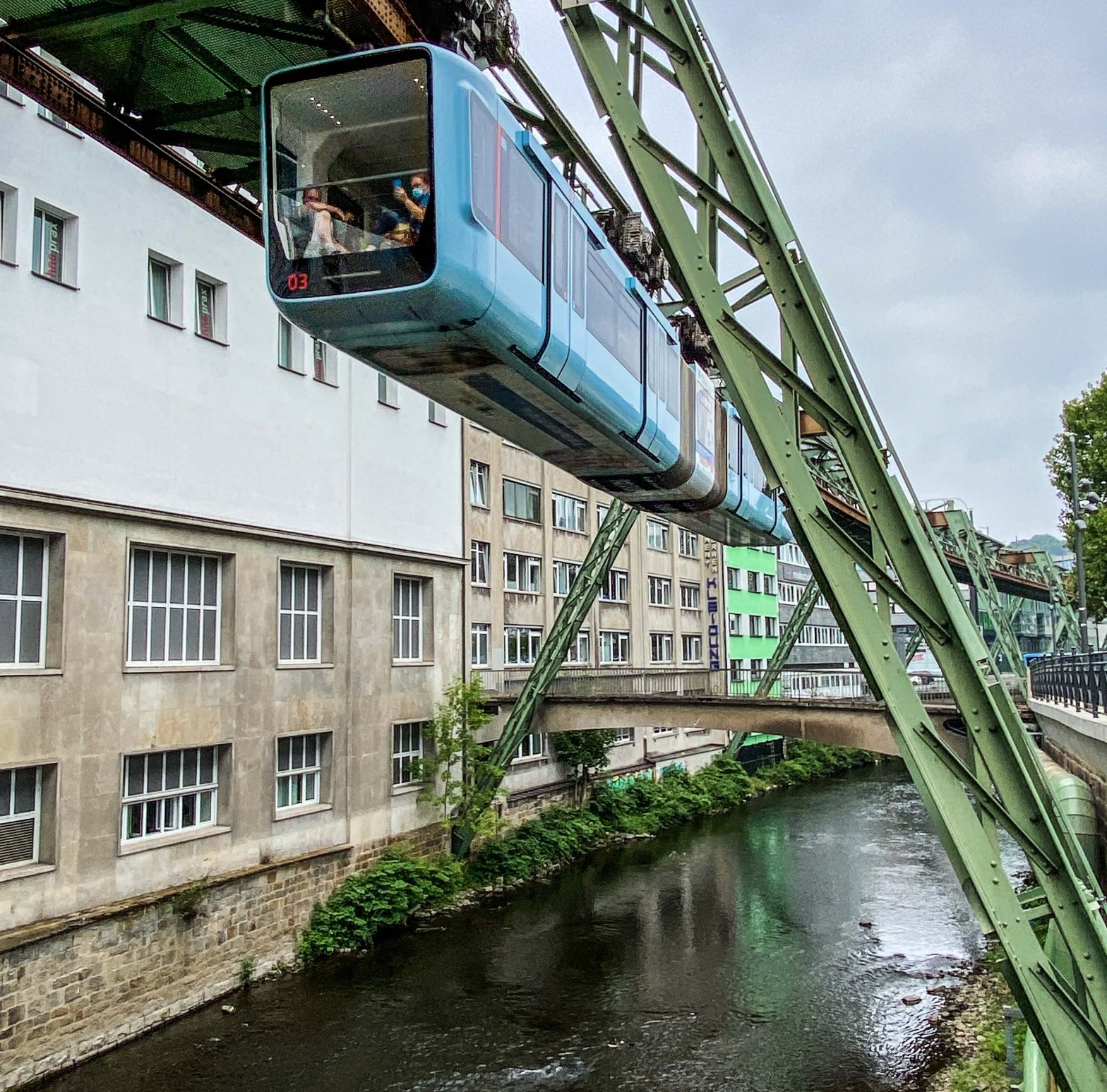
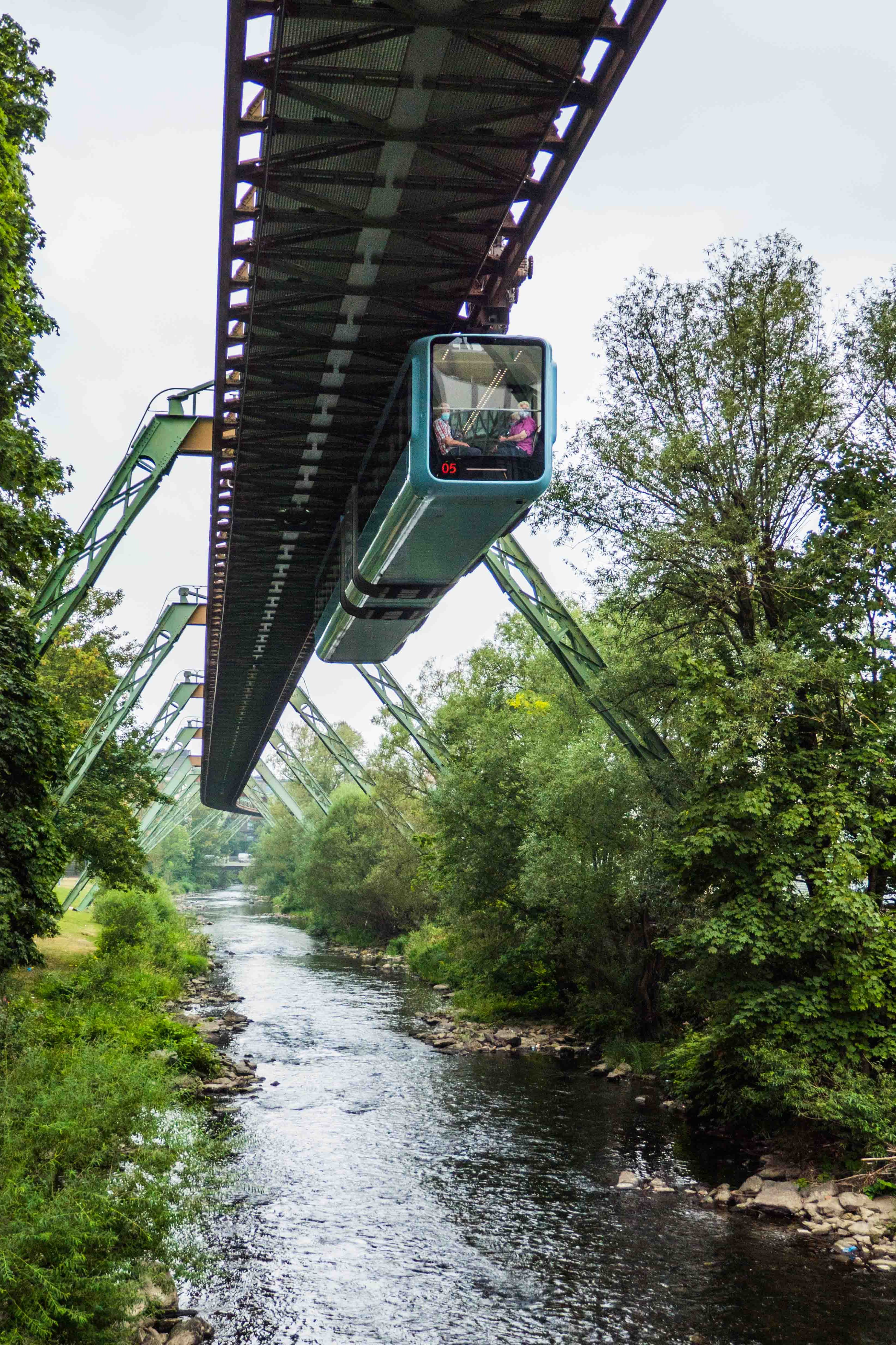
The 13 km railway runs mostly above the Wupper river, with a part above a street (above left and right). The cars are not huge (below) but manage to transport about 25 million passengers annually.
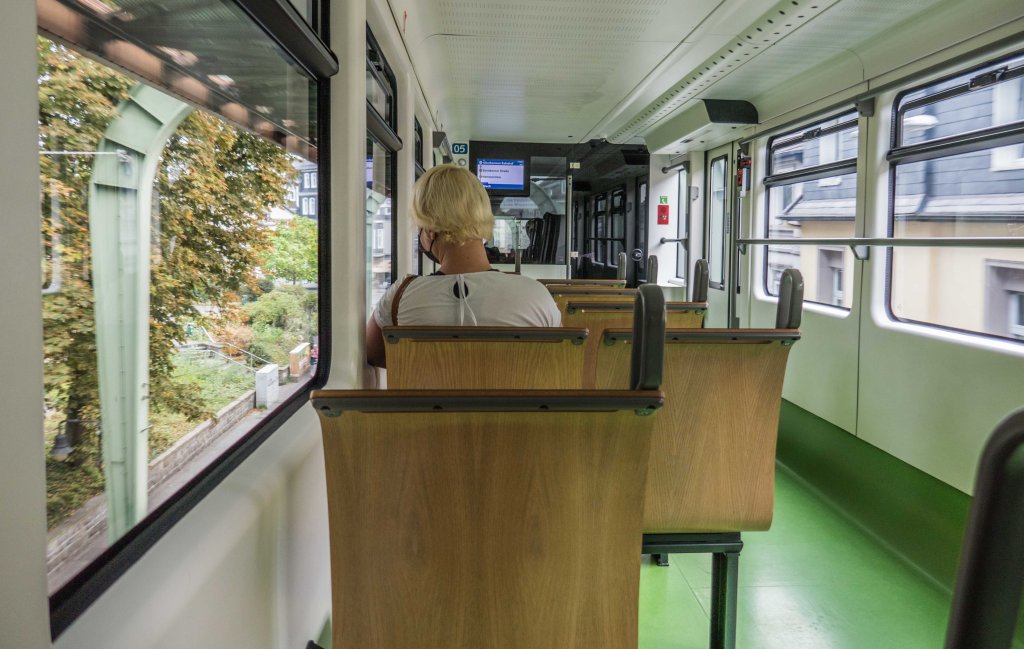
The first part of the railway opened in 1901 (with the whole track ready in 1903), although the kaiser had already been on a trial run the year before. The cars have been reguarly replaced and the current ones are only a couple of years old. They hang from the wheel and motor set (below left). Some stations are new, some are original and one is inside a building (below right). Overall, an imaginative way of avoiding traffic jams.
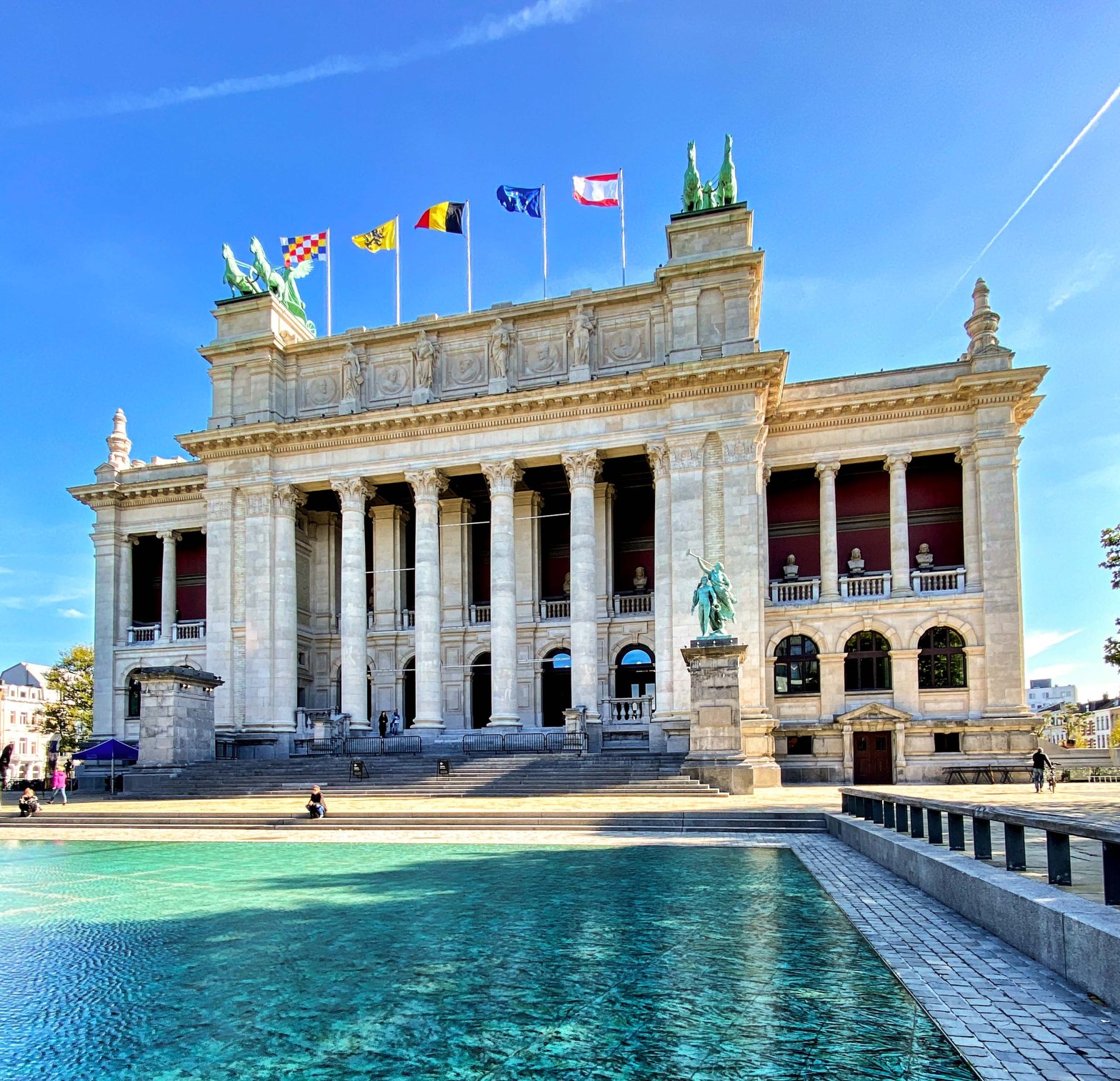
After 11 years of works, the Antwerp Museum of Fine Arts (officially Koninklijk Museum voor Schone Kunsten Antwerpen, or KMSKA for short) has reopened its doors. Mind you, in the Belgian context that time is nothing – scaffolding has surrounded the Palais de Justice in Brussels for more than 40 years – and counting.
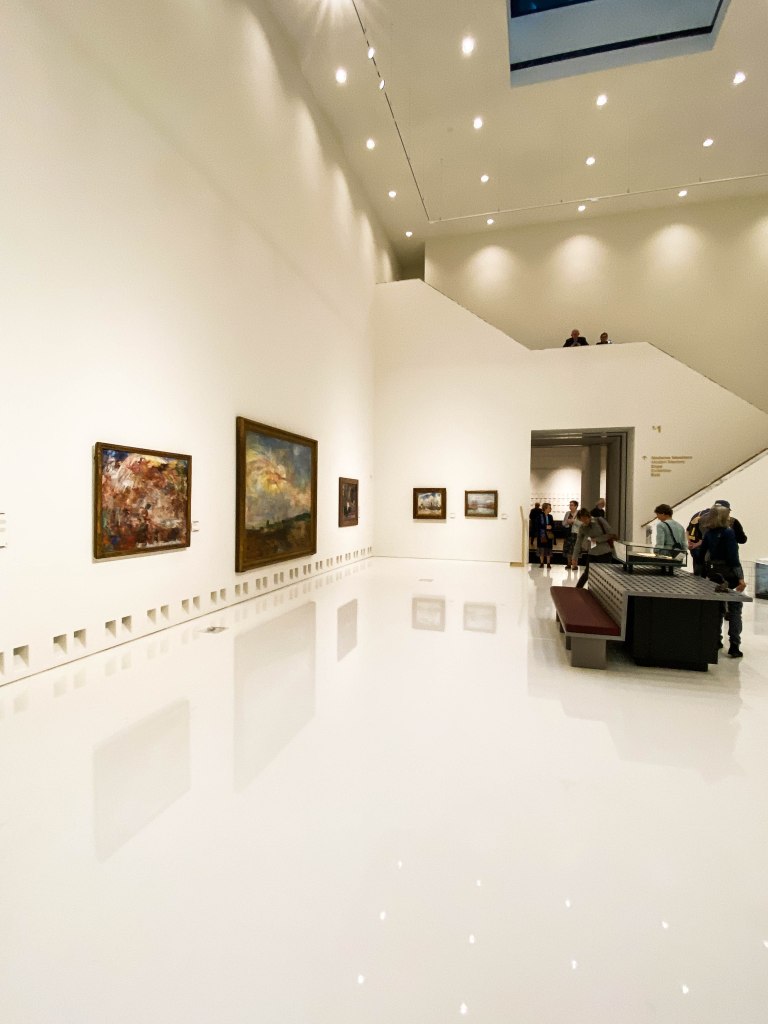
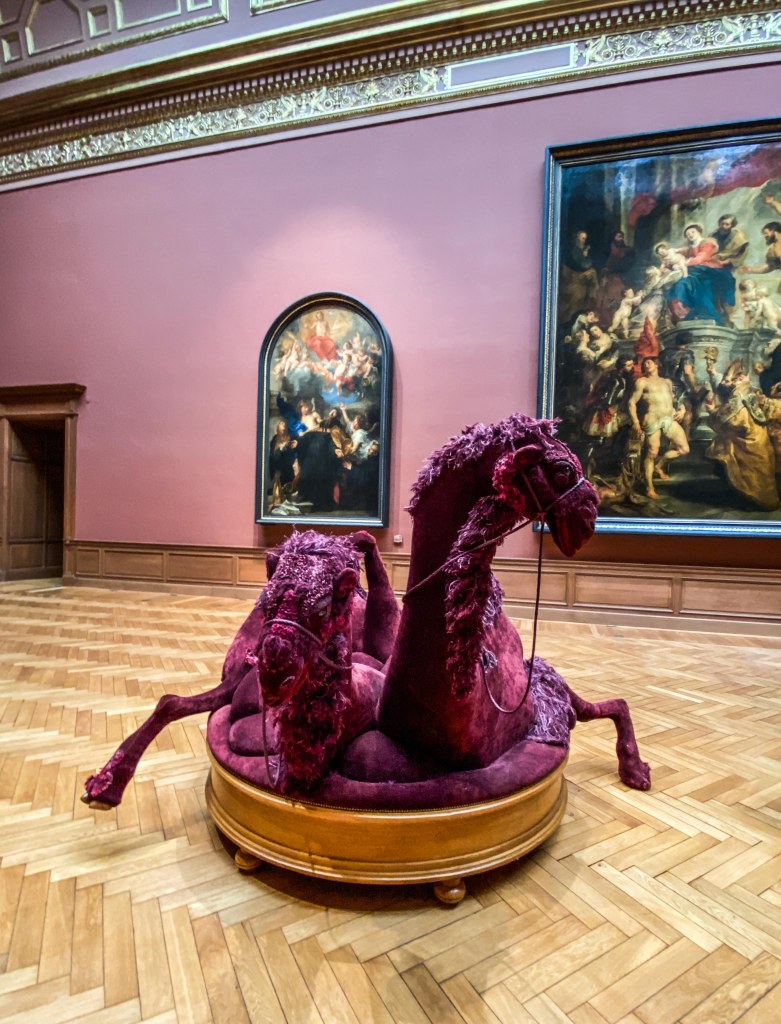
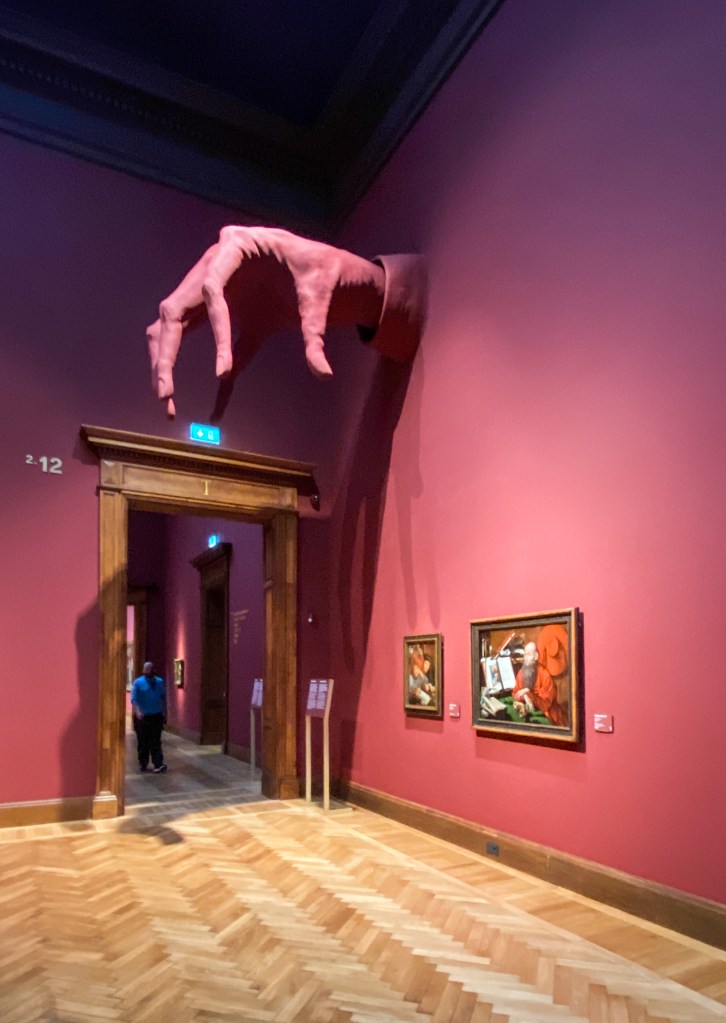
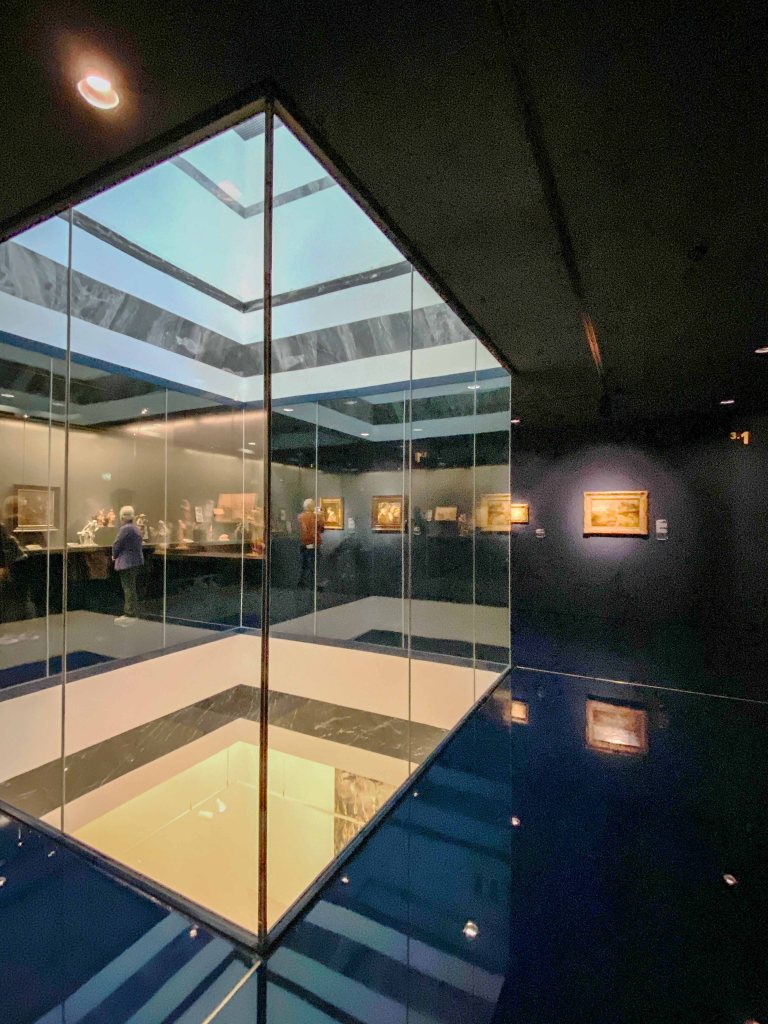
In many ways the resulting museum is impressive – also in ways that the visitors will not see, like the art storage facility built in the place of the nuclear bunker (for art) constructed in the 1950s. The new architecture is impeccably modern, with ultra-glossy floors (above left a view from the Ensor rooms), and the old spaces have been lovingly restored with quirky details (above right and below left) to counterbalance the overpowering Rubenses and Jordaenses.
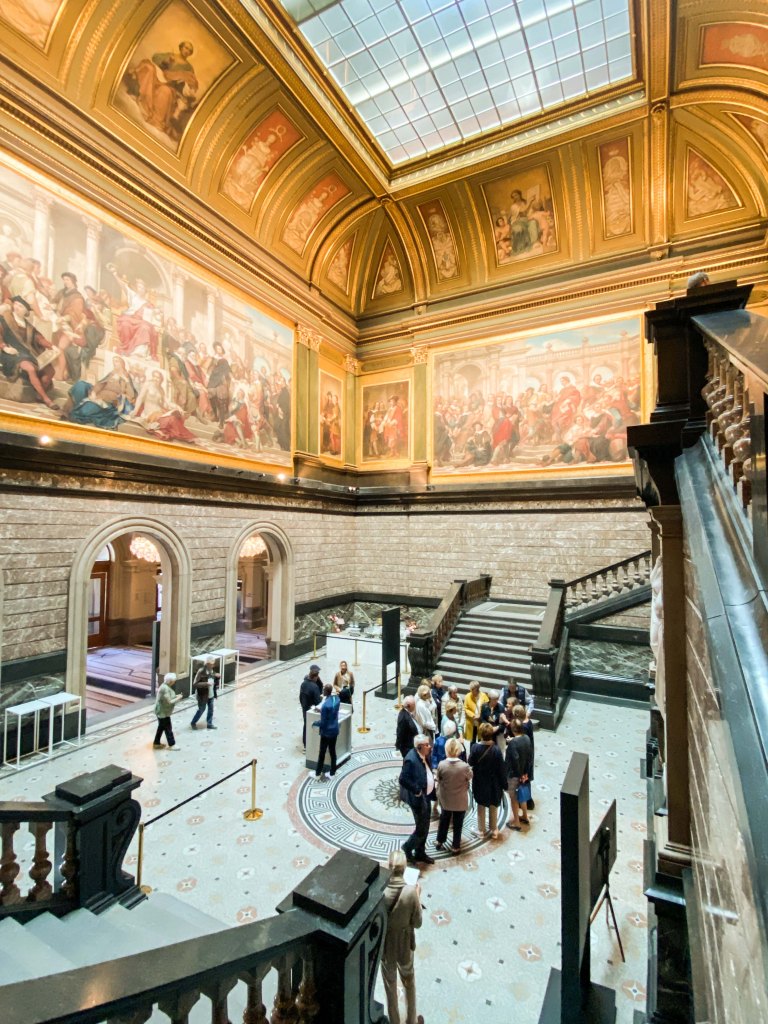
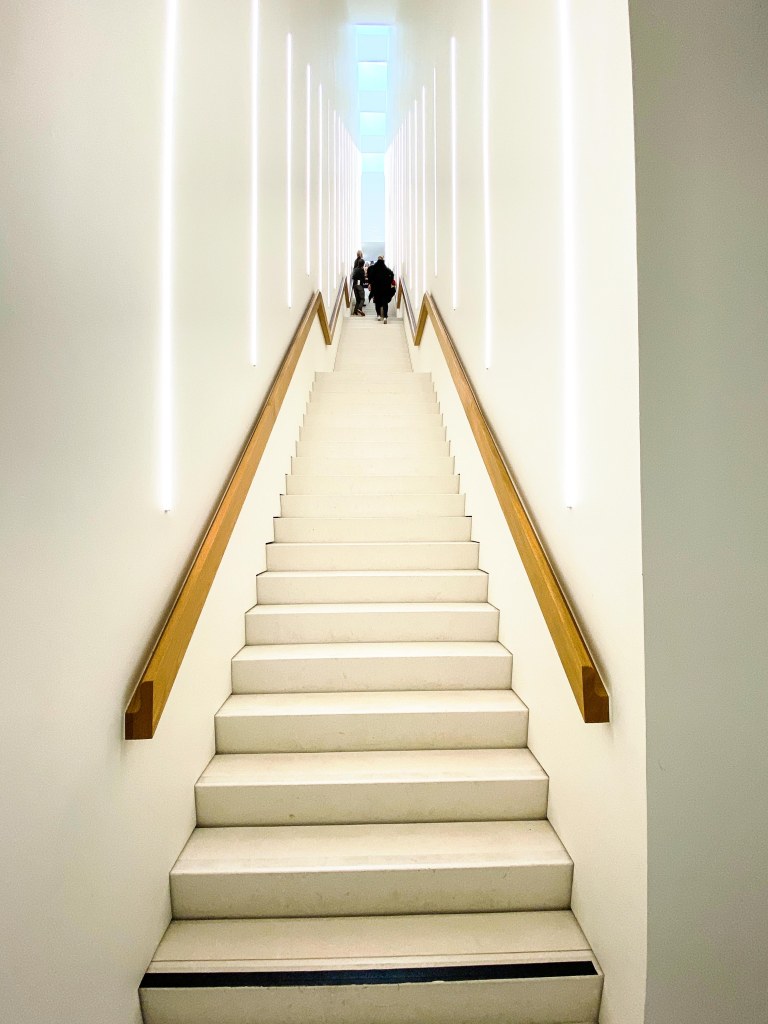
However, the design where the new building was constructed essentially into the courtyards of the old building without many connections, has created some questionable features. Except in the old part (above right), the visitor routes between floors are very limited and the space for prints and small statues feels slightly claustrofobic (below left). And the new stairs have not been created for large crowds, although architecturally beautiful (below right).
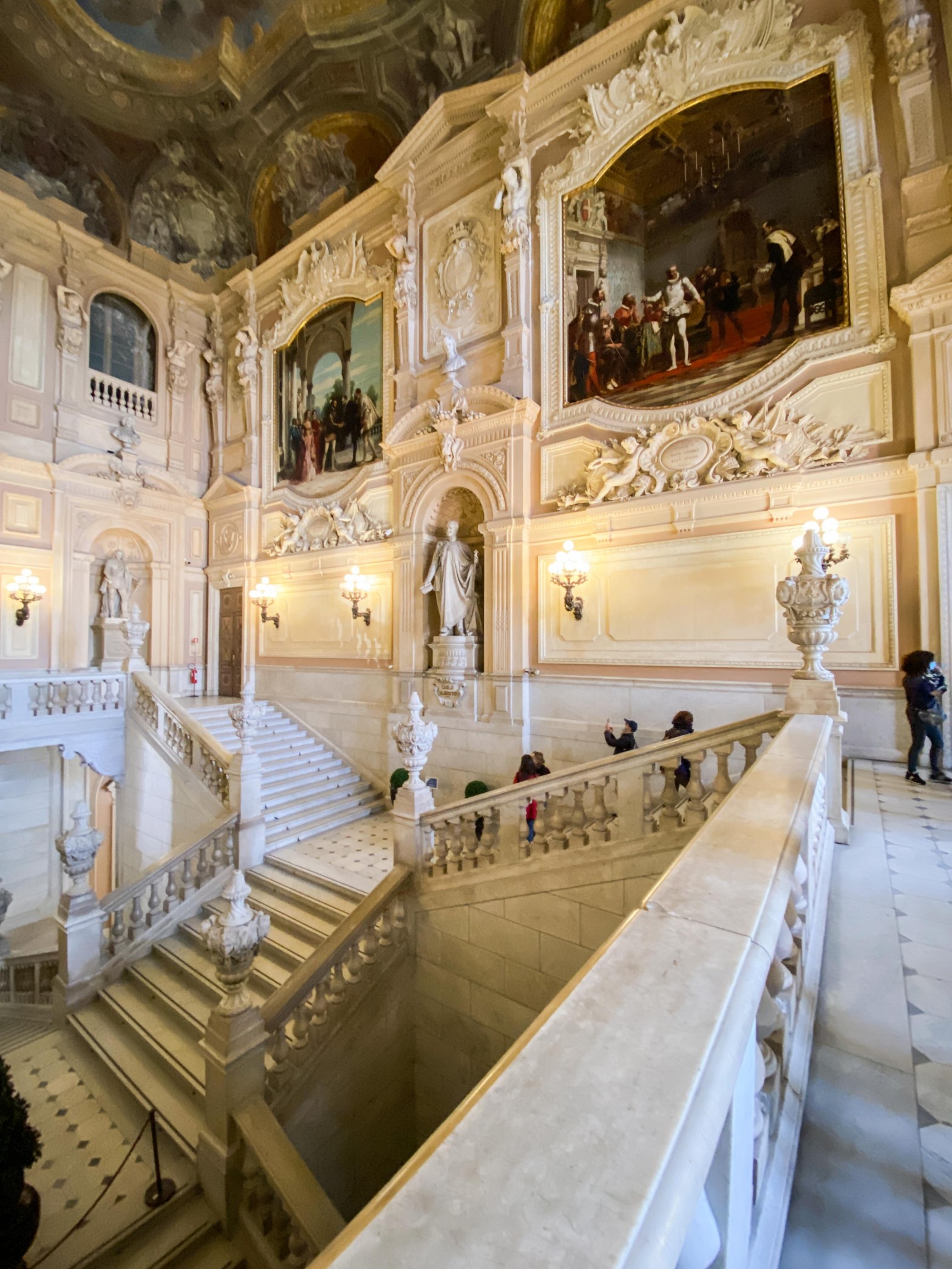
One of the sights of Turin is its royal palace. These royals were not your everyday small-kingdom-rulers, although the county and later duchy of Savoy was originally not very large. However, the family extended their reach to Sicily and Sardinia and finally became the kings of Italy in 1861. Thus, the palace needed to reflect their growing importance, including an appropriately grand staircase to impress visitors.
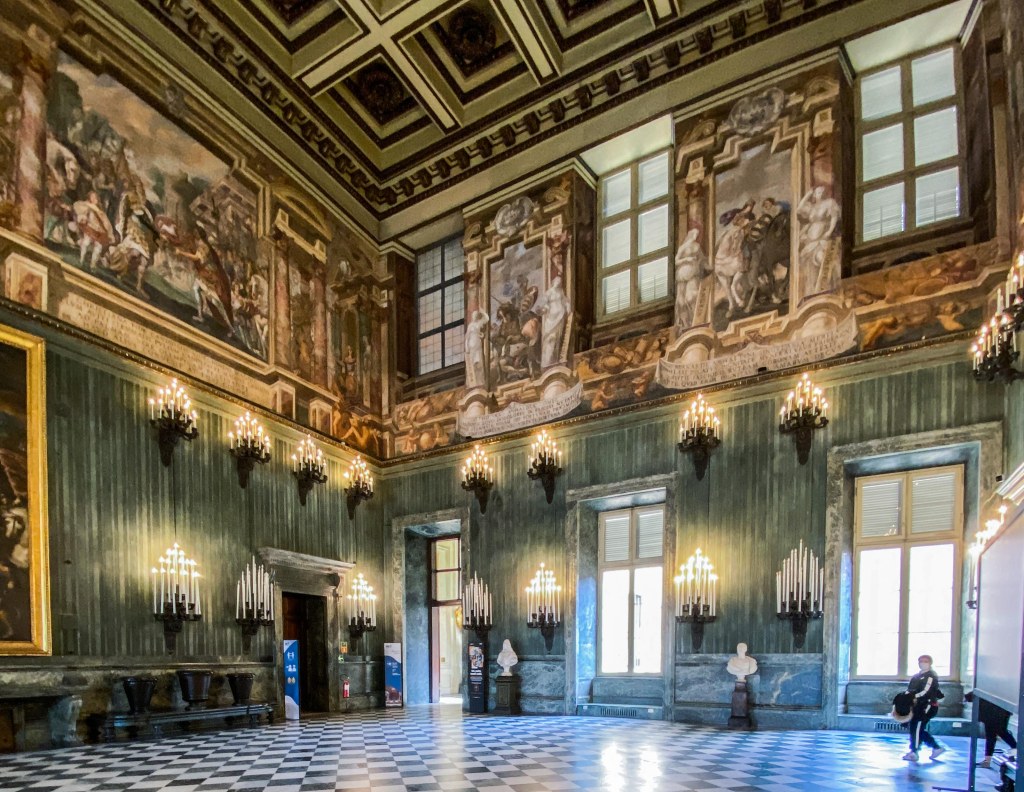
The current decoration of the hall of the Swiss Guards is from the mid-19th century. The hall was named after the military unit that occupied it already in the previous century. It is to be hoped that they appreciated the surroundings.
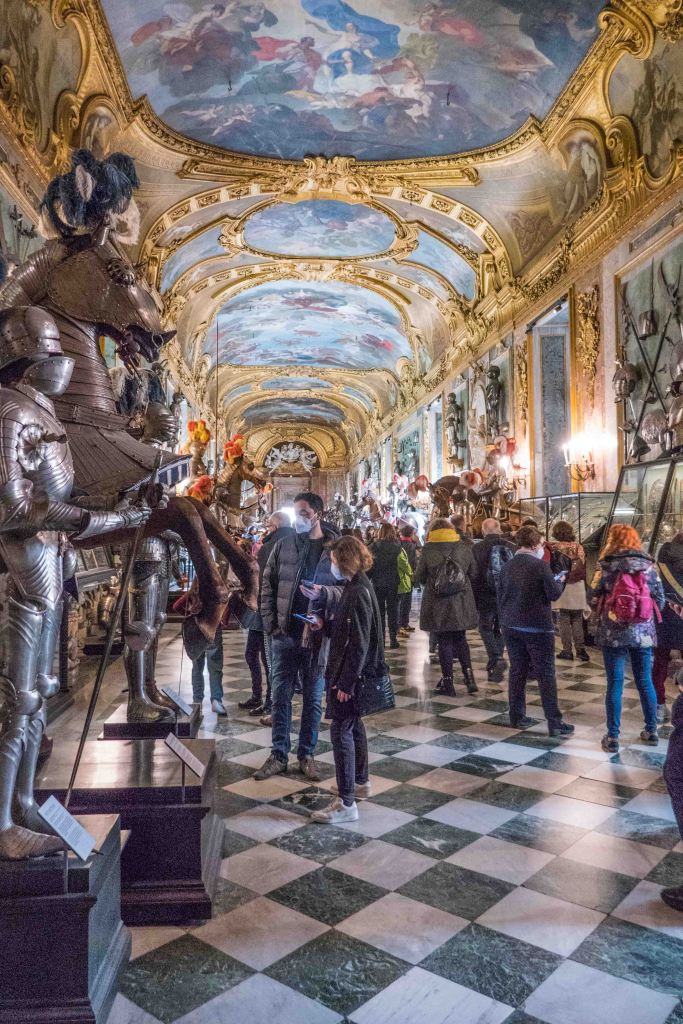
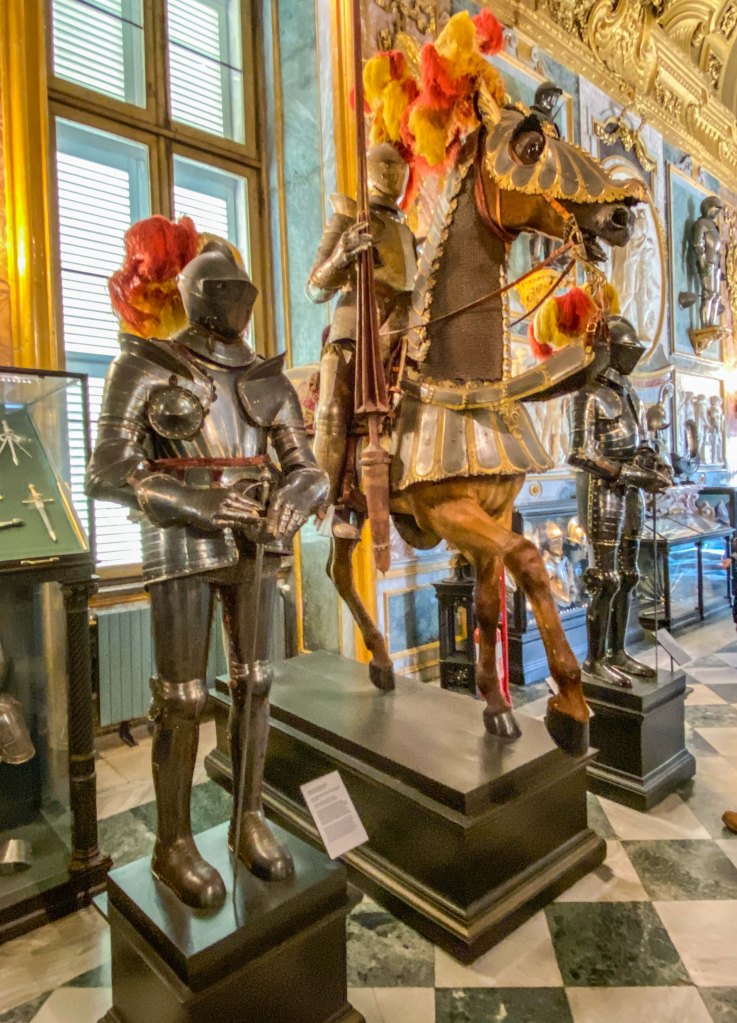
The Beaumont Gallery is one of the showpieces of the palace and stems from the mid-18th century. It has housed the royal collection of weaponry since the mid-19th century. Not all equipment was for actual warfare – showing off was also essential. A bit like with peacocks.
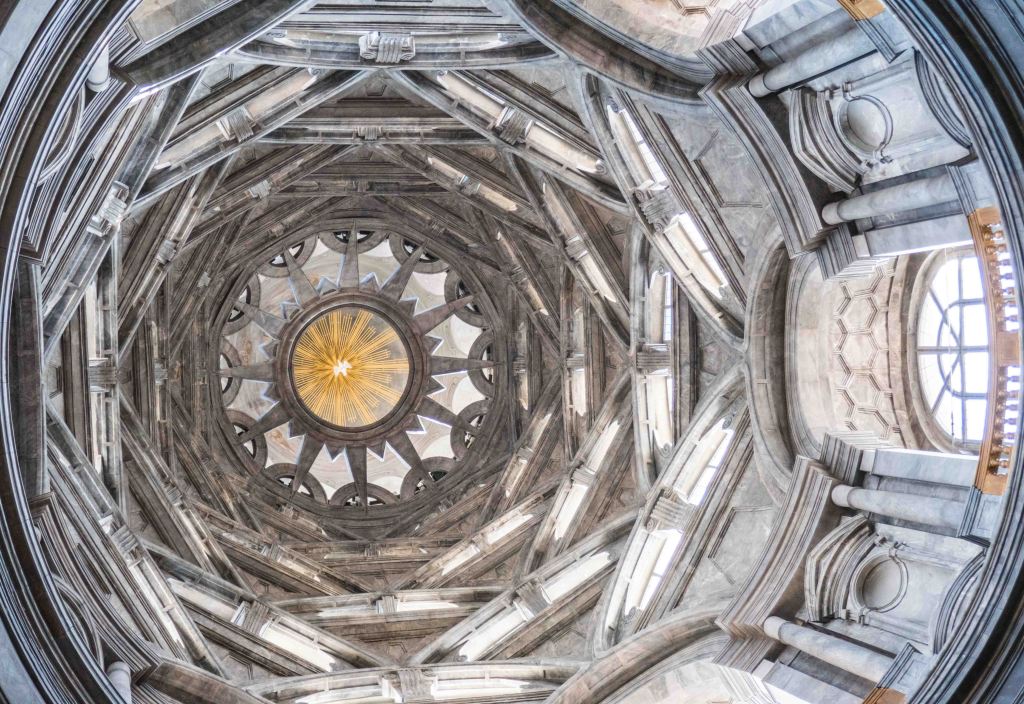
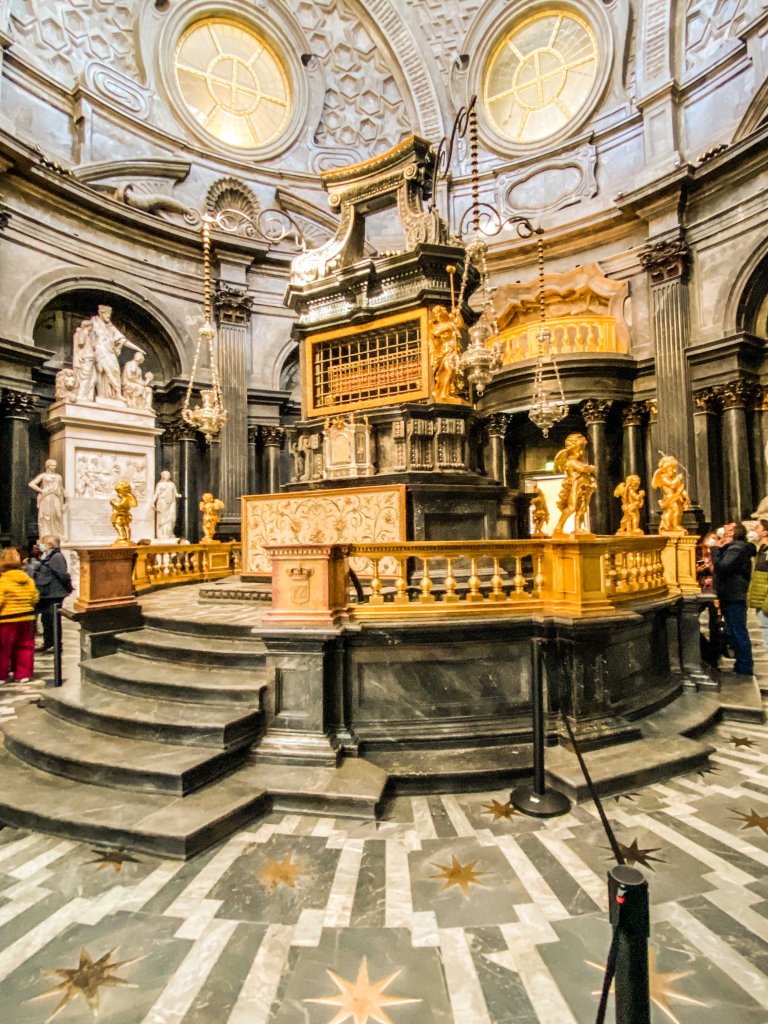
The Savoyards were in possession of the Turin Shroud and this needed a suitable storage facility – naturally in a chapel that is part of the palace. The shroud is still there behind the grille.
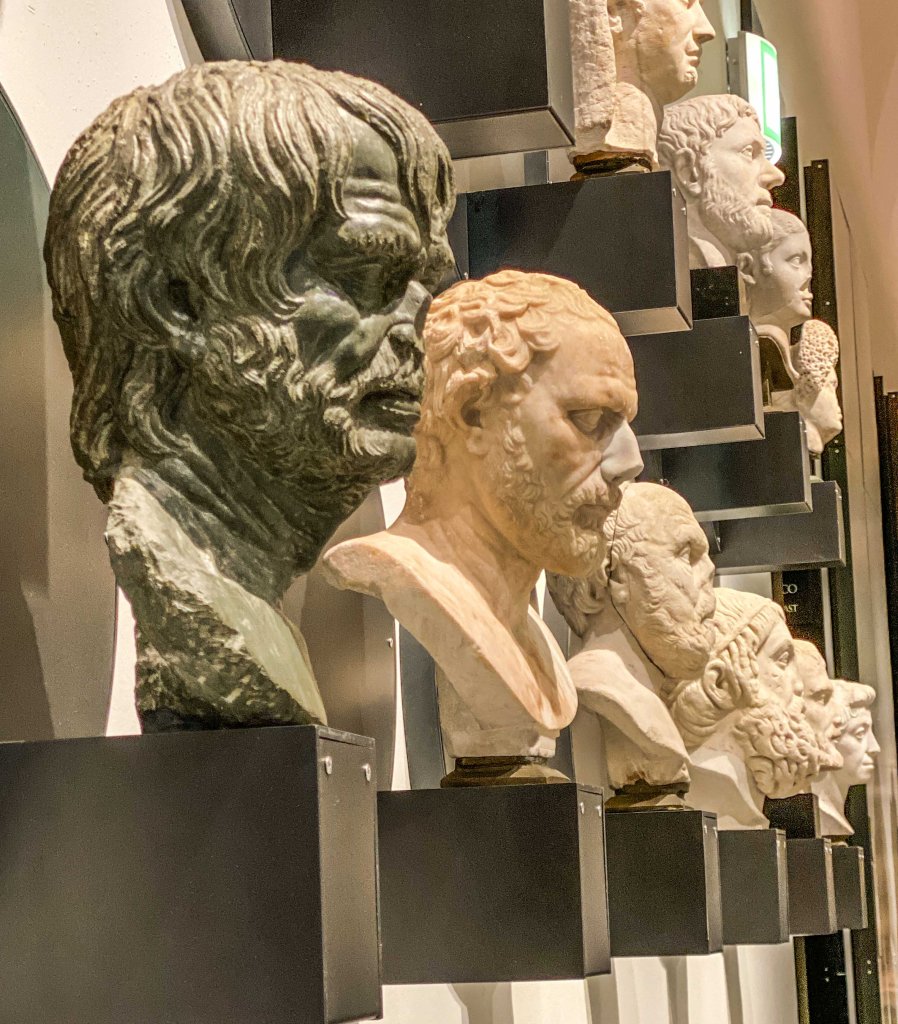
As we are in Italy, an extensive collection of ancient sculptures is required for a fully-equipped palace museum.
Go to Turin to learn about the ancient Egypt – it is closer. And the Egyptian Museum (Museo Egizio) in Turin hass the second most important collection of Egyptian antiquities after the Egyptian Museum of Cairo. The collection grew out of the acquisitions of the Savoyard kings since the 1750s.
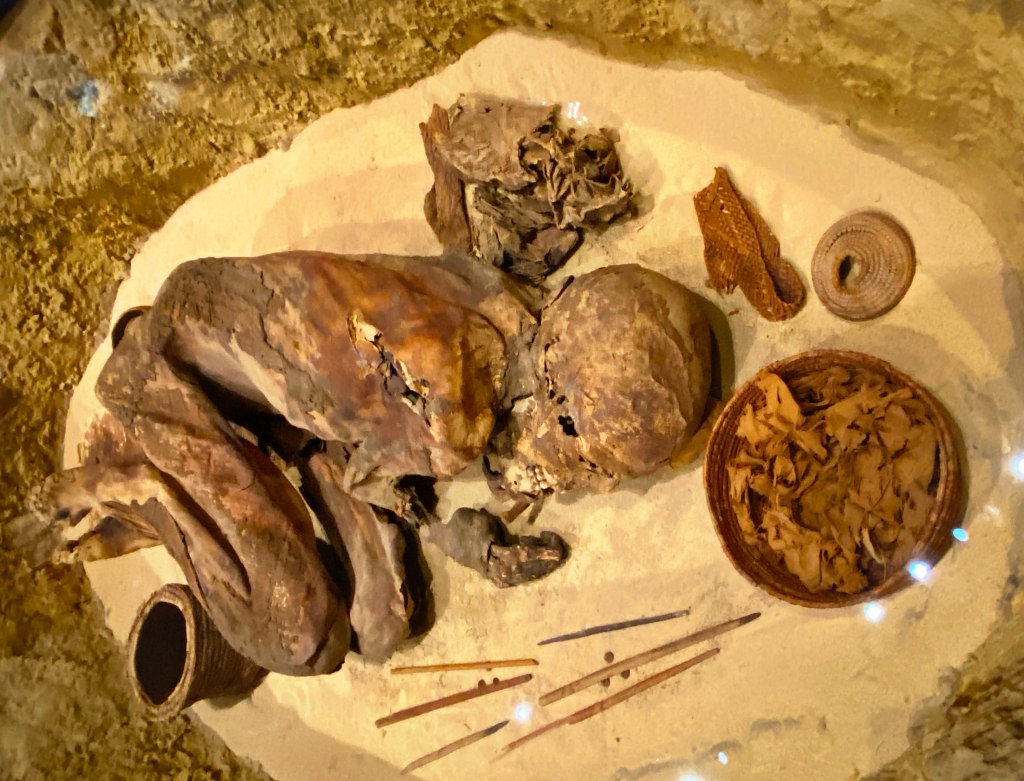
The presentation is approximately chronological, starting from pre-dynastic time. Above is a pre-dynastic naturally evolved mummy from about 5500 years ago. It also bears passing resemblance to me after having visiting the collections.
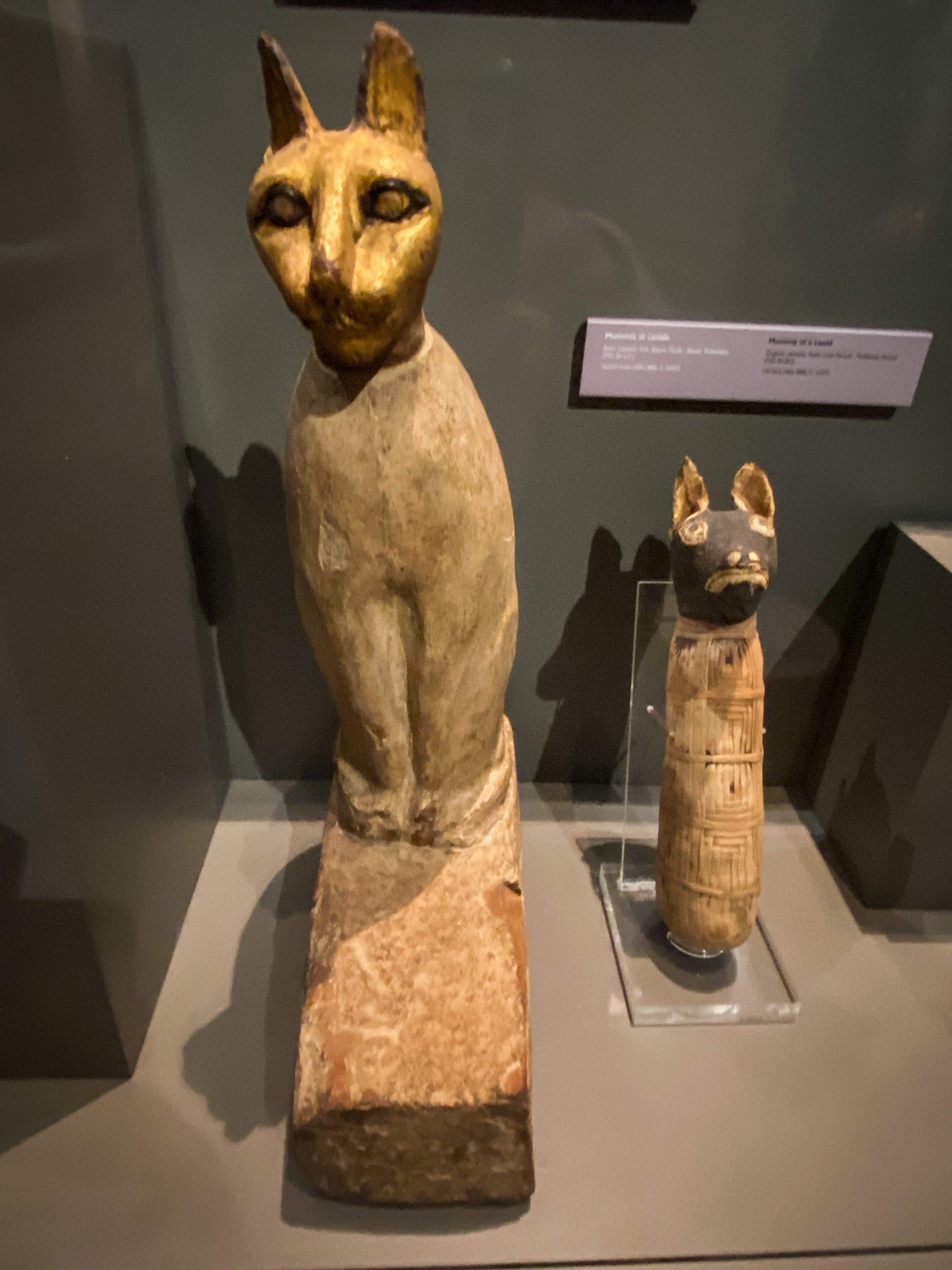
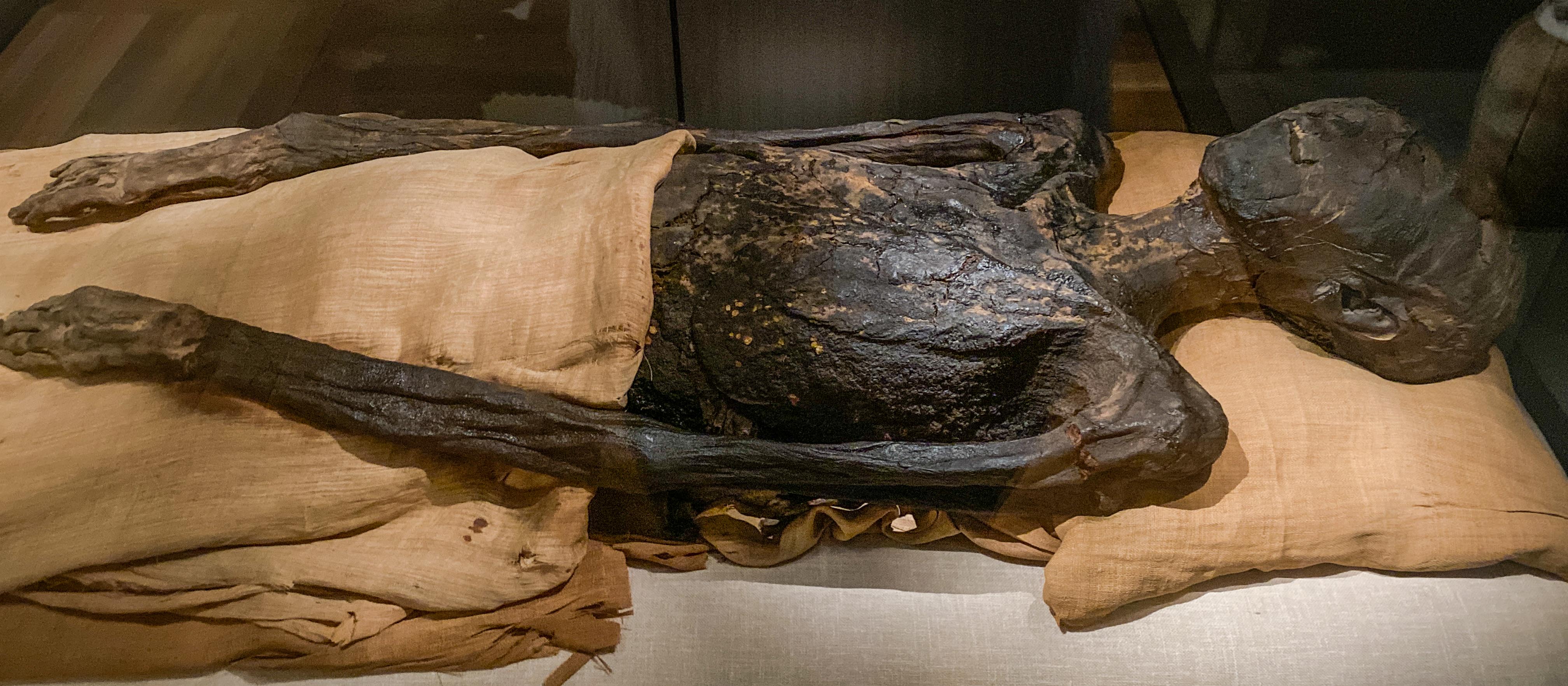
Naturally, mummies abound. Here are one mummified human and two mummified cats – the cats still in the wrappings.
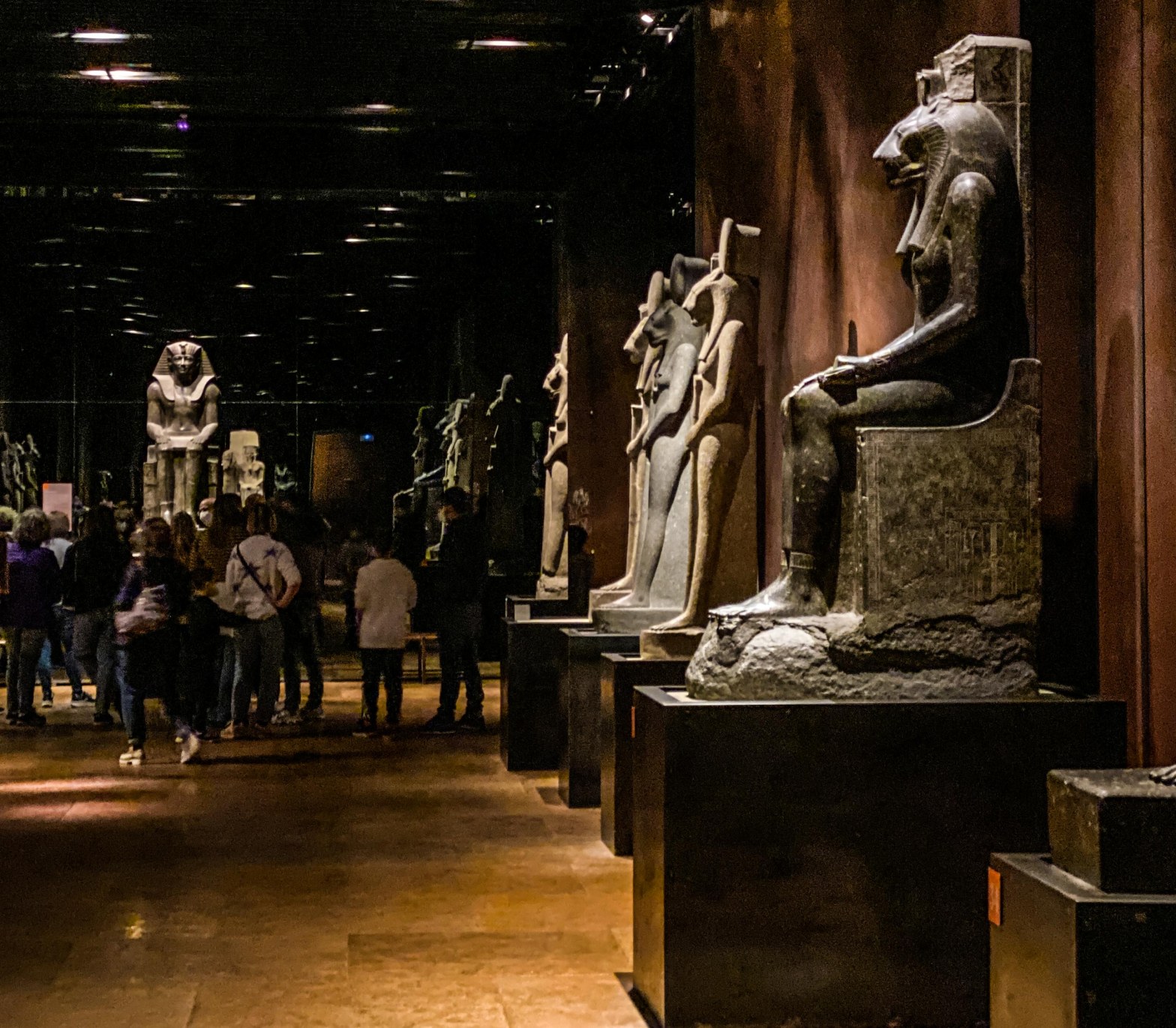
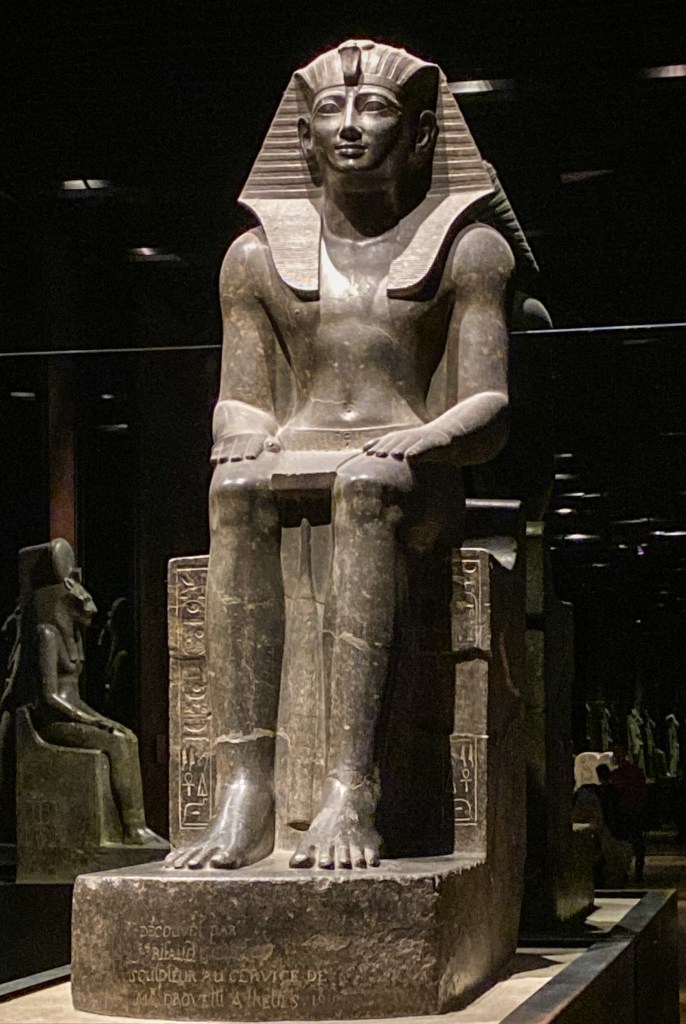
The hall of kings is the showpiece of the museum (see the title picture) where pharaohs and assorted deities live their afterlife. As an example, here is a statue of Tuthmosis III (who reigned in the 15th century BCE), with all the Egyptian royal paraphernalia: a kilt, a headdress, and a cobra in his forehead.
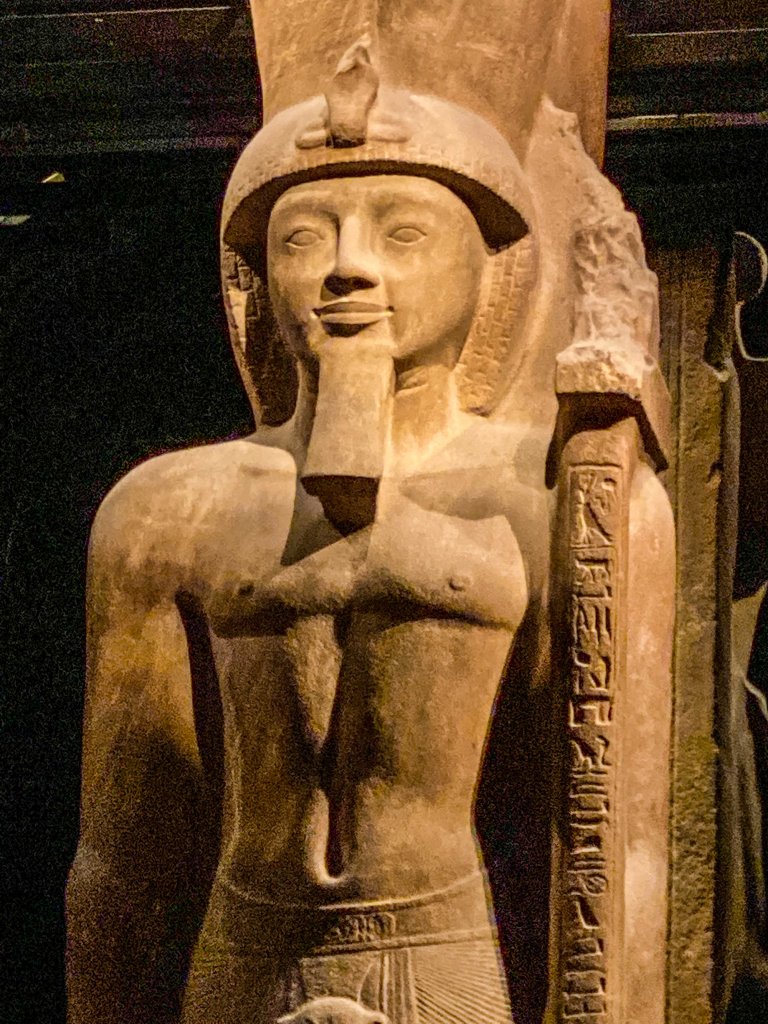
Here is a bodybuilder king, Sethy II – the muscles and the colossal rendering intend to convey his power. This guy reigned for a suitably short time, 1202-1198 BCE.
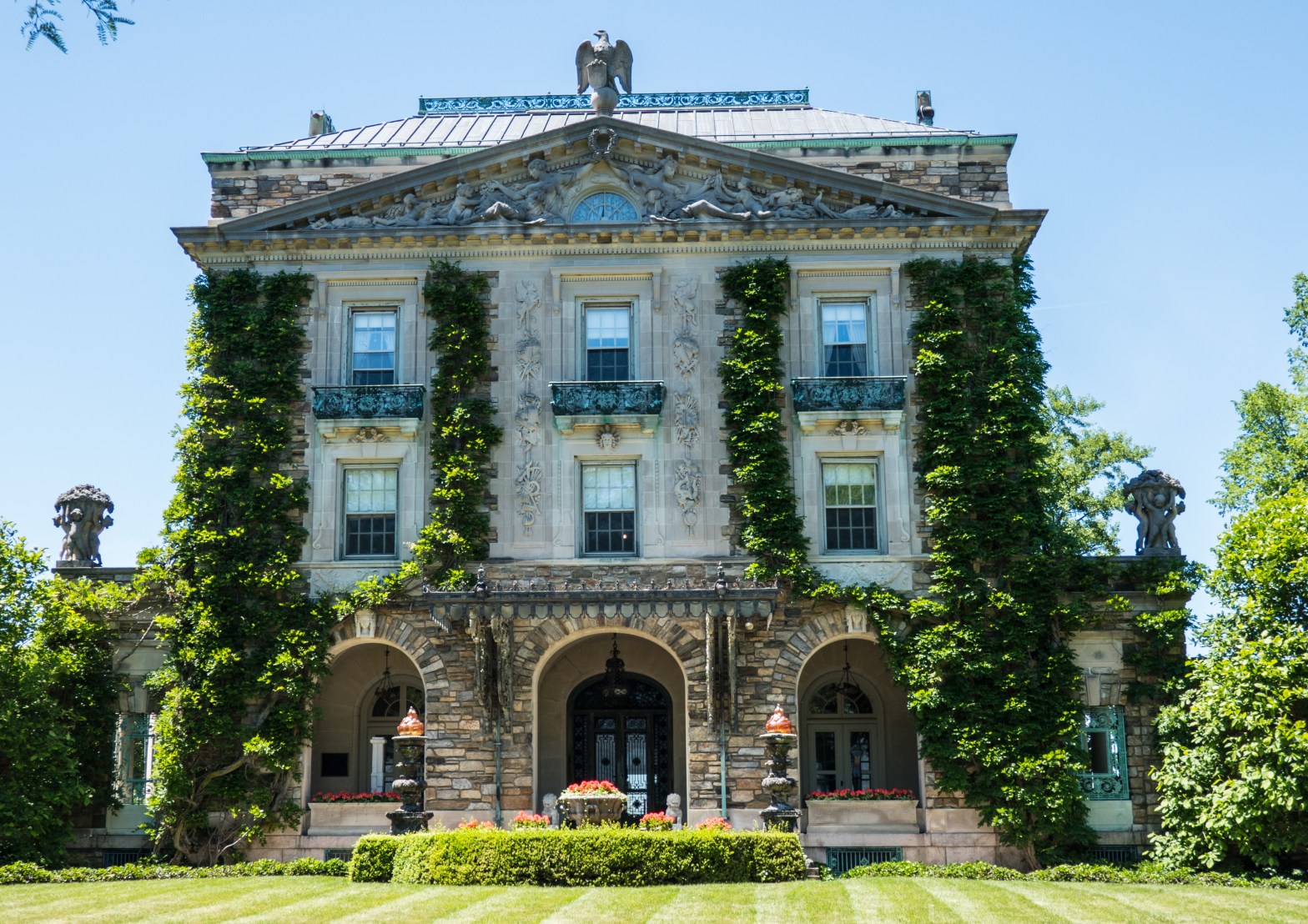
Sometimes even seriously rich people need houses that are more comfortable than showy. The Rockefellers had Kykuit as their modest retreat.
From the patriarch of the family, oil magnate John D. (1839-1937) to Vice-President Nelson (1908-1979) and his sons, generations of Rockefellers lived in Kykuit on the Hudson River. The Dutch colonists had named the hill Kykuit (lookout) for its panoramic views. The house was built between 1906 and 1913 as a family retreat, to be used when an escape from New York was necessary.
John D. Rockefeller was one of the original ‘robber barons’, who, in the 1870s, consolidated the oil industry under Standard Oil and ruthlessly eliminated all competition. He was an all work, no play type whose self-belief, disregard of law, and organisational talent contributed to his riches. When Standard Oil was dismantled by the order of Congress in 1911, Rockefeller became the first billionaire of the US, as he was the largest stakeholder in all of the new, more valuable oil firms.
Money was flowing in with such a speed that there was no point of leaving it all to the family, and thus philantrophy became essential. Despite funding a couple of universities (Chicago and Rockefeller), and a myriad of other causes, Rockefeller only managed to give away half of his riches. The subsequent generations continued the philantrophy, and dabbled in art collecting and politics. The Rockefeller Foundation still has an endowment of over 4 billion dollars.
Kykuit was not the only or even biggest of the Rockefeller homes. John D. Rockefeller wanted this building for comfort and not for show. Thus the scale of the building, and its rooms, are relatively modest compared to many palaces of contemporary millionaires. The interior is in restrained classical revival style, with furnishings specially bought in London and Paris. However, the first version of the house did not please John D. Rockefeller himself (the building work had been supervised by his son), and extensive alterations were made. In particular, as noise from the kitchen and deliveries had bothered the patriarch, these were moved further away.
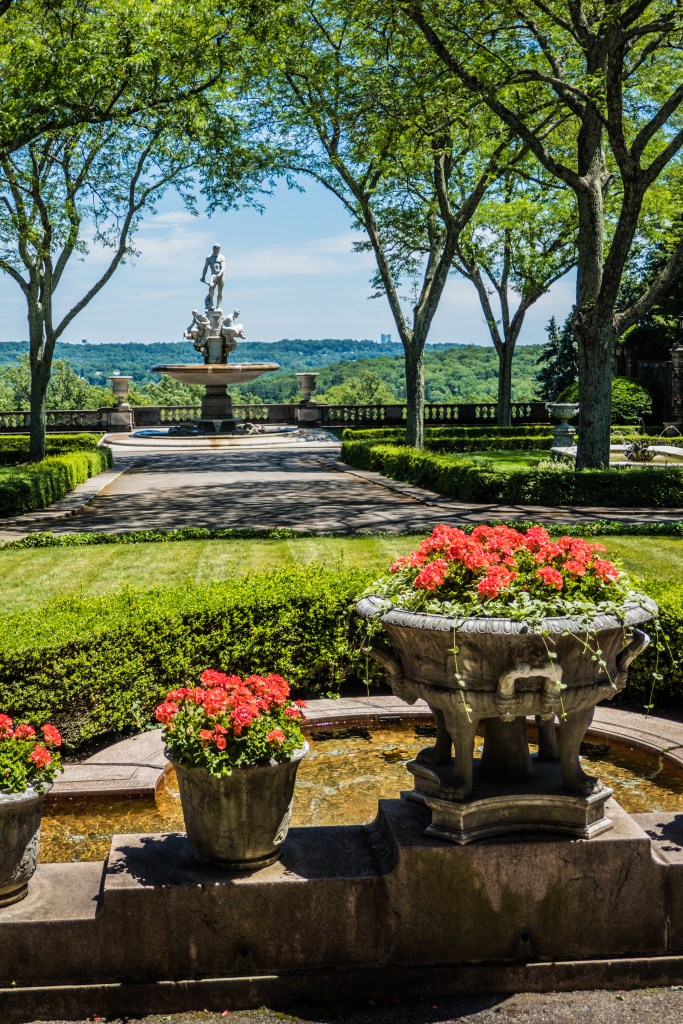
The garden provides fine views over the Hudson Valley, with a copy of Giambologna’s Oceanus fountain as a focus point, and a swimming pool that was used by the younger generations of the family. These days the house belongs to the National Trust for Historic Preservation, which also preserves the links to the current generation of the Rockefellers.
Sources – Henry Joyce: Kykuit – The House and Gardens of the Rockefeller Family; Matthew Robertson: The Robber Barons
Good buildings can have many lives over the centuries – they can store grain, merchants or art, depending on the needs of the population.
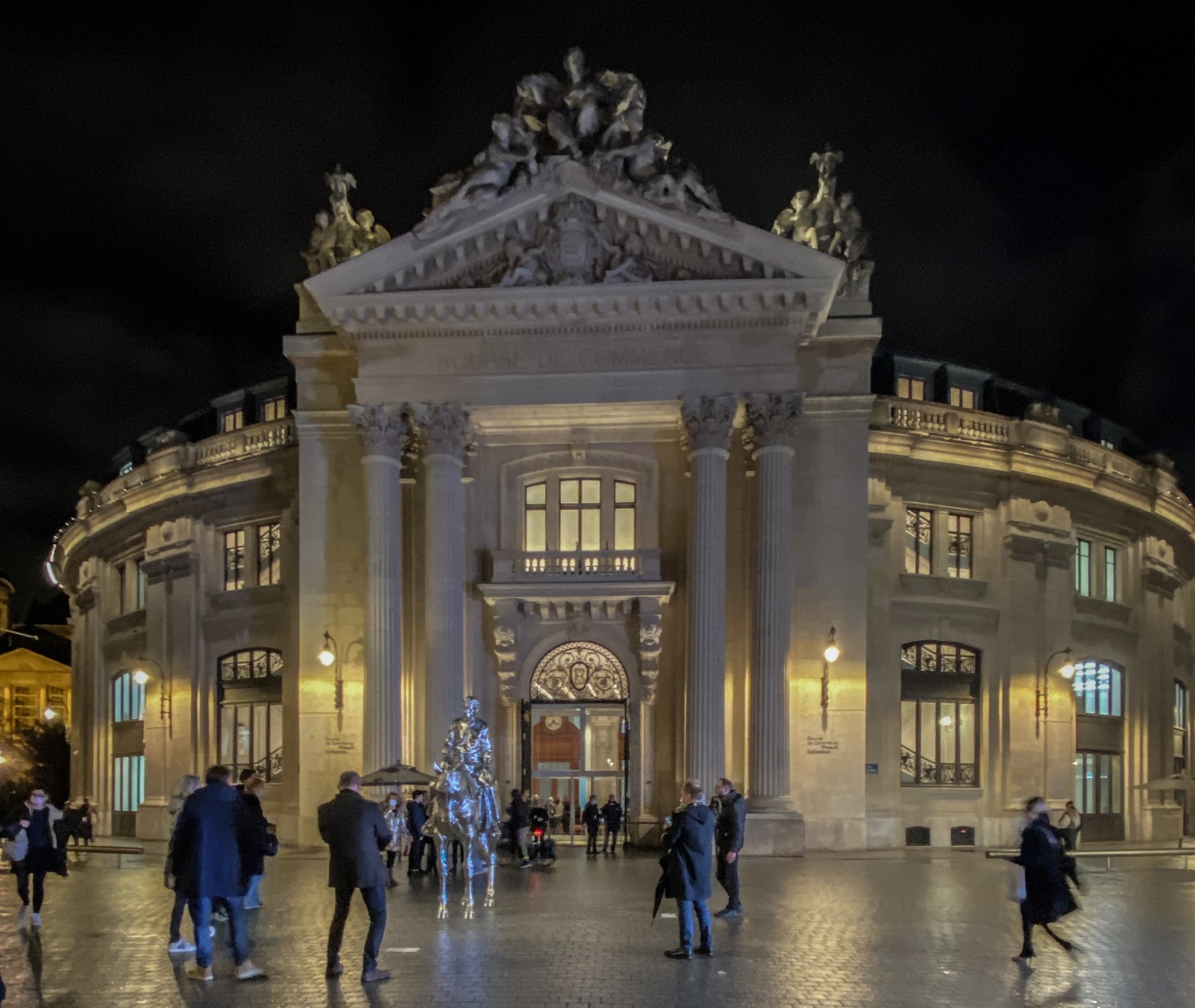
The Bourse de Commerce in central Paris started its life as a grain storage facility. The growth of Paris made the previous facilities too small, but upholding public order required having this staple food available relatively close to the citizens. Thus in 1765 a round building with an open courtyard was created for this purpose.
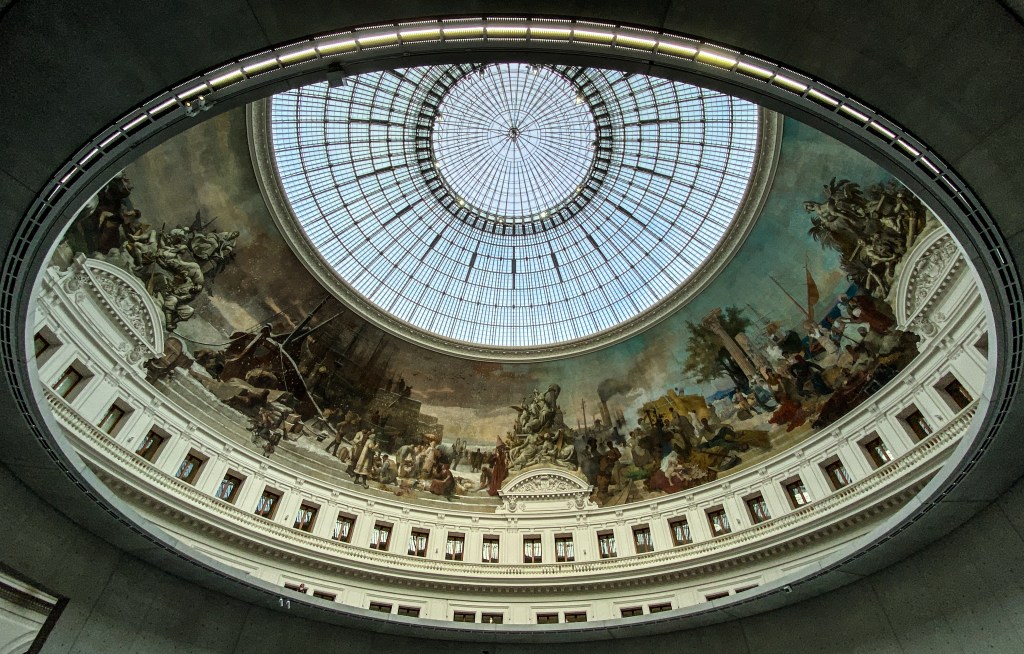
The open courtyard was soon covered temporarily with a wooden roof, but in 1783 a cupola – also in wood – replaced this until it burned down in 1802. A new cupola was then constructed between 1811 and 1813 in cast iron, covered with glass. This cupola still stands above the building.
The advances in transport in the 19th century made grain storage in city centres unnecessary, but the building was used as an intermediate storage facility for wholesale grain merchants until 1873. However, Paris needed a commodities exchange and so, in 1886-89, the building was converted to a ‘Bourse de Commerce’ by keeping the cupola and the internal walls, and expanding the external walls to gain more space. The lower part of the cupola was at this time covered to provide space for internal decorative paintings.
The Bourse de Commerce served as a trading facility for mostly agricultural commodities, both for spot and future trades until 2016 – although again, technological development since the 1970s had made the transactions electronic and thus there was little need for a grandiose and expensive buiding.
The City of Paris bought the building and rented it for 50 years to billionaire François Pinault (of luxury goods fame, including YSL and Gucci) for his collection of contemporary art. He then carried out a thorough renovation ad restauration that preserved all the layers of the building, including the cupola, inner walls and a double-helix staircase from the period between 1765 and 1813. Japanese architect Tadao Ando added an internal concrete structure to facilitate the movement of crowds inside the building.
The building also has a secret – a very visible one but often overlooked. On the right hand side is a 31m tall column. This is in fact a leftover from an earlier building at the site, Hôtel de la Reine (later Hôtel de Soissons), built on the order of Catherine de Médicis in 1572. The Medici column was originally decorated with the initials of C and H, referring to Catharine and Henri II. During the restoration, plenty of graffitis were found in the staircase inside the column, the earliest dating from 1766, and others from 1889 and the Second World War.
Source: La Bourse de Commerce – Collection Pinault. L’objet d’art hors-serie.
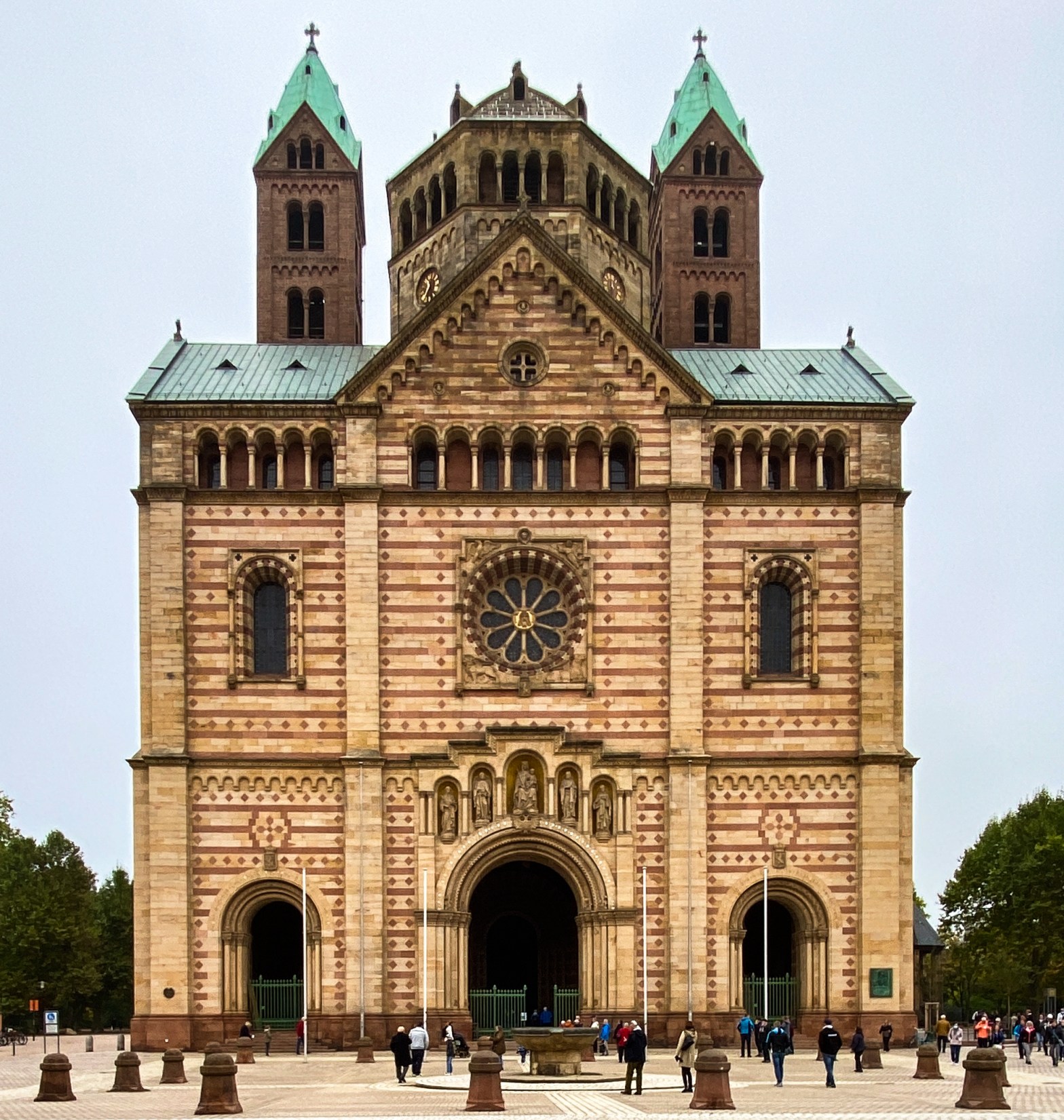
The Cathedral in Speyer (or Domus sanctae Mariae Spirae) was built at the initiative of Conrad II, first emperor of the Salian dynasty. The minor detail of actually getting anywhere took a couple of decades (and emperors), but the cathedral was consecrated in 1061, although further construction and expansion continued until 1106. The cathedral was heavily damaged by the retreating troops of Louis XIV in 1689 and rebuilt only in the second half of the 18th century. The facade was renewed in the mid-19th century in neo-romanesque style. Despite its turbulent history, the cathedral looks today much as it did in 1106.
When finished, the cathedral was the longest church in the Occident at 134 metres – longer than the original old St. Peter in Rome. And after the destruction of Cluny Abbey during the French Revolution, it is the largest romanesque church. For a town of about 500 inhabitants at the time, this would seem to be slightly excessive. However, as often is the case, we are not talking about practicalities, but about a statement, a claim of ecclesiastical power for the emperor against the pope.
But the strife between the Holy Roman Empire and the pope had a long pedigree, and at this point the pope was still in a position to keep the emperor in check. Thus the power grab of the Salians did not end so well, as emperor Henry IV had to make his famous humiliation trip to Canossa to petition the pope to lift his excommunication. He started the trip from Speyer, his favourite town.
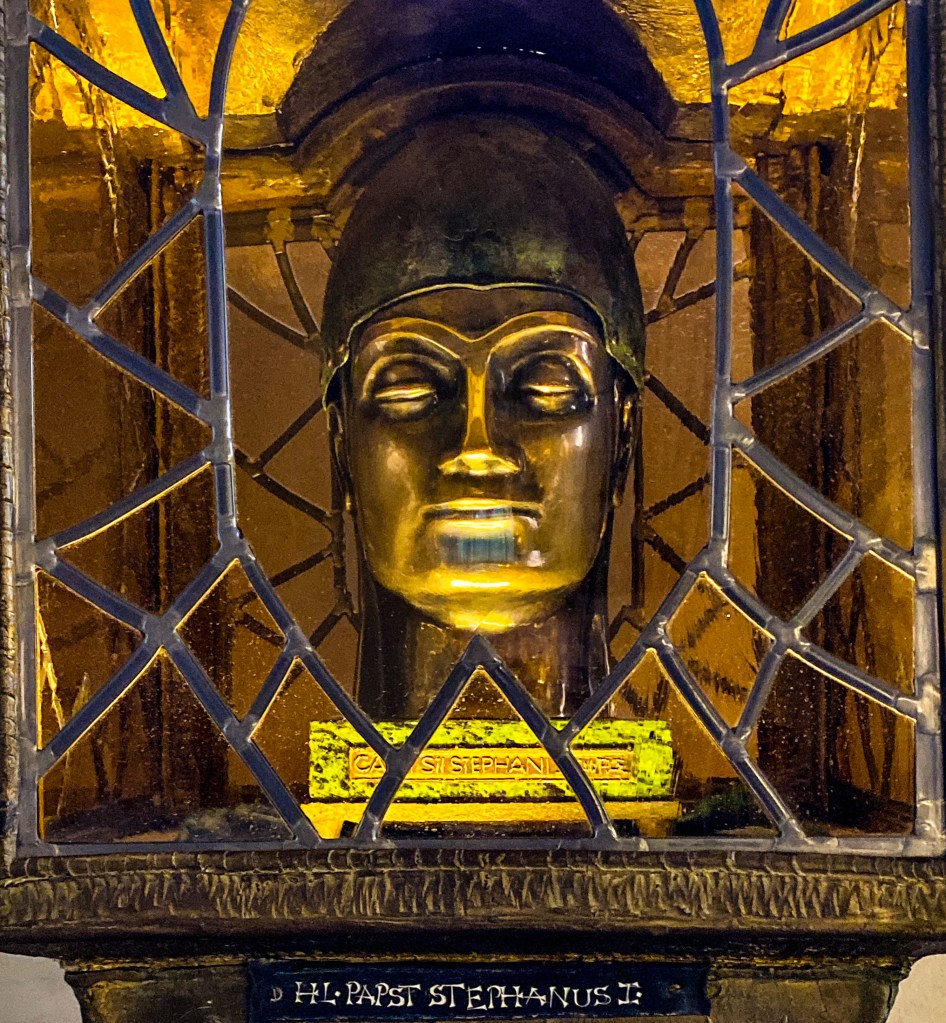
The cathedral became the favourite resting place of all the Salian emperors, from Conrad himself to Henry V, who died in 1125. Assorted later medieval German kings (who were not crowned emperors) have also been buried there, including Rudolf I von Habsburg, who established the eponymous royal and imperial house. The location of the graves was lost over the centuries, and all were excavated and relocated in the crypt in 1900-1906. Besides graves, the cathedral has – as usual – a reliquary with assorted body parts of various saints, including the partial head of pope Stephan I in a fetching bronze vessel (see below).
The cathedral was also a reason for Speyer to become a large Jewish town. With the approval of Henry IV, the Bishop of Speyer issued a privilege that allowed the jews to carry out all trades, of which finance was particularly important for the construction of the cathedral.
But we should not forget the lowly bureaucrats. The itinerant emperors of the Middle Ages needed a place for their archives, and the Salians and many of their successors entrusted the Bishop of Speyer to supervise the imperial chancellery that was located in Speyer until the late fifteenth century.
Sources: Wilson: The Holy Roman Empire; Schappert – Colletto: Der Dom zu Speyer.


 Rails, wines, worlds