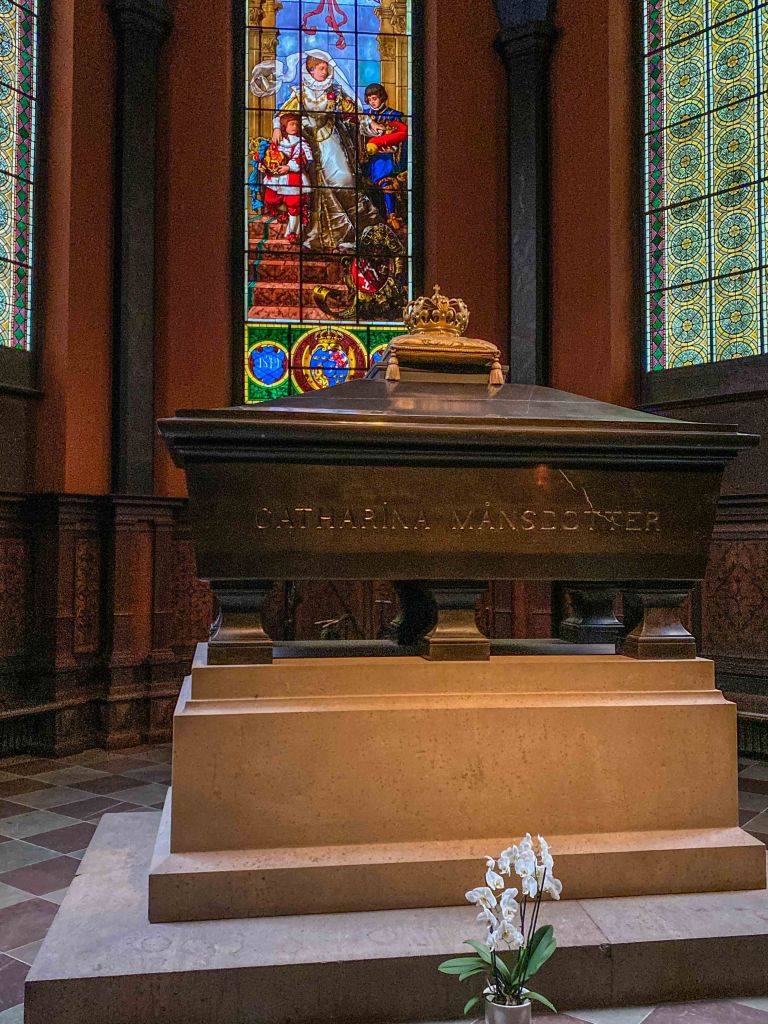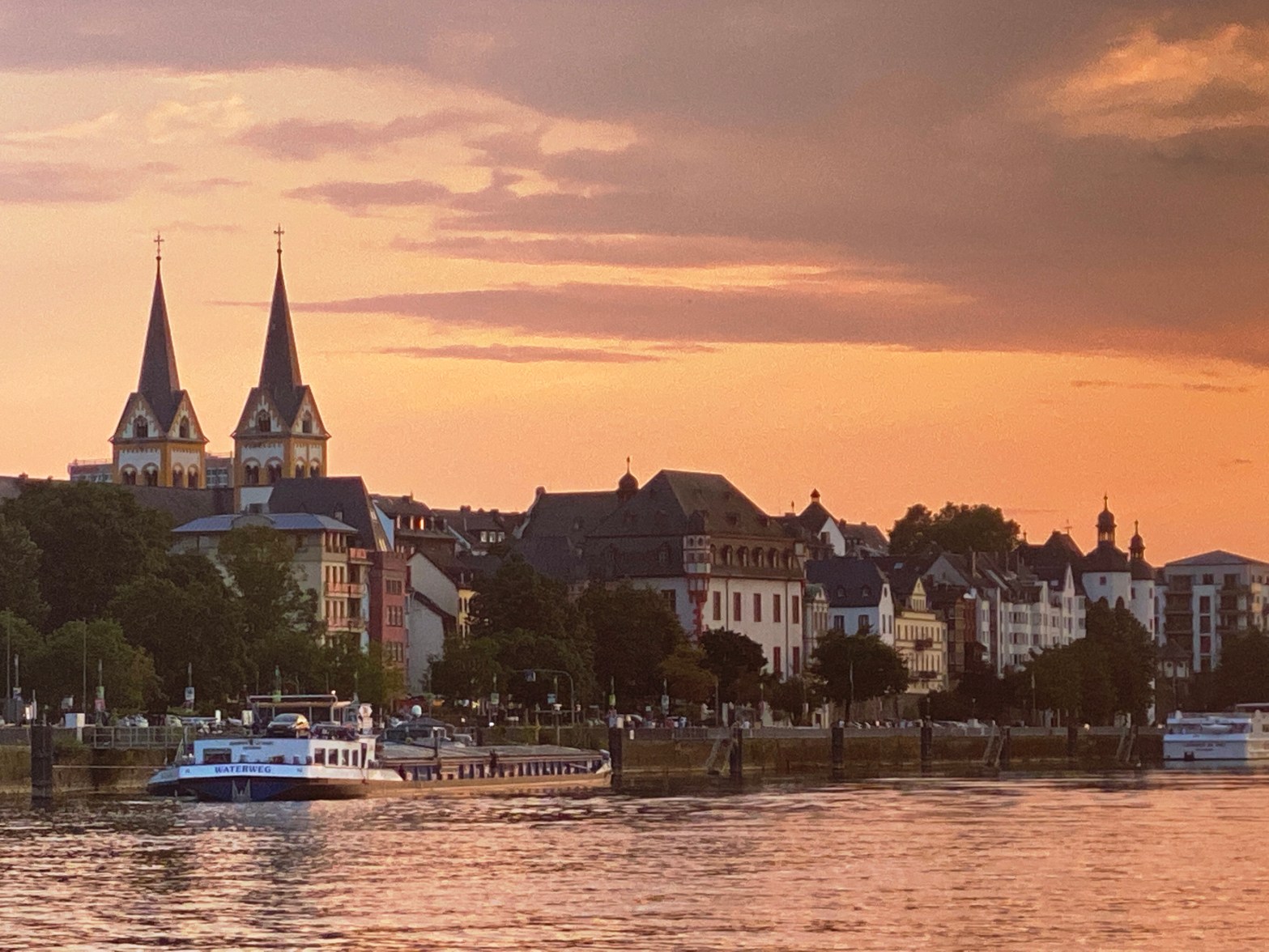
Worlds: War and peace in the shadow of Russia

Built for war, famous for a peace treaty – that has been the fate of the sleepy garrison town of Hamina in South-Eastern Finland.

In the 18th century, the conquests of the previous century that made Sweden a dominant power in Northern Europe, were gradually lost. In 1721 after the Great Northern War, the border with Russia was moved to approximately where the border between Finland and Russia is now. This led to Sweden losing its historical fortress in Viipuri (Vyborg), and a replacement border fortification was needed to guard against any new threats from Russia. Thus in 1723 a new fortified city called Fredrikshamn (shortened to Hamina in Finnish) was established, bearing the name of the king of Sweden, Fredrik I. It replaced an earlier town located in the same place that was destroyed in the war.

The town was built symmetrically to form an octogon, with six defensive bastions surrounding it. However, its time as a Swedish fortress was short, as already in 1743, after the Russo-Swedish war, the border moved again and Hamina became a fortified Russian garrison town.

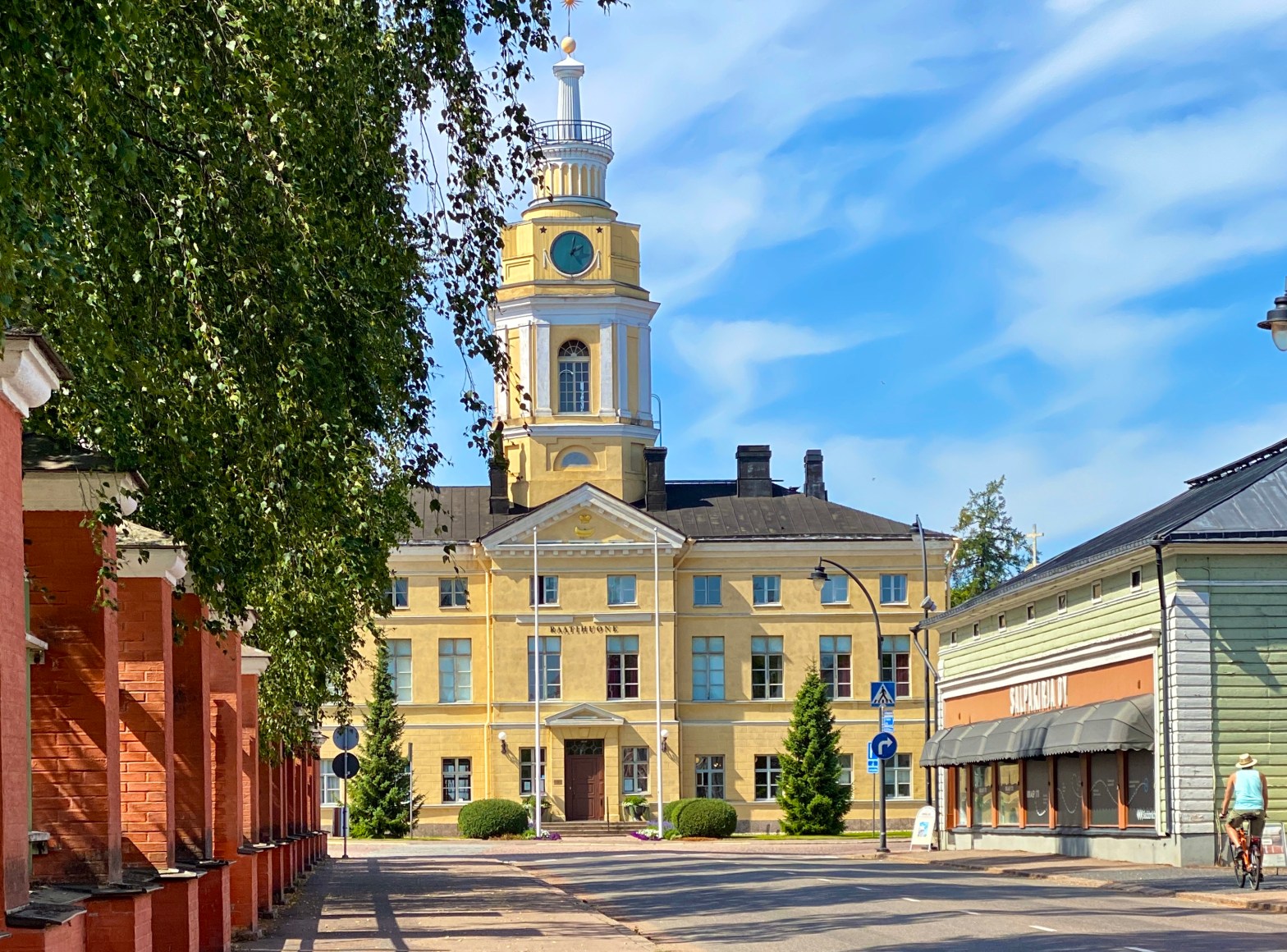
A bit later, the war of 1808-1809 meant that Sweden lost the whole of Finland, and the border moved to where it is now between Finland and Sweden. This was no foregone conclusion, though, as Russian troops had in fact occupied Umeå in the Western part of the realm (current Sweden), almost 400 km further south. Thus the peace negotiations were difficult for the Swedes – the Russians had invited them to Hamina for this purpose. The resulting Treaty of Hamina that was signed in the town hall (pictured) was in fact the last peace treaty between Sweden and Russia, as the Swedes had by this time had enough of military adventures.

In fact, the military fame of the town continued even after the peace of 1809. Under the new autonomous Grand Duchy of Finland, the town got to host an officer training school for the Russian army. Many of the students who initially served in the imperial Russian army, became important figures in the Finnish army after the Russian revolution, including Field Marshal Mannerheim who commanded the Finnish troops against the Russians in 1939-1944. This military connection of Hamina has in no way ended, as after Finnish independence, the same facilities have been used by the reserve officer training school. 

By the way, the fact that the border between Finland and Russia is now again in the same place as in 1721 is no coincidence – Stalin specifically demanded the border of Peter the Great after the wars with Finland, both in 1940 and 1944.

Sources: ‘The Treaty of Hamina 1809’, Wikipedia

Rails: Building the Peking–Hankow railway

When imperial China wanted to construct the first major domestically-oriented railway line from Peking to Hankow (a city that in 1927 merged with Wuhan on the other side of the Yangtze river), they turned to a Belgian company. Why?

In the turn of the 20th century, as part of its modernisation efforts, China wanted to connect the north and south of the country, Peking (Beijing) and Canton (Guangzhou) via Hankow by rail. Railway construction in China had so far been mostly linked to concessions to the great powers. For example, Russia built lines from Vladivostok to Harbin and Port Arthur (Lushunkou). However, China sought managers for the new project that were not directly linked to the interests of the great powers. For its part, at this time Belgium was one of the leading manufacturers of railway equipment and had the densest railway network in Europe, but had fewer colonial ambitions in China than the great powers. 

Combining Belgian and French financial and railway industries would provide enough resources for the project without too colonial overtones. Thus, the contract to build the railway was signed between China (the Imperial Chinese Railways) and a Belgo-French firm formed for this purpose, Societé d’Etude de chemins de fer en Chine, in 1898. The agreed first phase covered the track from Peking to Hankow, 1214 kilometres. The works started in 1899 and the line was completed in 1905. The building works were supervised by a Belgian engineer, Jean Jadot, who later became director and governor of the Société générale in Belgium. It should be noted that the extension of the line from Hankow to Canton was only built between the two wold wars. 

The railway was put to good use already before its completion, as in 1902 the dowager empress Cixi returned to Peking after the Boxer revolt by train. She did not travel alone, however, as her ministers, cooks, eunuchs and other servants made an entourage of 1500 people. 

The Peking-Hankow line proved to be so profitable that the Chinese imperial railways bought it in 1908. Although a recent high-speed line now connects the cities, the upgraded and slightly straightened original line still serves slower trains.

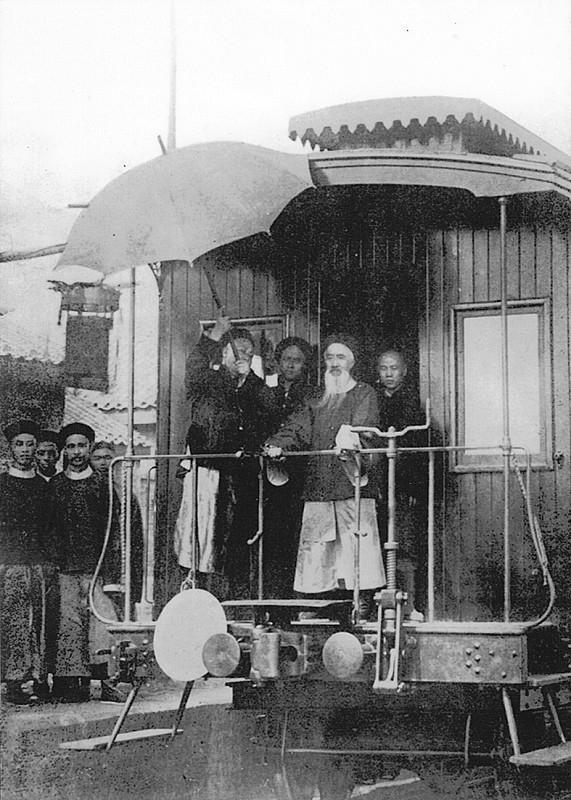
Source: The exhibition ‘From Peking to Hankow – A Belgian adventure in China’ is in the Train World, Brussels, until 10 October 2021. In the picture viceroy Zhang Zhidong, who negotiated the financing for the railway, inaugurates a section of the line. 

Worlds: How do buildings get their names?

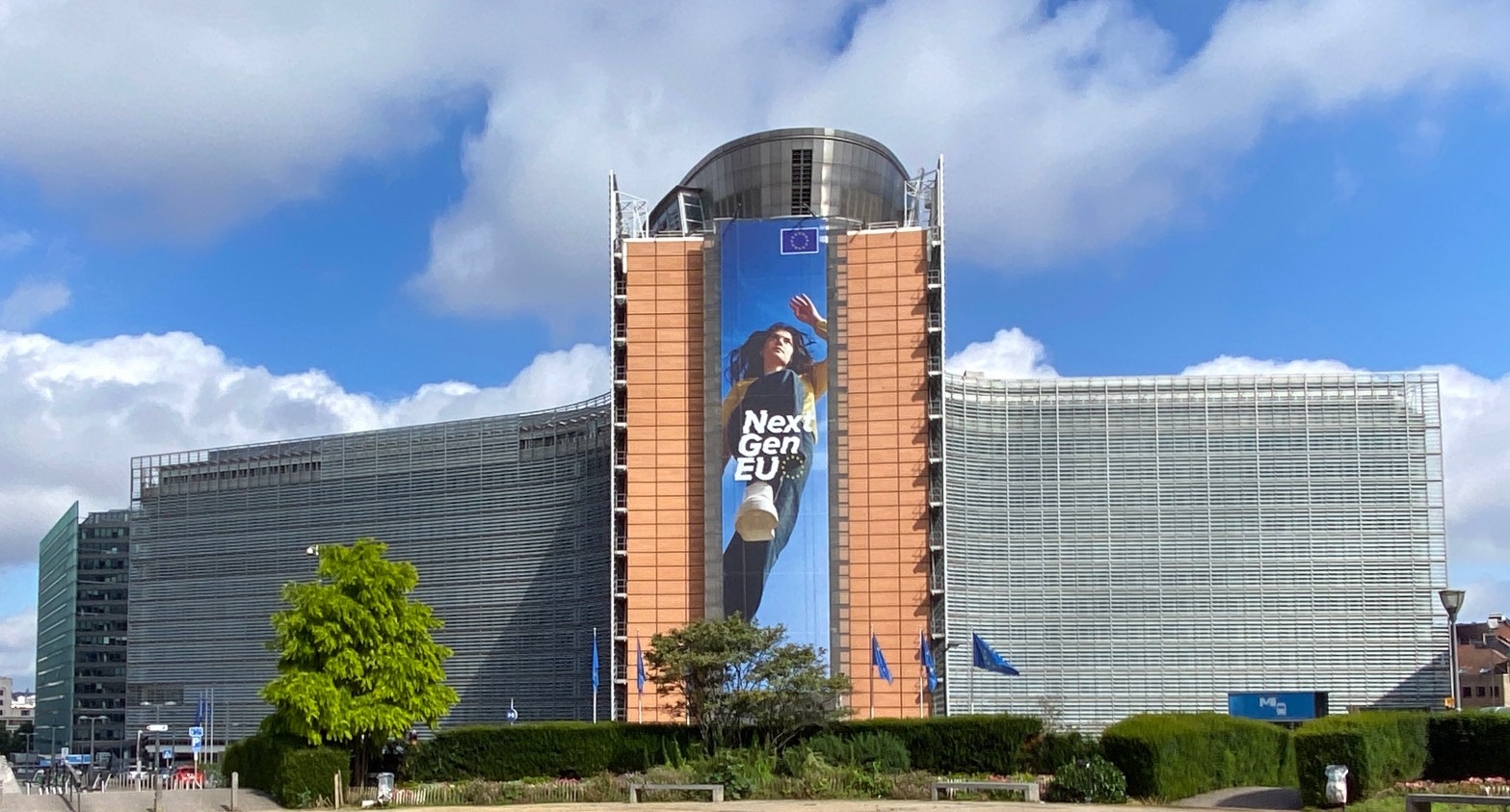
Major buildings in capitals are often named after prominent politicians of yesteryear, or worthy historical figures – there are plenty of those in Brussels. Then there are those buildings that seem to get their names by chance.

The headquarters of the European Commission in Brussels is called the Berlaymont. Many people know that there was some religious institution at the spot where the building now stands, but few know the background of the sisters of Berlaymont.

The original Berlaymont is a small village on the river Sambre in Belgium. Florent de Berlaymont was a political ally of Philip II of Spain in the Spanish Netherlands and a prominent figure in the local political strife. His wife Marguerite de Lalaing (1574-1650) experienced a religious awakening and founded the ‘Dames de Berlaymont’ as an Augustinian order of nuns in 1624. The first location of the convent was close to the cathedral of Sainte-Gudule in the centre of Brussels. It even gave name to a street, which, however, disappeared during the construction of the railway tunnel underneath the city.

The French revolutionary administration closed the convent in 1798, although by this time it was primarily a boarding school. The former nuns and lay teachers were forced to move around in various locations in Brussels, and not even the new Dutch administration after 1815 helped much, as the protestant Dutch were not keen on catholic schools. The Belgian independence in 1830 led to the re-establishment of the convent and boardng school.

After a series of moves necessitated by the growth of Brussels and its new public buildings, in 1864 the convent was given a plot far in the outskirts of the city along the new Rue de la Loi, where they had a set of buildings surrounding a park. This arrangement turned out to be longer-lasting, but a hundred years later property speculators keen on new office space around laid their eyes on this plot and started bidding. However, the Belgian State was also interested and managed to buy the convent lands for the specific purpose of constructing the headquarters of the European Commission on it. Then with the inevitable bureaucratic and construction delays, the new Commission headquarters was built there between 1961 and 1970.

As a side note, barely 20 years later the building had to go through a fundamental renovation to remove the asbestos used in the 1960s. With similar inevitable delays this took almost 15 years, to 2004.

And the convent? The convent and its boarding school moved to Waterloo, just south of Brussels, in 1963, and are still there. 

Source: Thierry Demey: Brussels, capital of Europe.

Worlds: Teutonic Knights in the Belgian countryside

The Teutonic Order (aka Deutschorden, or officially Order of Brothers of the German House of Saint Mary in Jerusalem) was founded in 1190 to help pilgrims to the Holy Land and to establish hospitals. From 1220 onwards it set to conquer and convert the southern coast of the Baltic. So, what was it doing in present day Belgium?

By the 16th century, the Teutonic Knights had lost their lands in Prussia and the Baltic, but had possessions in the Holy Roman Empire. Their land holdings were combined into commanderies, and several of these were administered as a bailiwick that then reported to the Grand Master of the Order in Bad Mergentheim in present-day Baden-Württemberg.

There were up to 19 Teutonic bailiwicks, most in the Holy Roman Empire, but at different times extending from Sicily to Utrecht and Greece. Gradually, most of these were also lost, so that when Napoleon put an end (at least temporarily) to the Order in 1809, essentially only the seat of the Grand Master remained. 

The Landcommanderij Alden Biesen was the largest Teutonic commanderie in northern Europe and administrative centre of the bailiwick Biesen administering the land holdings in the Maas and Rhine region. The castle itself is one of the largest between Loire and the Rhine, and was first established in the 11th century. The current buildings date from mid-16th to 18th century – although a fire gutted the interiors in 1970. The castle is now a conference centre of the Flemish Government.

It might be interesting to note that the Teutonic Order was re-established after Napoleon as a purely Catholic religious organisation. It has bestowed honorary knighthoods, among others, to Konrad Adenauer and Otto von Habsburg.

Worlds: No fancy capes this year

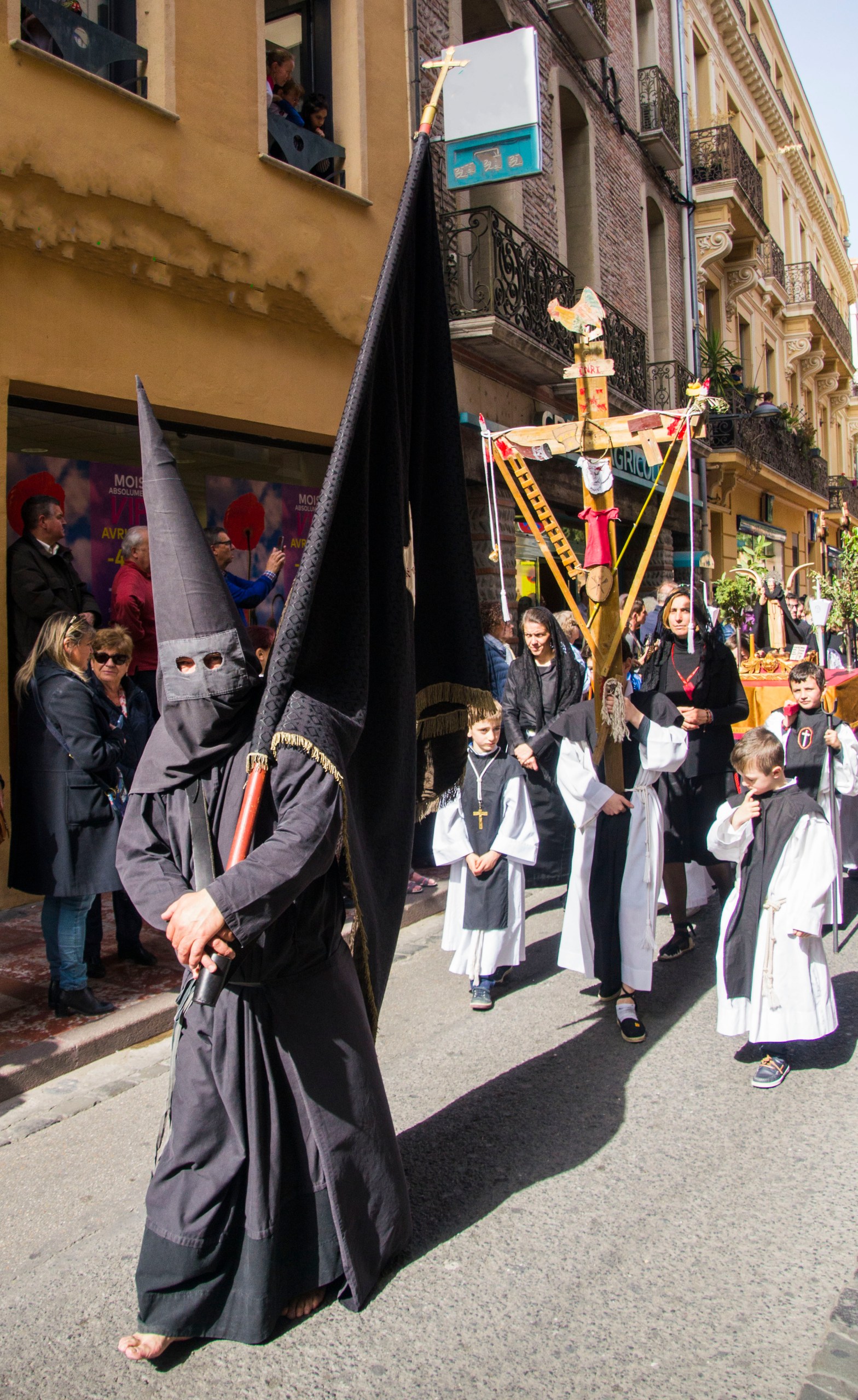
Usually on Good Friday, Perpignan and other towns in the French Catalonia celebrate with the procession of La Sanch, full of people in peaked, masked robes. These are not the world’s most fashionable garments, so perhaps an explanation is required.

Originally, the brotherhood of La Sanch (the blood) was founded in 1416 at the church of St Jacques in Perpignan to accompany condemned prisoners to their execution. The capes were intended to protect them from being lynched by the crowd and to ensure they received a religious burial. Over the centuries, other elements have been added to the procession, like symbols for the stations of the cross that penitents in carry on their shoulders. This makes for a colourful spectacle.

Evidently the Catholic church has not always been comfortable with the procession, as it has been forbidden several times over the centuries but it has always been resurrected. Except, of course, in 2020 and 2021.

Worlds: The fortress contributing to the French revolution

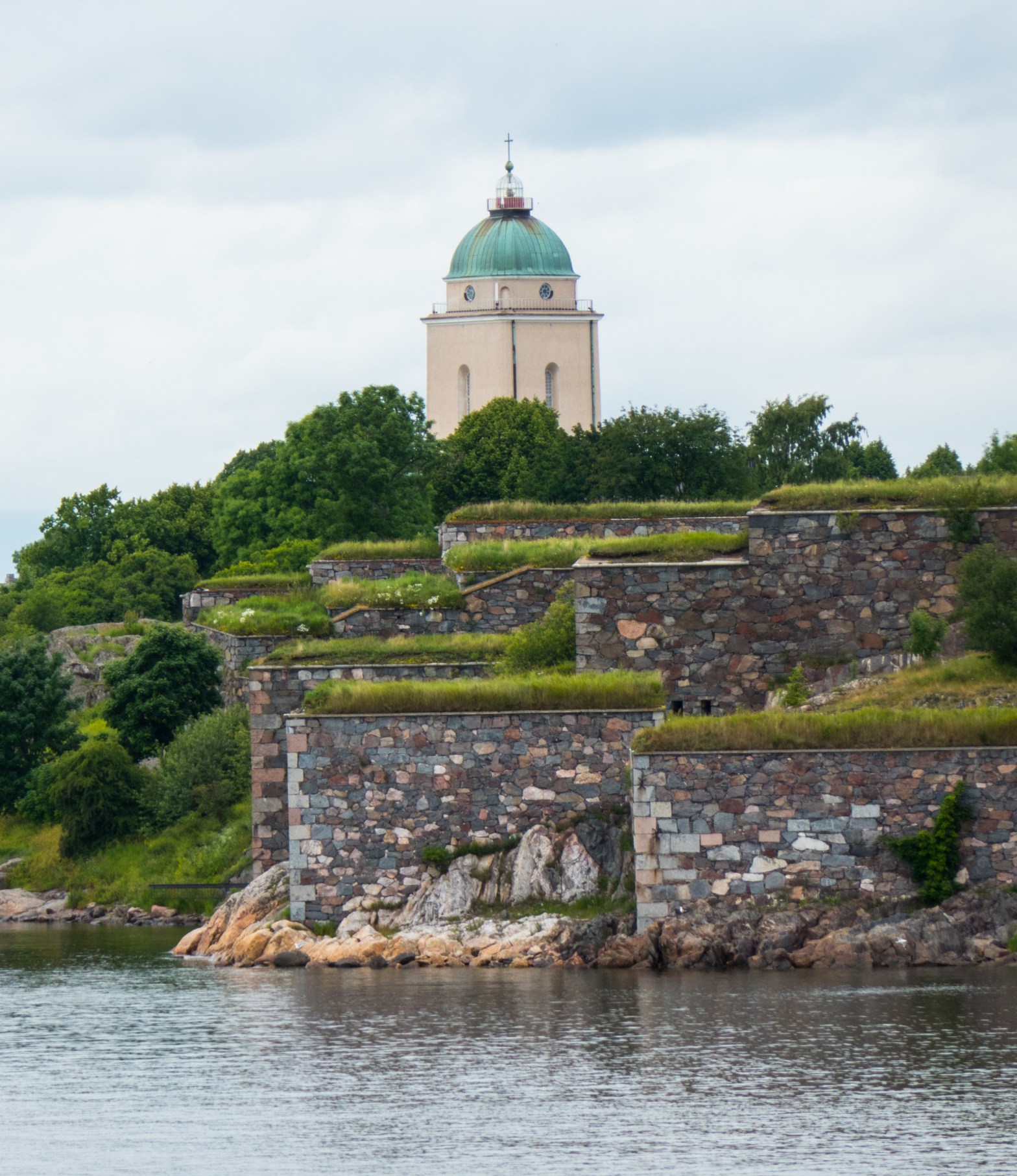
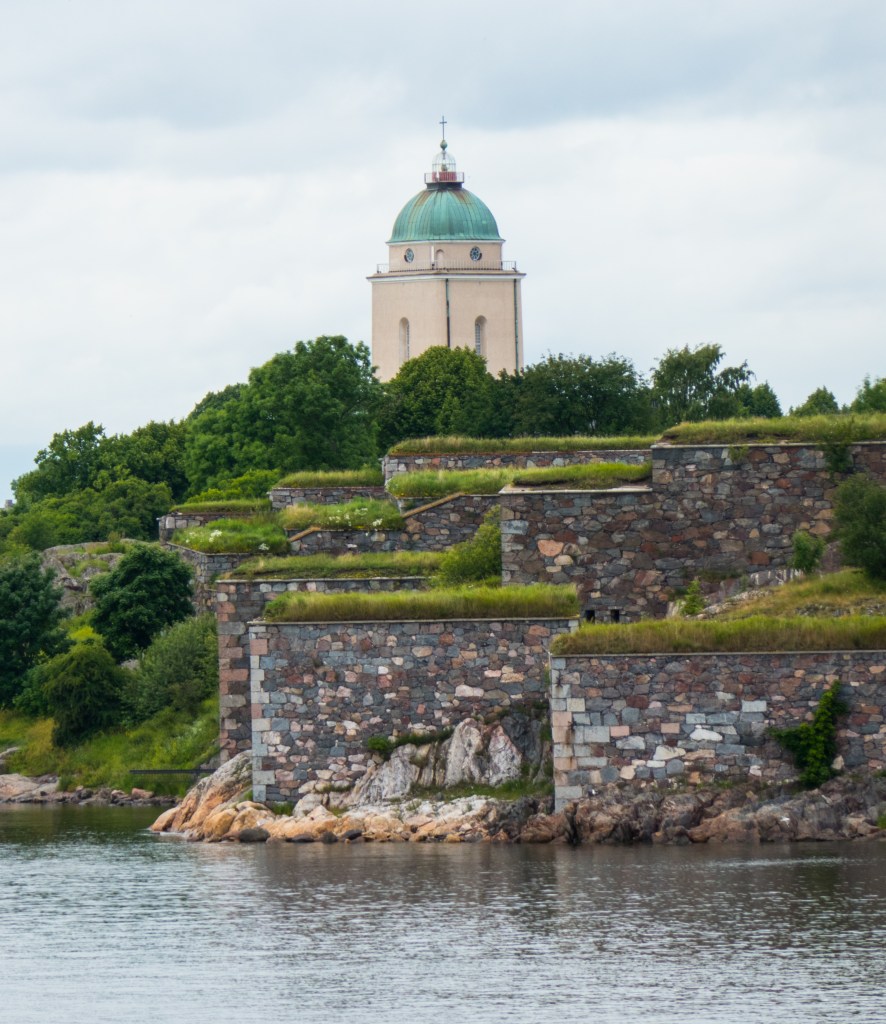
How did it come about that the Suomenlinna-Sveaborg fortress in front of Helsinki contributed to the French revolution? The answer can be found in the great power politics of 18th century Europe.

Sweden, which at this time included Finland, had been a great power in the 17th century, ruling major areas around the Baltic and Northern Germany. But by the early 1700s those times had gone. In 1703 Peter the Great had conquered the banks of river Neva, and founded St. Petersburg where the Swedish town of Nyen had been. The presence of the capital increased considerably the importance of Baltic Sea in Russian foreign policy and made it necessary for Sweden to be constrained. The Great Northern War of 1714-1721 and the Russo-Swedish war of 1741-43 made Russia the dominant power around the Baltic, enabling Empress Elizabeth to dictate the terms of peace, including installing her favourite Adolf Frederick of Holstein-Gottorp as the crown prince (and later king) of Sweden. 

As a result of these wars Sweden had lost all its border fortifications in Finland to Russia, and needed to reorganise the defence of the realm to take into account that the eastern border had been moved considerably westwards. Nor were they happy to be under heavy Russian influence and turned to Prussia and France instead of Russia. France, already a historical ally, ended up being the main supporter of Swedish foreign policy from the 1740s onwards. 

In line with prevailing custom, France provided Sweden with large payments to support its policy. These yearly payments were around 400 000 silver dalers in the 1750s and continued until 1788. The amounts were not trivial and allowed Sweden to embark upon constructing fortifications along its new eastern border. The main navy base and armoury for the whole eastern part of the country was to be the Sveaborg fortress in front of Helsinki.

Construction started in 1747 and continued until the French support stopped coming. At times there were up to 5000 people working in the construction site, making it the largest construction project in the history of Sweden up to that point. 

When the Russian army then came twenty years later, during the Napoleonic wars in 1808, the fortress could not be provisioned in the winter and, after a siege, ended up surrendering to the Russians without fight. That was the end of its military significance – although English and French ships fired upon it during the Crimean War to make a point. But 50 years of financial support to Sweden’s fortifications contributed to the catastrophic state of the French state finances at the end of 1780s, necessitating a call for the Estates General to raise new taxes – and the rest is history. Thus, arguably the greatest impact of the Suomenlinna-Sveaborg fortress in the world ended up being on the French revolution. Talk about unintended consequences.


Sources: Aalto-Gustafsson-Granqvist: Linnoituskaupunki – Helsinki ja Viapori 1721-1808.

Rails: Of termini and through stations

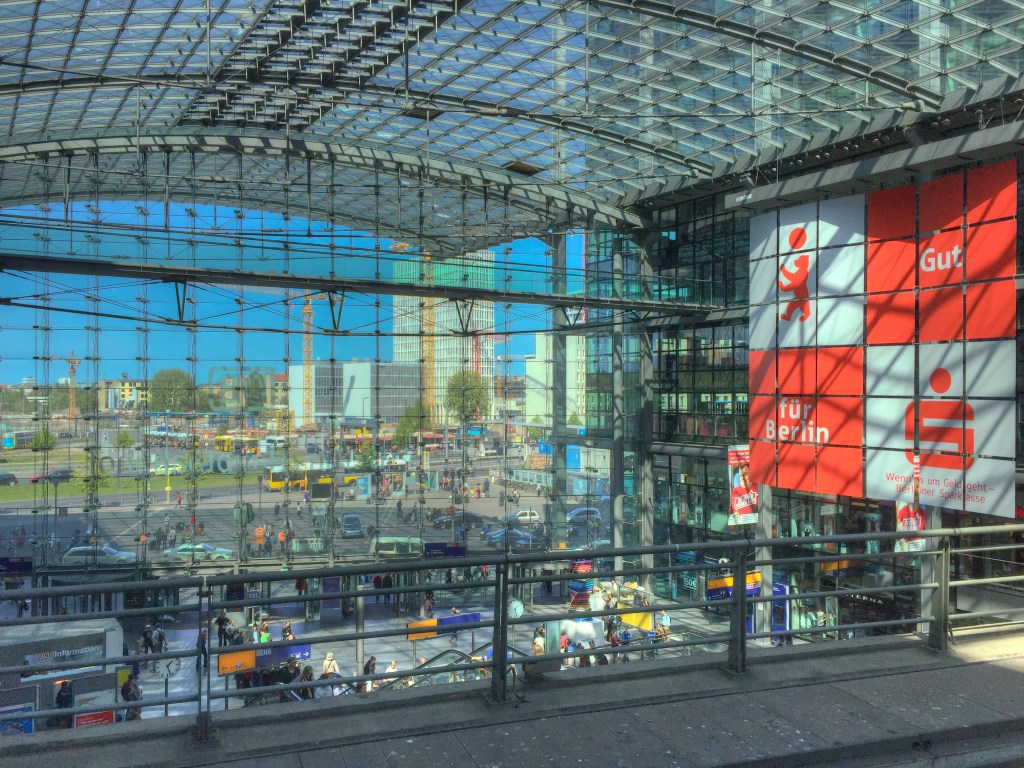
The Berlin Hauptbahnhof is a glimmering modern version of the traditional train shed structure of classical main line stations. However, the difference is that it is a through station of both east-west and north-south connections, reflecting the needs of modern cities and train travel patterns. 

Historically Berlin railway stations were termini, like those in London and Paris. Berlin had Anhalter Bahnhof, Potsdamer Bahnhof, Lehrter Bahnhof and so on, stations that got their names from the general direction the trains came from. Most of these were destroyed during the war, and afterwards the division of Germany meant that most trains arriving from outside the city were directed towards stations in the east. Thus during my Interrail years in the 1980s, international trains indicated their destination as Berlin Ostbahnhof or Berlin Lichtenberg. You couldn’t travel in East Germany with an Interrail pass, so these stations weren’t part of my travel plans.

In the absence of rail traffic to the hinterland, West Berlin did not have a need for many railway stations, and so they detonated what was left of the Anhalter Bahnhof and made do with the Berlin Zoologischer Garten as the main stop for international trains in the west of the city. By agreement this station was maintained by the East German railways (Deutsche Reichsbahn, DR), which did not have much of an incentive to do that well, so by the 1980s it was badly lit, dingy and dirty. 

Towards the end, the East German regime tried to raise the status of Berlin Ostbahnhof by renaming it Berlin Hauptbahnhof. After the German reunification, it reverted back to Ostbahnhof, as building the new railway structure for the unified city began. The extensive pre-war rail corridors meant that there was enough room to recreate many of the rail connections of the city. And the spot where the old Lehrter Bahnhof had been was chosen for the new Hauptbahnhof. It combined the east-west S-Bahn and main line tracks with a new north-south rail corridor that was built where the Lehrter and Anhalter Bahnhof approach tracks had been (with a tunnel inbetween). Ostbahnhof has also preserved its status as a long-distance station.

It is in the nature of a through station that most trains do have to pass through, and these days the end stations for Berlin-bound long-distance trains are often Berlin Gesundbrunnen in the north or Berlin Südkreuz in the south of the city serving the Hauptbahnhof on their way there. But you can also have a high-speed long-distance train from Stralsund on the Baltic coast to Munich via Berlin, avoiding the need to change trains and stations.

Many of the old termini names live evocatively on. Anhalter Bahnhof, Görlitzer Bahnhof and Lichtenberg S-Bahn stations continue to link Berlin’s past to its future. Even at the Hauptbahnhof S-Bahn platforms a small sign proclaimed “Lehrter Stadtbahnhof” for a few years, but it is now gone.

Through stations are also being built in London for commuter use as the result of the CrossRail 1 and possible Crossrail 2 projects, and in Paris the old RER network is being expanded with the Grand Paris Express to allow more cross-regional links – but so far there are no through long-distance trains. For example, the TGV from Brussels to Côte d’Azur skirts Paris altogether. The old termini are not serving their cities well enough these days.

When God Save the Queen was national anthem in Finland

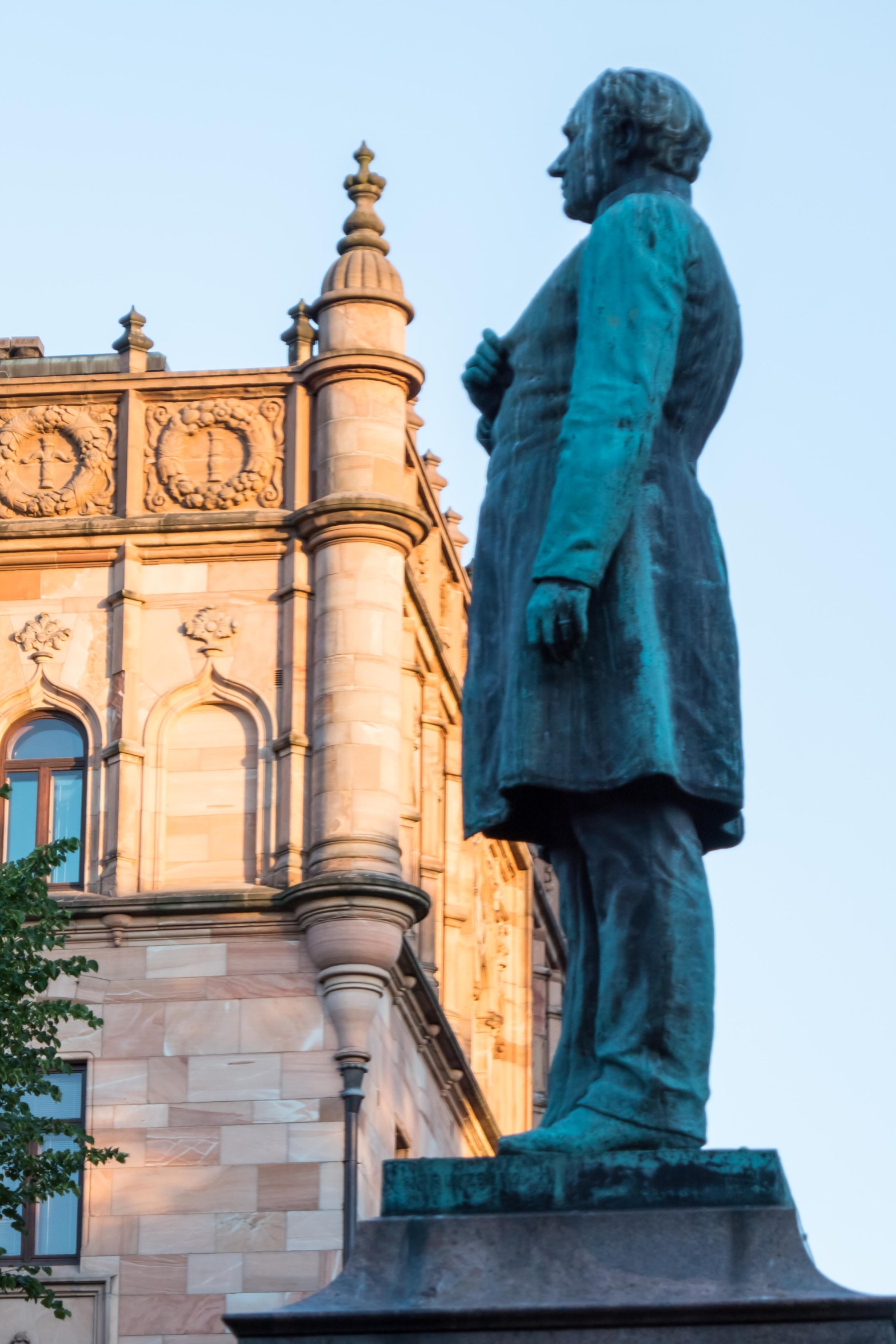
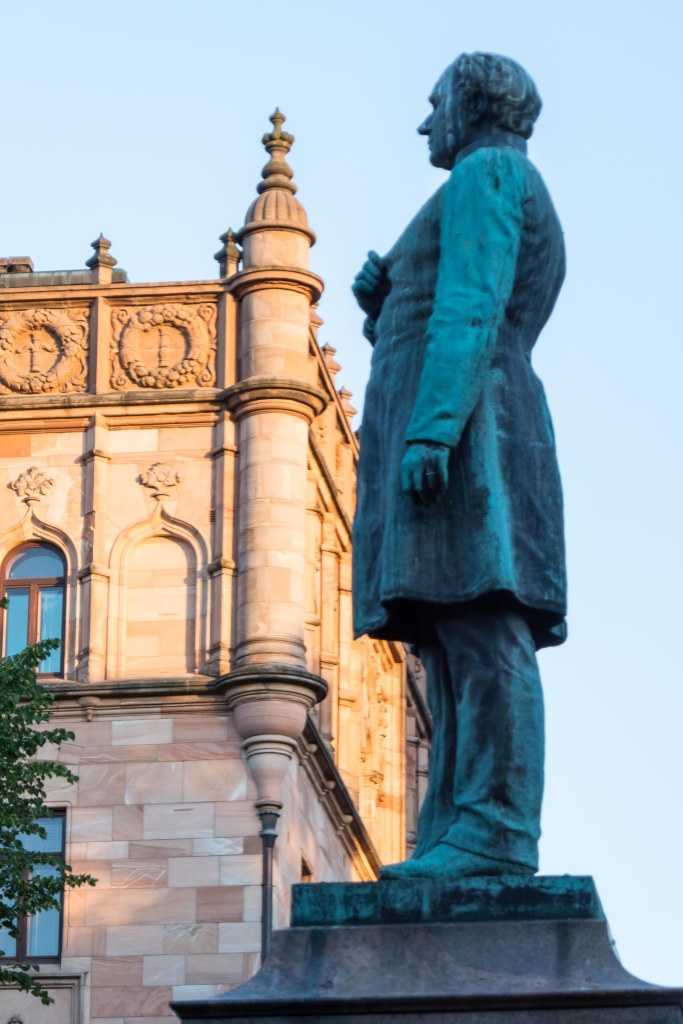
On 13 May 1848, at a student spring party, the Finnish national anthem (Maamme/Vårt land) was performed for the first time. Johan Ludvig Runeberg (him in the picture) had written the lyrics a few years earlier, and they had been set to music several times. These efforts were not particularly successful until the Hannover-born Fredrik Pacius, music teacher at the university, was given the task to compose a new melody specifically for this spring party. The reason was to give an outlet for the students’ patriotic feelings, at the same time carefully avoiding any revolutionary overtones. It was 1848, a revolutionary year in Europe, after all, and la Marsellaise had been heard in the streets of Helsinki. The representatives of the imperial Russian administration were determined to stamp out anything that could undermine the rule of the Czar, and thus the governor-general and the vice-chancellor of the university made sure that Maamme was sung several times throughout the night – so as not to give any opportunities to subversive attempts to sing revolutionary songs. Patriotic feelings were acceptable, but any hint of revolutionary inclinations was out of bounds. The tactic worked as the anthem was owned by the students that day – and by a wider audience when it was performed in a concert three days later. Essentially from the beginning Pacius’s version acquired the status of national anthem. 

Later Pacius’s melody was given lyrics in Estonian, and was performed for the first time in Tallinn in 1869. Since 1920 it has also been the national anthem of Estonia.

But what was sung before in Finland? In 1848 it had been part of Russia for 40 years and the Czar and members of the imperial family had visited several times. So, proper expressions of loyalty had been needed. Here, the natural answer was the Russian imperial anthem. Since 1833 Russia had had such anthem of its own – one that survived until the revolution. The melody was the result of a composing competition, and lives on in many guises. It is used in many American institutions – for example, the song Hail, Pennsylvania of the University of Pennsylvania uses the melody, so I got acquainted with it during my student days. 

Going further back, already in 1816, after the Napoleonic wars, Czar Alexander I had wanted Russia to have an imperial anthem. He chose the tune of God Save the Queen with Russian lyrics under the title The Prayer of Russians, and this tune was used until 1833. The lyrics had been translated into Finnish under the title Eläköön armias (Long live the gracious) and had been sung in official contexts to the Emperor, members of the imperial family and representatives of the Russian administration since the conquest of 1808-09.

What about when Finland was part of Sweden until 1808? In fact, the country had sung C. M. Bellman’s Gustafs skål (to Gustaf’s health) from 1772 onwards, but in 1805 it also started to use the melody of God Save the Queen with Swedish lyrics under the title Bevare Gud vår kung. The Finnish translation was not very successful, though. In Sweden itself this melody was used until 1844 when the current anthem (Du gamla, du fria) was adopted.

Thus, for 28 years, both under the Swedes and the Russians, the tune of God Save the Queen was sung as national anthem in Finland.

Rails: Border architecture

If you happen to look at the map of Barcelona commuter trains, you can see that line R3 continues outside the suburban area to somewhere called La Tor de Querol – Enveig. If you were to take the unassuming train to its final destination, you would have left Barcelona and Spain altogether and ended up on the French side of the border high up on the plateau of Pyrenees, near Andorra.

There you would encounter an imposing station building, with the French version of that double-barreled name Latour-de-Carol – Enveitg. This station is a leftover from the time when borders had meaning and when you needed customs controls and change of trains at many borders. Europe has plenty of abandoned large border stations that no longer have any function, where high-speed trains whish past without stopping, and the passengers barely notice the station.

But Latour-de-Carol – Enveitg has avoided this fate. Not because of any local attractions, as the two villages of La Tour de Carol and Enveitg are sleepy, home to only 400 people, and thus do not need a large railway station – if any. However, the historical choices made by the French and Spanish railways mean that trains cannot swish past the station but must discharge their passengers, who – even though border formalities are long gone – need to change trains.

The reason for this is that each of the three train lines leading to Latour-de-Carol – Enveitg has different gauge. The Spanish trains from Barcelona use the Iberian gauge of 1668 mm, the French trains to Toulouse use the standard 1435 mm, and the mountain train to Villefranche-de-Conflent (where it meets again standard gauge track) uses 1000 mm which allows this touristy “Train jaune” to use tight bends on its way up the Pyrenees. Originally the point of this exchange station was to connect Paris to Barcelona via Toulouse, but these days the coastal TGV line takes care of that, and Latour-de-Carol – Enveitg serves mostly local and regional clientele, even though there is a direct Intercités train to Paris.

Thus the tourists that come to see the mountains, or to trek around, can take advantage of the scenic Train jaune, or the more prosaic suburban and regional services, and get to admire the station that is a leftover from a bygone age when borders still had meaning in Europe.

Wine: Where terroir speaks

Can you taste the soil in wines? This is the claim of many a wine producer, but in practice it has been proven that wine roots do not get mineral elements from the underlying rocks. But of course, strictly speaking this is not what we most often refer to when speaking about “mineral” wines. We use it as a shorthand for a group of taste sensations that do not fall into the other categories like “fruit”. These sensations do not have to come directly from the rocks, but in our tasting language this is how we can best describe them.

A recent tasting of wines from Faugères was an opportunity to test whether we can find such elements of minerality in wines from one area that professes to have a relatively uniform soil type.

Faugères in Languedoc has a homogenous type of soil, made of various types of schist that is poor in nutrients and drains well while preserving water underneath. Schist is a rock type that consists of layers of minerals and splits into thin plates. Faugères har different types of schist that have different porousness and hardness. The harder the rock, the poorer the soil. It is said that in Faugères the soil talks, not the grape.

Faugères produces mostly red wine, with some rosé and a little white. The tasting had one white, one rosé and four red Faugères wines. When trying to find common elements in the wines, the tasters pointed out some characteristics that seemed to be more or less in common to all of them.

First, although you had plenty of fruit in the nose of the wines, the taste did not follow – it was much more austere, without any fruity yamminess. We struggled to find a description for the dominant features – perhaps something close to wet stones. All the wines had good acidity and the reds displayed slightly varying levels of round tannins.

Second, there seemed to be a certain final sour note in most of the wines. This was not disturbing, just something that emphasised the austere taste. It points to the general aspect of wines that display “minerality” – they tend to be described as refreshing and zesty.

The topic of terroir and mineralogy is fashionable and even wine professionals disagree what exactly we are talking about (see the Jancis Robinson article in the FT). There is speculation whether concrete vats or clay amphorae can give wines mineral character under fermentation, although this probably would not be filed under any terroir feature. In any case, there is much more to discover under minerality.

More about these topics: Jancis Robinson “Minerality report”, FT 25/1/2020; Rosemary George: “The Wines of Faugères”; and Britt Karlsson – Per Karlsson – Bengt Rydén: Languedoc Roussillon, södra Frankrikes viner.

Wines tasted: Crus Faugères Parfum de Schistes Blanc 2018; Domaine Balliccioni Faugères Tradition Rosé 2017; Domaine de Fenouillet Faugères Extraits des Schistes 2016; Château de la Liquiere Faugères Les Amandiers 2014 ; Domaine Valambelle Faugères Grande Cuvée 2013; Domaine des Pres-Lasses Faugères Castel Viel 2011