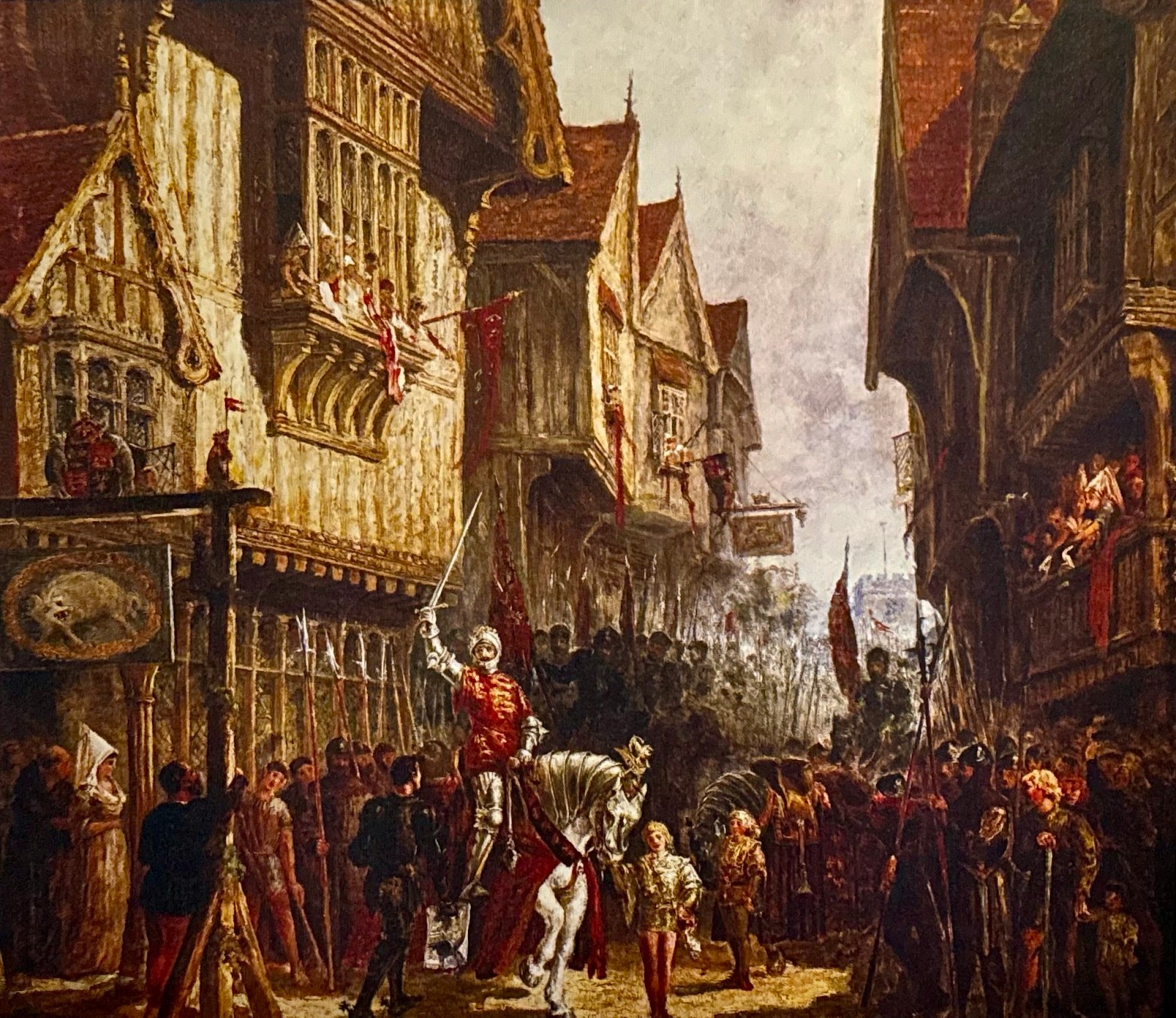
The last Plantagenet king of England, Richard III, was buried in 1485 – and reburied in 2015. The first time he was interred immediately after having lost the battle of Bosworth, into a Franciscan monastery in Leicester, close to the battlefield. But the monastery was mostly destroyed during the Reformation, and gradually all traces of it were lost – in the 1920s and 1930s, a municipal car park was laid on top of the former choir where Richard’s tomb had been.

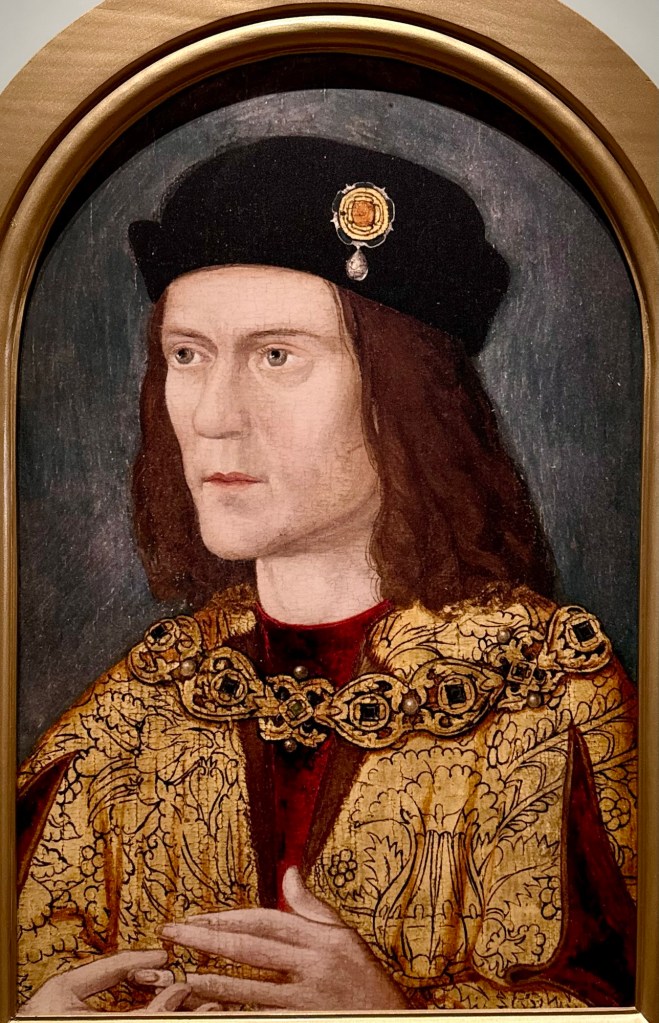
However, enterprising individuals were searching for his last resting place and finally in 2012 they succeded in finding a skeleton that was probably his. The remains had to go through carbon dating, battle trauma comparison, DNA analysis, and numerous other tests before the University of Leicester could declare that the remains were those of Richard, beyond reasonable doubt. They also reconstructed his face from the skull (above left), and established that the earliest contemporary paintings (above right) were reasonably accurate.

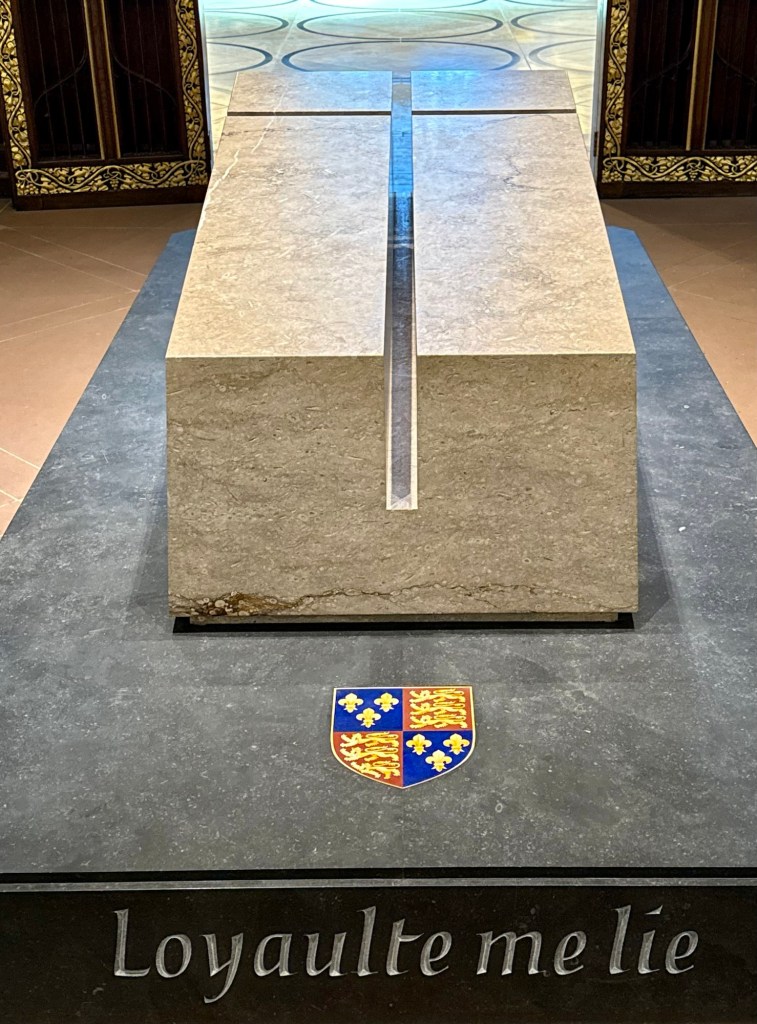
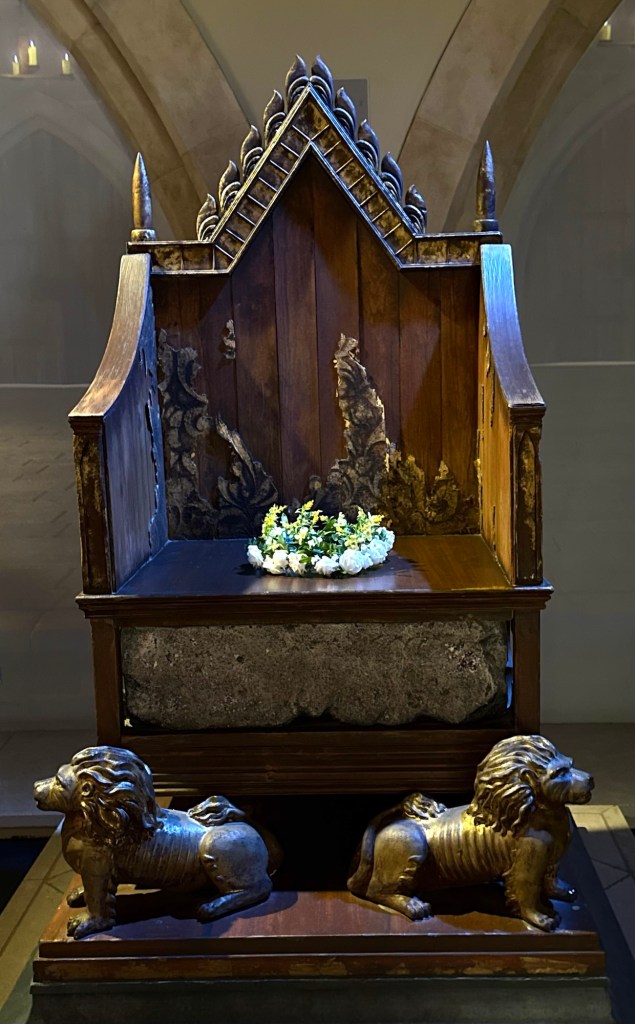
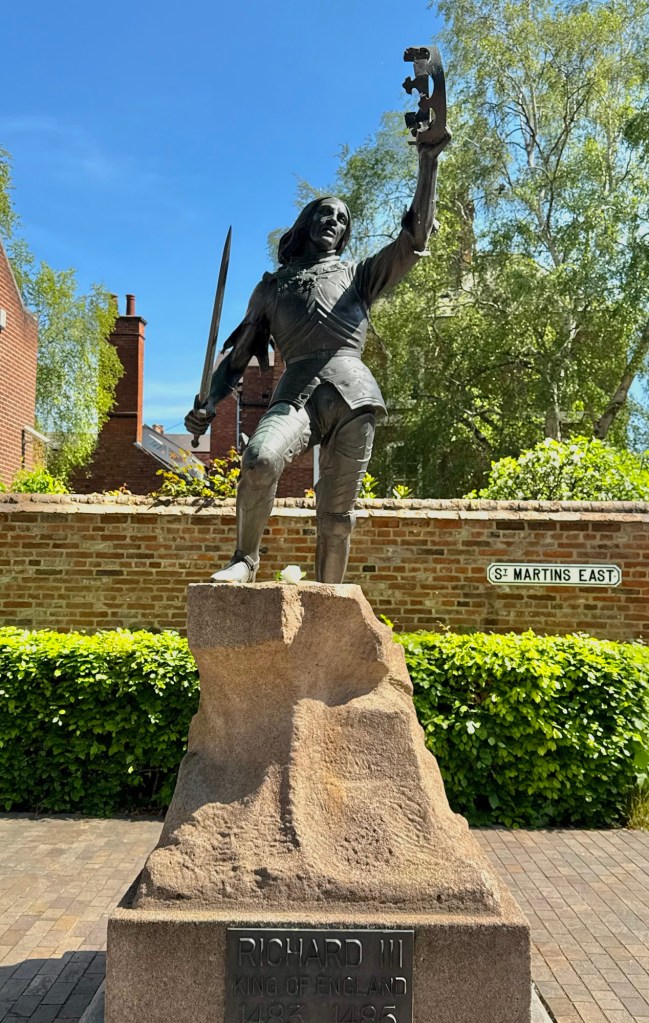
Thus, England got a royal burial in 2015, be it only a reburial, at the Leicester Cathedral (above, with the new tomb). Leicester has also built a whole ’Richard III Visitor Centre’ to tell the story of his life and death (with a mock throne, below left) – and naturally there is a heroic statue (below right), although the king has featured in the gallery of rogues at least since Shakespeare, who famously blamed him for the murder of the young sons of his predecessor in the London Tower.
The War of the Roses culminated at the battle of Bosworth (the title picture shows an imaginary Richard before the battle), won by Richard’s opponent and next king, Henry VII Tudor. Richard was killed in battle and interred for the first time. Henry graciously built a tomb for him at the Franciscan monastery, but it was destroyed with everything else by the next king, Henry VIII, and thus began the story of the municipal car park.
Previous posts:
 Rails, wines, worlds