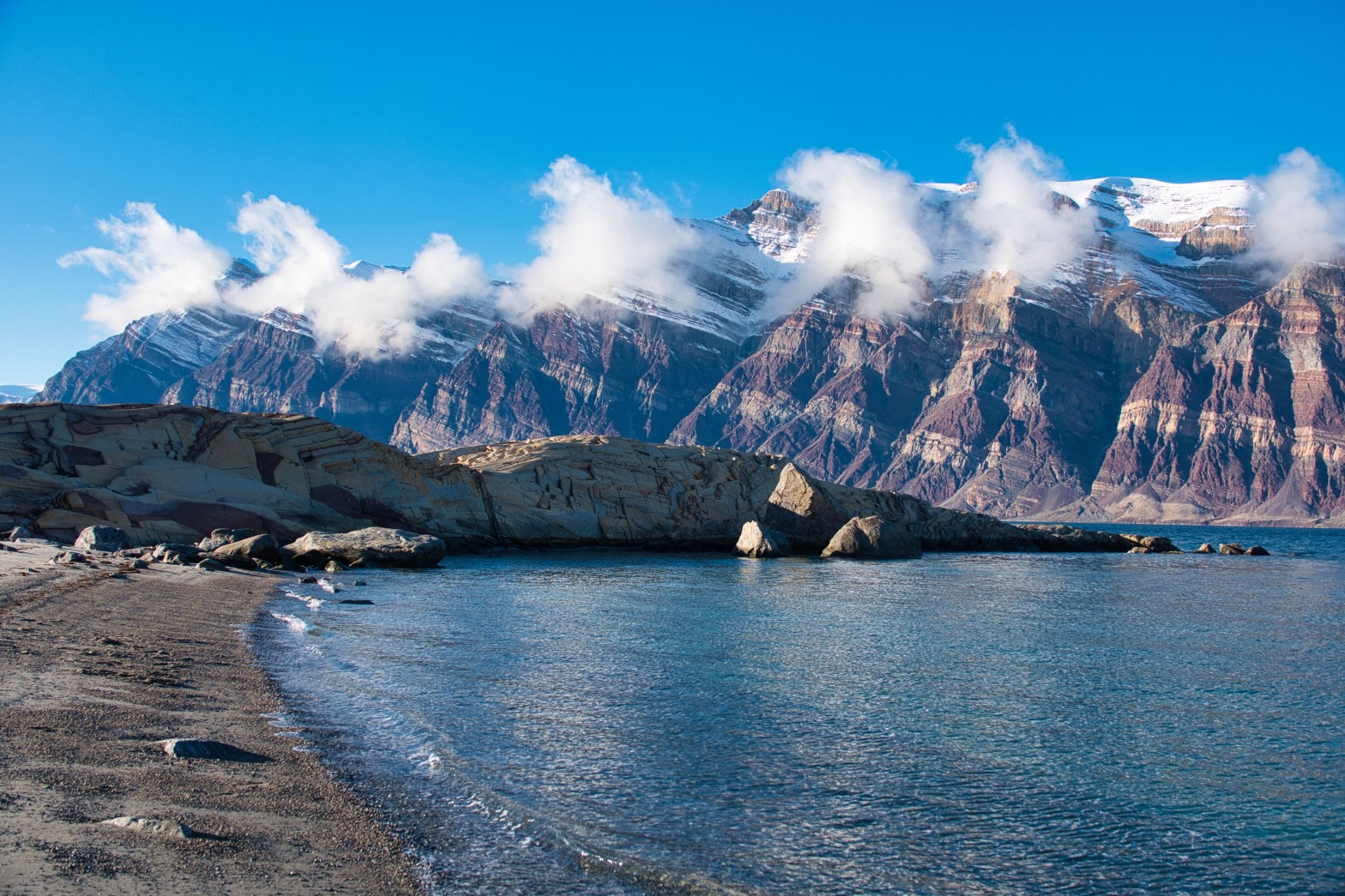
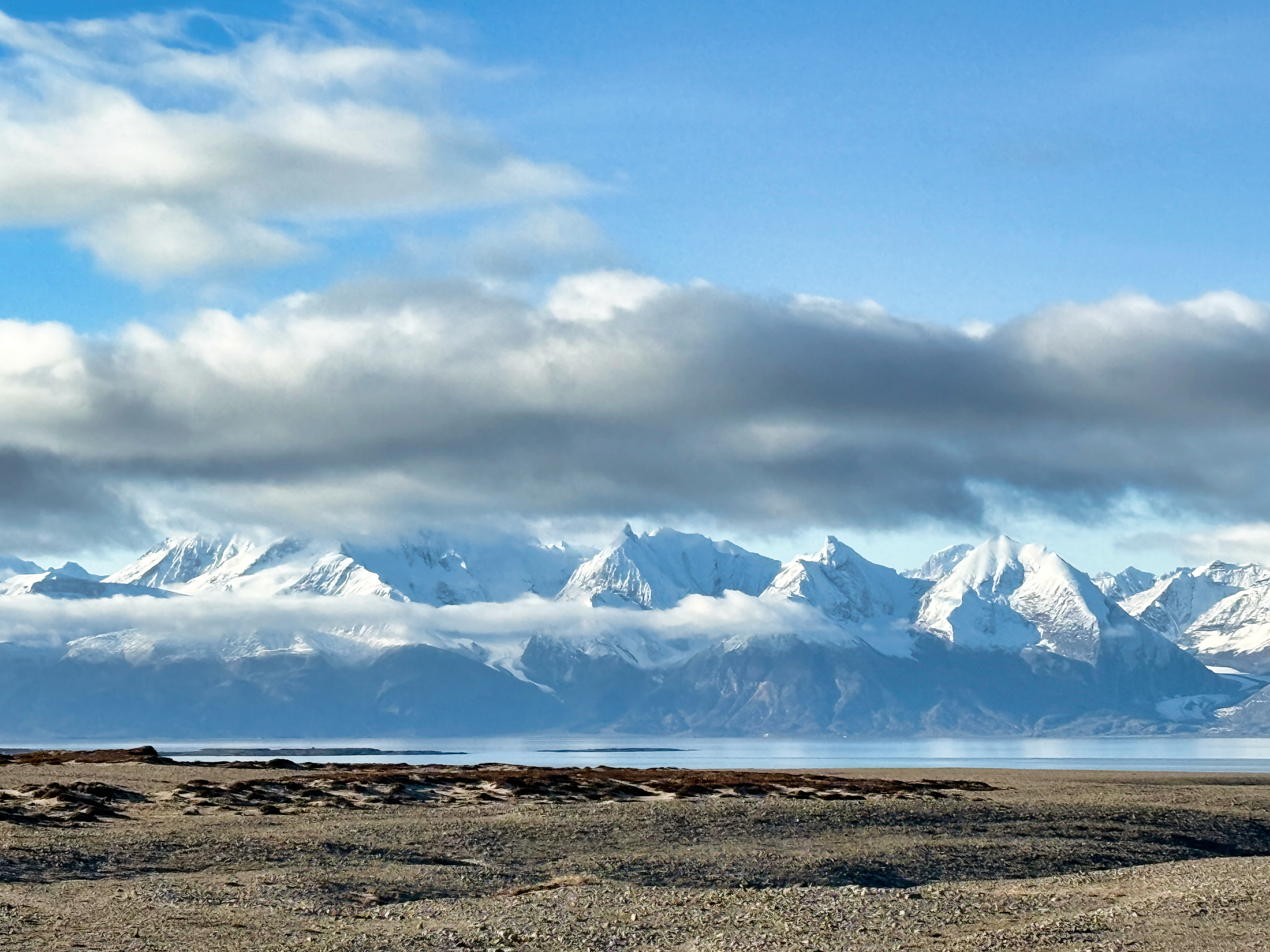
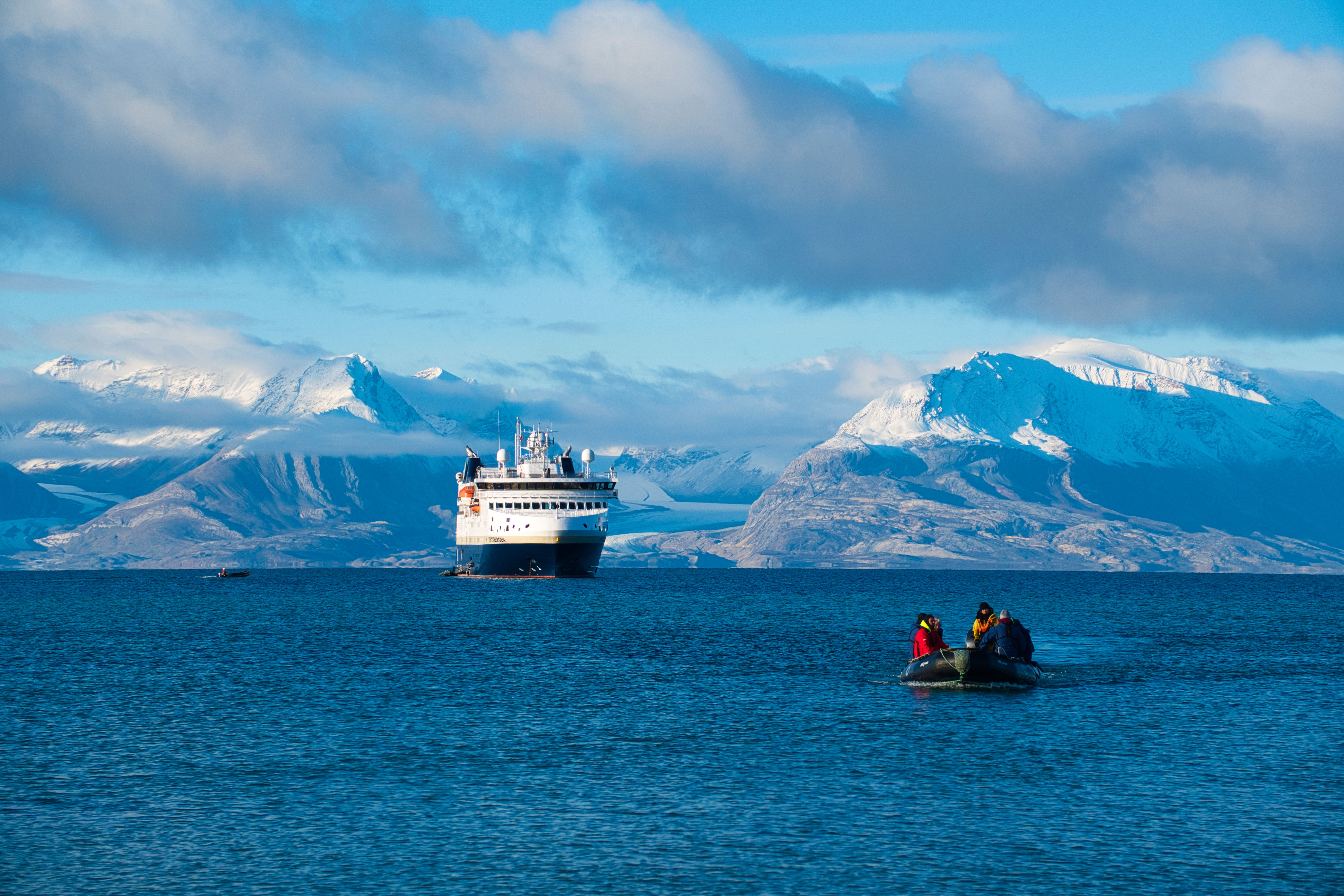
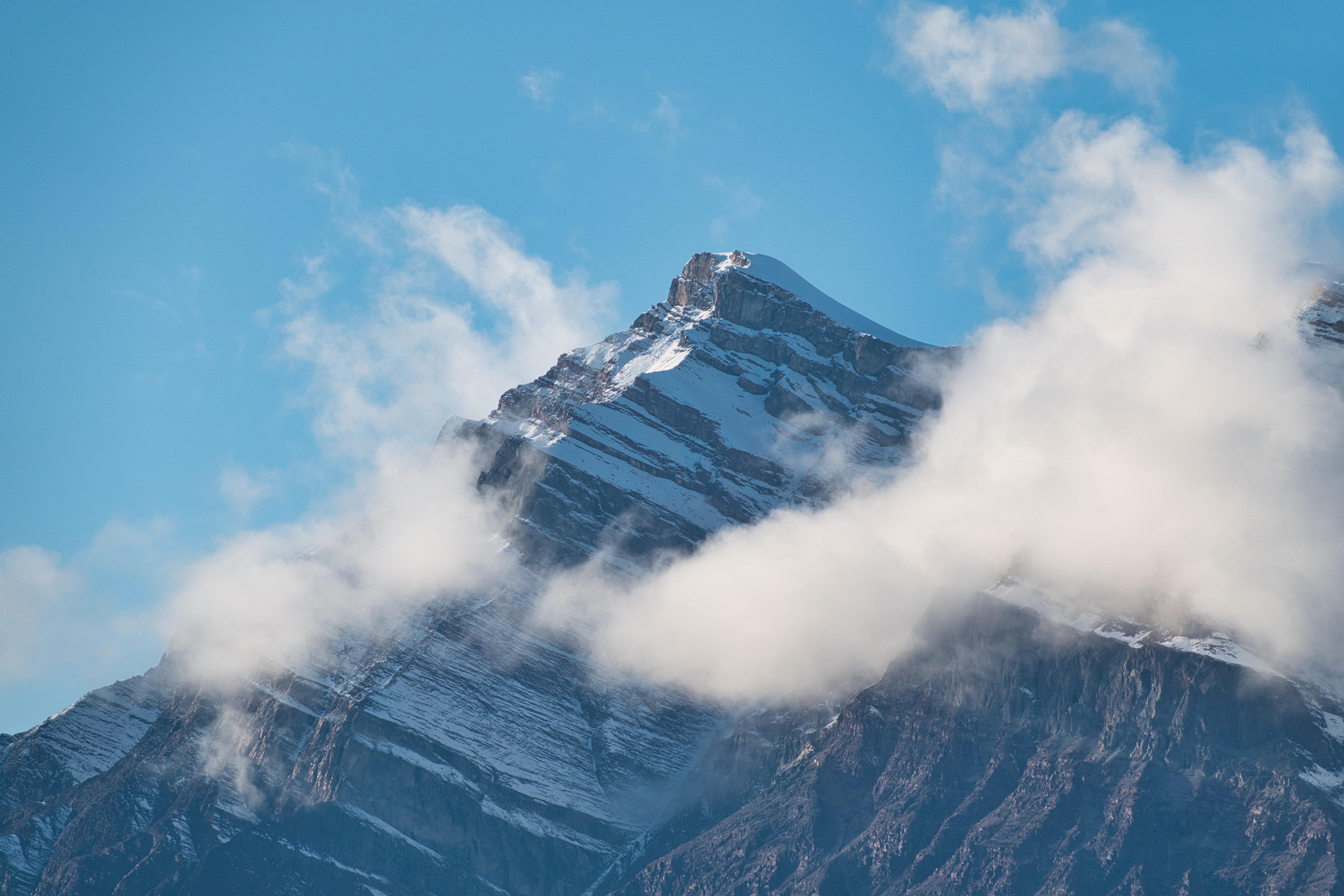
The Northeast Greenland National Park is the world´s largest at 972 000km2. The interior is covered by the Greenland ice sheet, but the coastal areas are ice free in the summer. There is no permanent population, only military and research posts with changing staff.

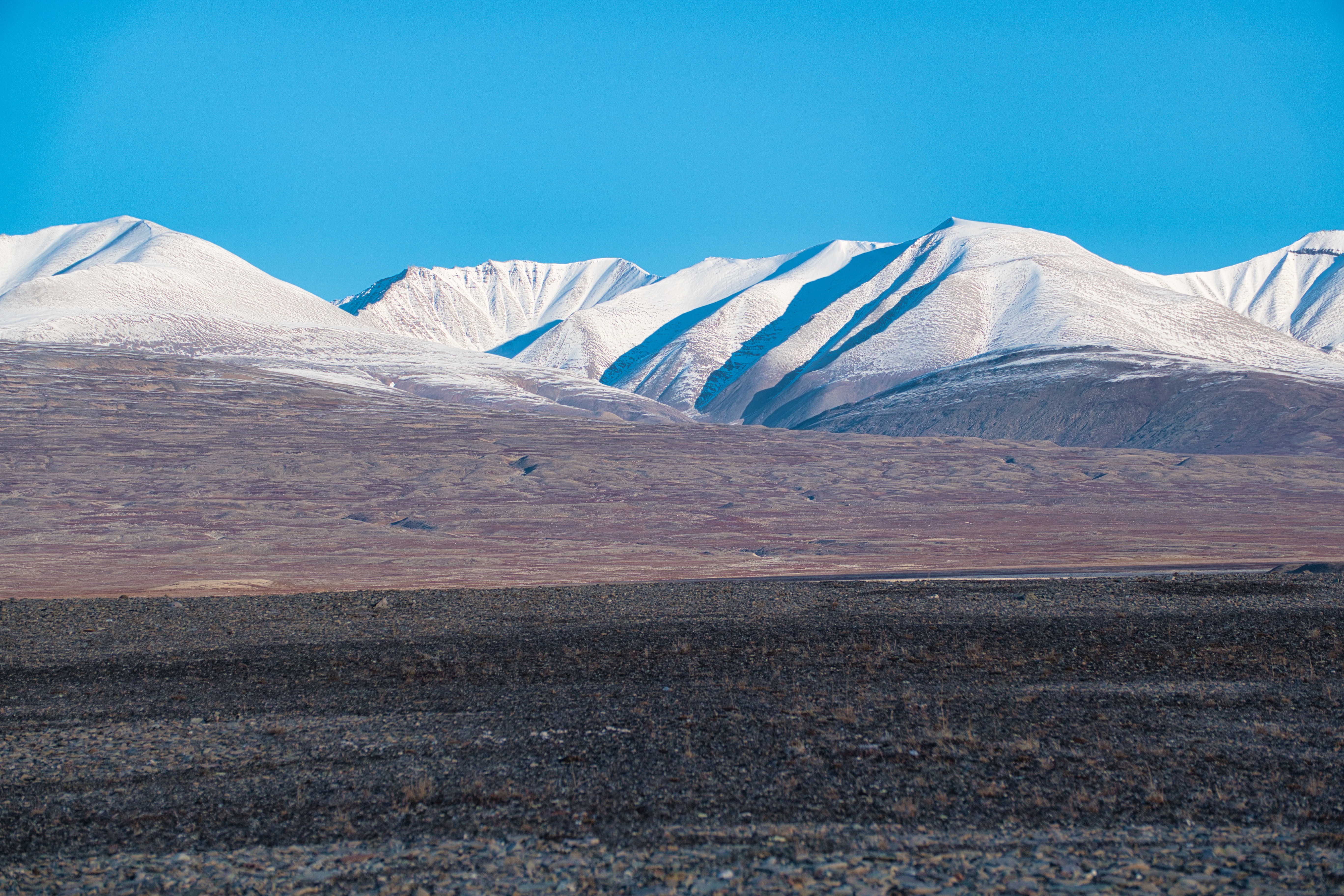
The most accessible parts of the park are in the southeast, around Kong Oscar Fjord and Kejser Franz Joseph Fjord. The Holm Bugt is on the northern side of the Kong Oscar Fjord, on Traill Island (below).
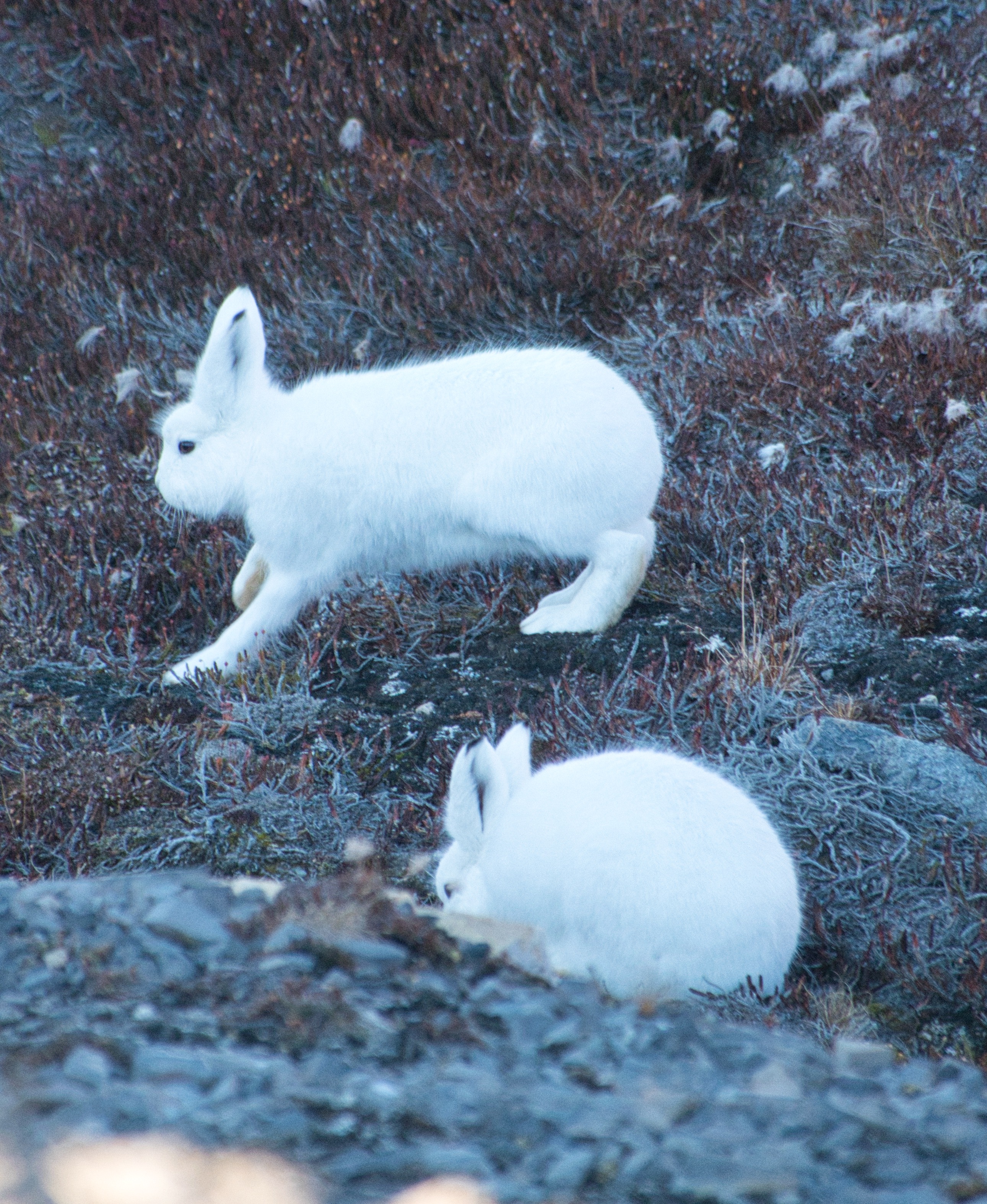
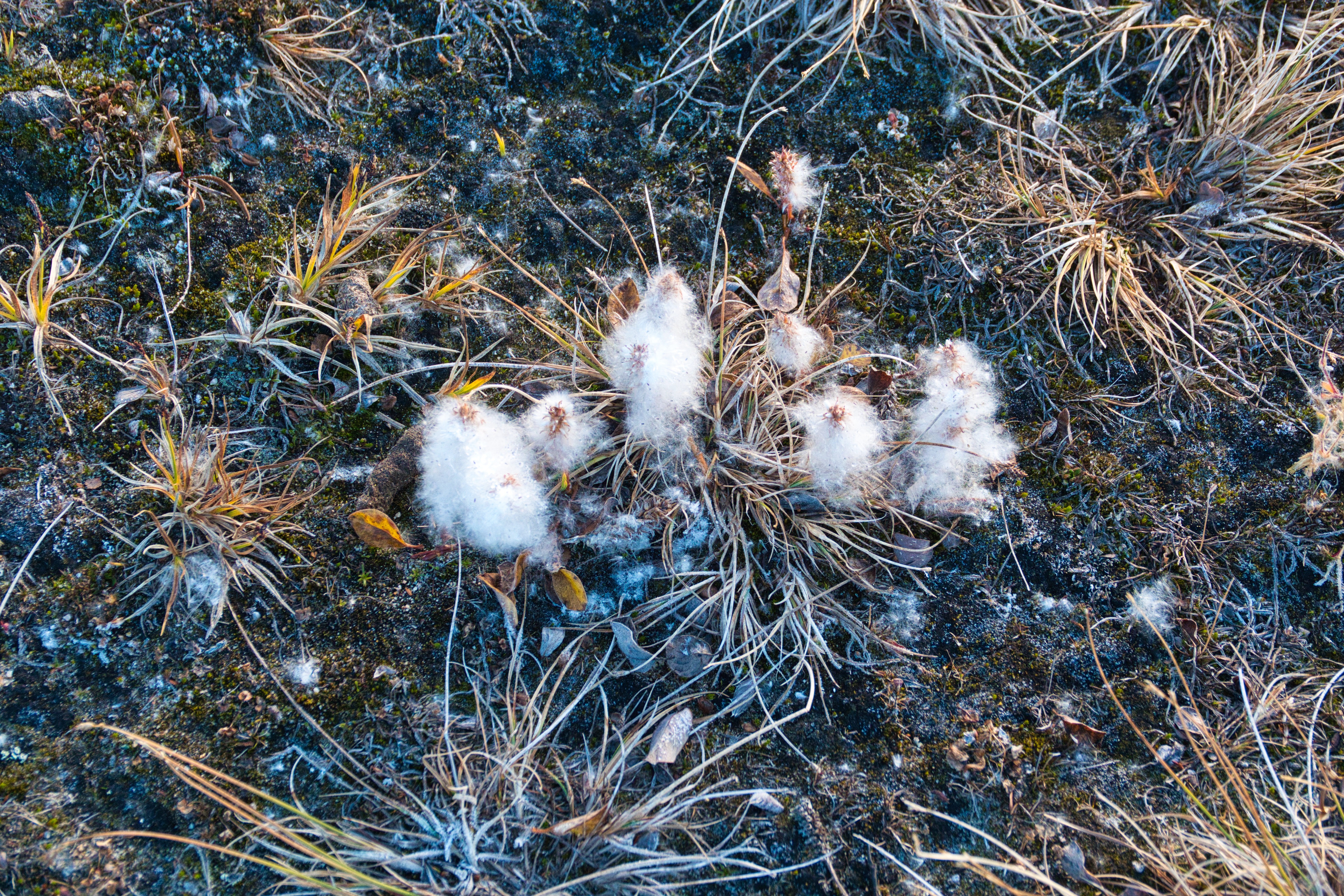
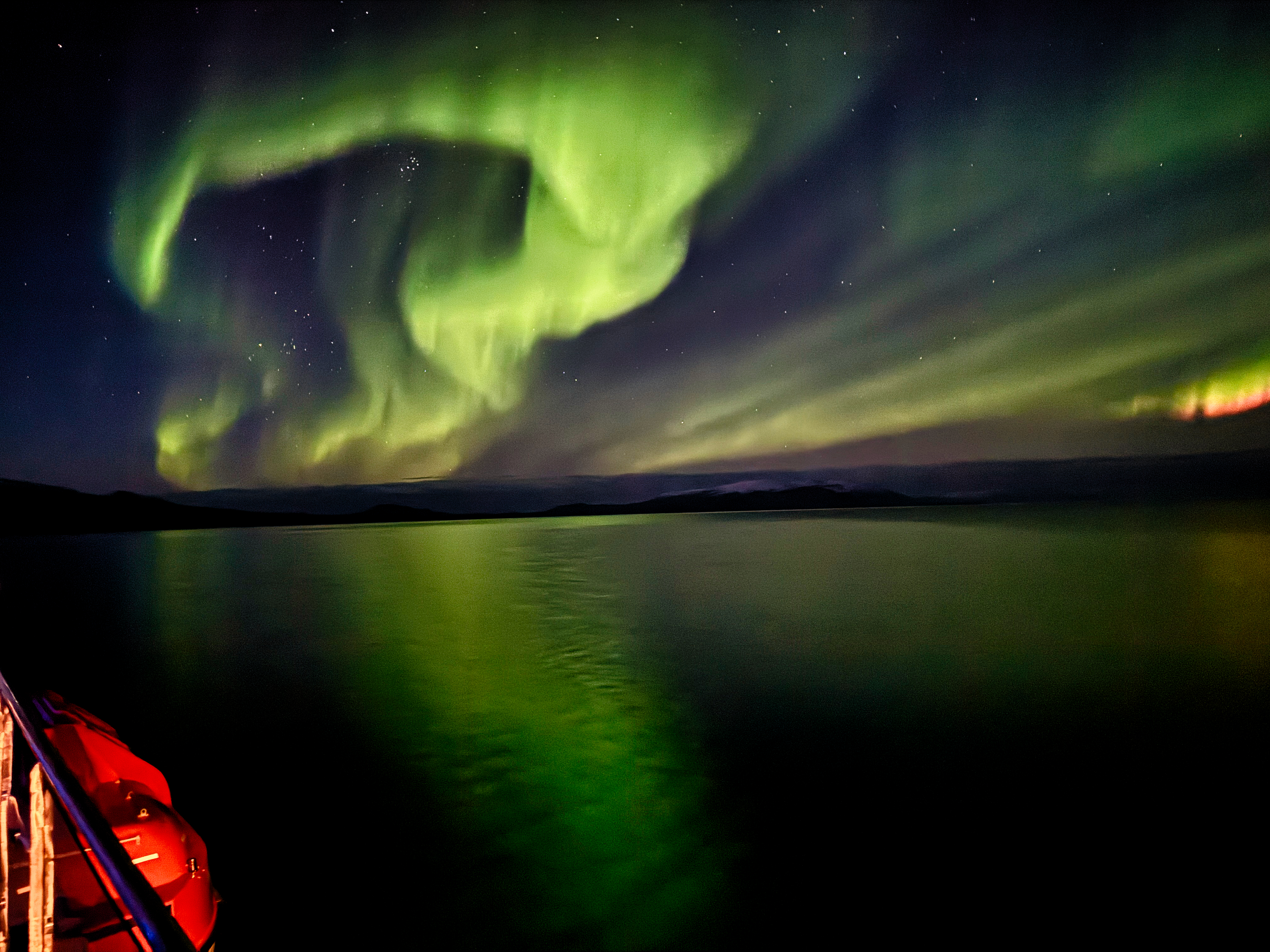
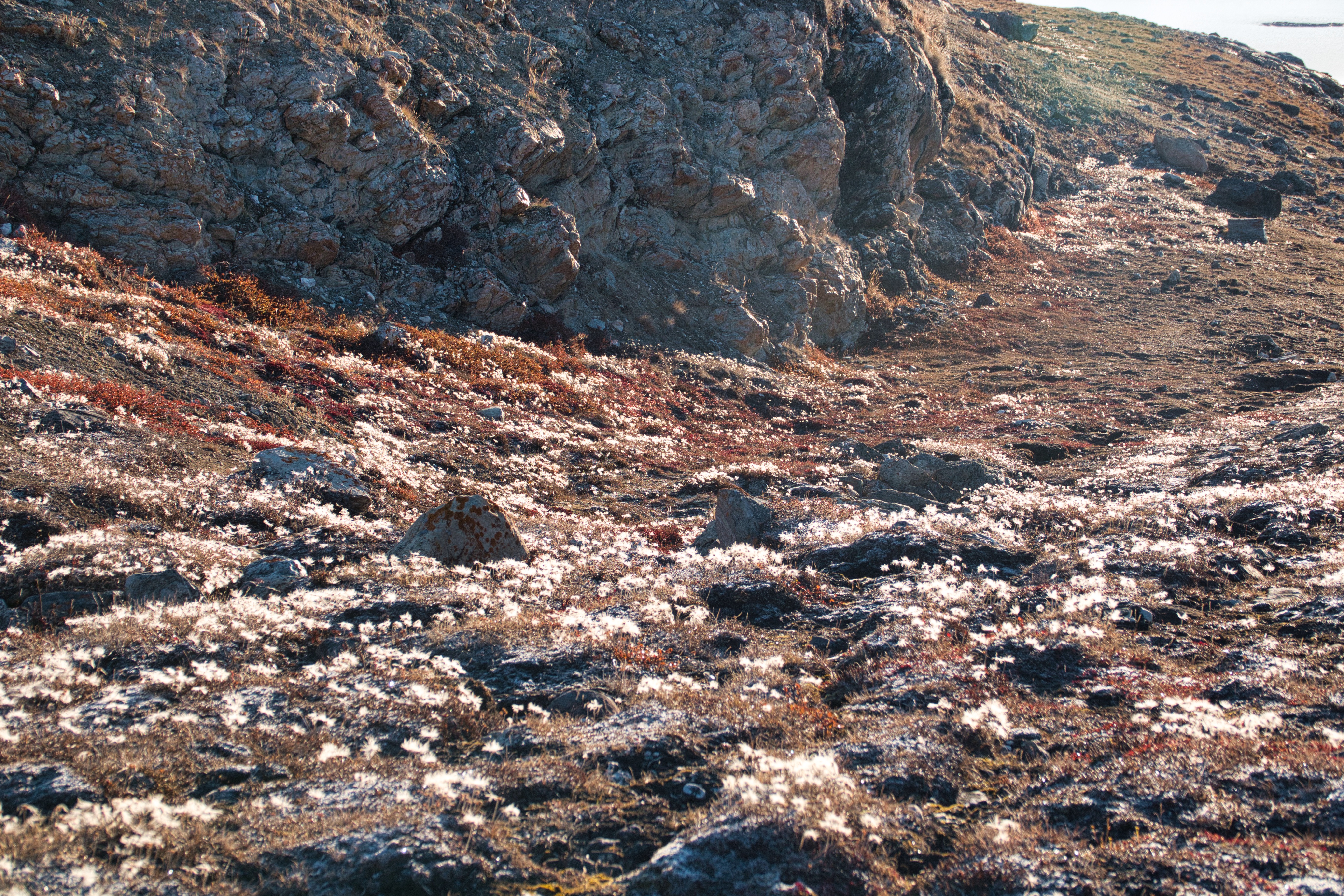
The conditions here are harsh, so life here is limited to only a few species that have adapted to them, like polar bear, musk ox, arctic hare (below), lemmings, the snowy owl and a few others. Also the vegetation is sparse and at the end of summer, there is nothing uch to eat except roots. On clear nights Northern Lights are common at these latitudes (below).
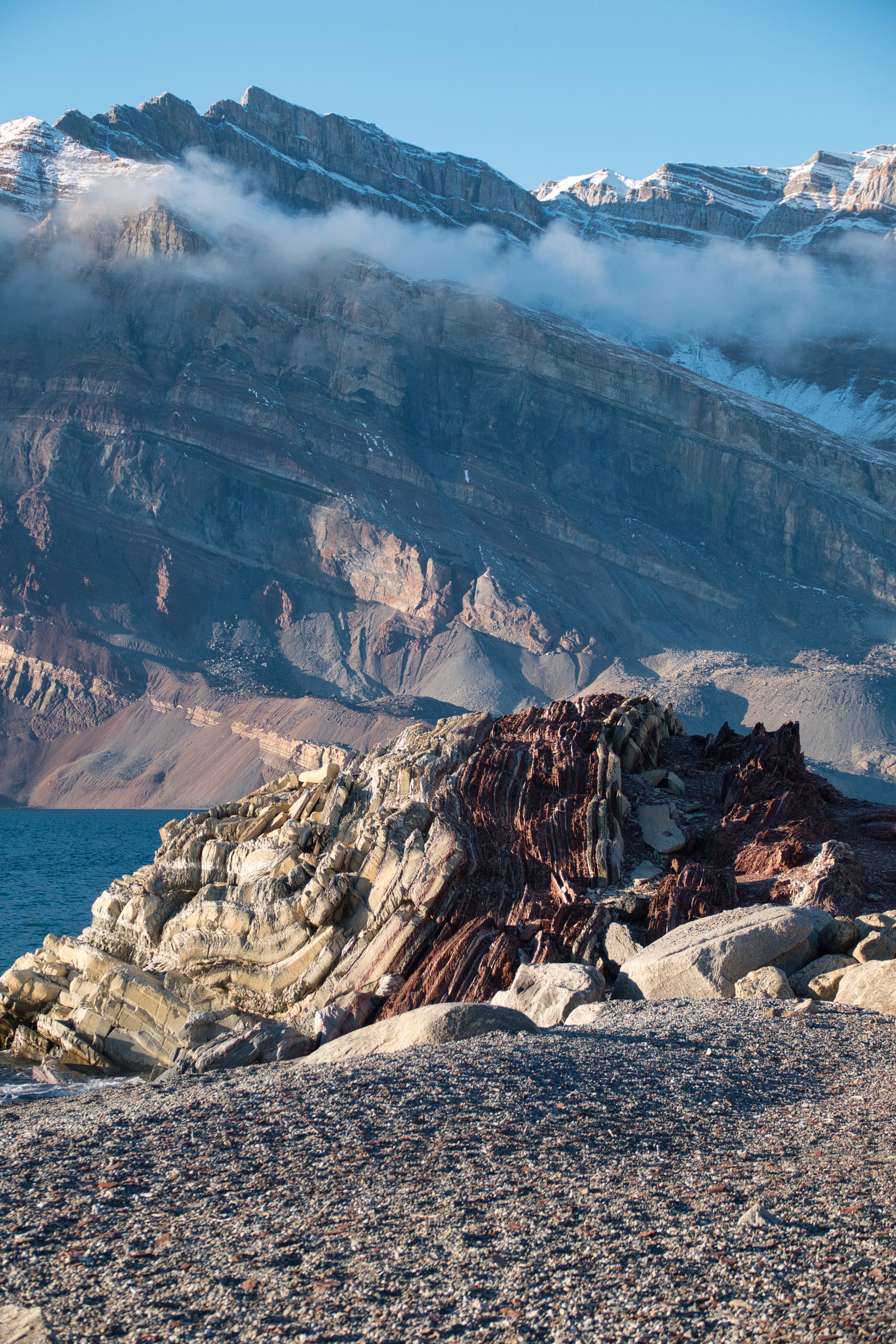
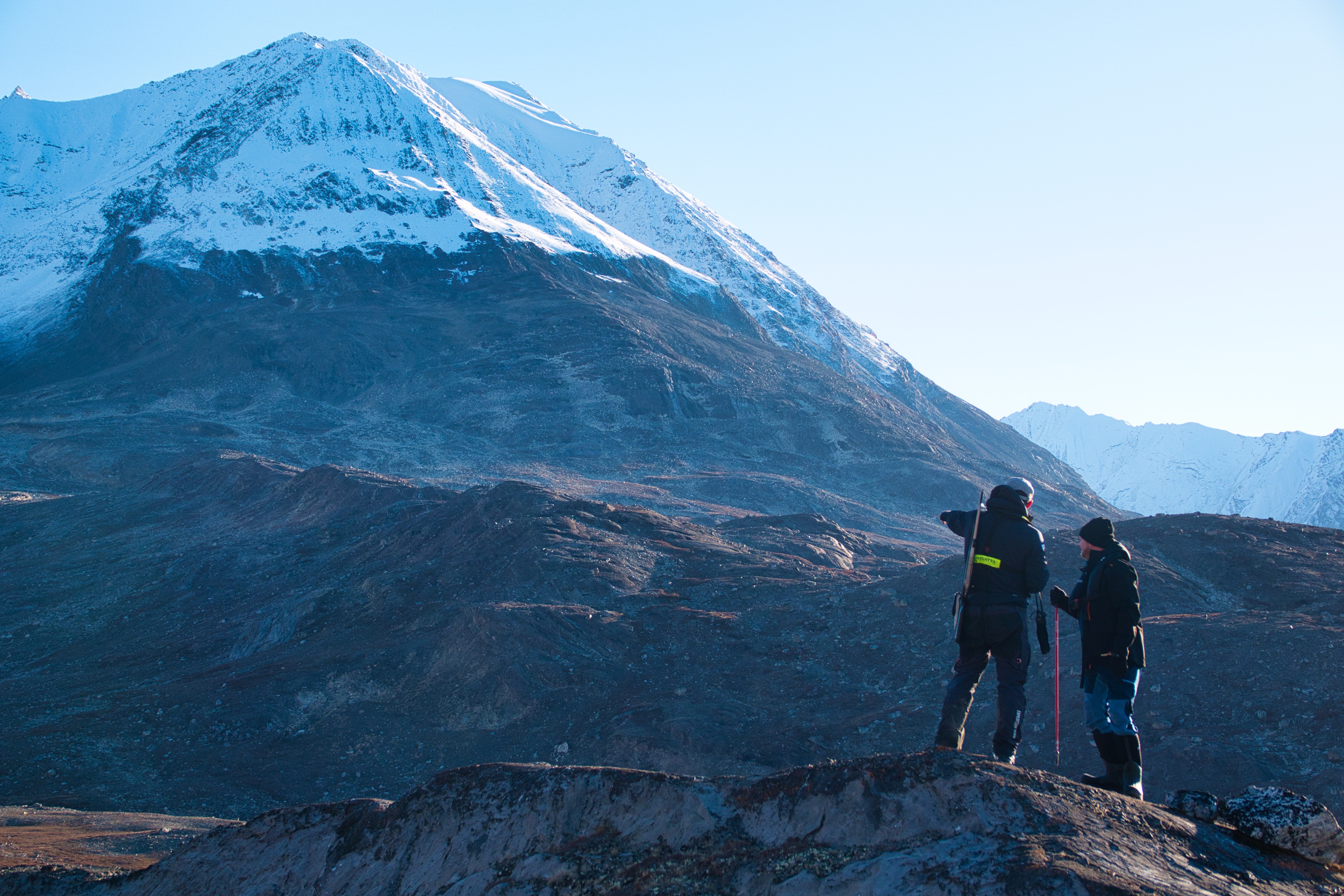
The Segelsällskapets Fjord was named after the Royal Swedish Yacht Club by a Swedish explorer. It is off the Kong Oscar Fjord, and known for its geological formations (below).
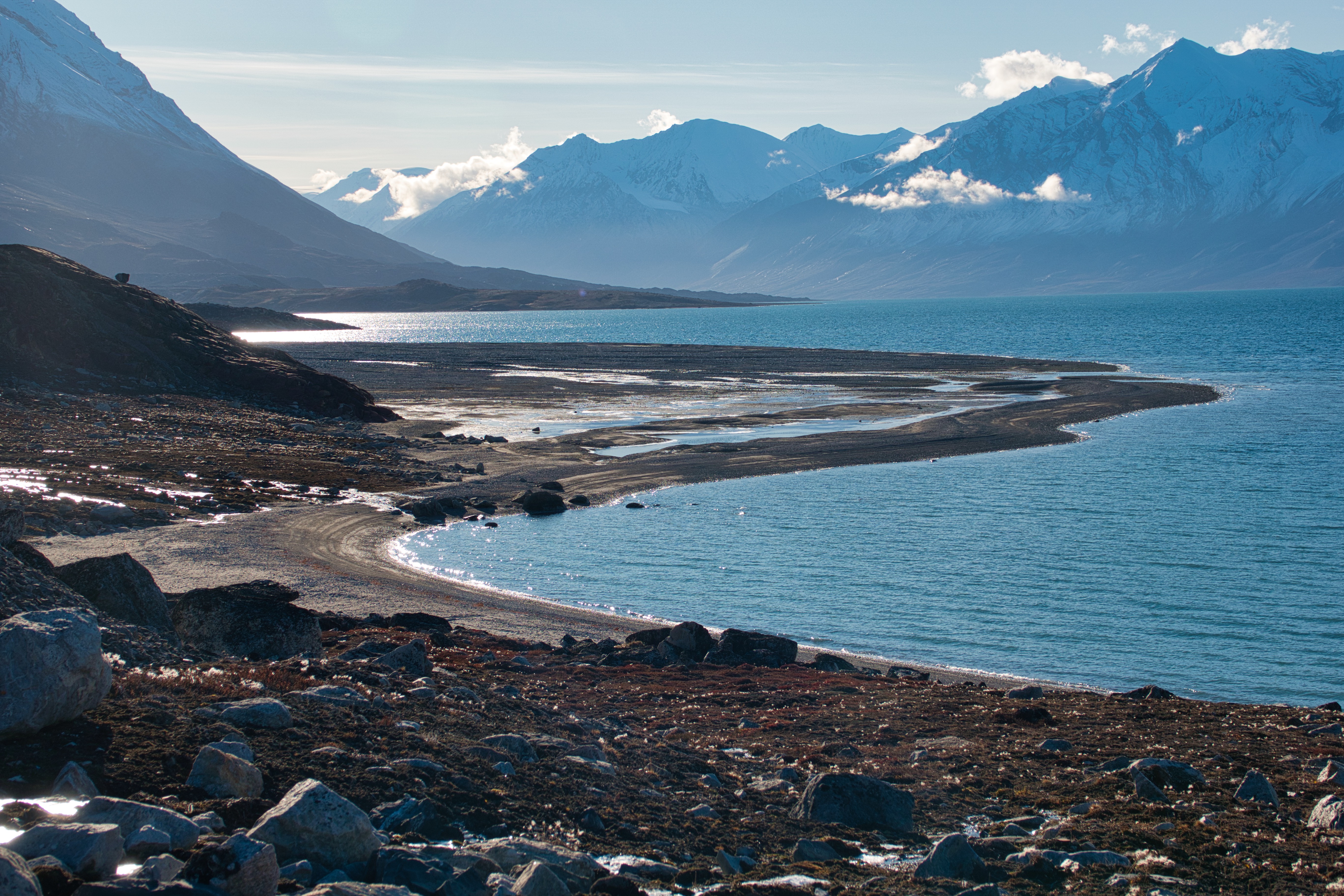
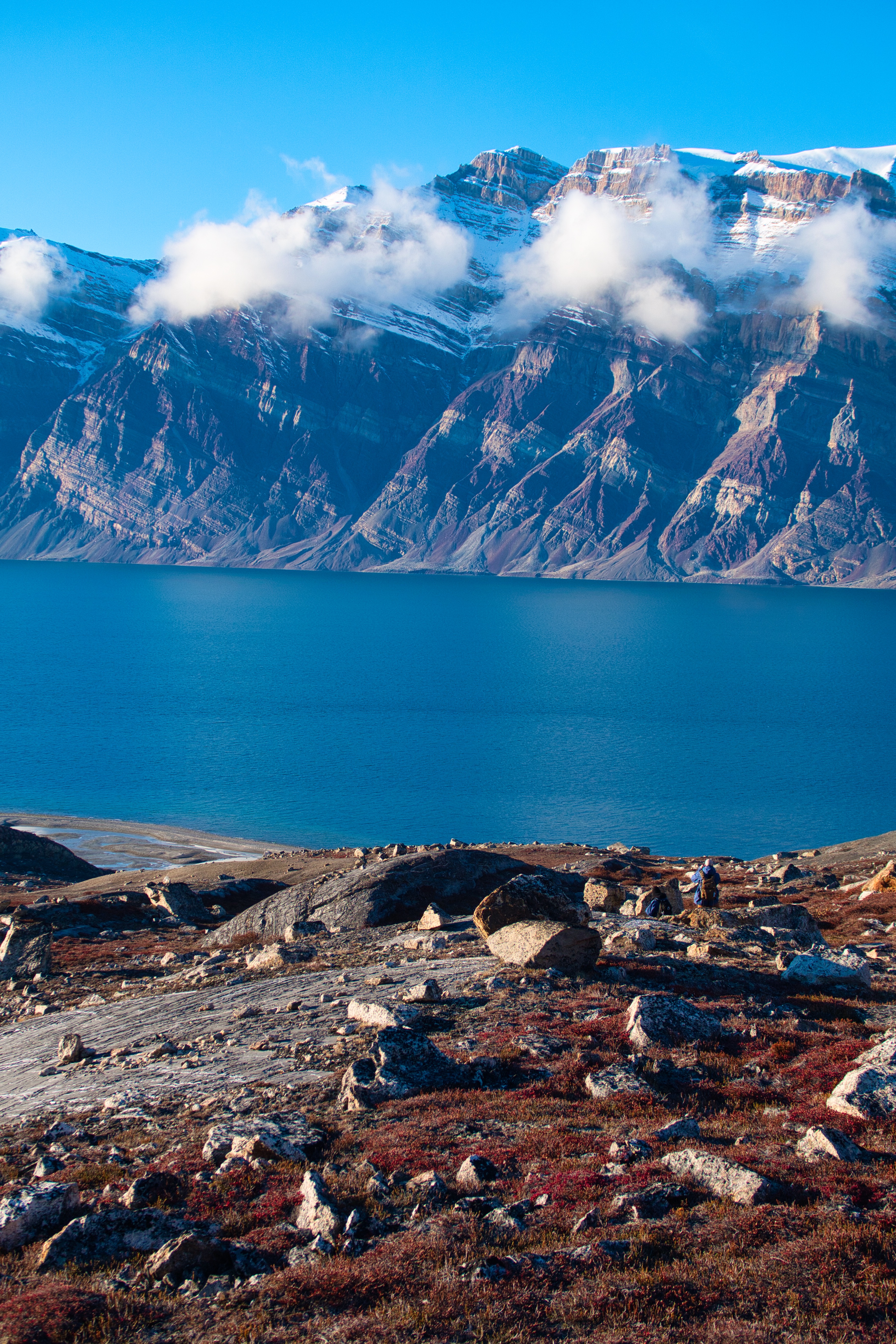
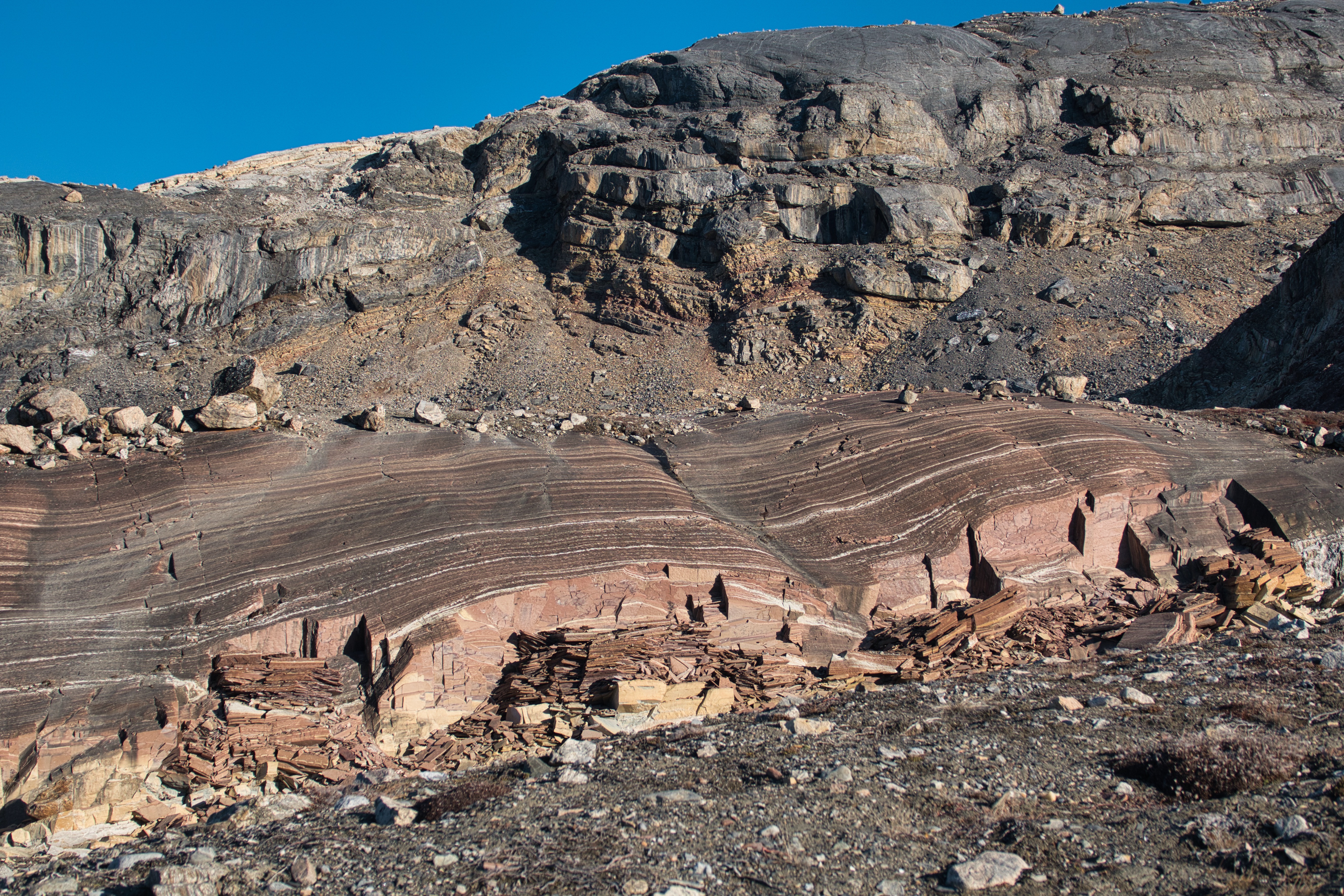
The Blomsterbugt (below) is at the western end of Ymer Island, between the Kong Oscar and Kejser Franz Joseph Fjords.
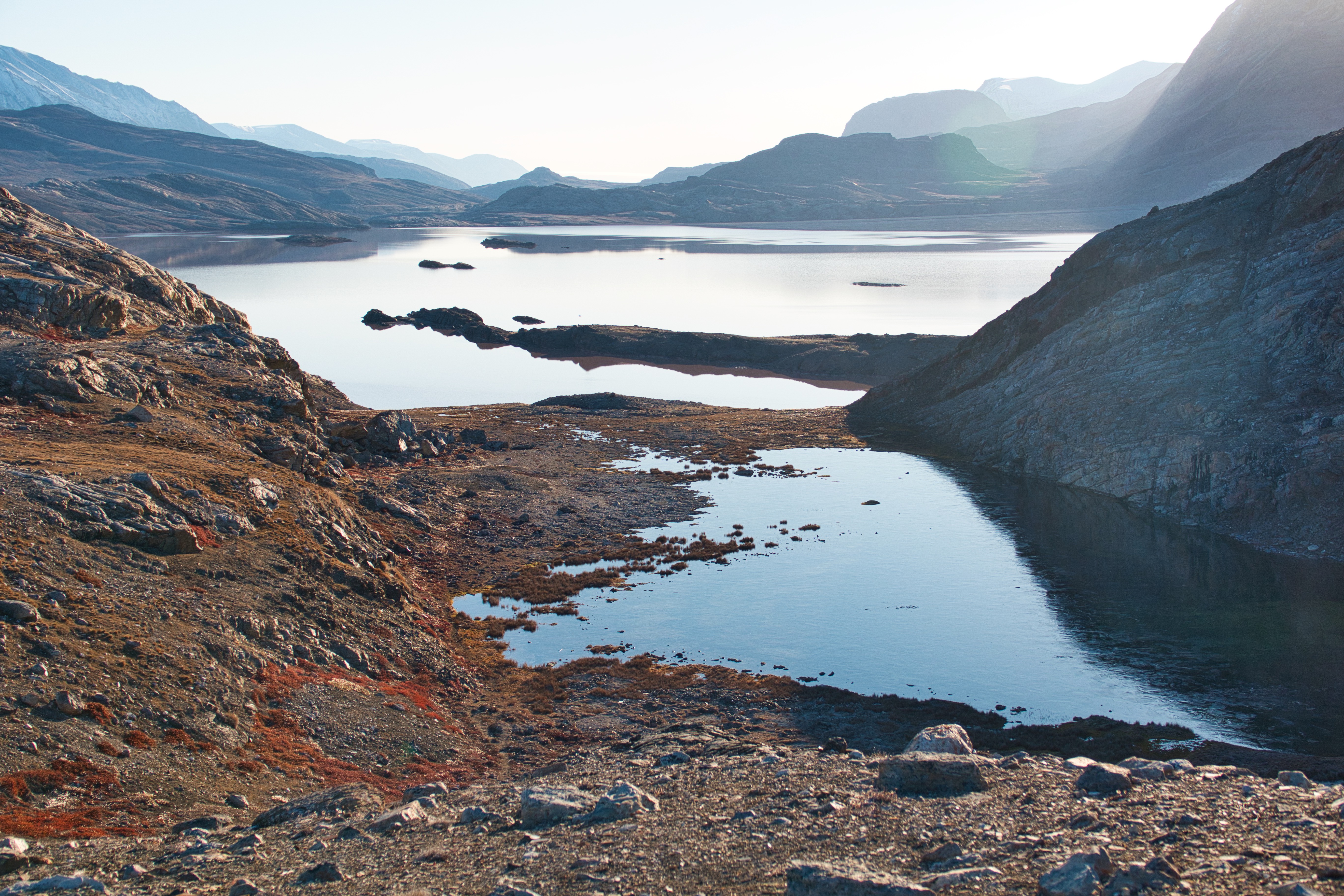
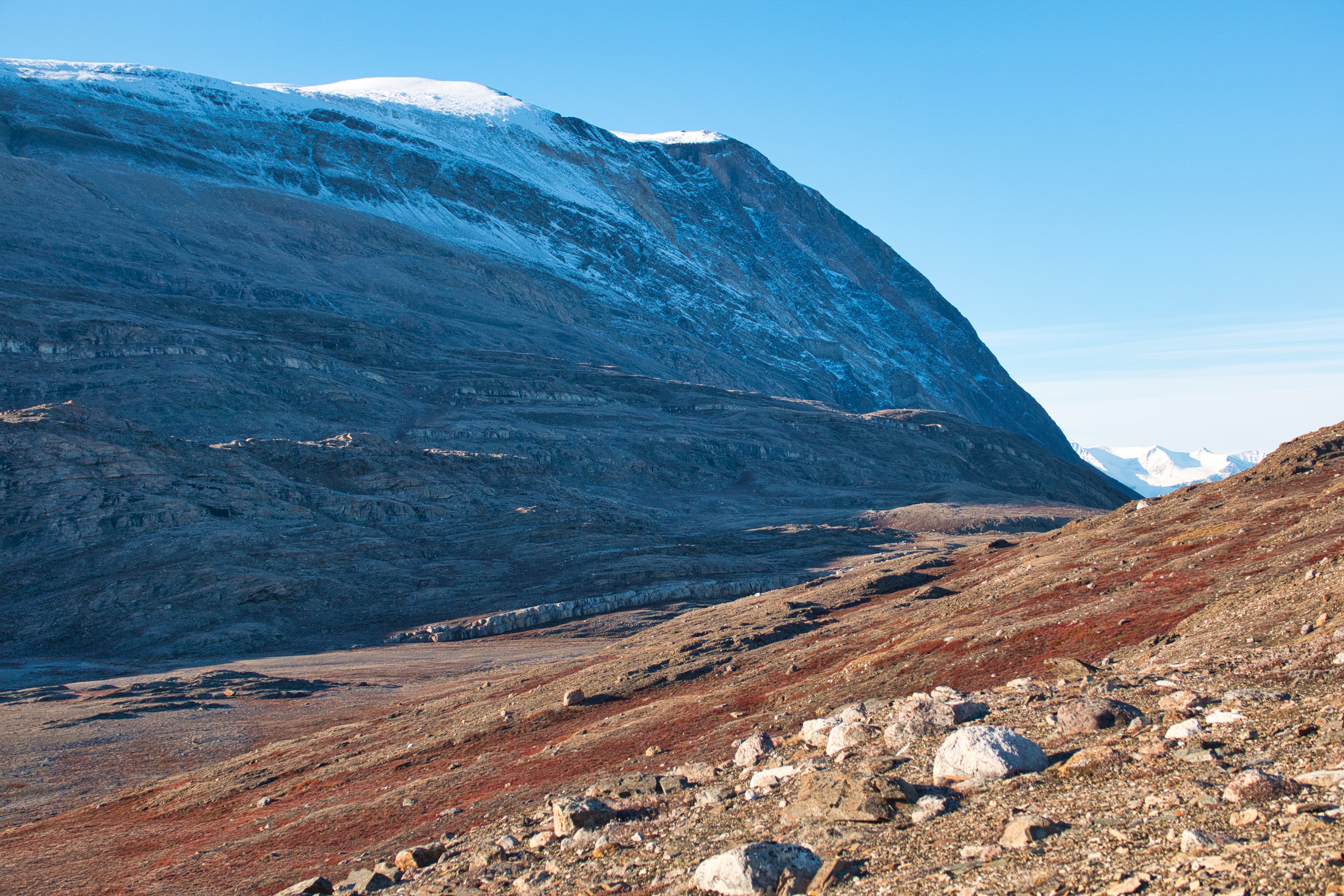
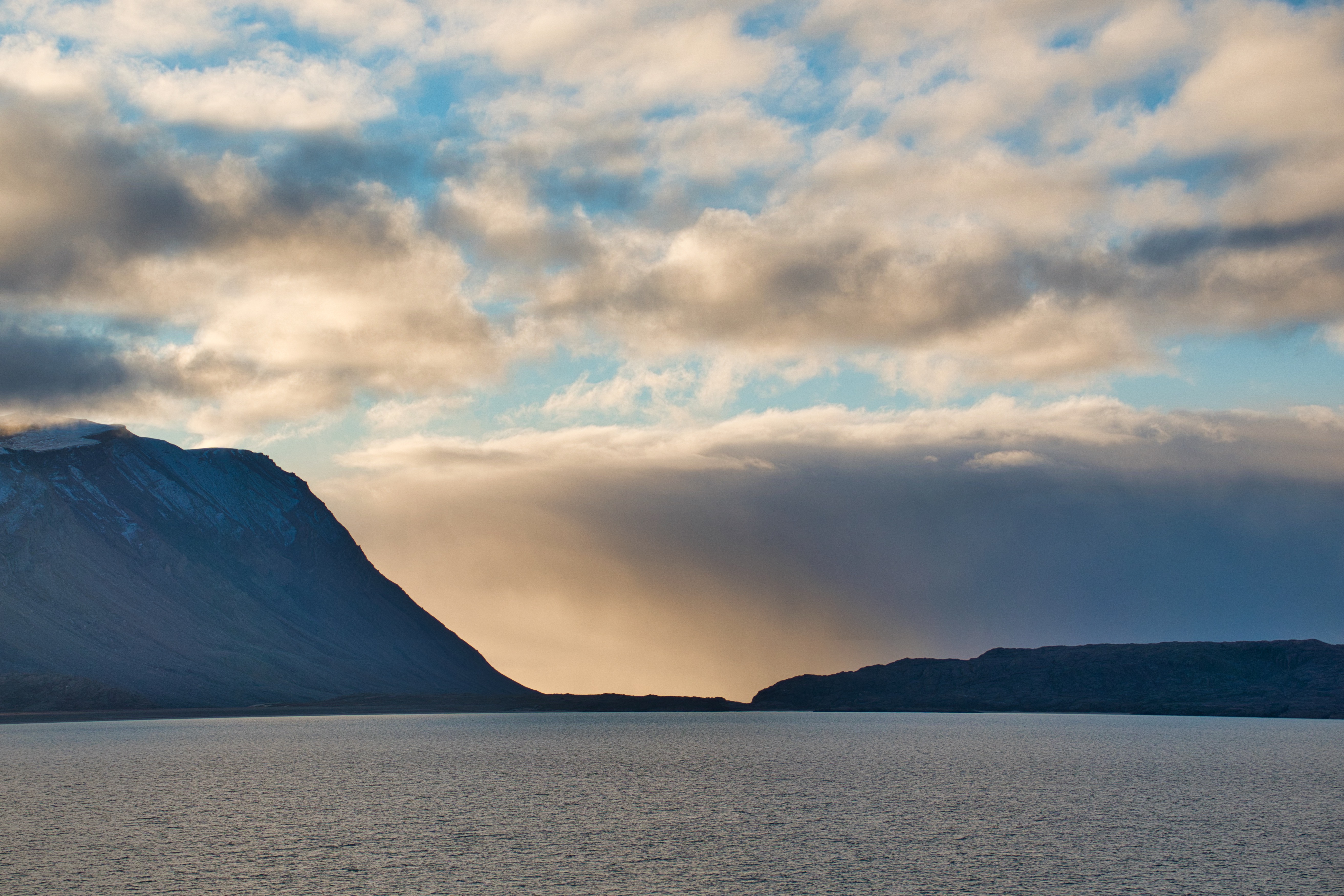
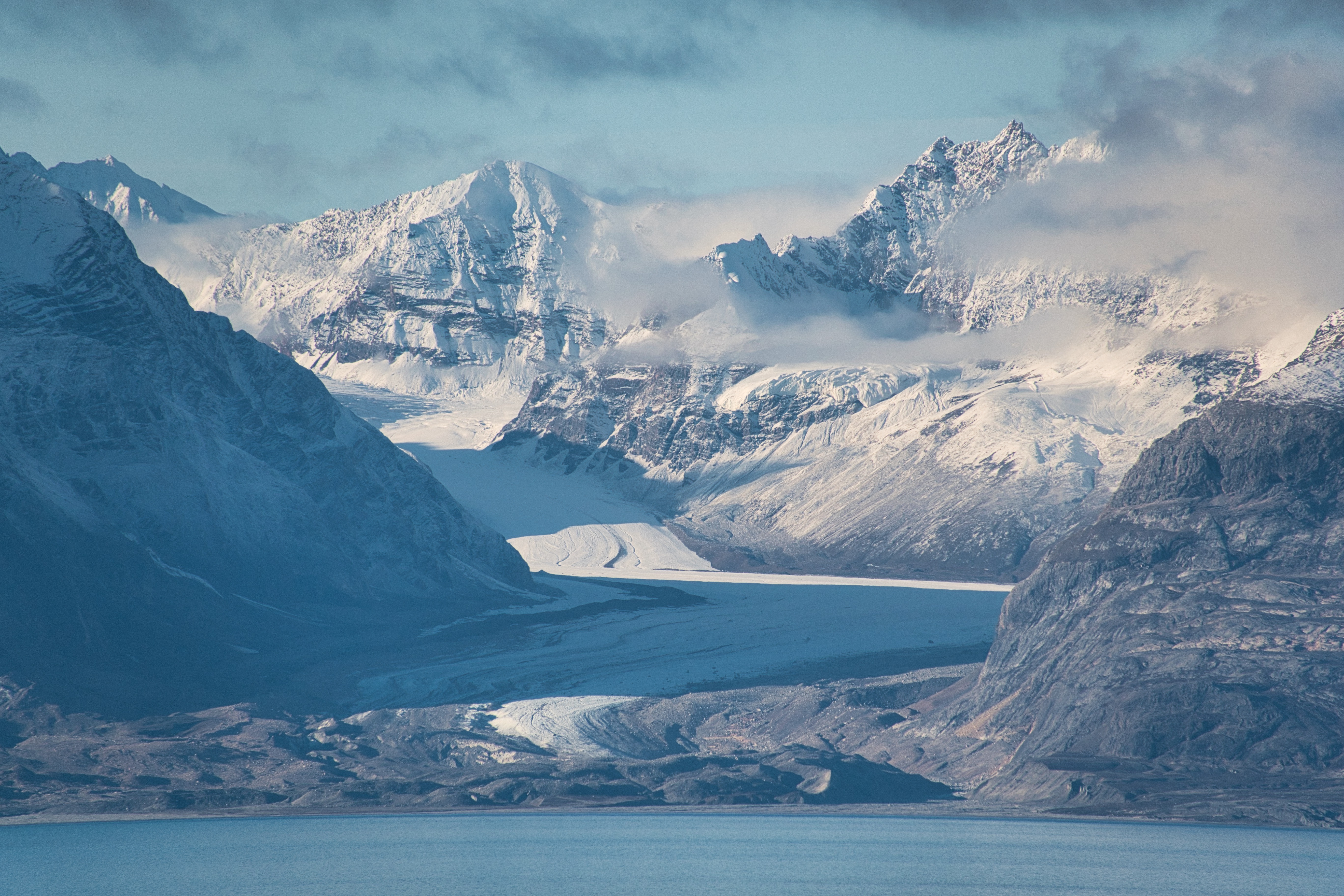
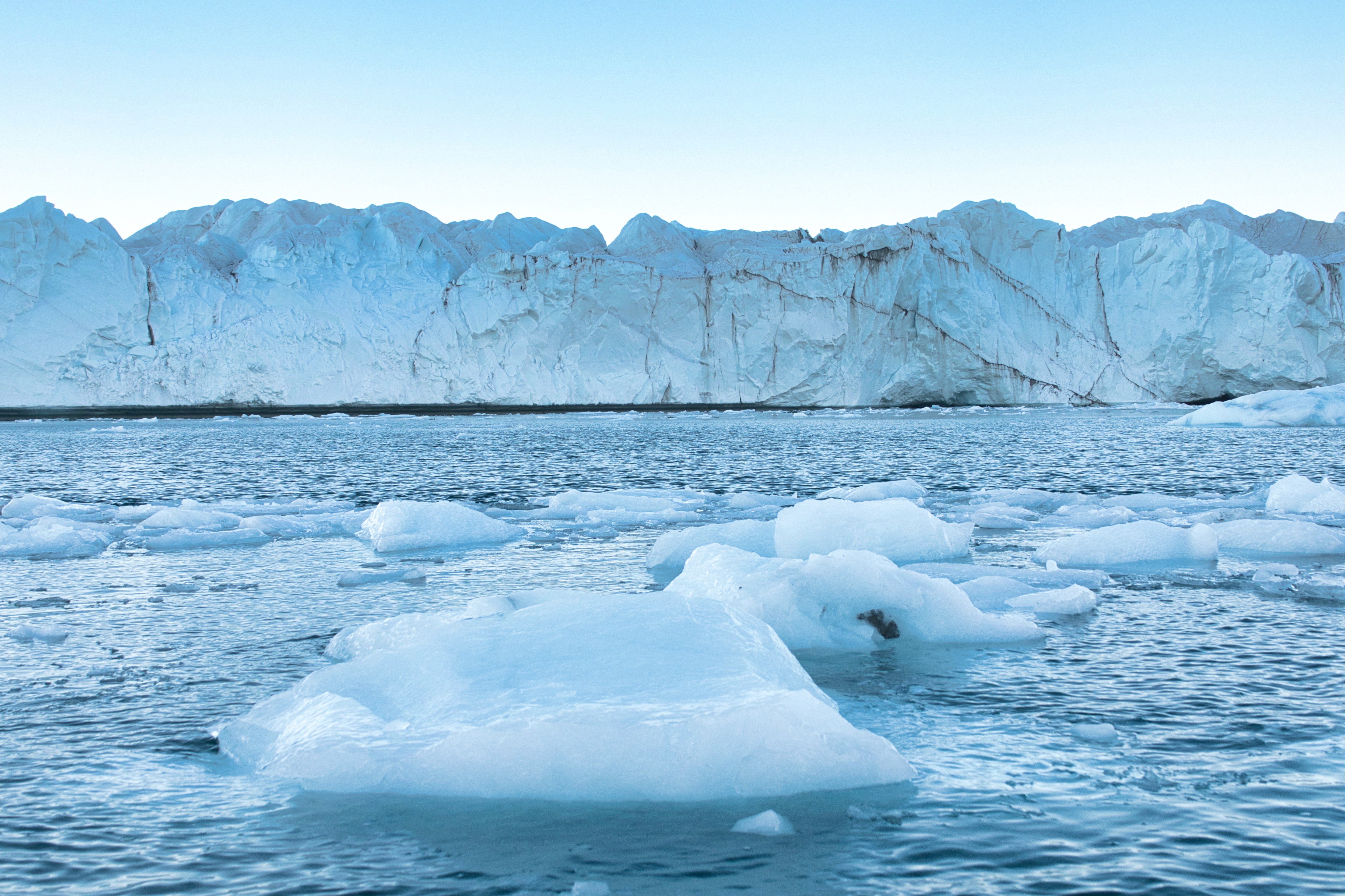
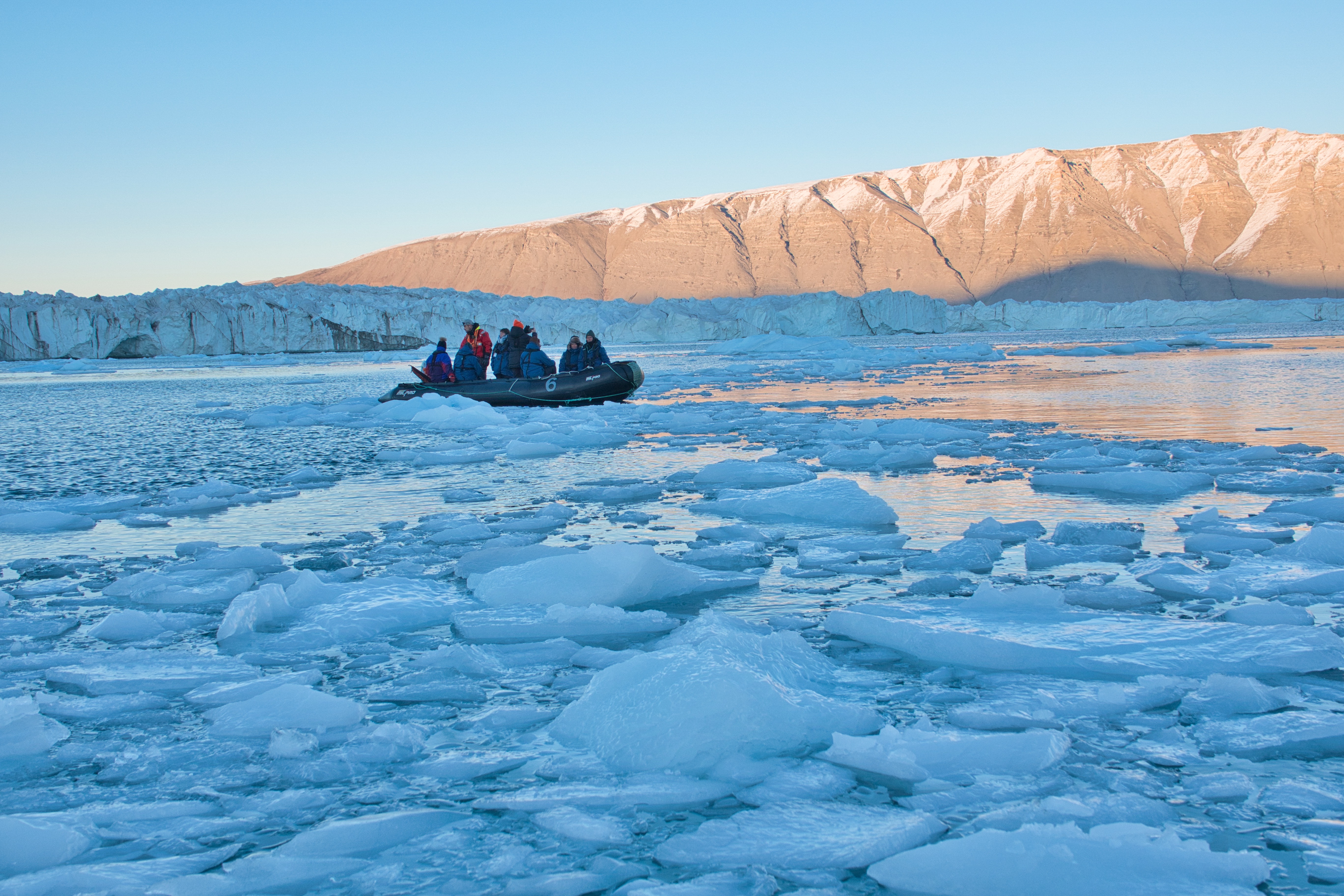
The Waltershausen Glacier (below) is at the end of Nordfjord. It was named after the German geologist who surveyed it in 1869-70.
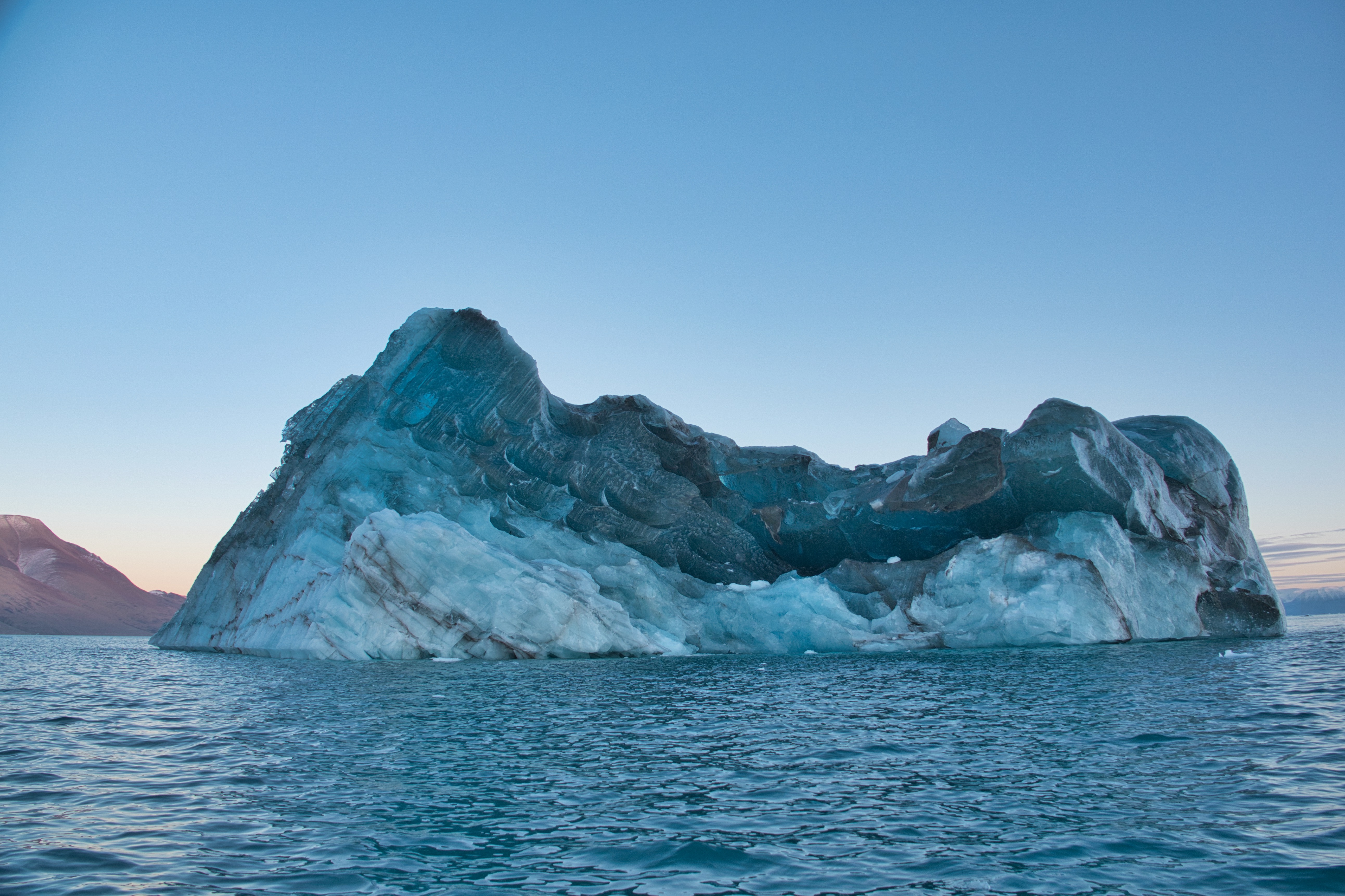
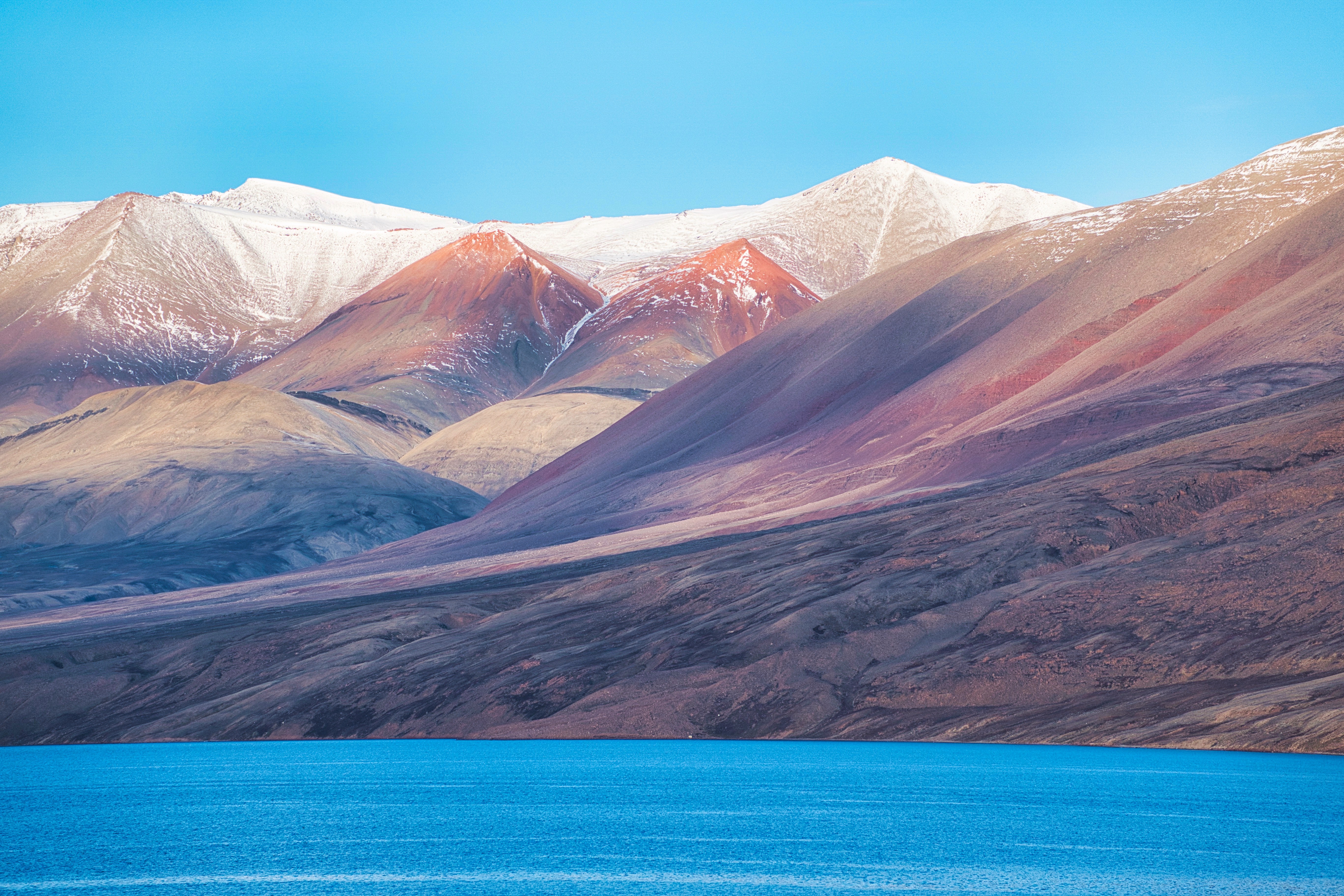
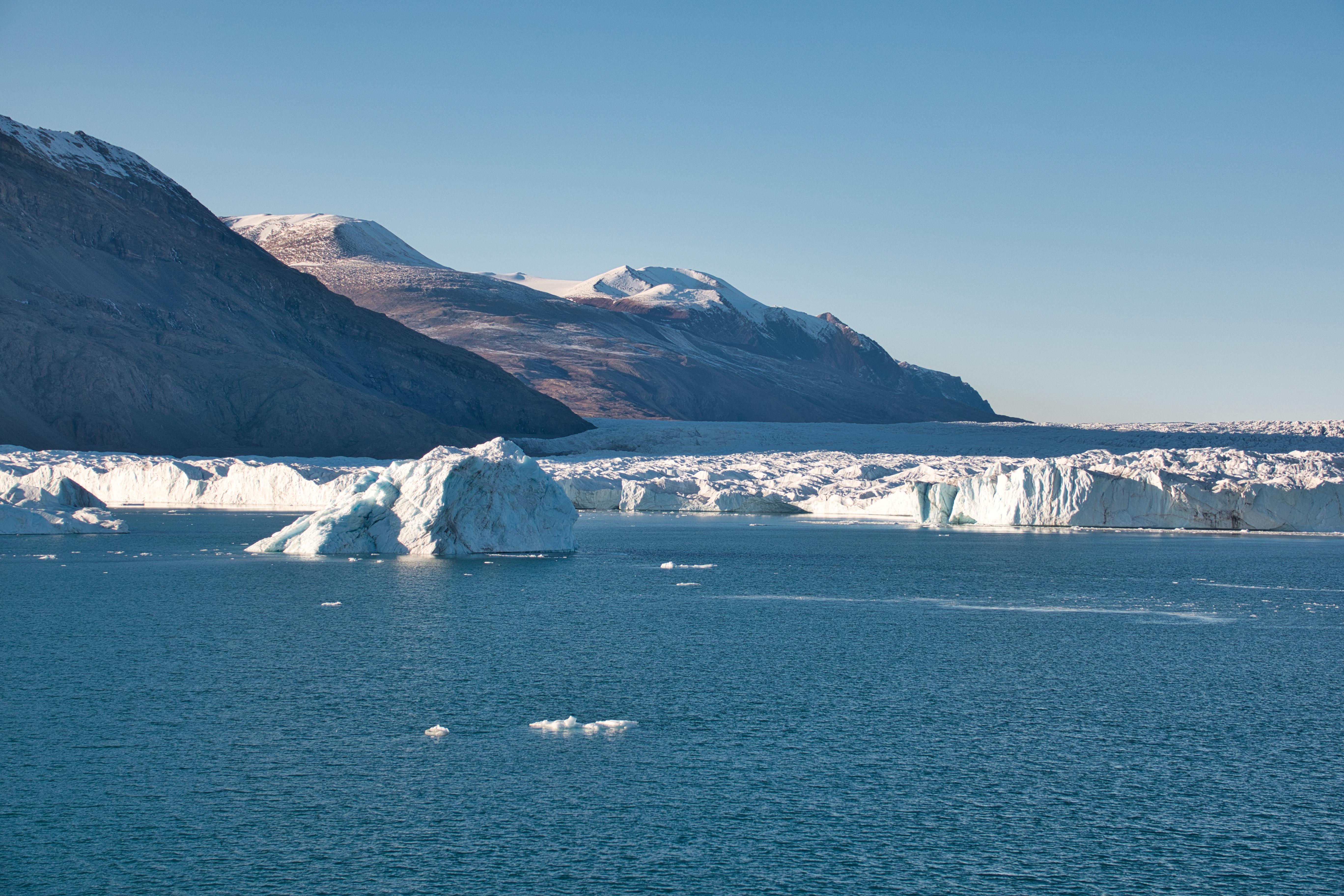
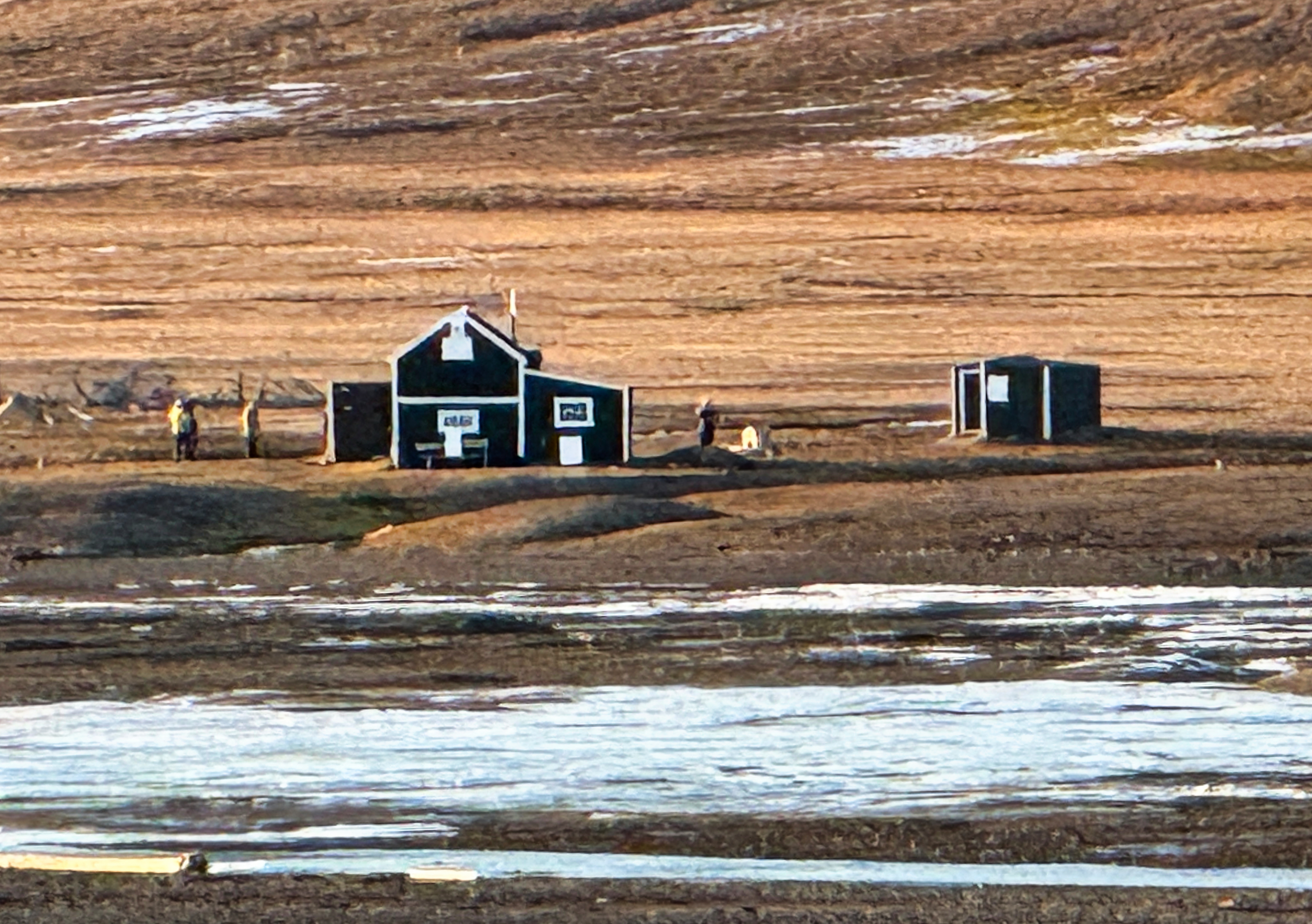
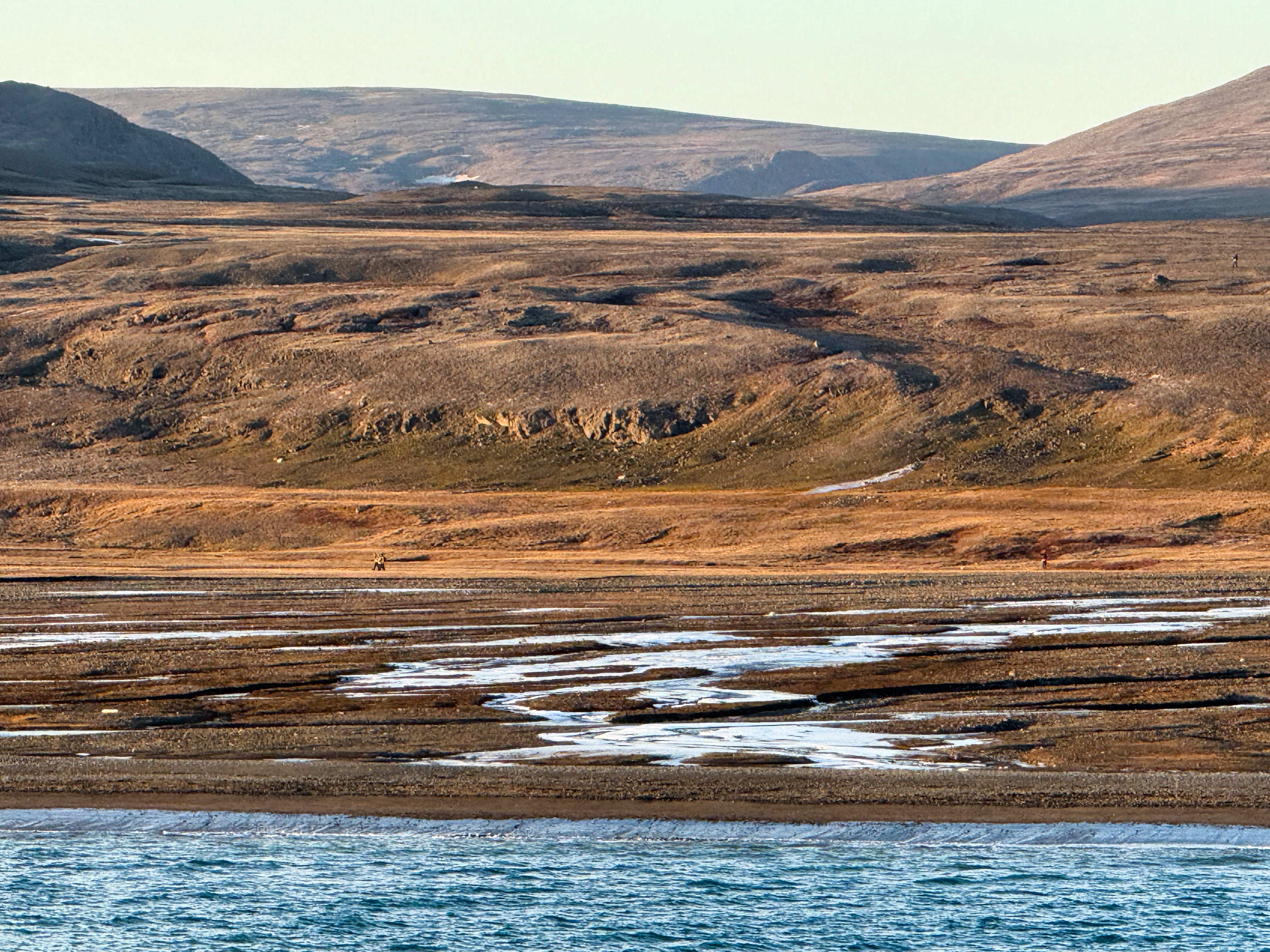
The Myggbukta is a bay in the larger Foster Bugt, getting its name from the wet coast that is optimal for mosquitoes in the summer. There is an old Norwegian weather station here, erected at the time when Norway tried to claim this part of Greenland.

Latest posts:
 Rails, wines, worlds