Upstairs, Downstairs – at the Naumburg Cathedral

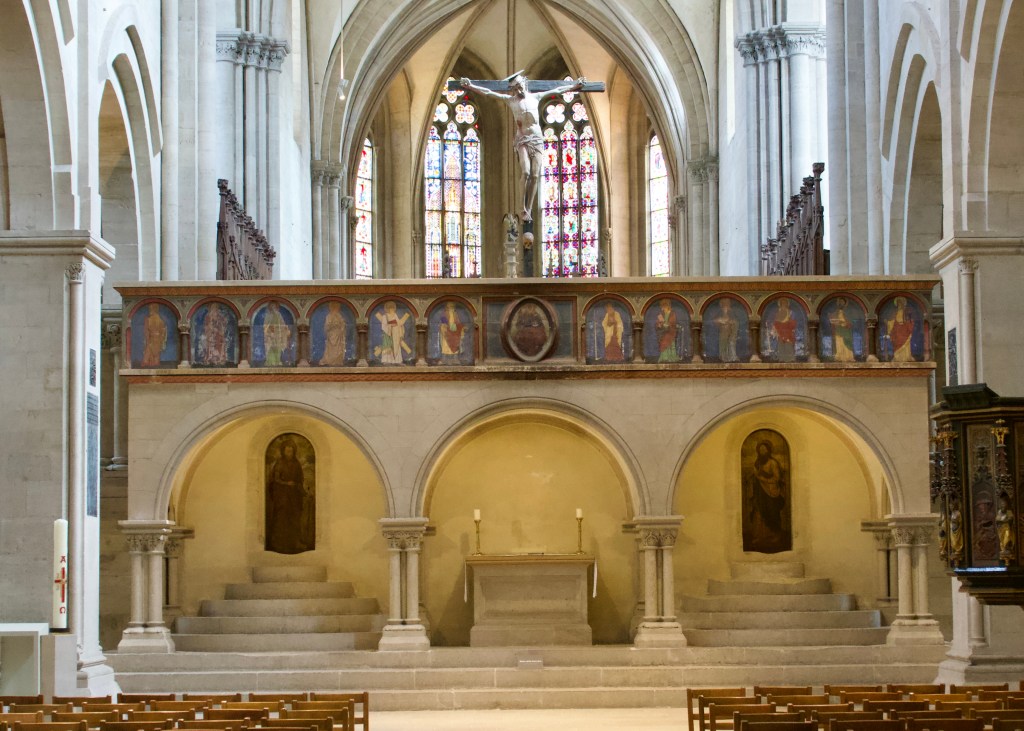
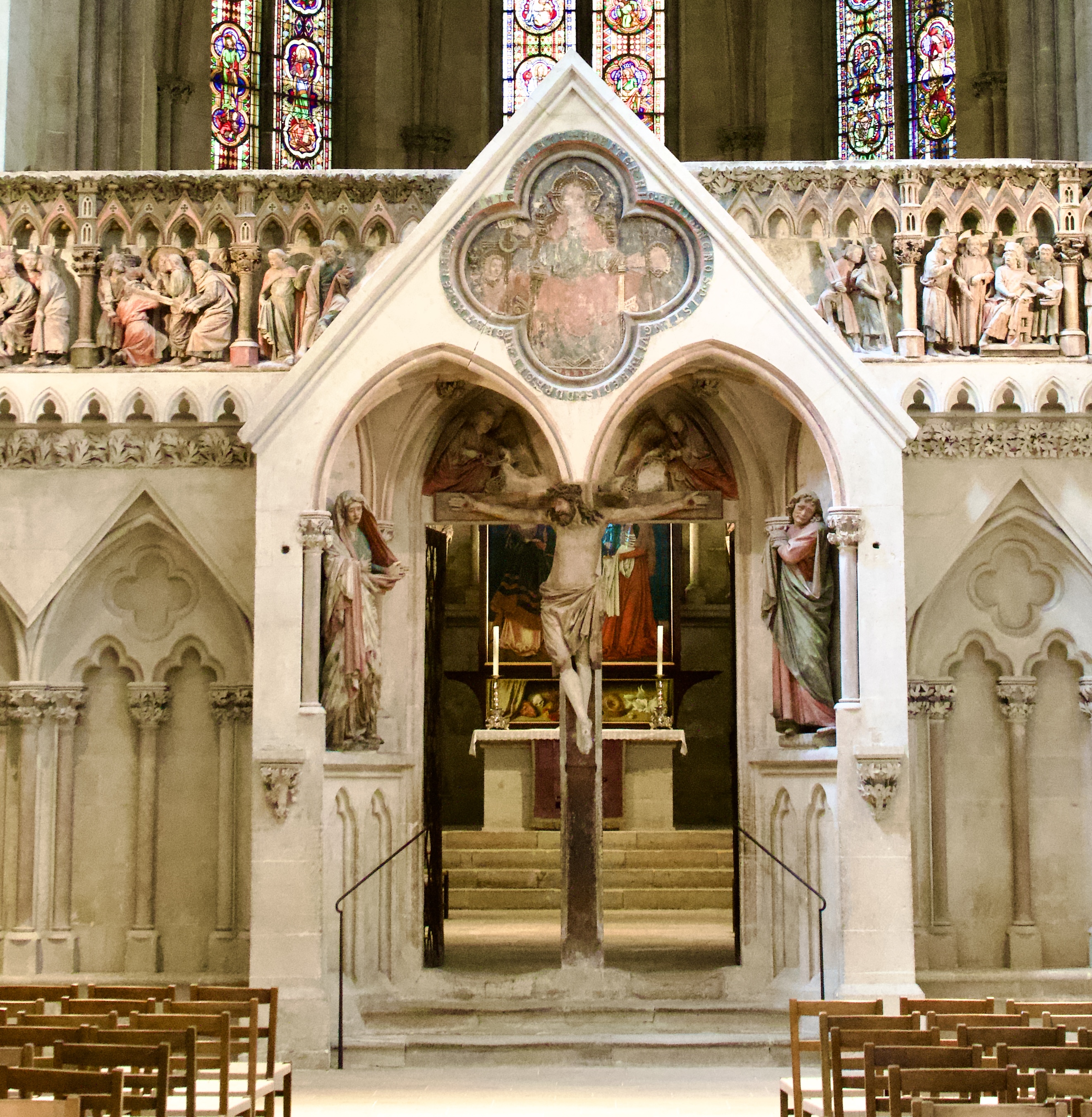
The choir of the medieval churches was usually reserved for the clergy and separated from the churchgoers with a more or less closed screen. Rarely were there two screens – one at both ends of the church, but the Naumburg Cathedral is one of them. It is even rarer that the screens have survived reformation and all manner of modernisation efforts.

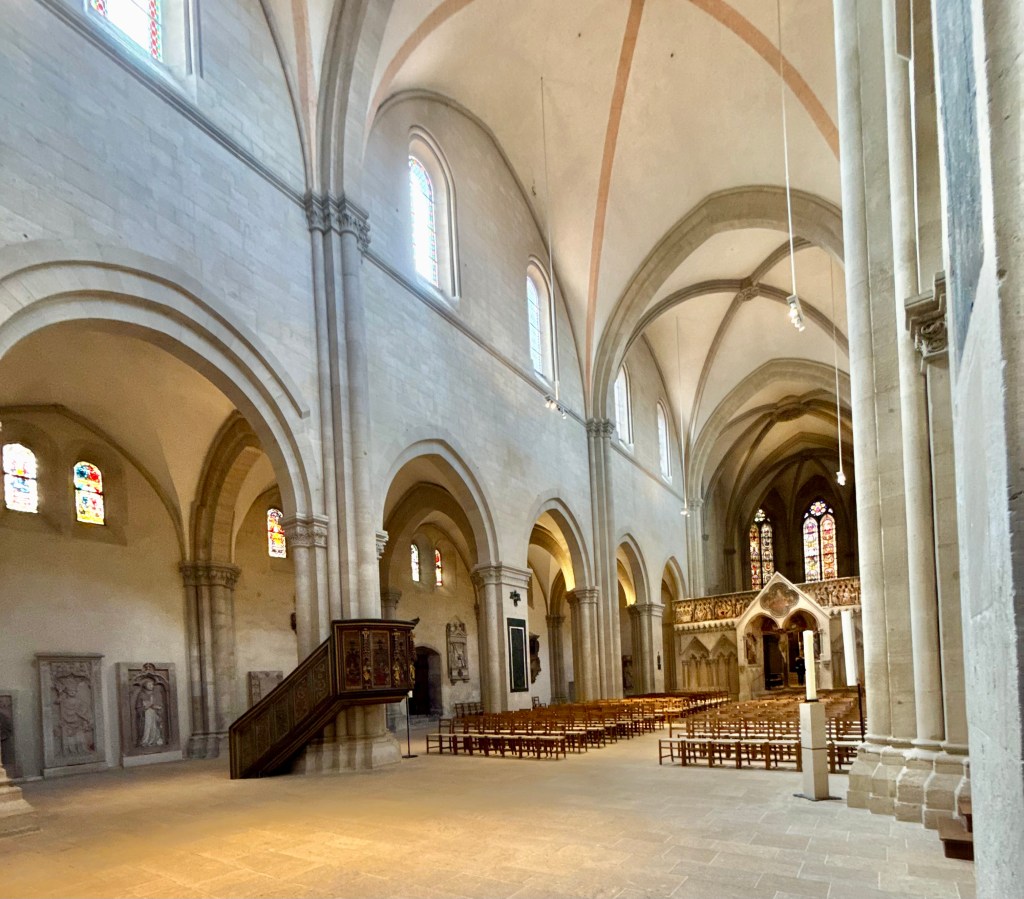
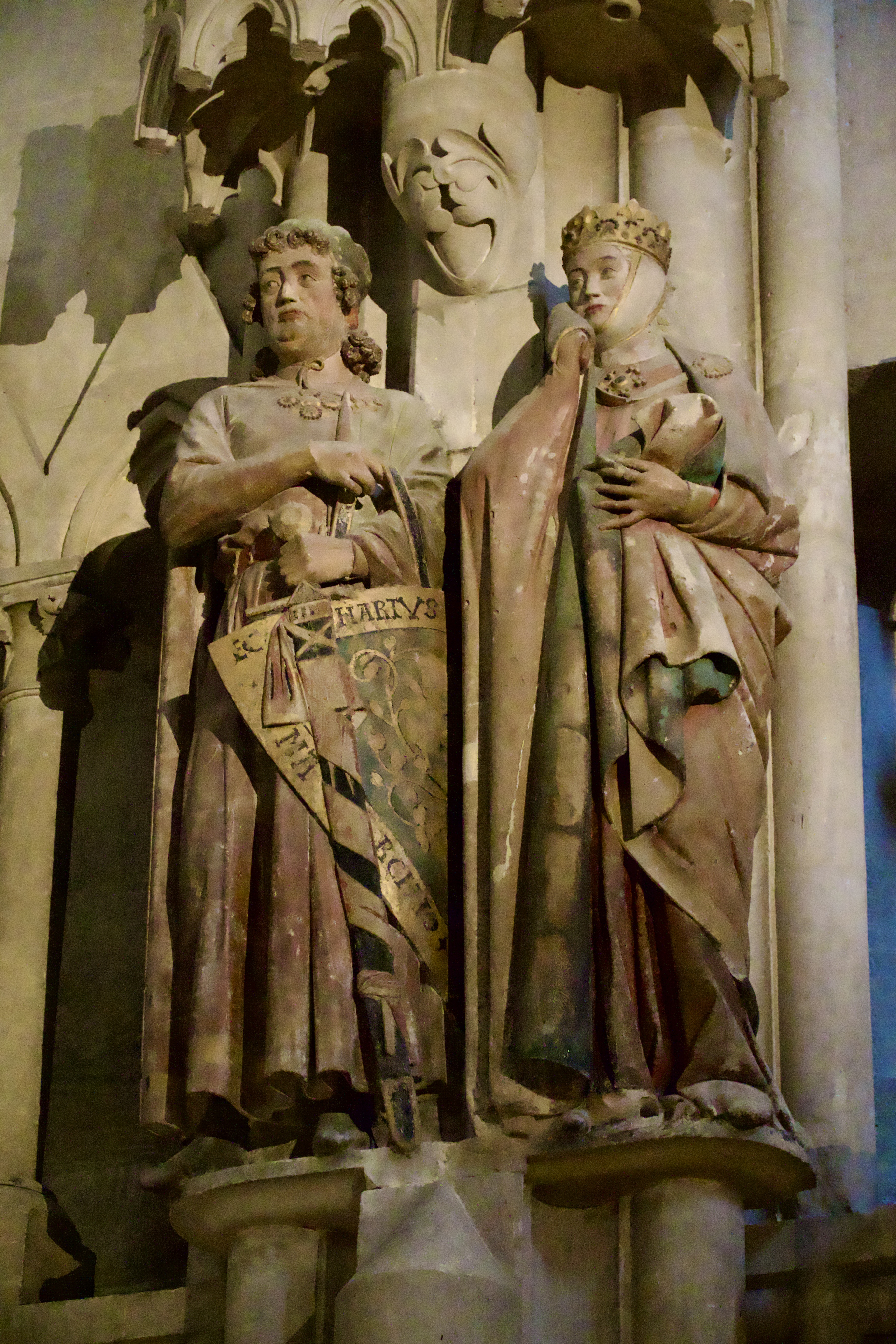
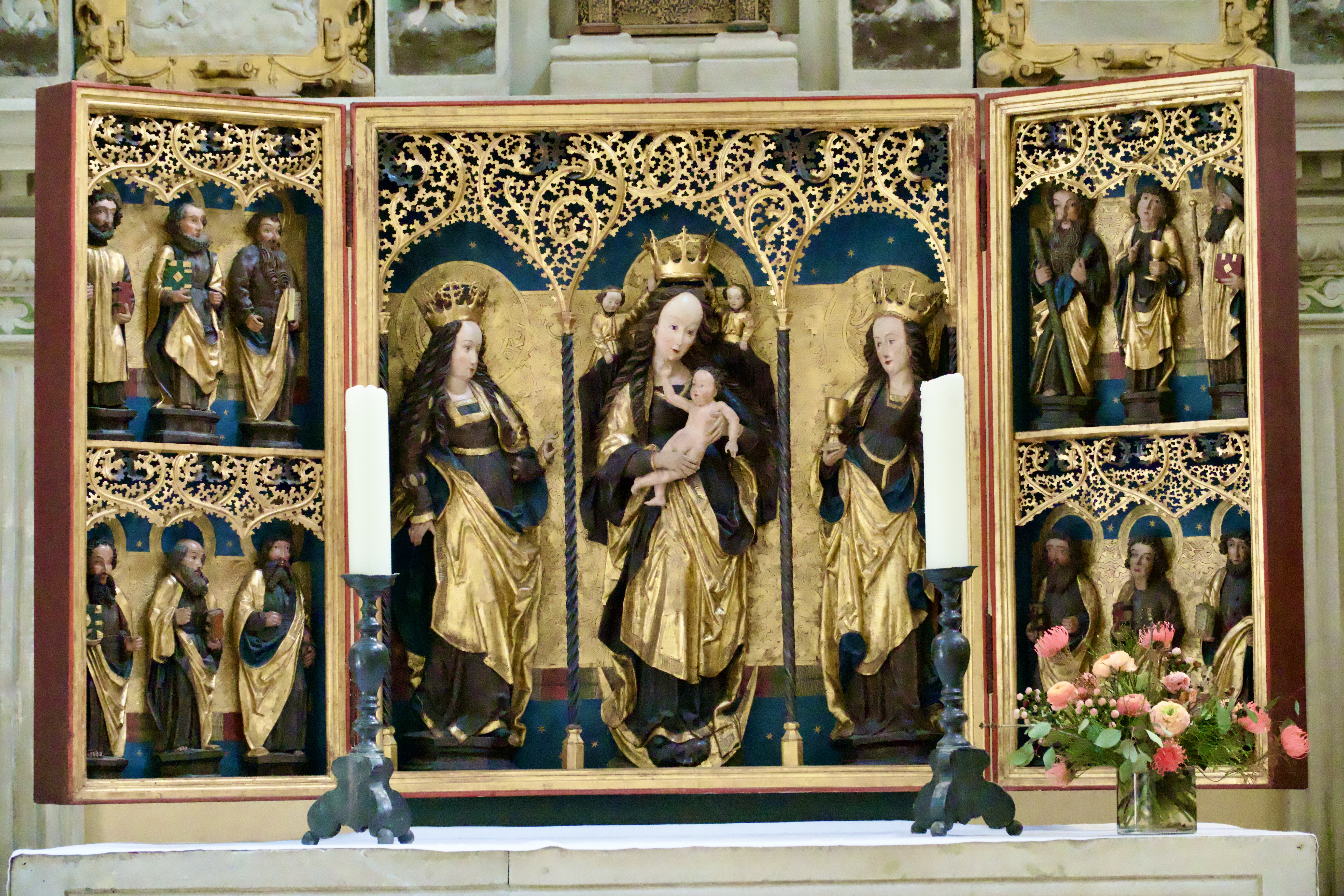
The central part of the Naumburg Cathedral (above left, with the west screen) was left for the congregation, but at both the west and east choirs were separated by screens (above right the east choir screen), beyond which only the clergy were allowed. To emphasise that the choirs were special, the west choir has statues of wealthy donators (’founders’) preserved for eternity (below left Margrave Ekkehard and his wife Uta) to remind the clergy who they should thank for the magnificent cathedral. The portal of the west choir is richly decorated by an unknown Gothic master (below right, upper picture). The east choir has the main altar dedicated to Mary (below right, lower picture).

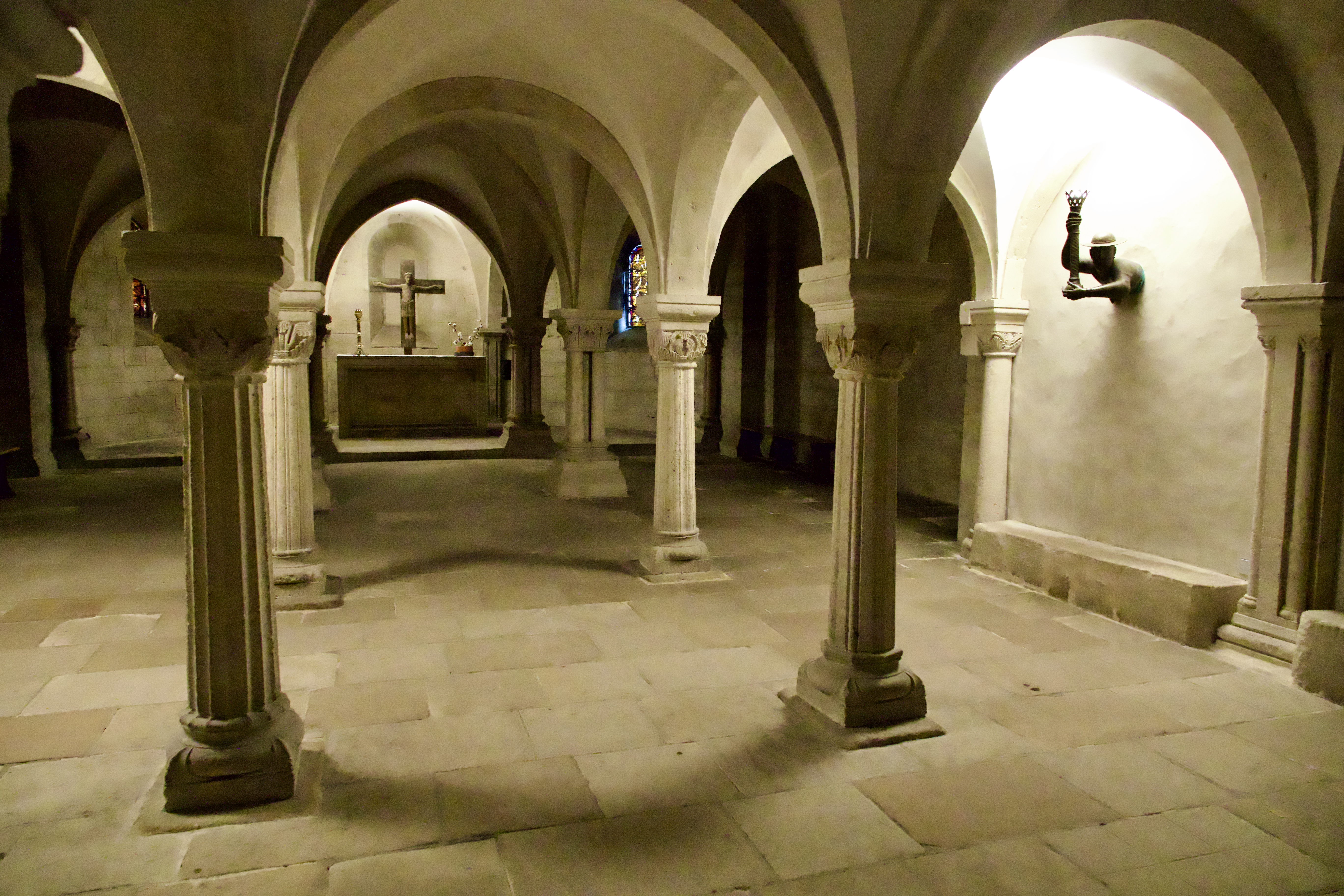
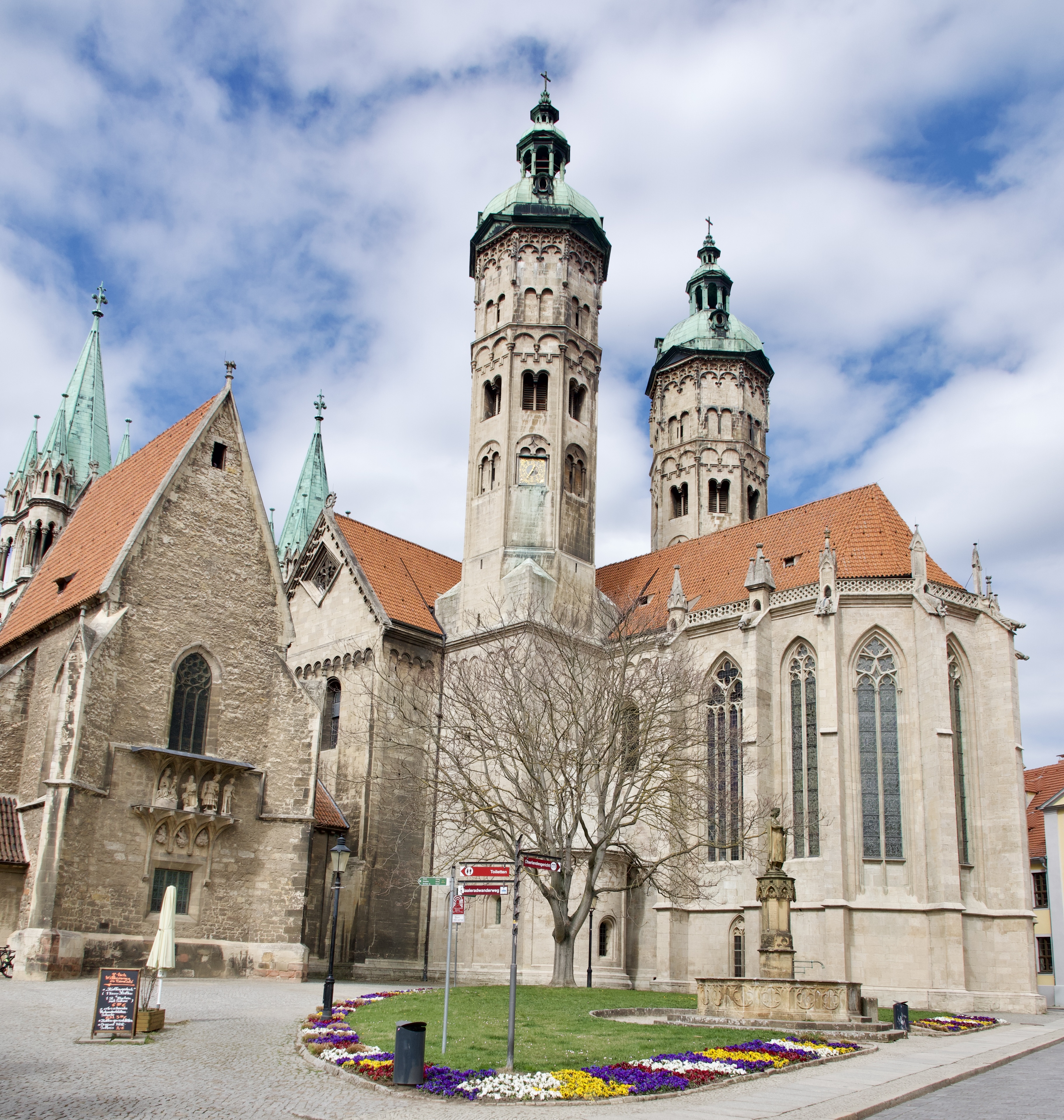
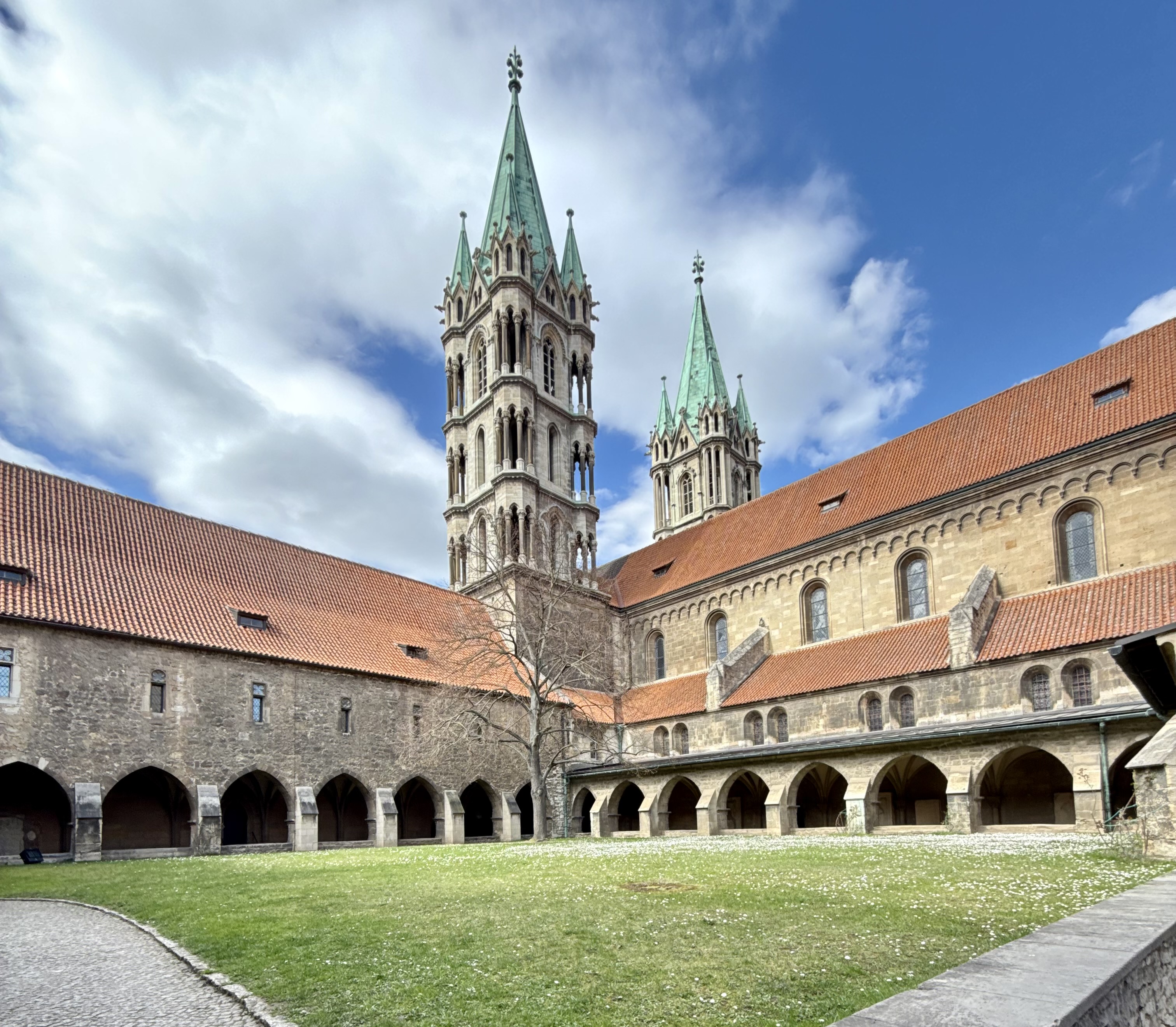
The construction of the well-preserved Cathedral started in early 13th century on the site of an earlier one (of which only part of the crypt survives, below left). Of the four towers, two are from 15th century (below right, upper picture) and two from 1894 (below right).

Over-the-top Baroque

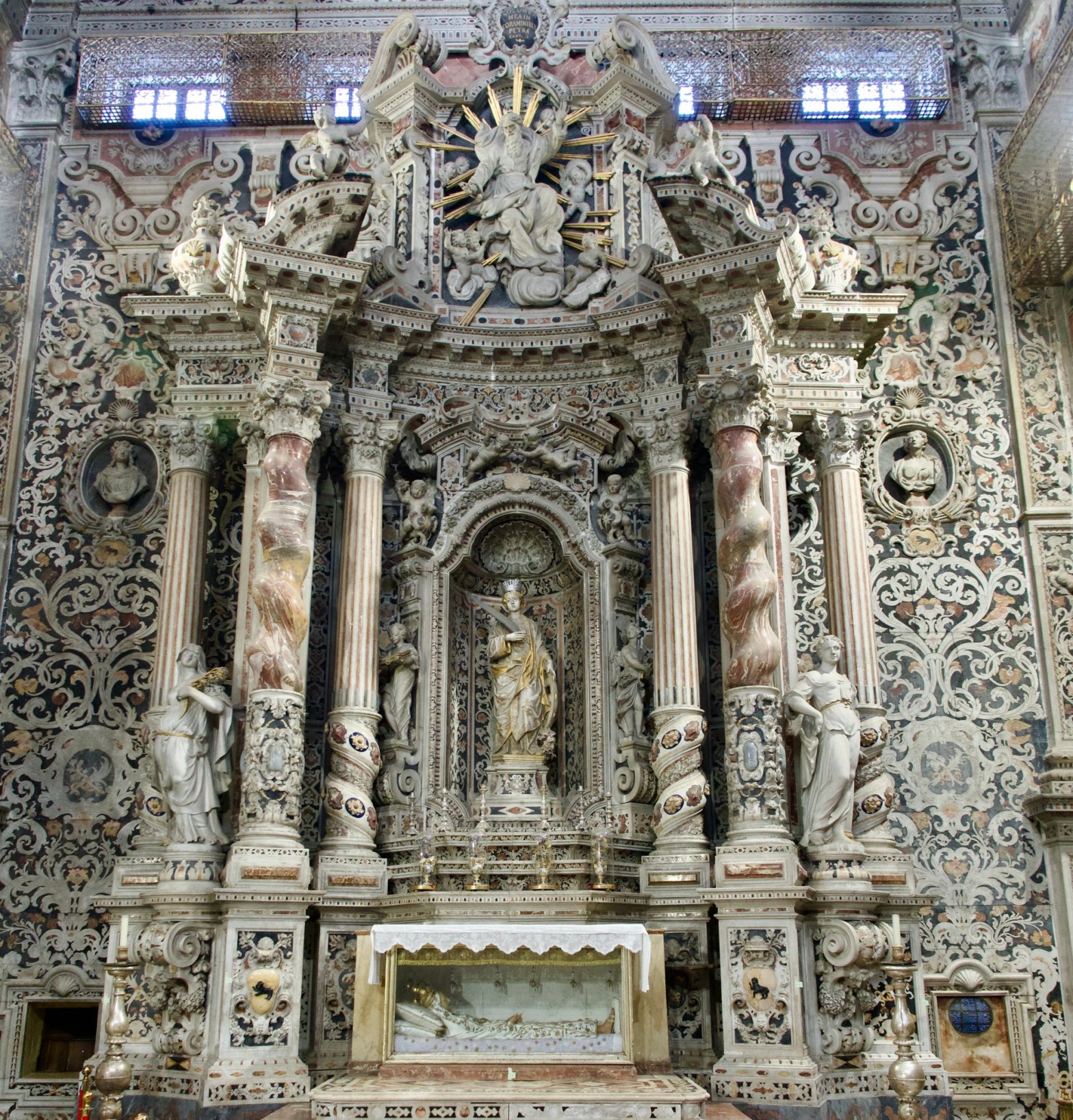
The interiors of the Baroque churches in Palermo seem to have been created by people with a clear ’horror vacui’, fear of emptiness. Every surface has been filled with statues, paintings and ornamentation. From a North European viewpoint, the Sicilian Baroque is really something else.

Saints and biblical stories naturally dominate the narrative of the statues and paintings. Below (and title picture) is the Santa Catarina d’Alessandria (left and middle) and Il Gesù (right).

Continue reading “Over-the-top Baroque”

Normans in Sicily

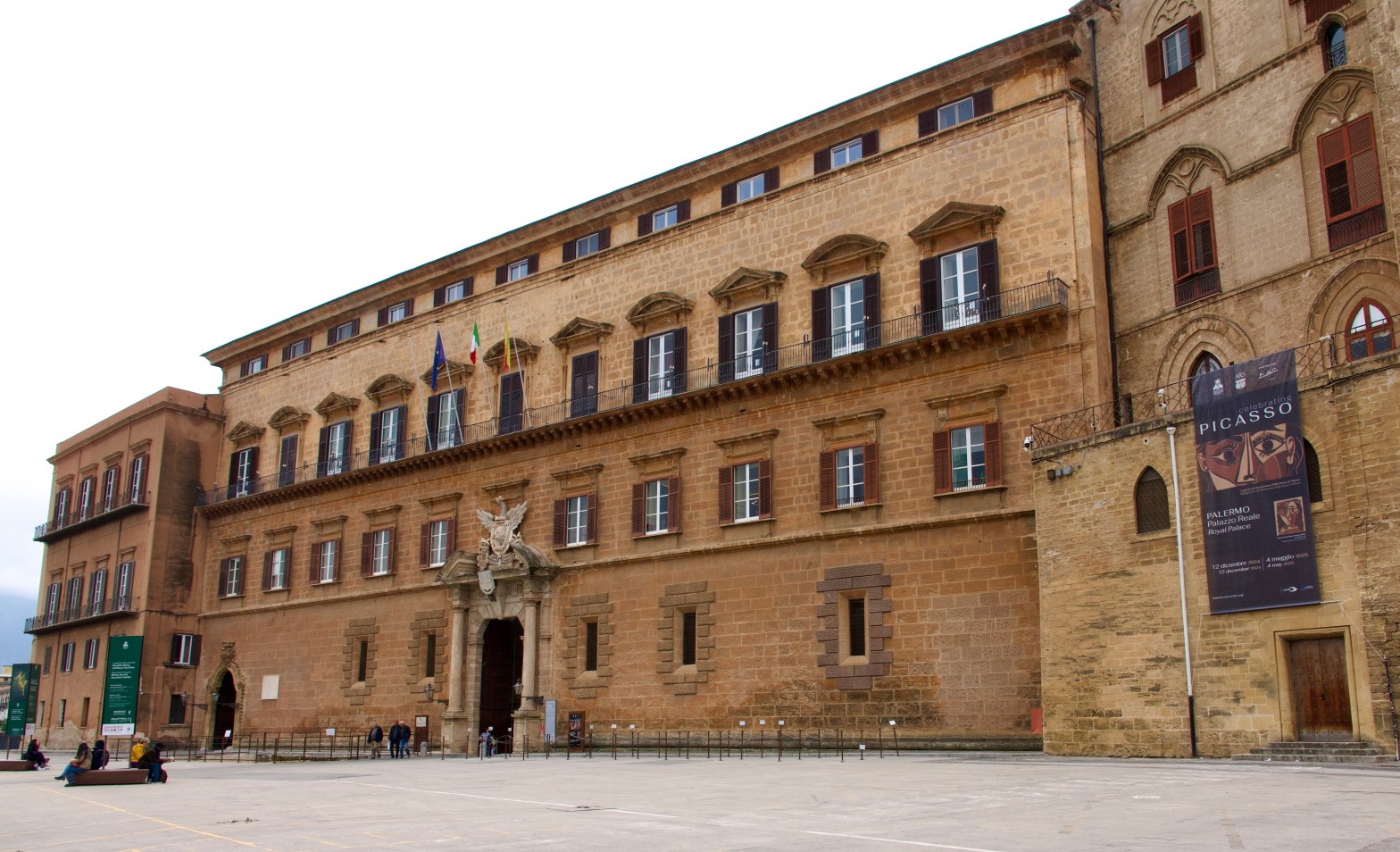
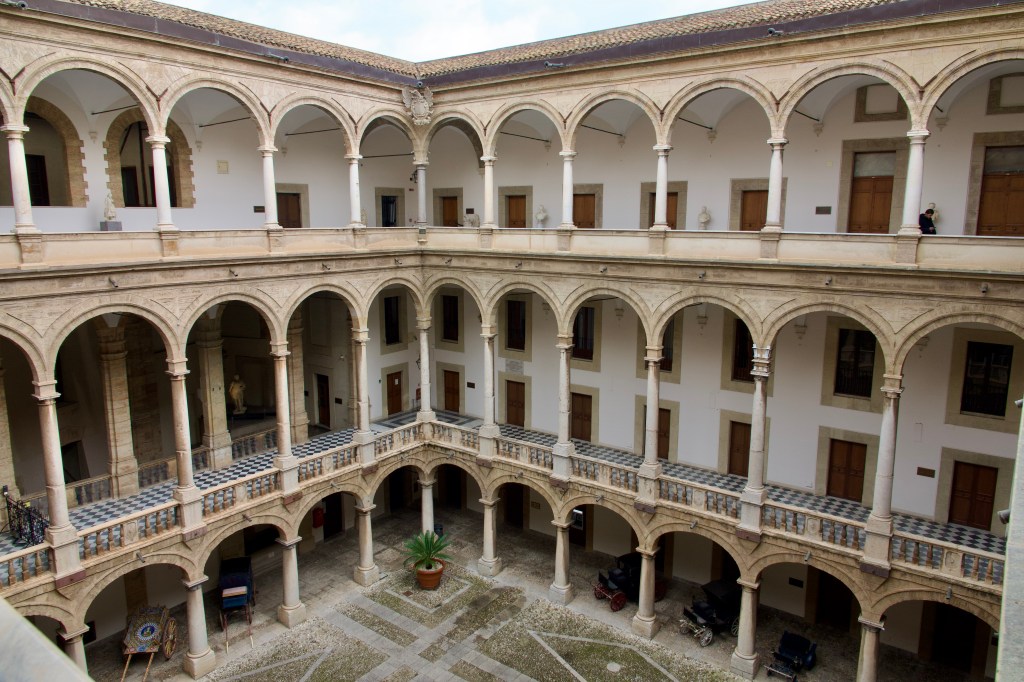
As is well known, Normans (i.e. descendants of Vikings from Northern France) conquered Sicily from 999 onwards. They established the Palazzo dei Normanni in Palermo as their headquarters and built this originally Arab defensive fortress into a royal palace (title picture and below). Obviously later occupants have expanded and changed it considerably.

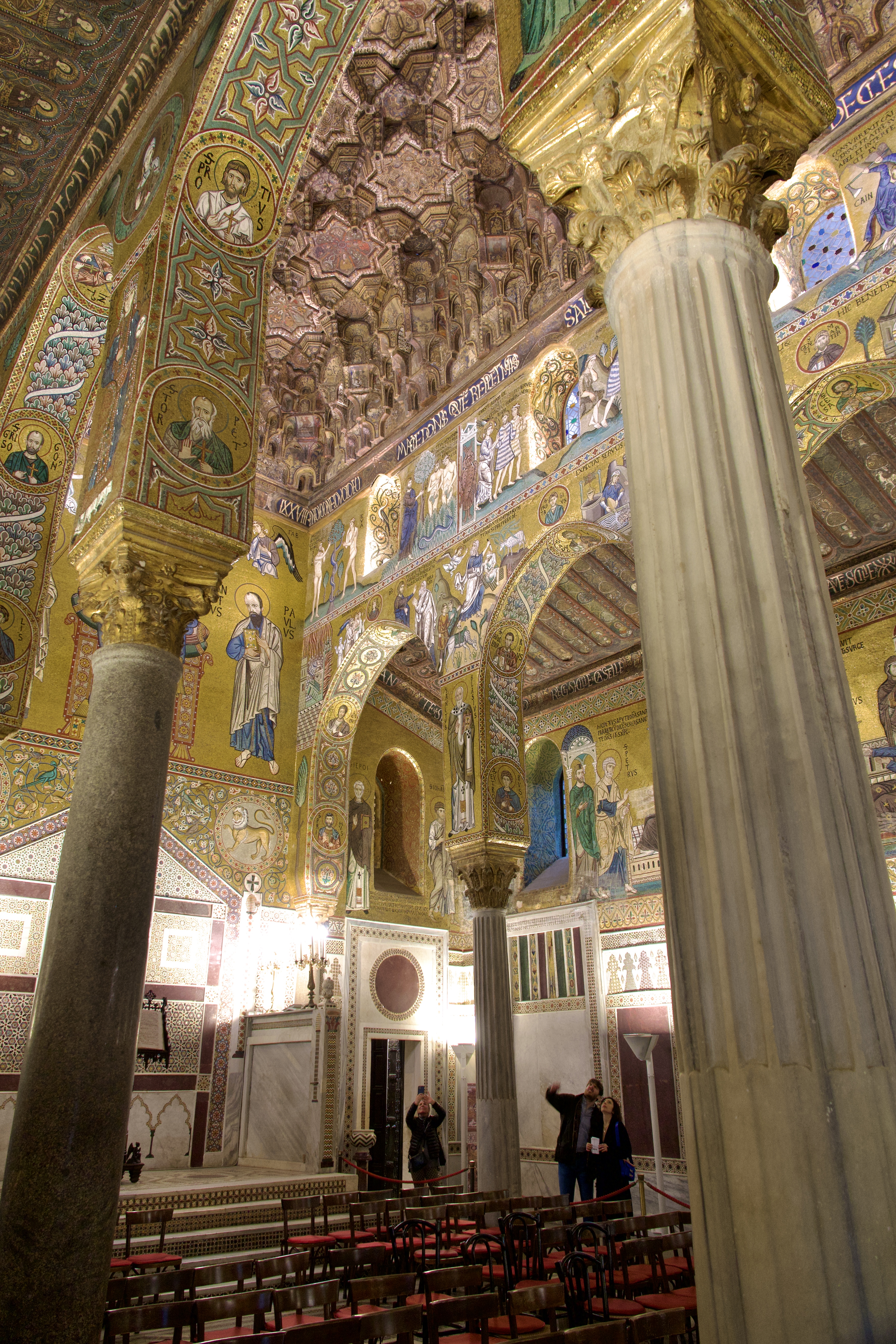
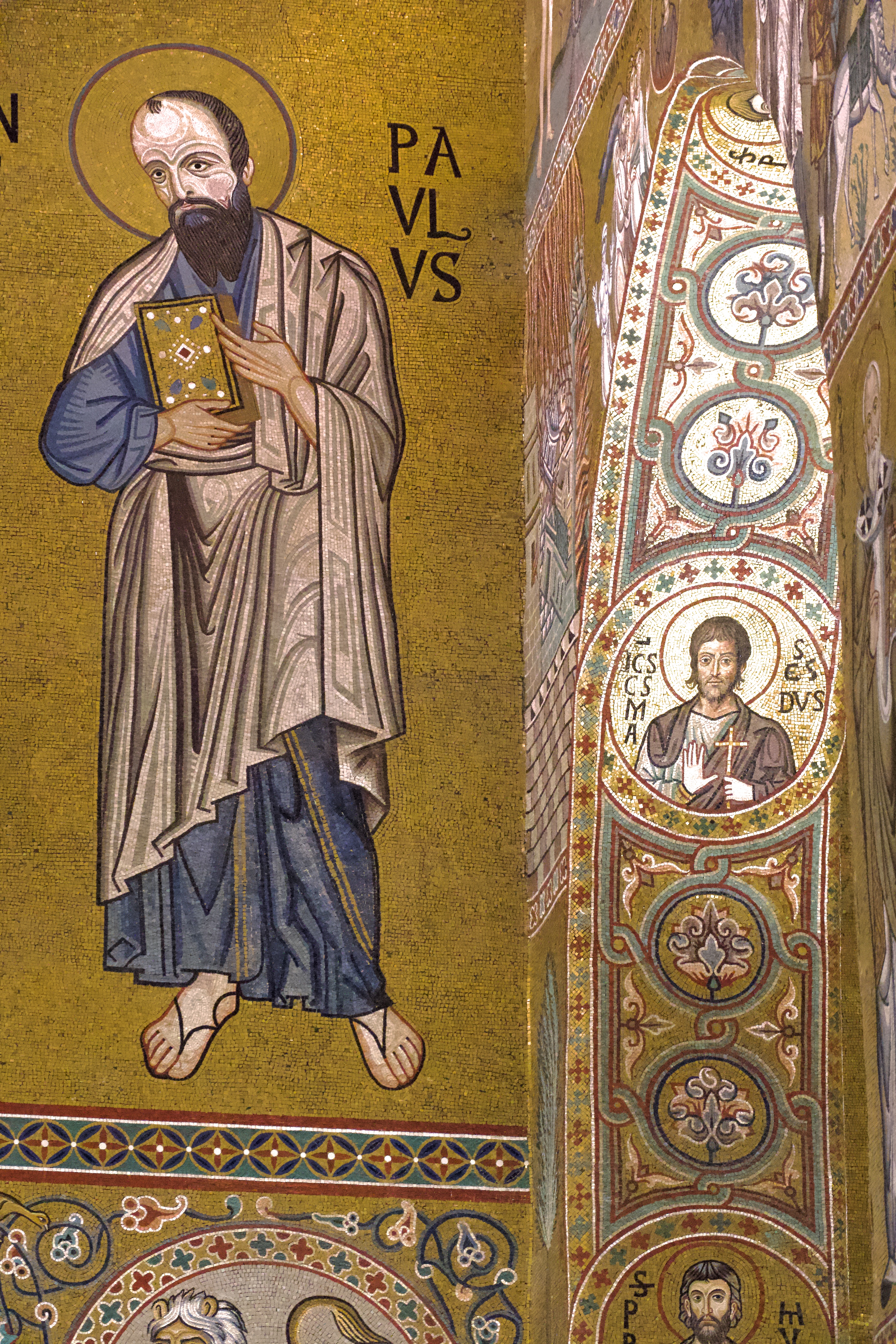
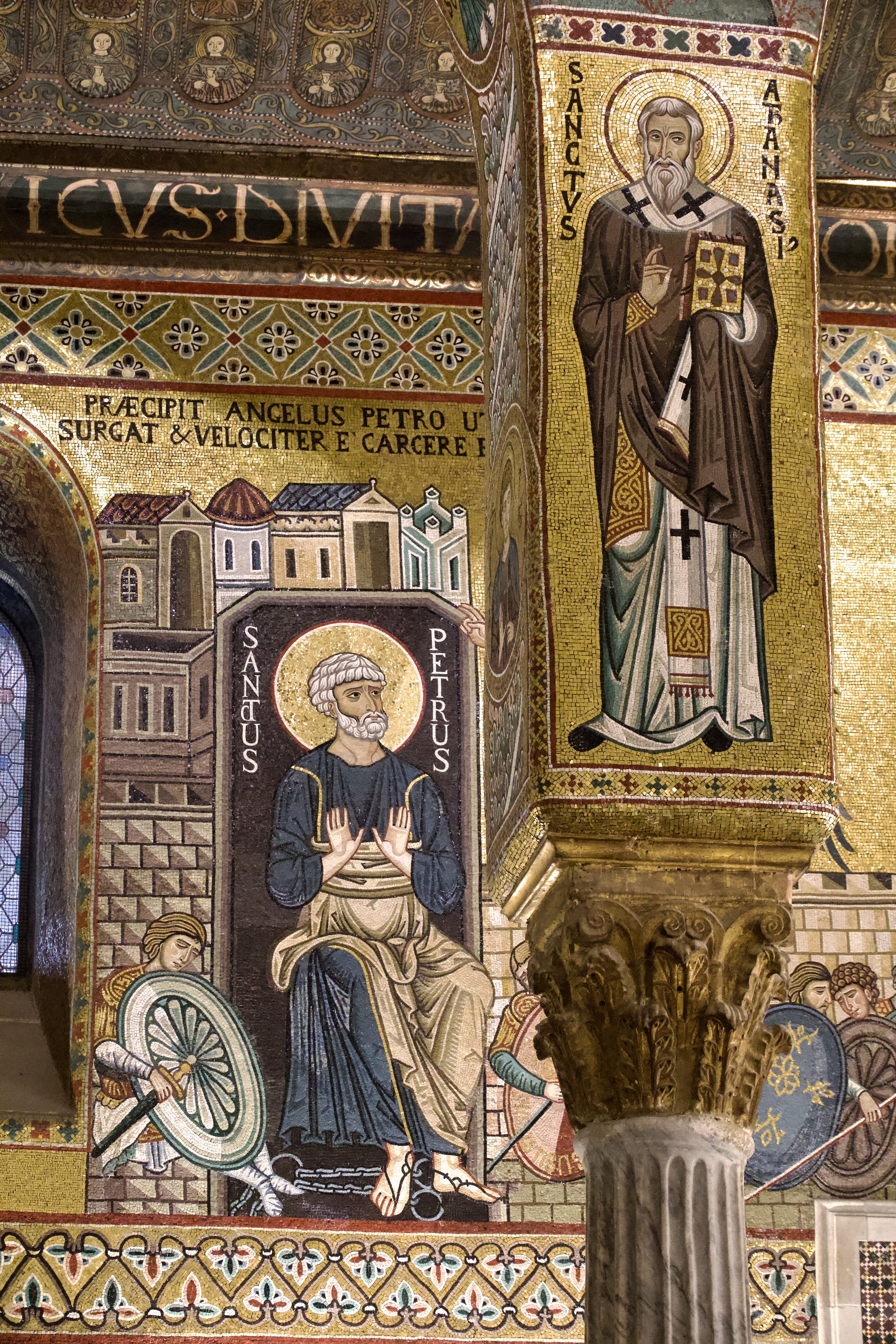
Some of the occupants of the palace have been colourful. E.g. Roger II rose to power in Sicily, but had to fight for the formal recognition of his status (against relatives, the popes and other usual suspects), before he was formally crowned 1130. He built the Cappella Palatina in the Palazzo, incorporating Norman, Saracen, Byzantine and Arabic design into the whole (pictures below).

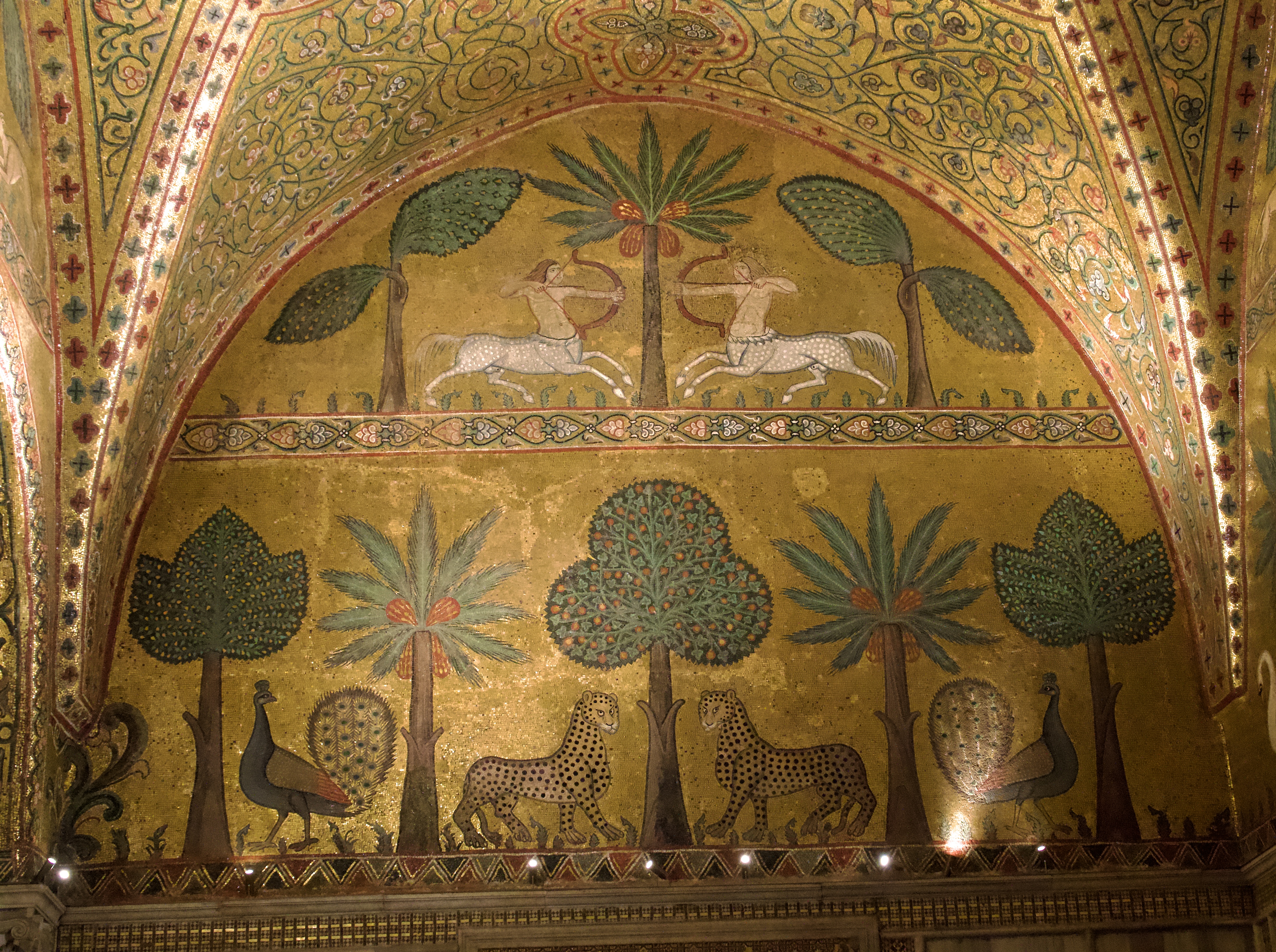
Although the Cappella decoration is Biblical, for the private rooms, Roger chose more everyday subjects (below).

A bit later, a member of the Hohenstaufen family, Frederick II, was crowned king of Sicily in 1198 and became the Holy Roman Emperor in 1220. He was one of the most remarkable rulers of the Middle Ages – as a canny crusader he crowned himself as king of Jerusalem in 1230, and was called ’Stupor mundi’ (Wonder of the World).

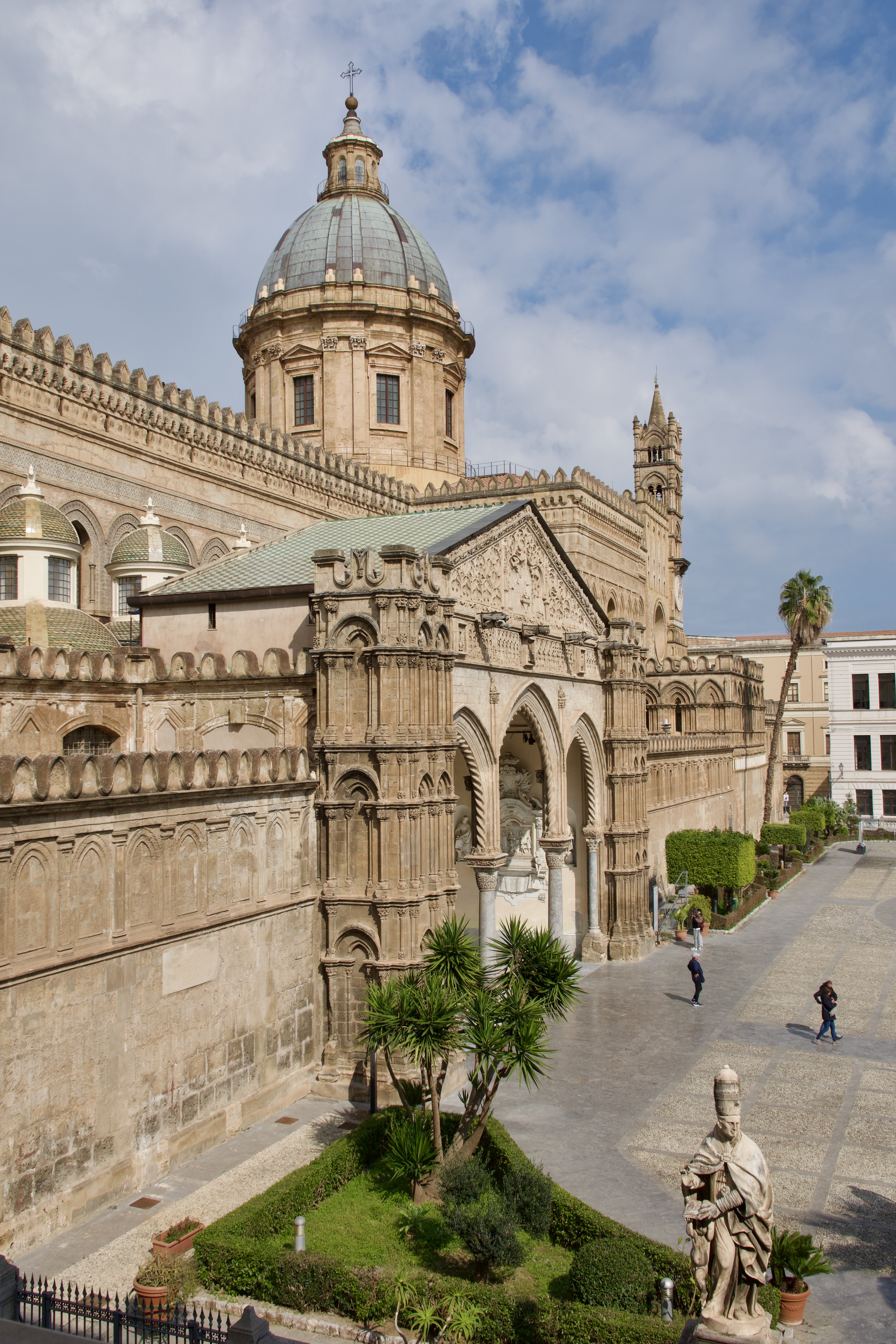
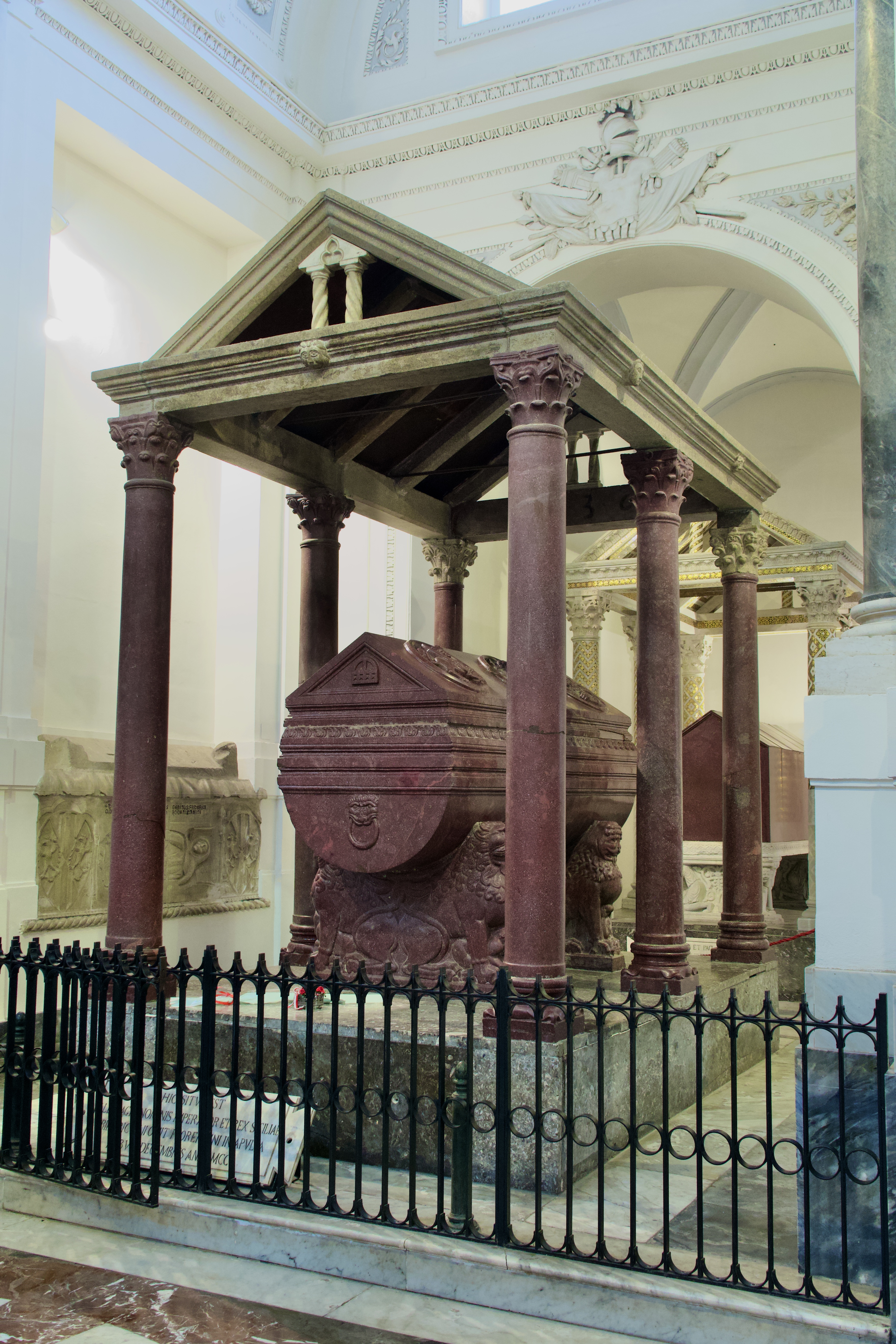
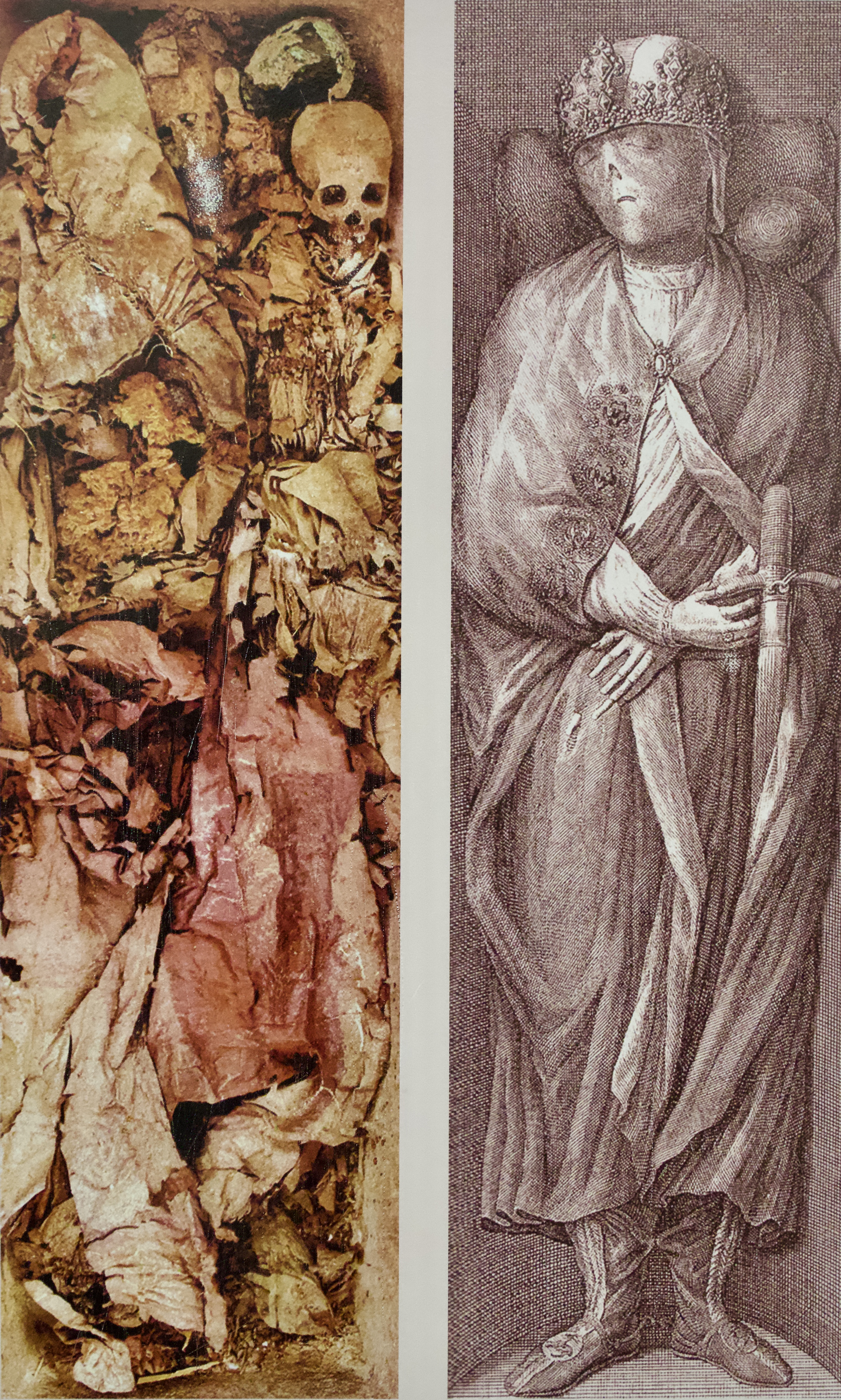
He promoted (and practised) arts and sciences, but strife and wars with the Popes led to four excommunications from the Church, and he died in Southern Italy in 1250. His tomb is in the Palermo Cathedral (above left), but he didn’t look too good when the tomb (above centre) was last opened in 1994 (above right, first half) – it had been slightly better at the previous opening in 1801 (above right, second half).

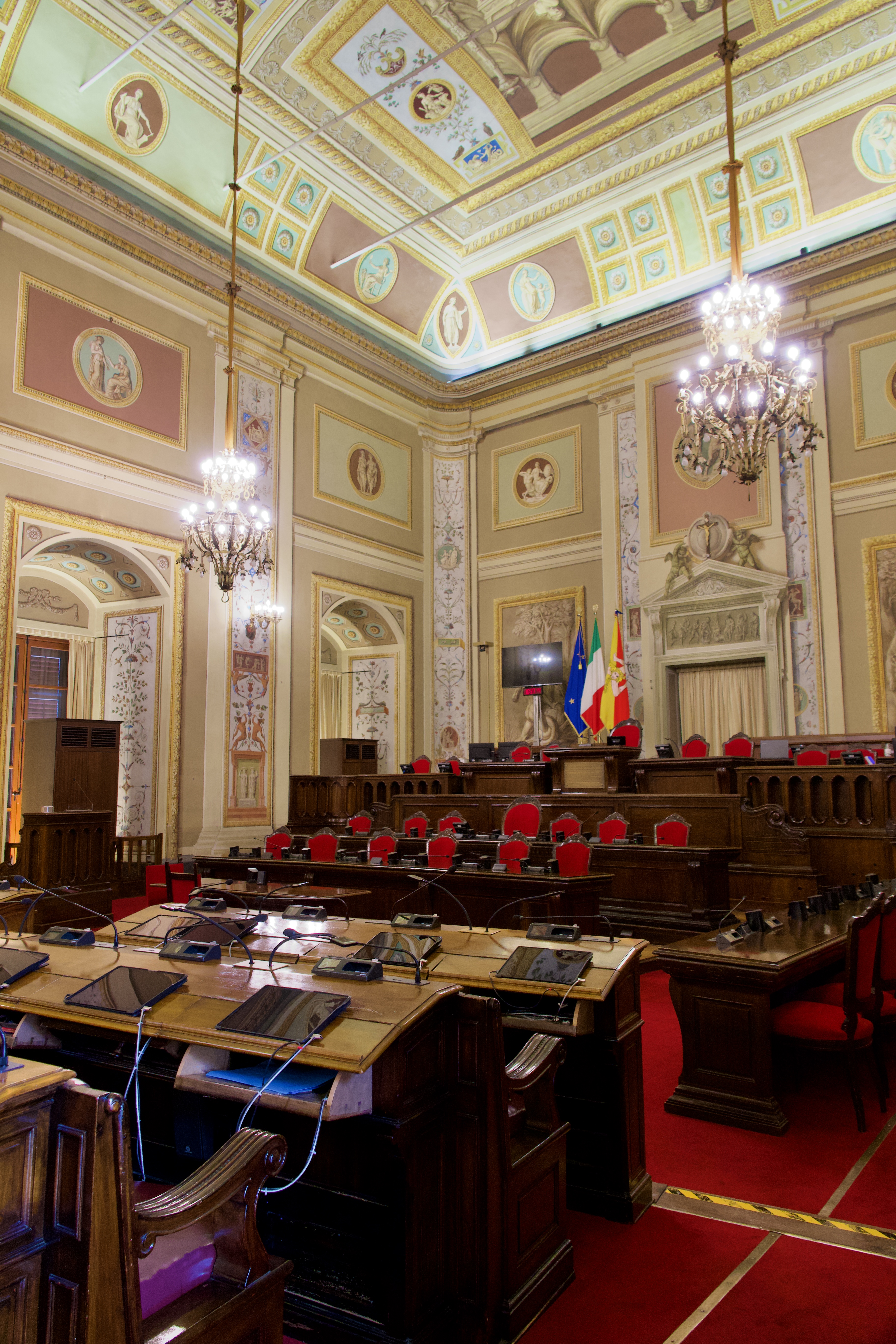
The Palazzo is still in use by the Sicilian regional administration that meets in one of the rooms created by Roger II – in a somewhat altered form that Roger might not recognise (below left). However, he might easily recognise the Roman-inspired decorations in rooms by some of the latter occupants (below right).

Scipione Borghese’s art

If you are an art lover, it helps to get a collection going if your uncle is the pope and nepotism is the order of the day. Becoming a cardinal, getting the necessary income and influence happen just like that – and before you notice, you have a huge collection, a large villa and a reputation.

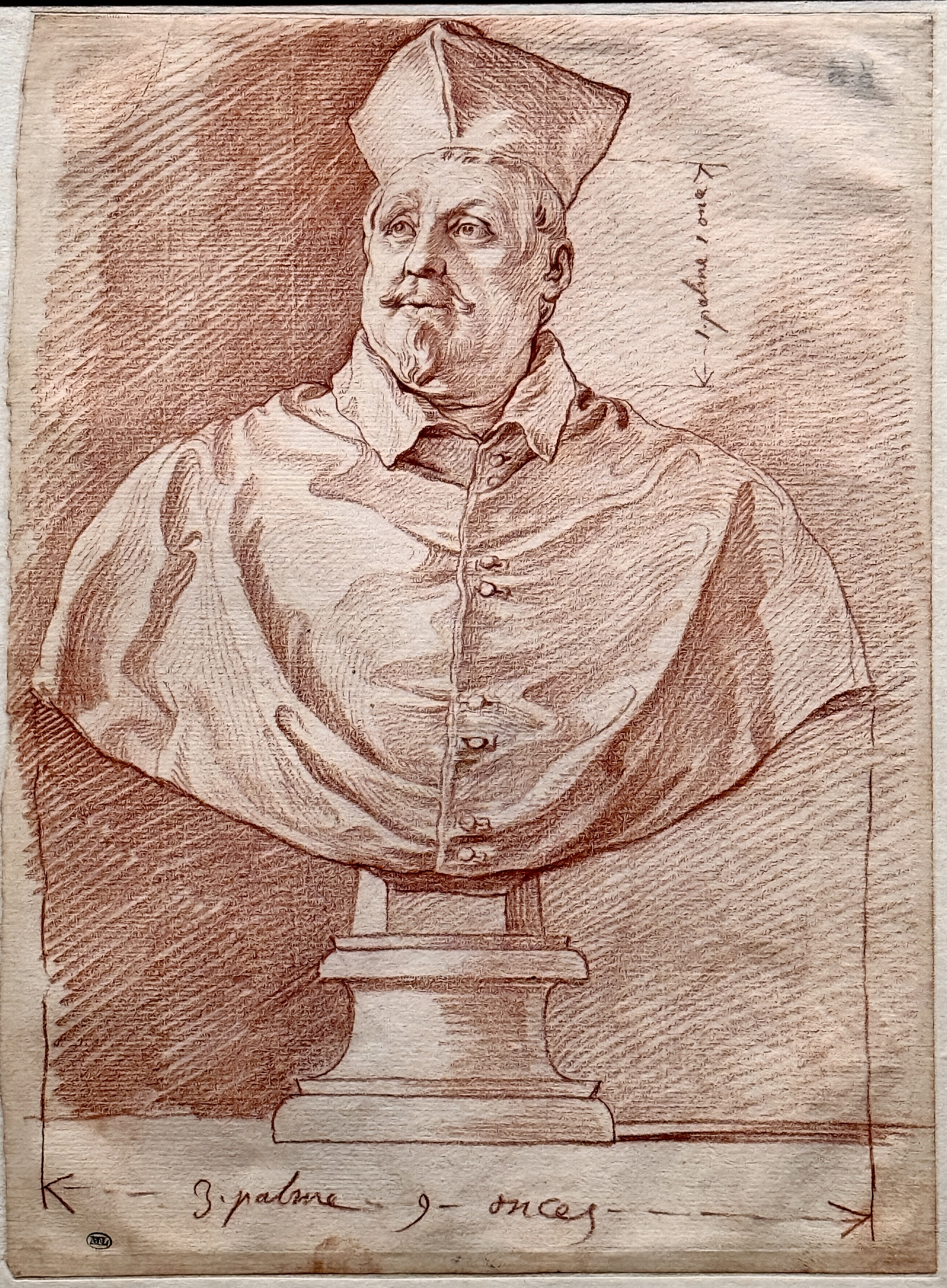
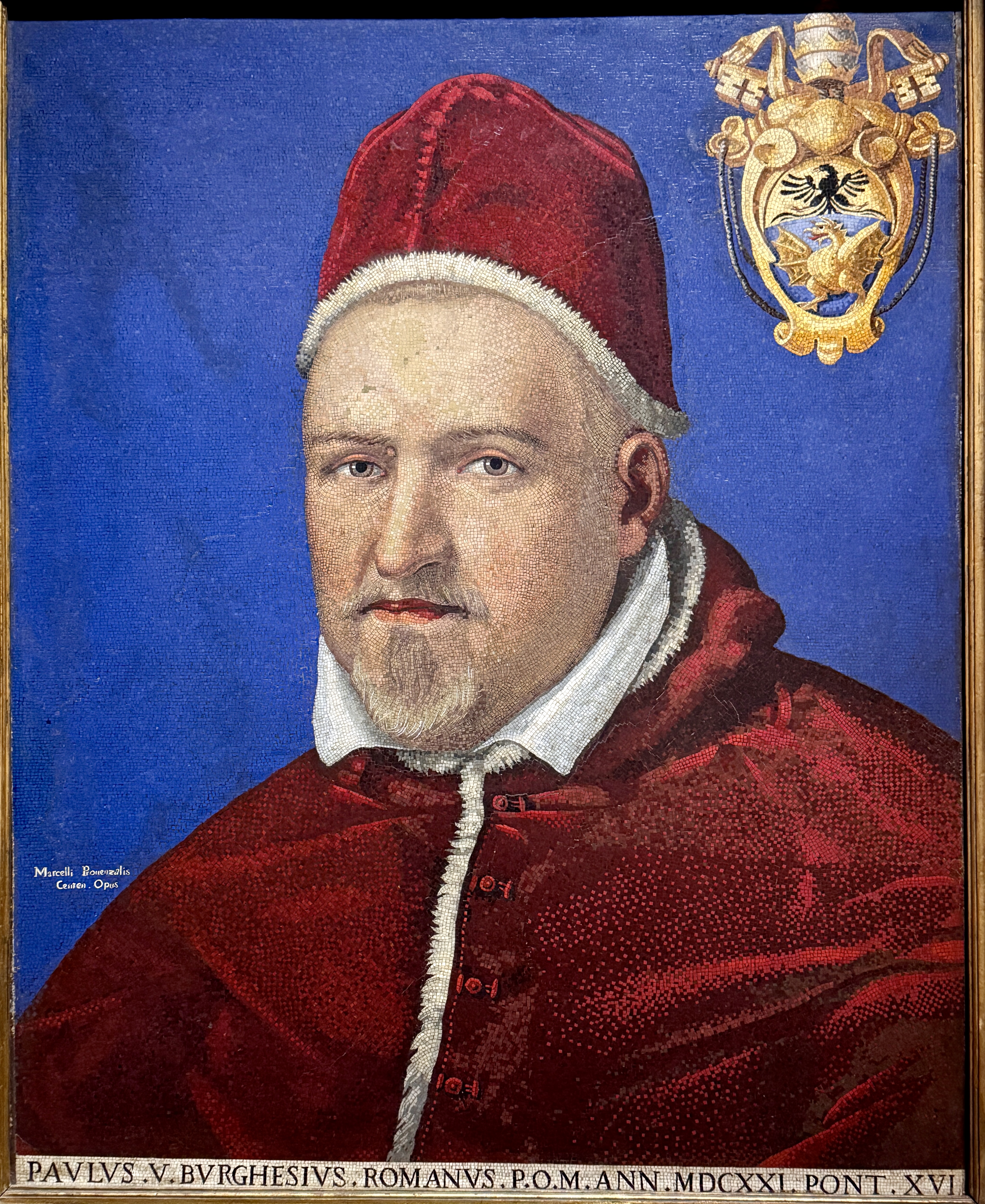
This was the approach of Scipione Borghese (above left, a drawing of Bernini’s bust at the Galleria Borghese), whose uncle was pope Paul V (above right in a mosaic by Marcello Provenzale). He collected Caravaggio, Bernini, Bassano and others, had the pope’s favourite architect to draw a villa for the collection, and bequested all of this to his heirs. The collection has been added to, and has also lost items – some were given to Napoleon after his sister married a Borghese (these ended up in the Louvre). Soon afterwards, the remaining collection was preserved as a whole, and taken over by the state in 1902. It has stayed in Villa Borghese, described as ‘delizia di Roma’.

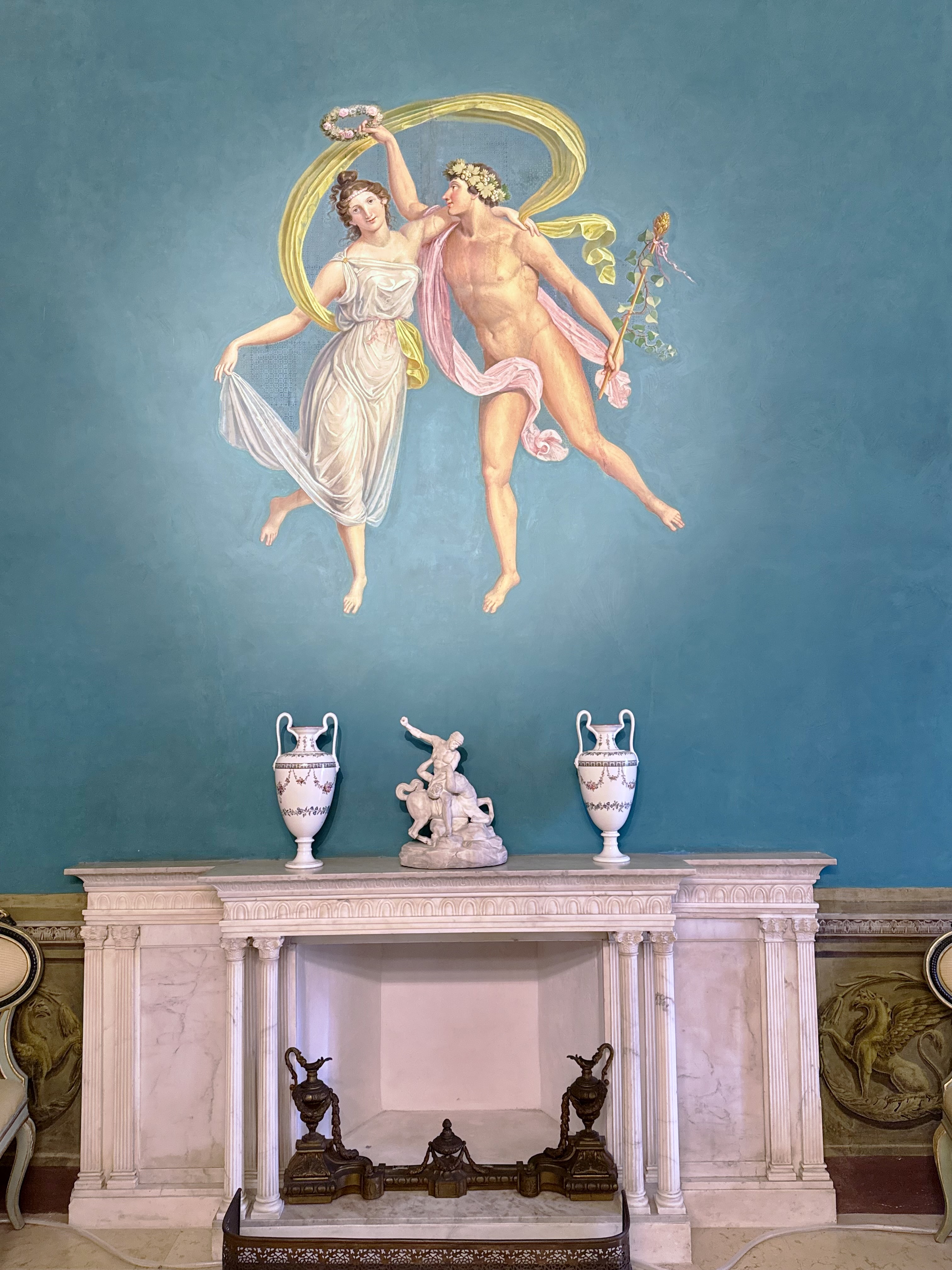
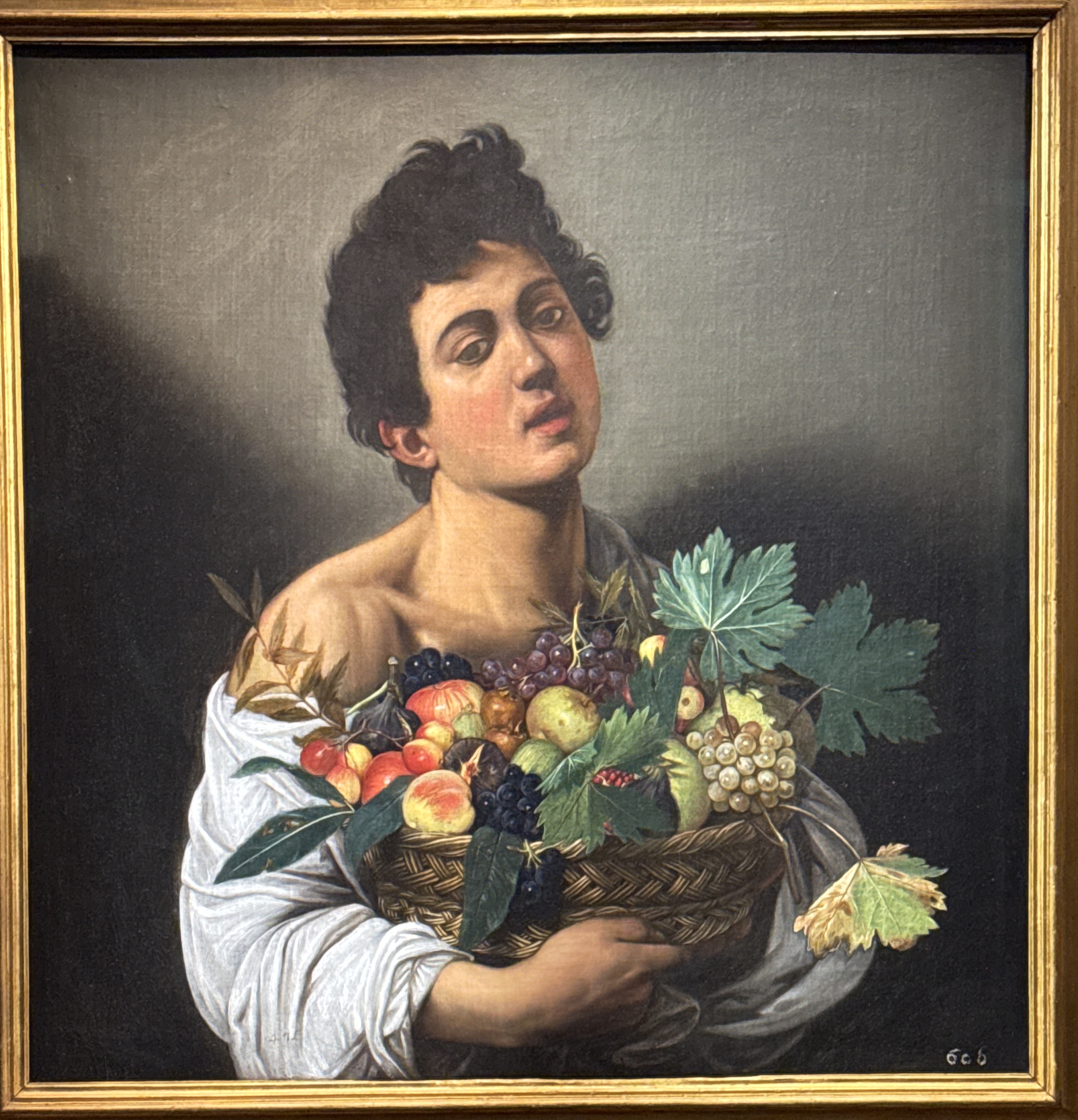
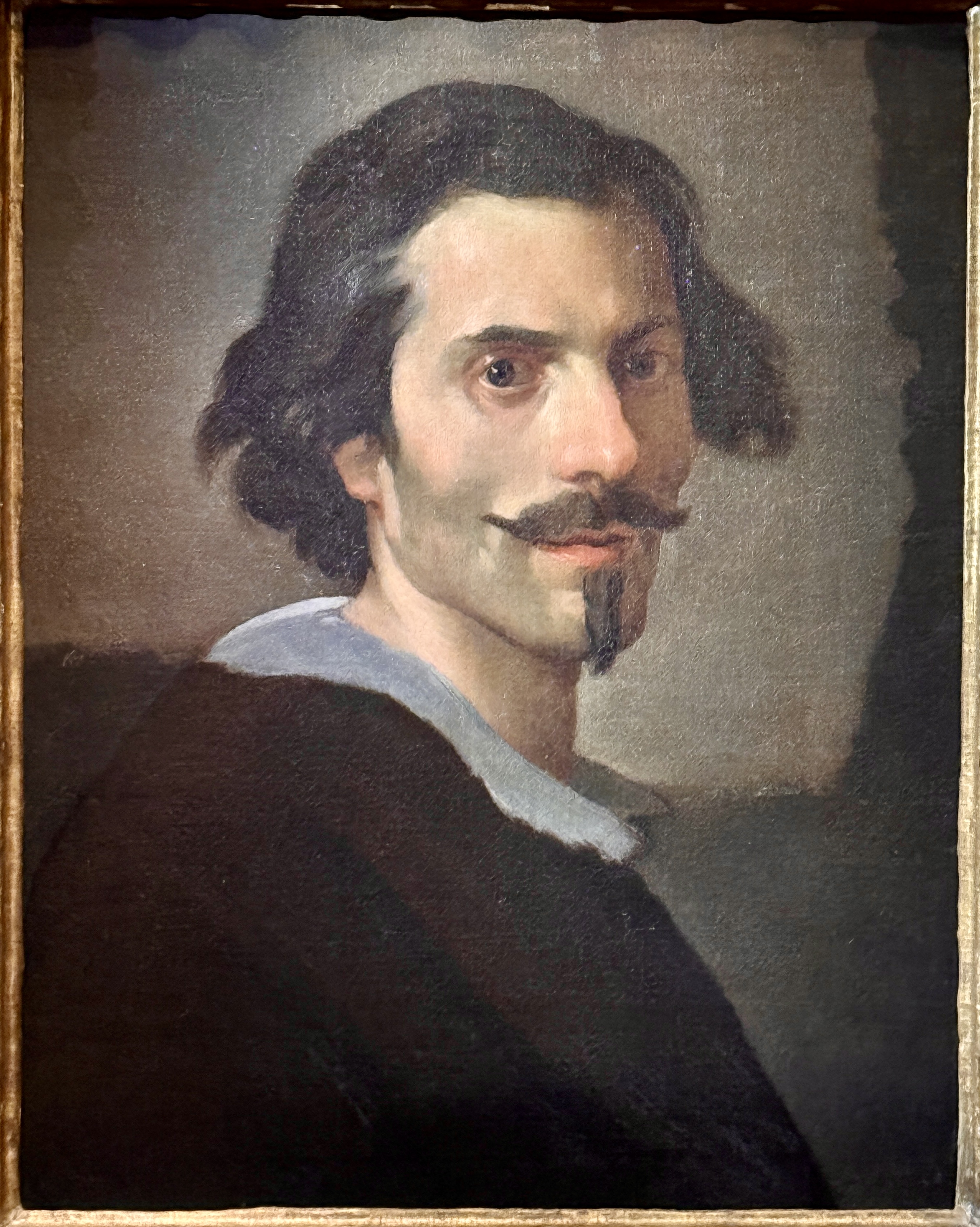
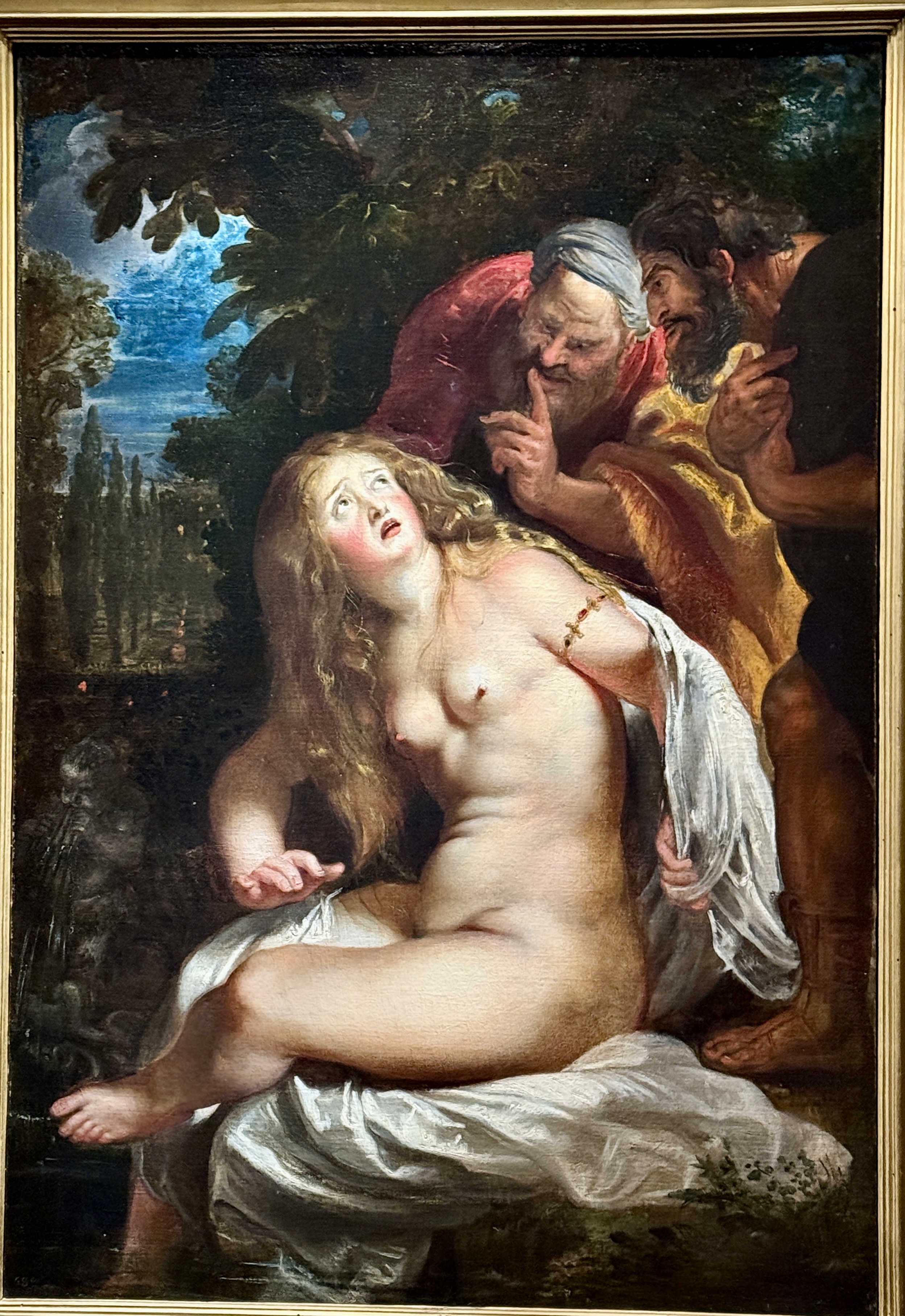
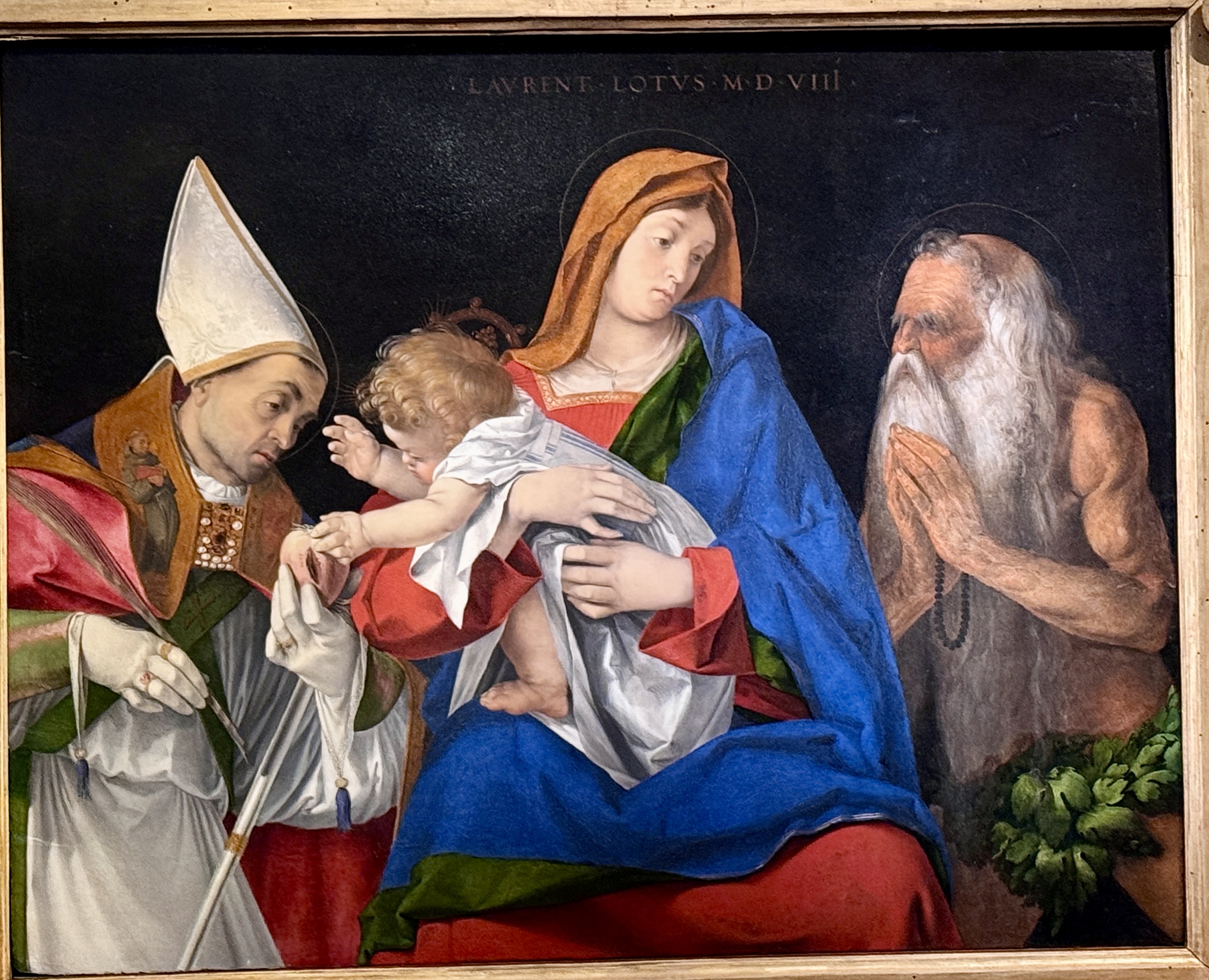
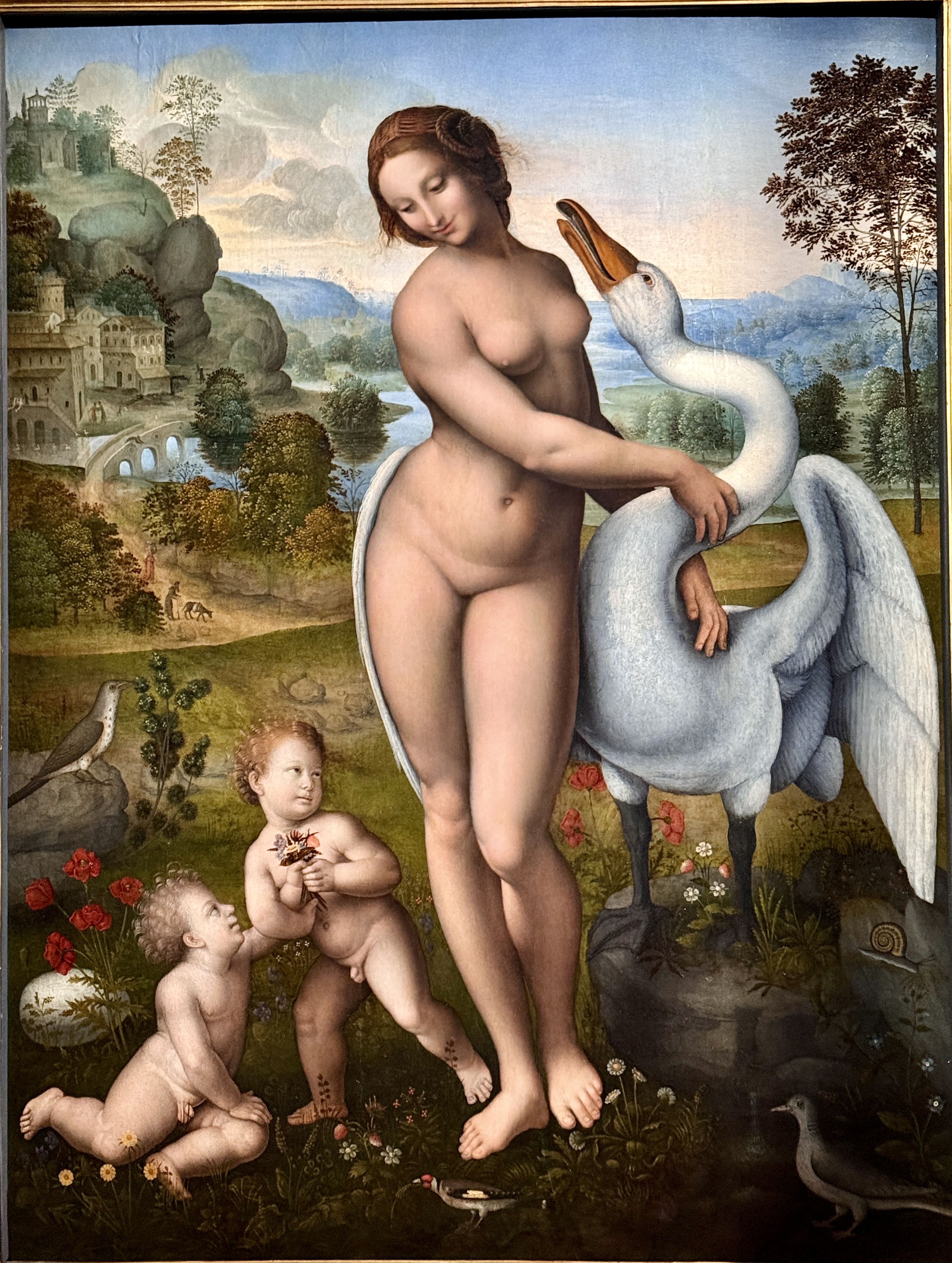
Key items of the Galleria Borghese are currently visiting Paris. They include Caravaggio’s well-known ‘Boy with a Basket of Fruit’ (above left), Bernini’s self-portrait (above right), Rubens’s ‘Susanna and the Elders’ (below left), Lorenzo Lotto’s ‘Madonna and Child with Saints Ignatius of Antioch and Onuphrius’ (below center), and a copy of Leonardo’s ‘Leda and the Swan’ (below right) – here the original has been lost to the mists of time. Not to forget Raphael’s ‘Young Woman with Unicorn’ (title picture) – unicorn being a symbol of chastity, of all things.

The exhibition ‘Chefs-d’oeuvre de la Galerie Borghèse’ is at the Musée Jacquemart-André until 5 January 2025.

Paquebots in Nantes

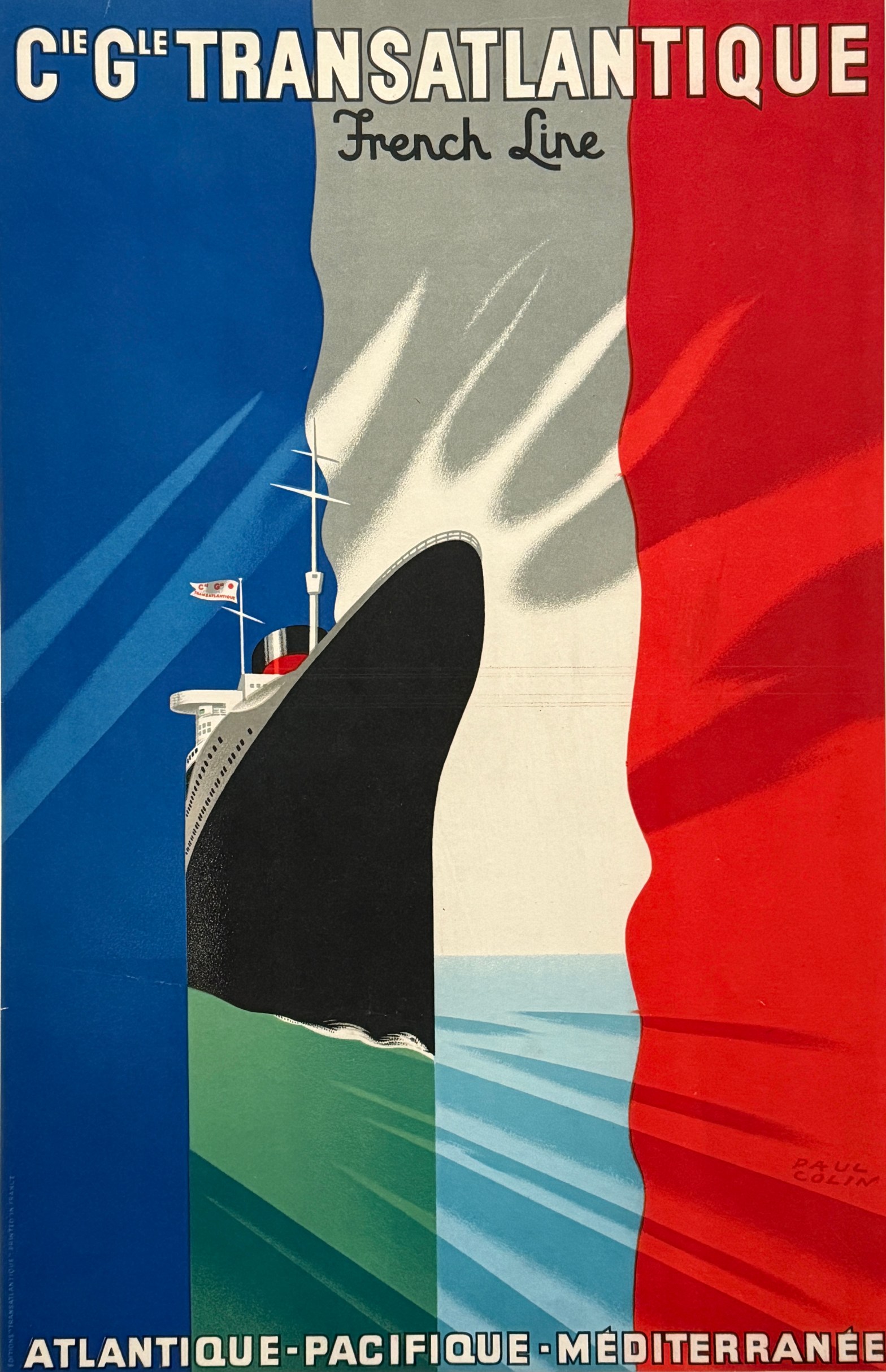
The ’Normandie’ was the pride of French naval construction, so it is no wonder that it is the star of an exhibition on ocean liners at the Nantes Art Museum.

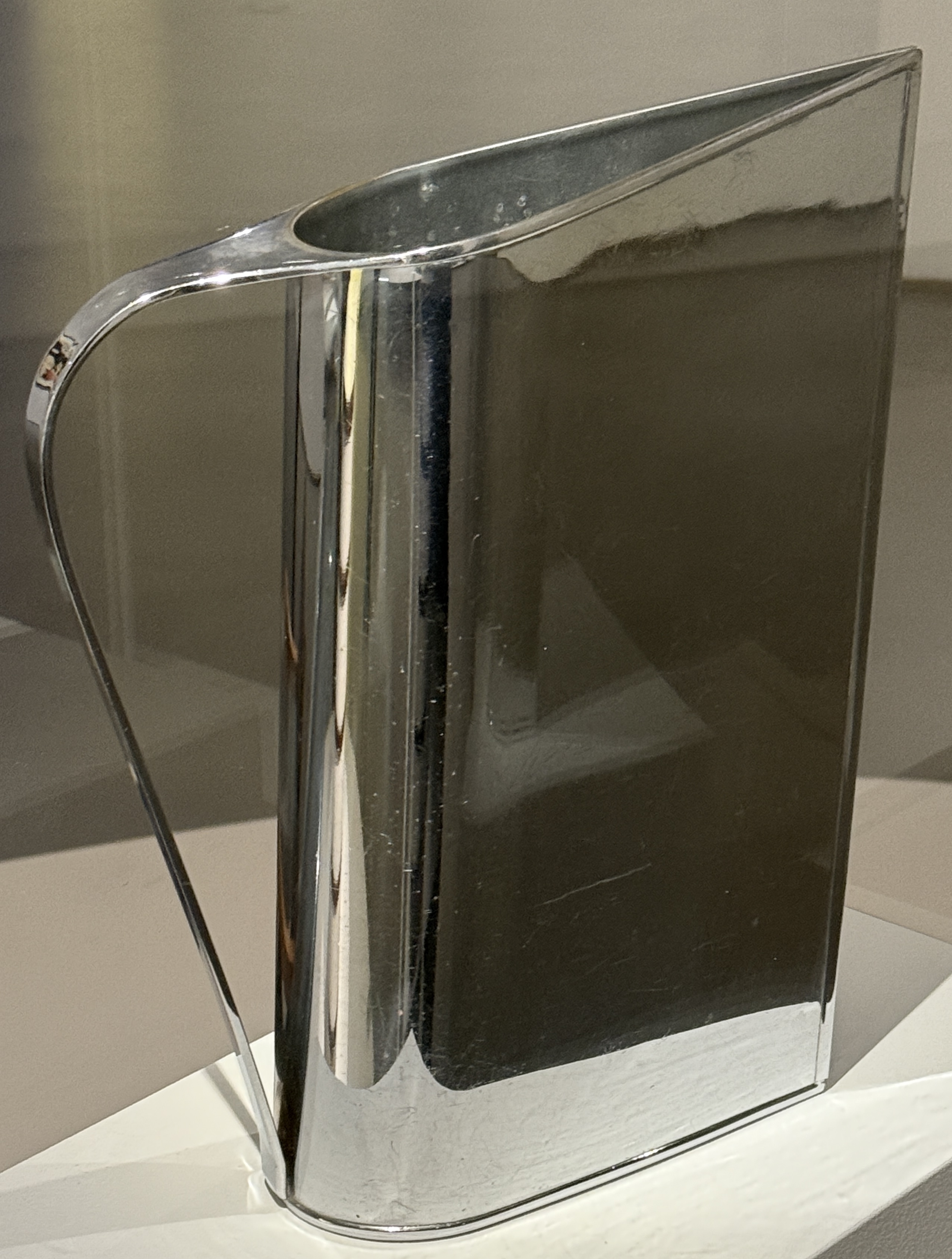
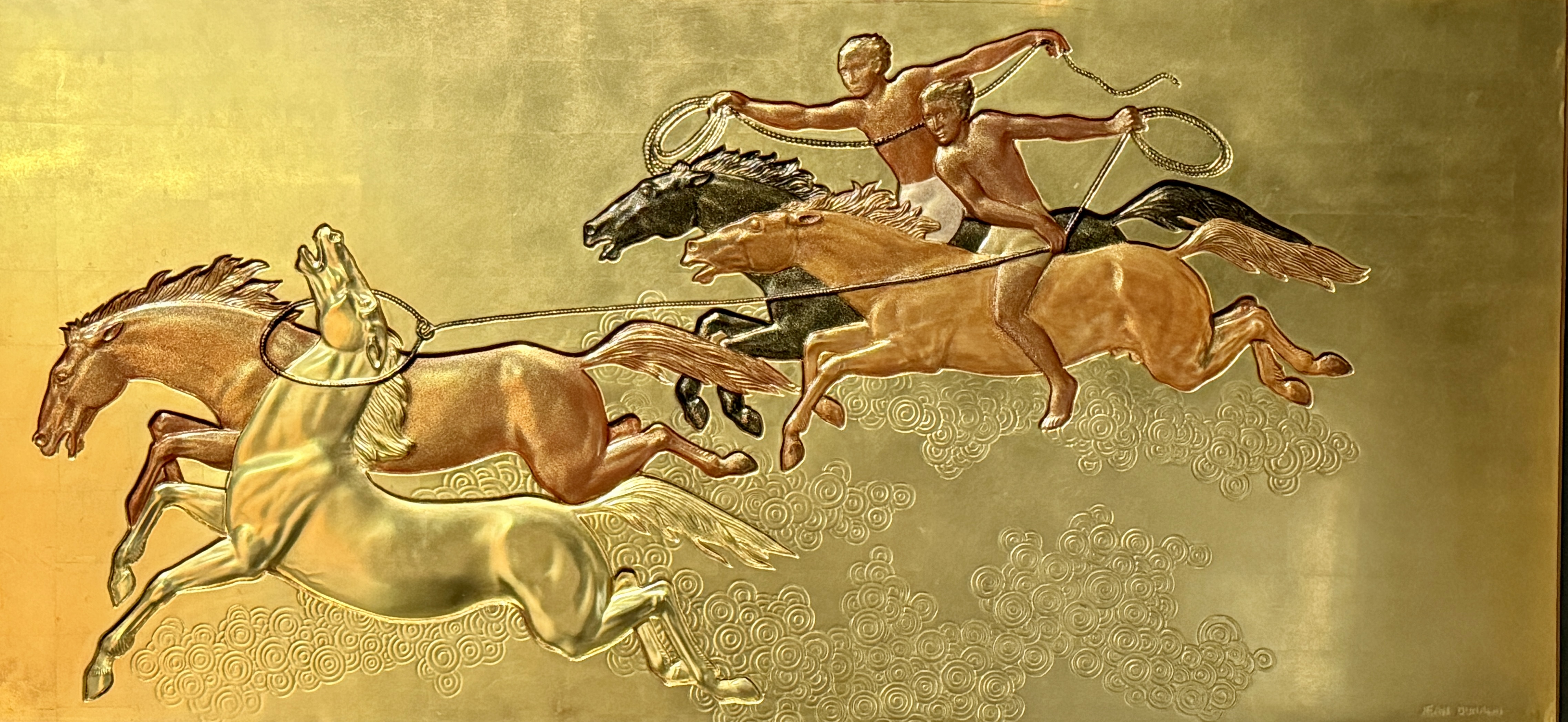
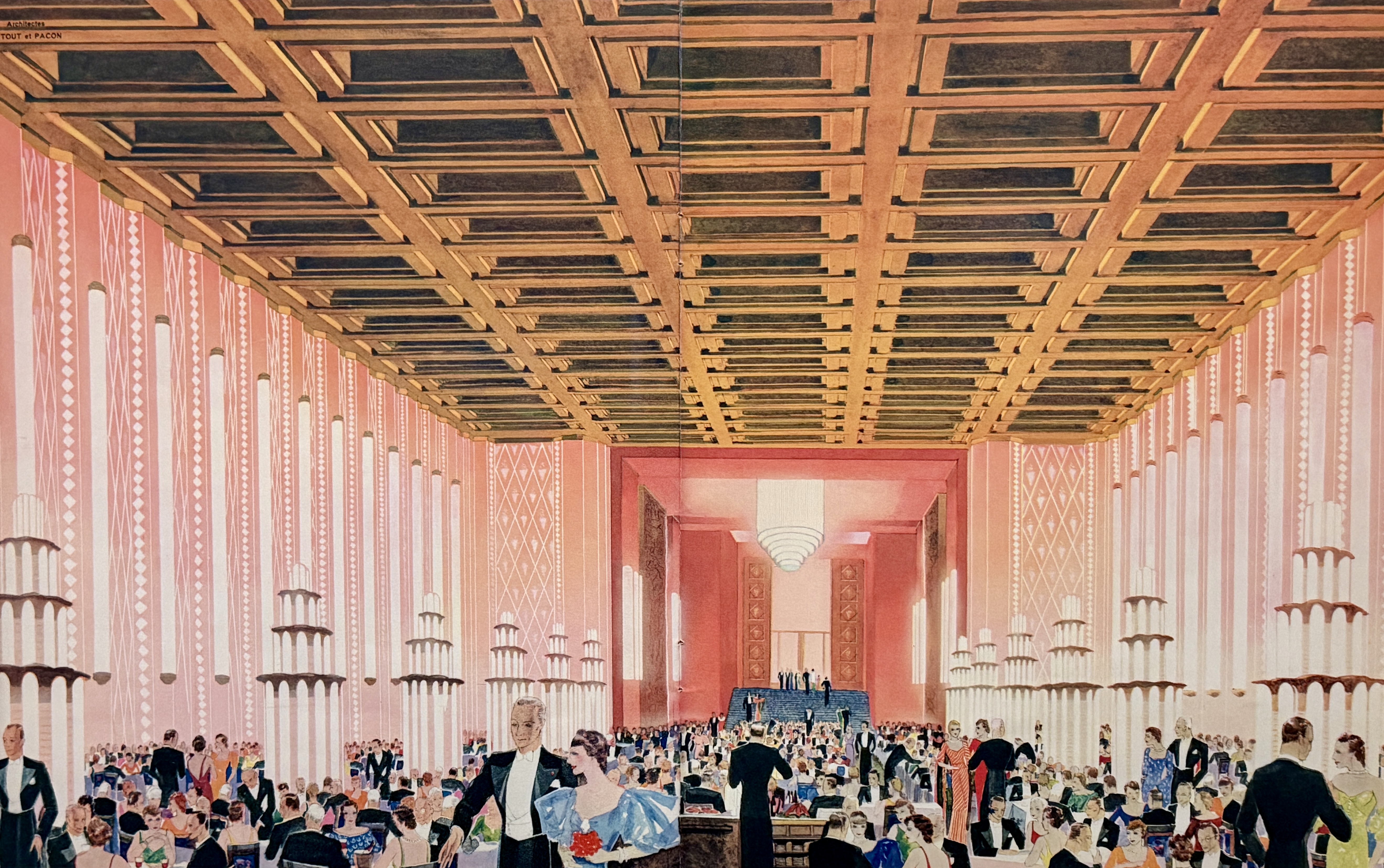
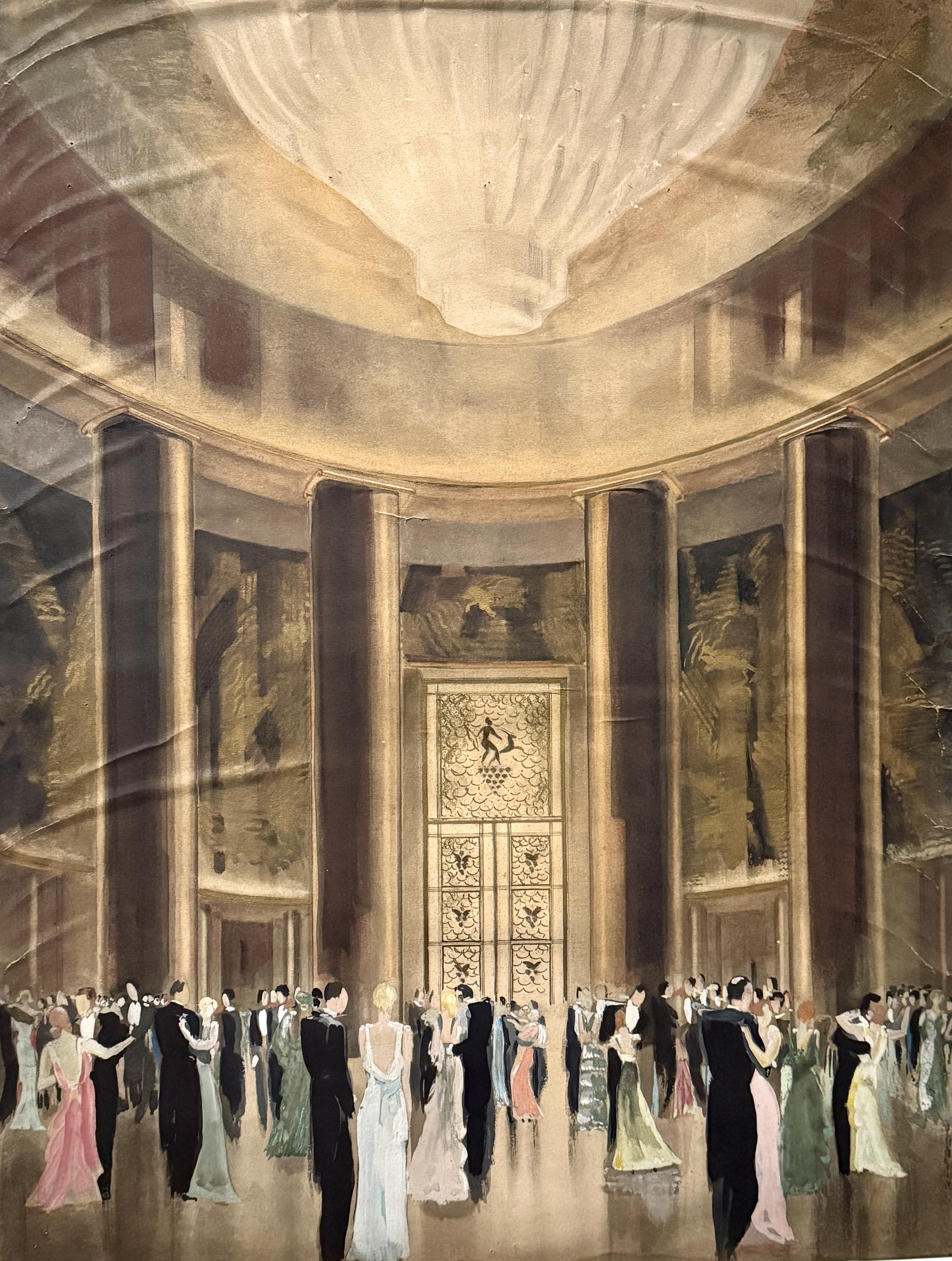
In the 1930s, ocean liners were the epitome of luxury travel and were outfitted in the decorative styles of their time. The Normandie reflected late art deco in its interior (above left the famous Normandie pitcher; above right a detail of the ’Taming of the Horses’ by Jean Dunand in the first class smoking room), and in the marketing materials of its owner (below left first class dining room; below right first class oval salon).

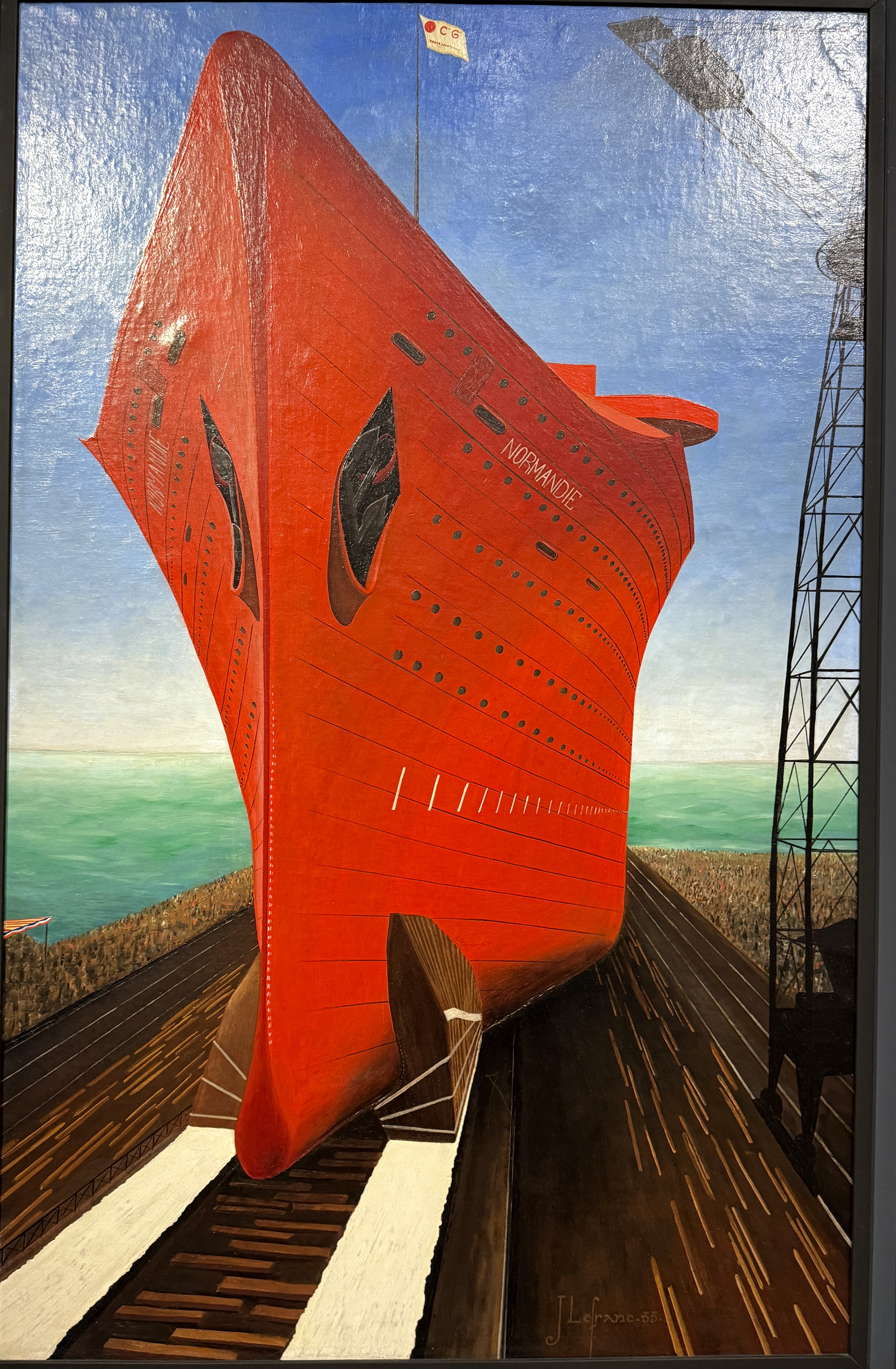
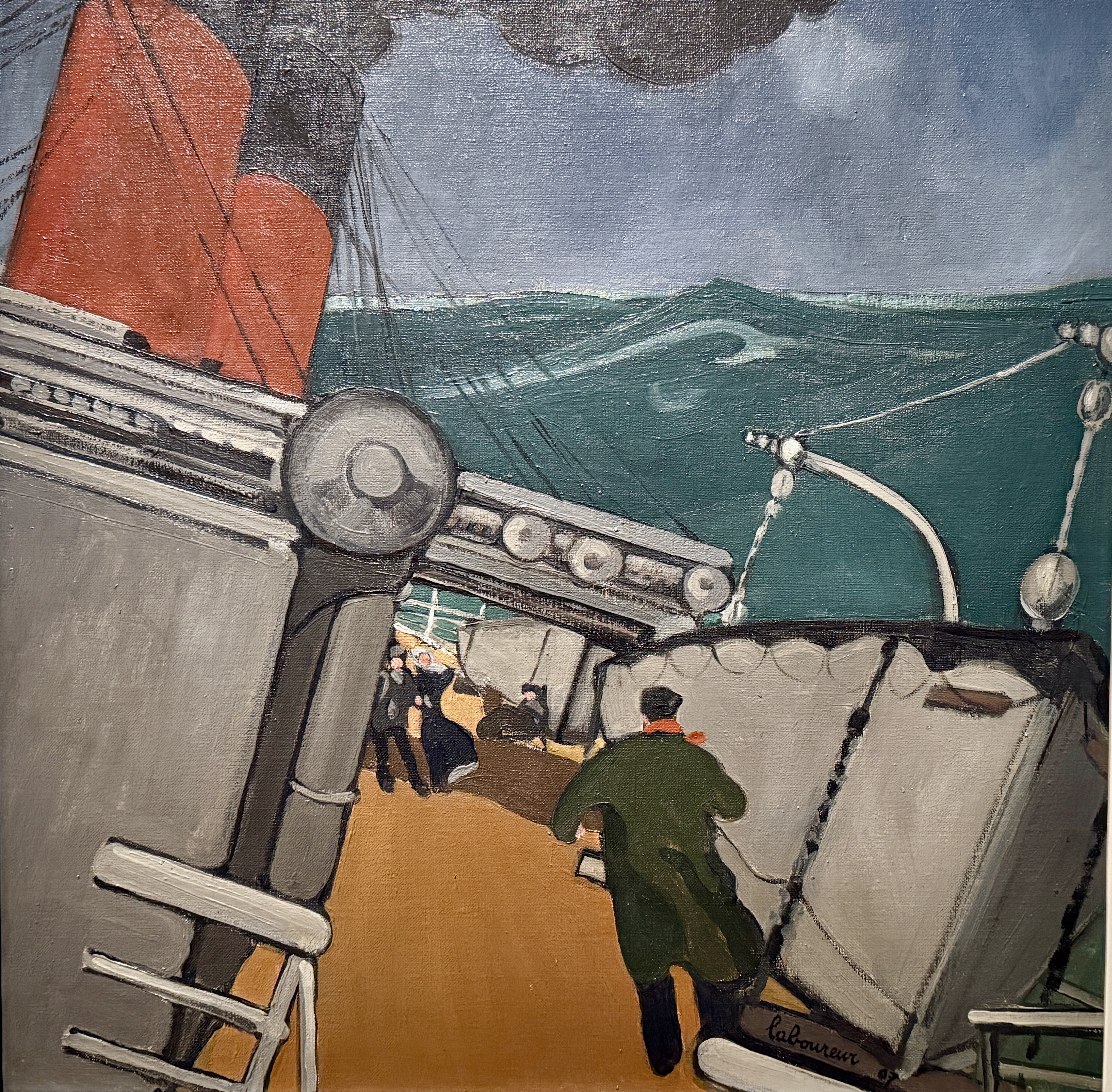
And that was not all – the magic of the ocean liners was captured in films, photographs and art. It is not every day the launch of an ocean liner is immortalised in an oil painting – but the Normandie was (by Jules Lefranc, below left). Of course, crossing the Atlantic had its les agreeable moments even in the best ships, and these moments were also captured – below right Jean-Émile Laboureur’s ‘Transatlantic Roll’.

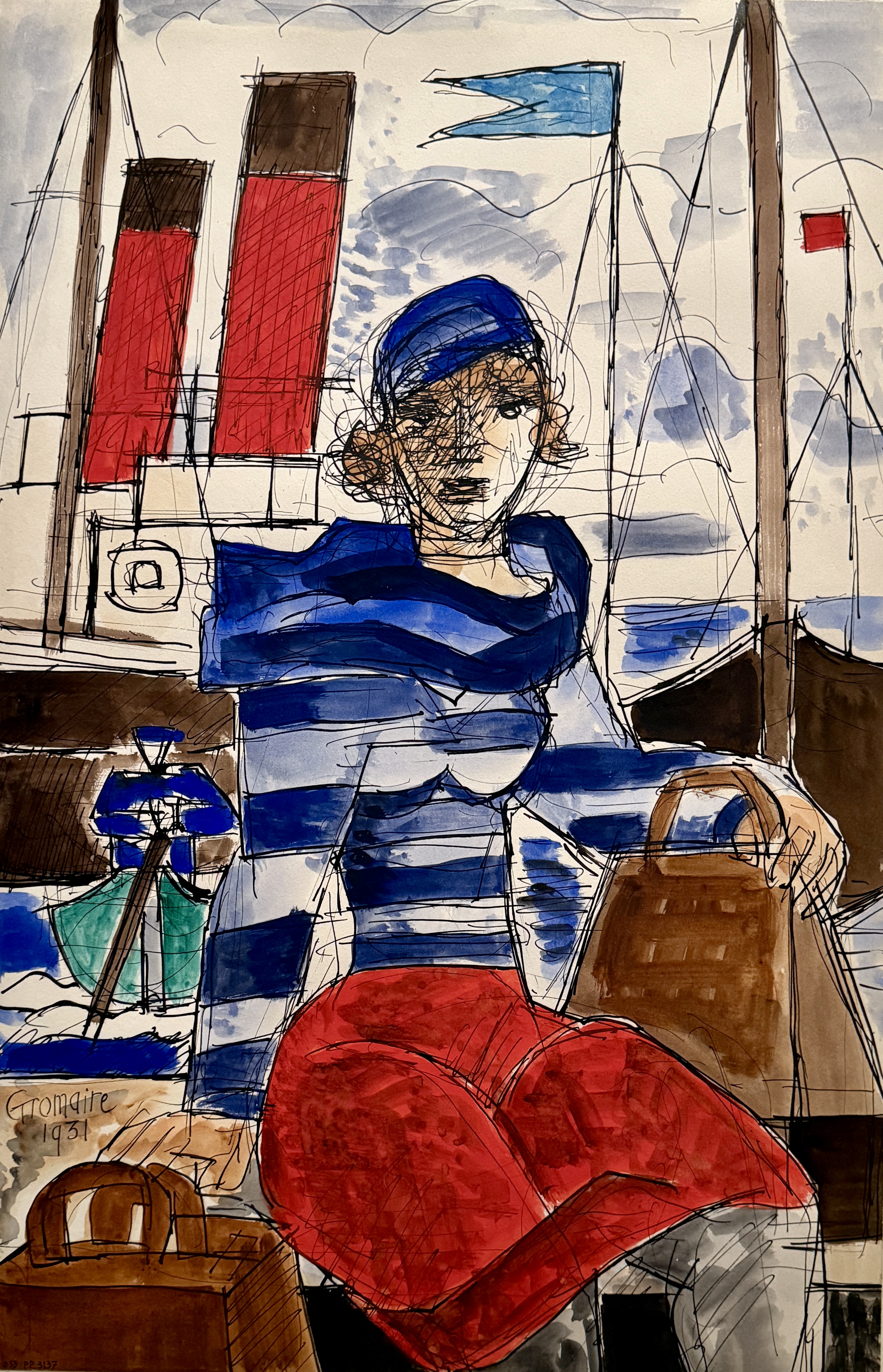
The liners were an essential part of the exciting machine age, so arduously captured by many painters. Here are some examples – Marcel Gromaire’s ’Traveller on board’ (left), and Felix Del Marne’s ‘The Port’ (right).

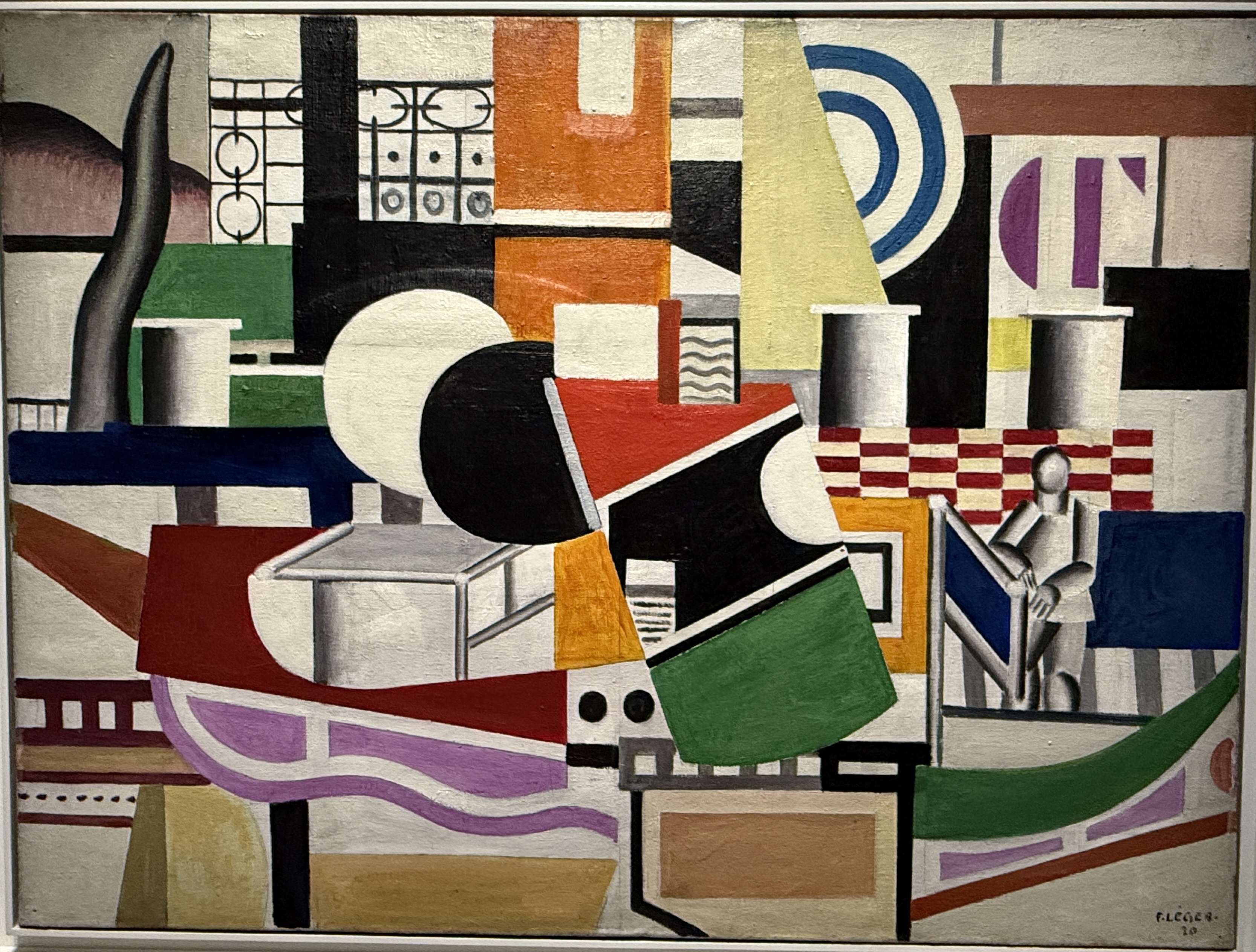
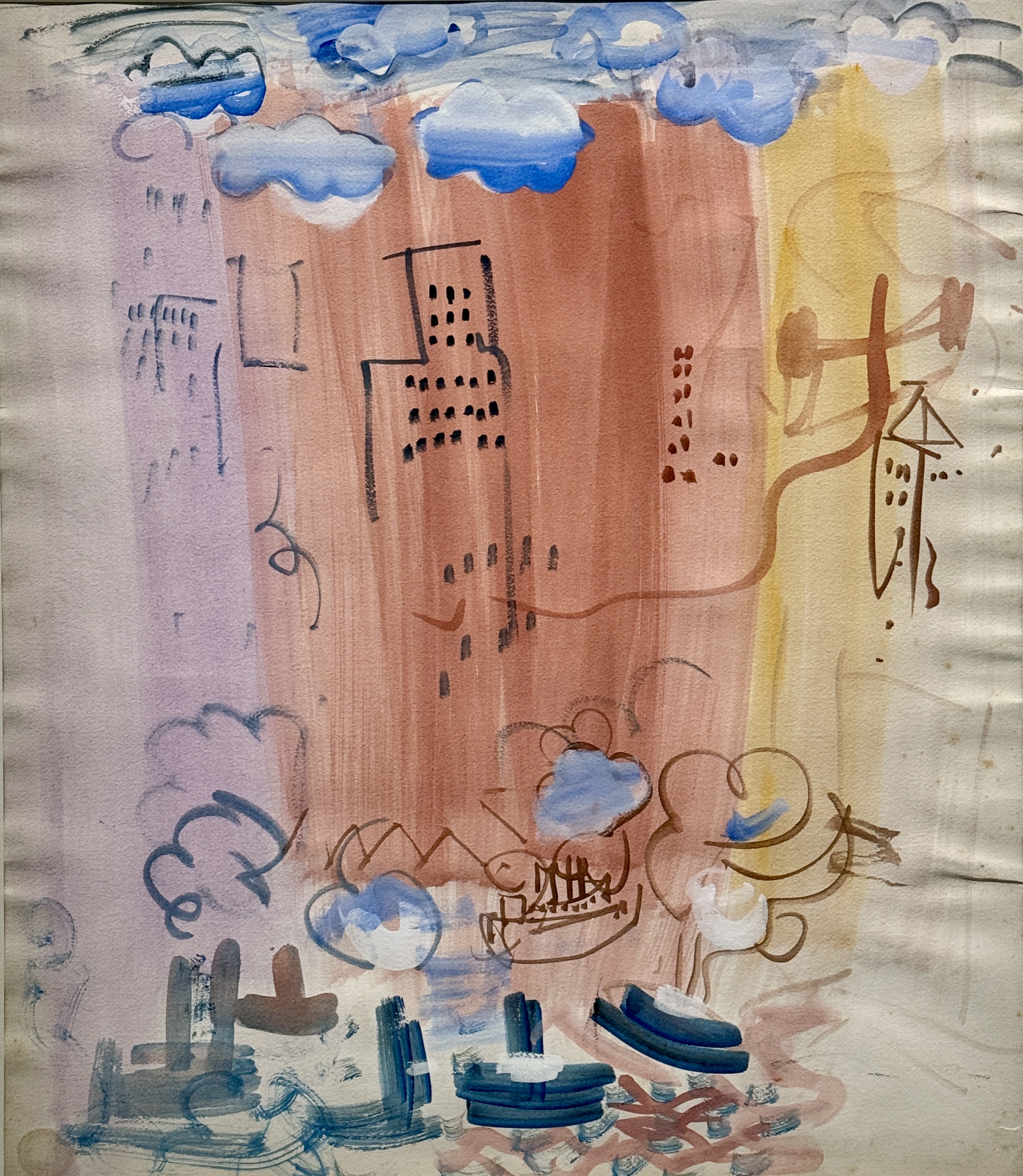
Further painters inspired by ocean liners included Fernand Léger (a tugboat below left) and Raoul Dufy (the New York Harbour below right).

The glory days of the Normandie lasted only four years, from 1935 to 1939. In the early years of the war it was stripped of its interiors in preparation for troop carrying duty. Sadly, it caught fire and sank in the New York harbour in February 1942 – what a suitable end point for the exhibition.

The exhibition ’Paquebots – Une esthétique transatlantique 1913-1942’ is at the Musée d’arts de Nantes until 23 February 2025.

Clermont-Ferrand – Between Vercingetorix and Michelin

If you want to know more about pneumatic tyres than you ever wanted to, visit the L’Aventure Michelin in Clermont-Ferrand, which tells the story of the local firm from tyres to restaurant and travel guides. Bibendum, the Michelin Man, is omnipresent, including a fountain (below left) that used to grace a swimming pool.

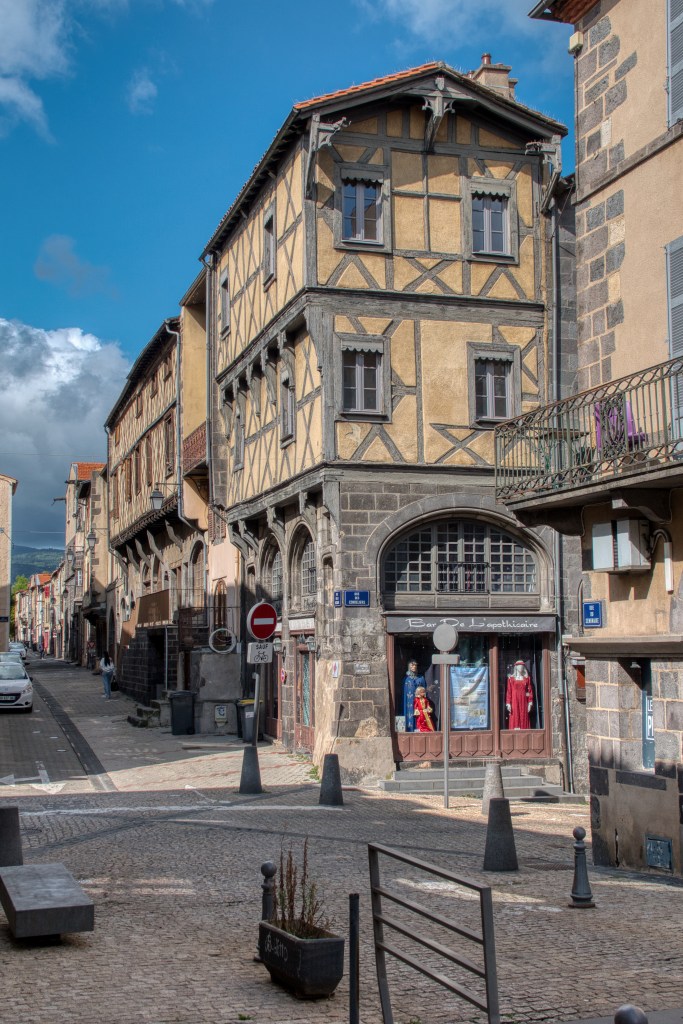
However, the town’s claim to fame extends much farther back than that. The Gauls beat Caesar nearby in Gergovie in 52 BCE – although Caesar then won the two subsequent battles later the same year, putting an end to the Gallic Wars. No matter, in Clermont-Ferrand Vercingetorix rules – at the art museum with Jeanne d’Arc (!), and on the central square of the town (below left and right). The town is composed of two parts, Clermont and Montferrand (the latter has some well-preserved houses, see above right).

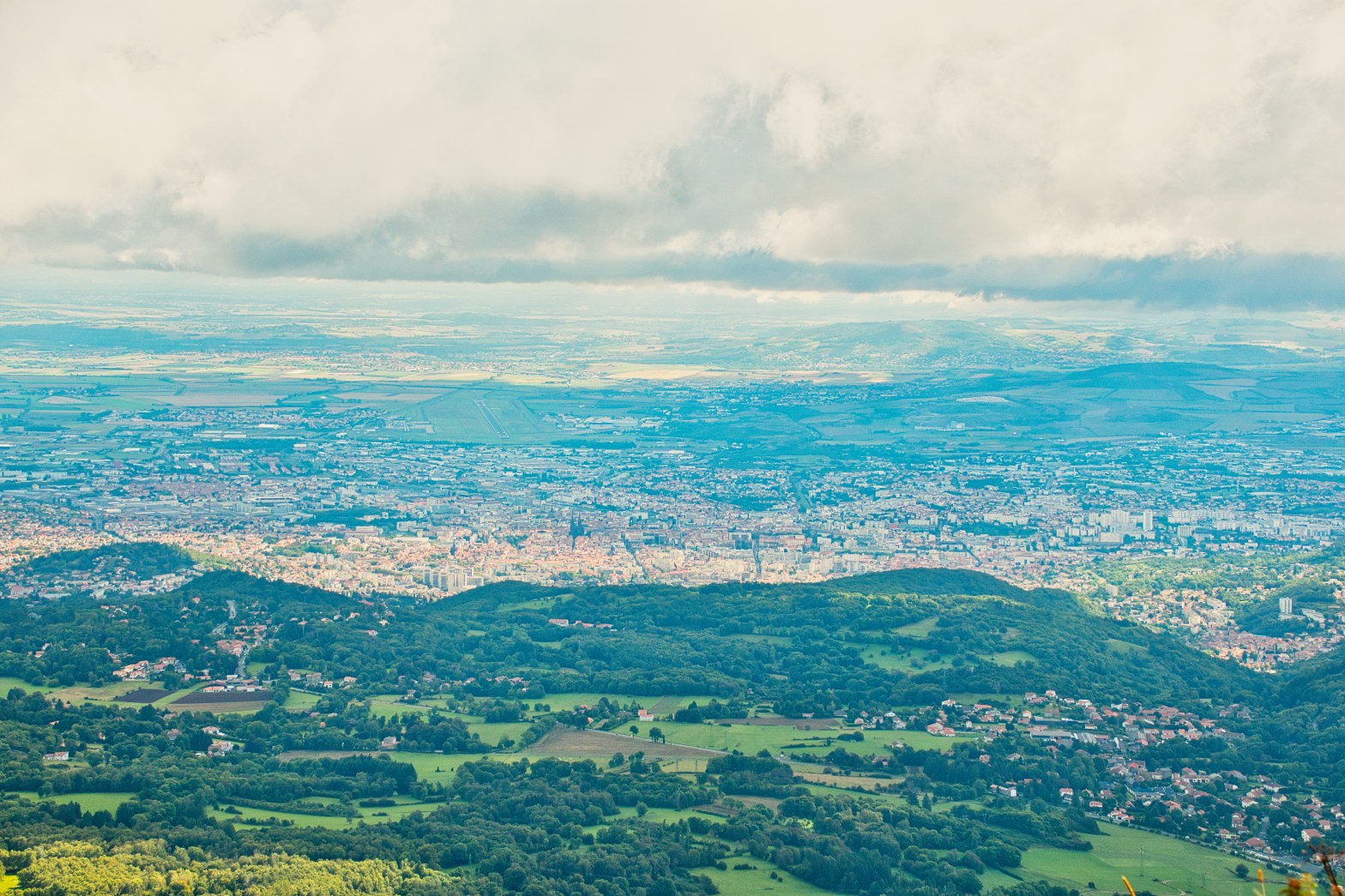
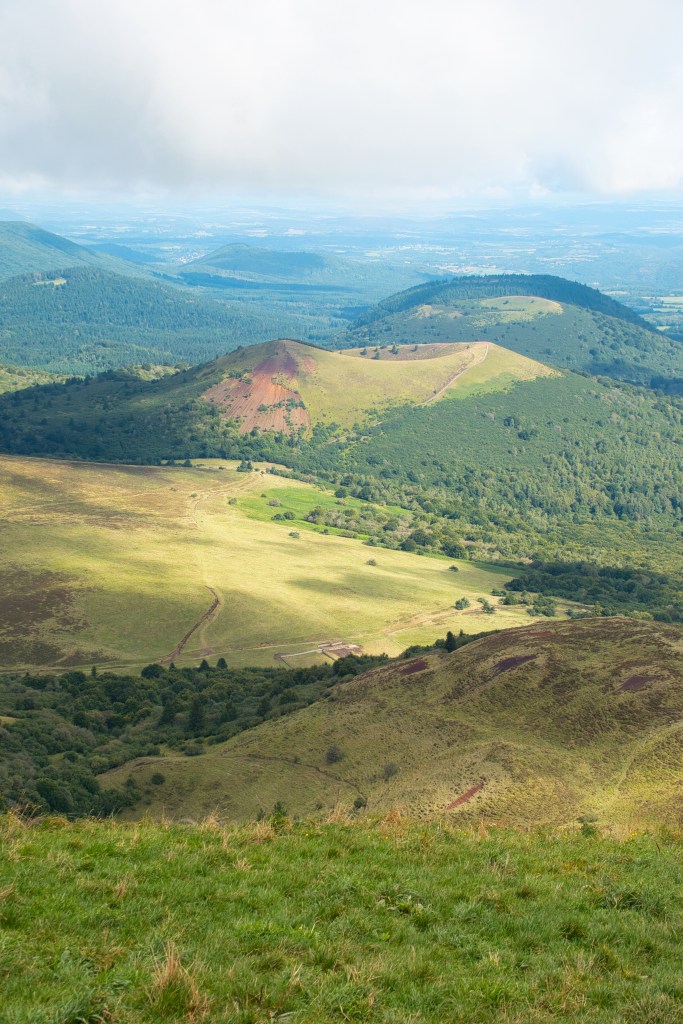
As the town is on the Massif Central, a chain of mountains, ‘puys’ is nearby (see below left), with the highest, ‘Puy de Dôme’ providing a view over the town (title picture) from 1465 m. There are also ruins (partially reconstructed) of an antique temple of Minerva on the top (below right).

St Kilda – life at the edge

A rocky island in the middle of the Atlantic, with fewer than 100 people, hunting birds and eggs for living – any takers? Didn’t think so, and in the end there were none.

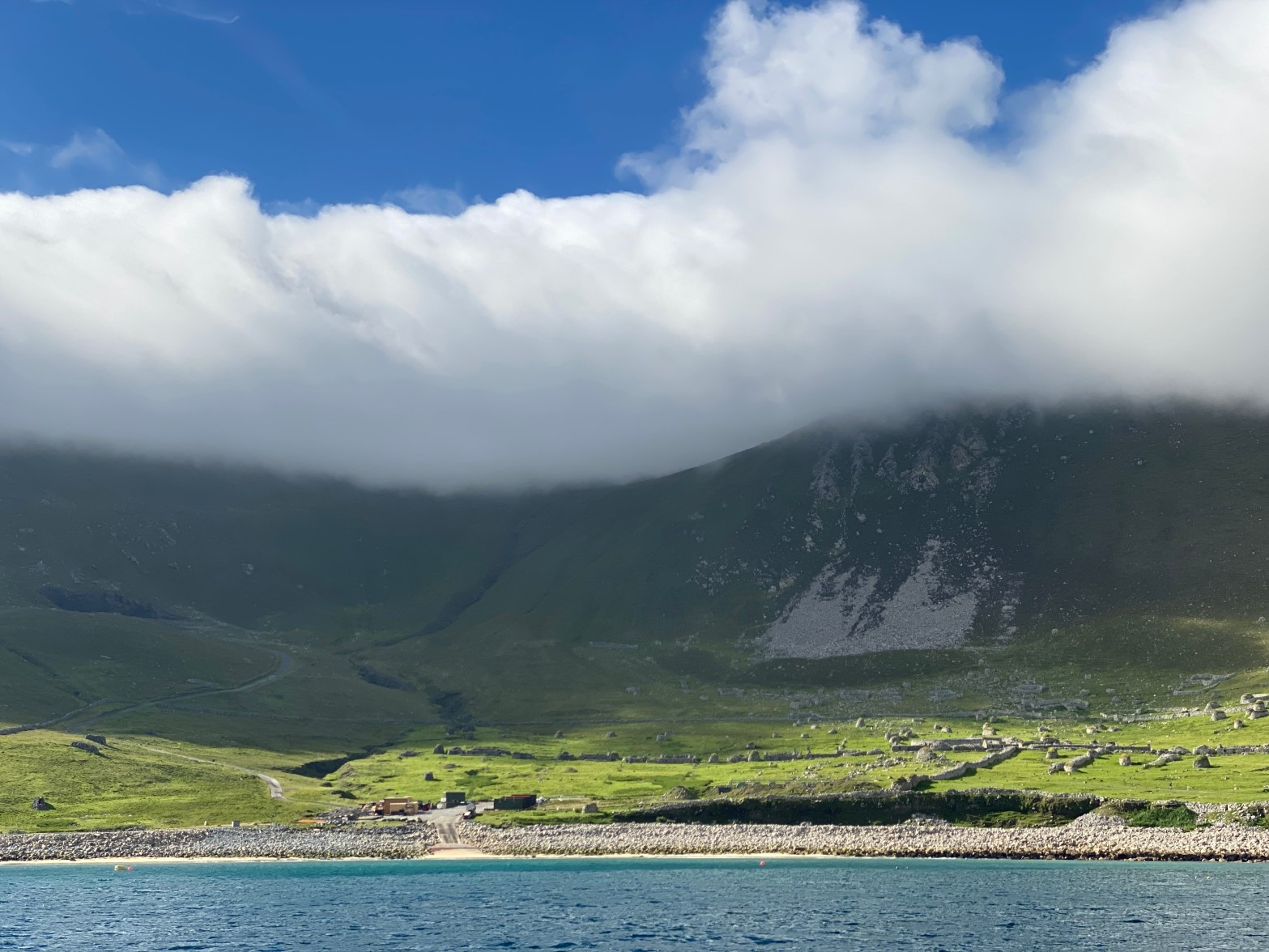
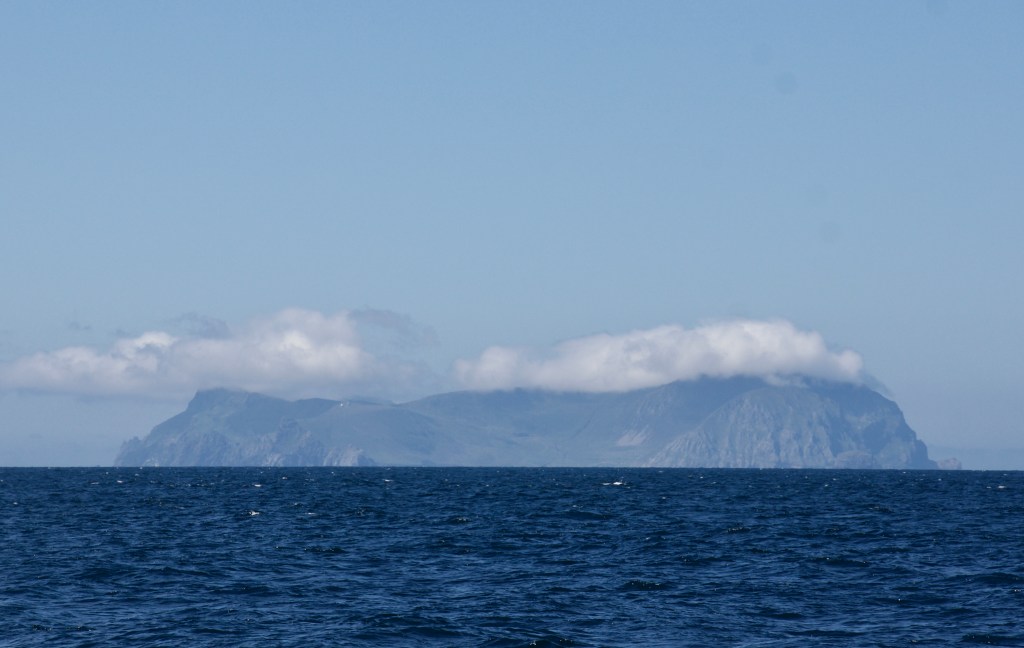
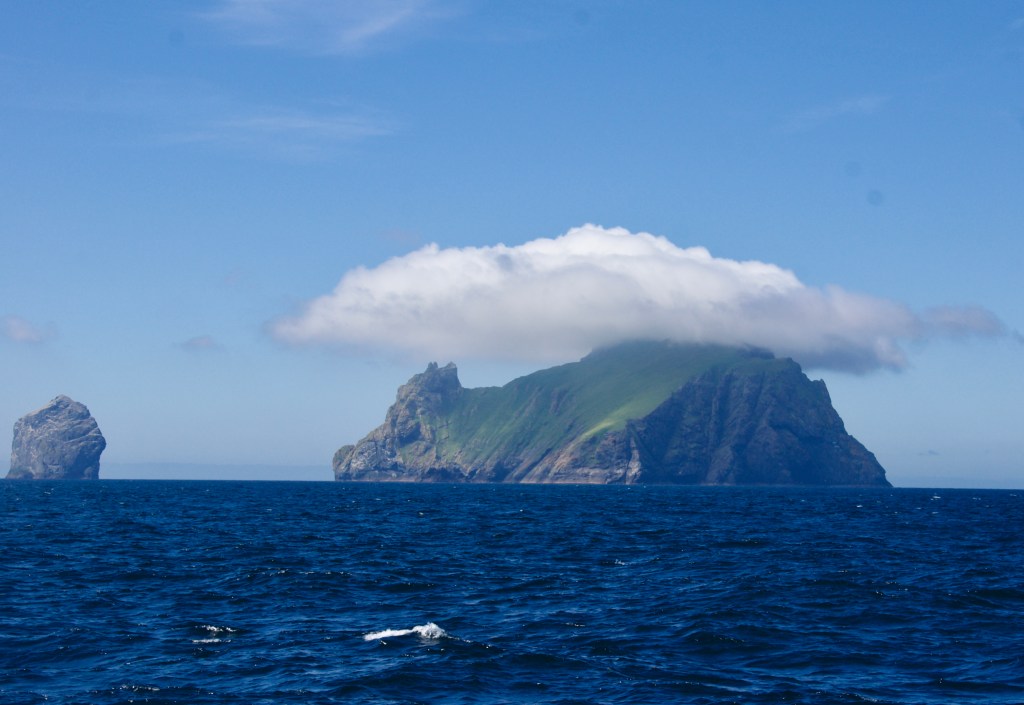
St Kilda is an archipelago to the west of Scotland, about 60 kilometres northwest of the Outer Hebrides. The islands rise out of the sea (the largest, Herta, below left and the smaller Stac Lee and Boreray below right) in the middle of North Atlantic.

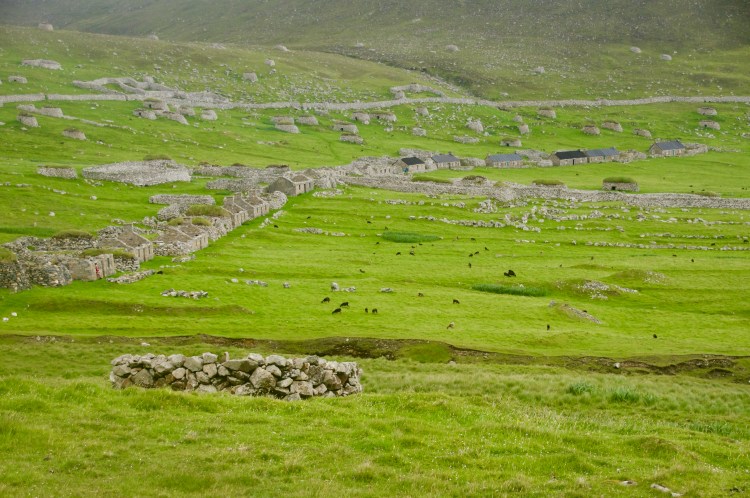
The main island, Herta, was inhabited for thousands of years, with about 180 people at the end of the 17th century, and 93 in mid-19th century (Main Street below left, with early 20th century houses). The surviving layout of the village (below right) is from the third quarter of the 19th century, but signs of human occupation go back 5000 years.

The islanders got their livelihood from their surroundings, killing tens of thousands of seabirds and collected thousands of eggs. The birds and eggs were eaten, and their feathers sold for bedding. Dedicated stone buildings, cleitean, (below left) were used for storage. The original habitations (below right) followed the same construction principles.

The first tourists arrived in 1838 and provided earning opportunities for the St Kildans. Military installations arrived during the FIrst World War, but their removal after the war started an emigration wave, and in two years the population fell 25%. 

In 1930 there were 36 St Kildans left, of which seven were able-bodied men. They applied to the government to be evacuated and resettled on the mainland. And this is what happened, although the islanders did not adjust well to modern life.

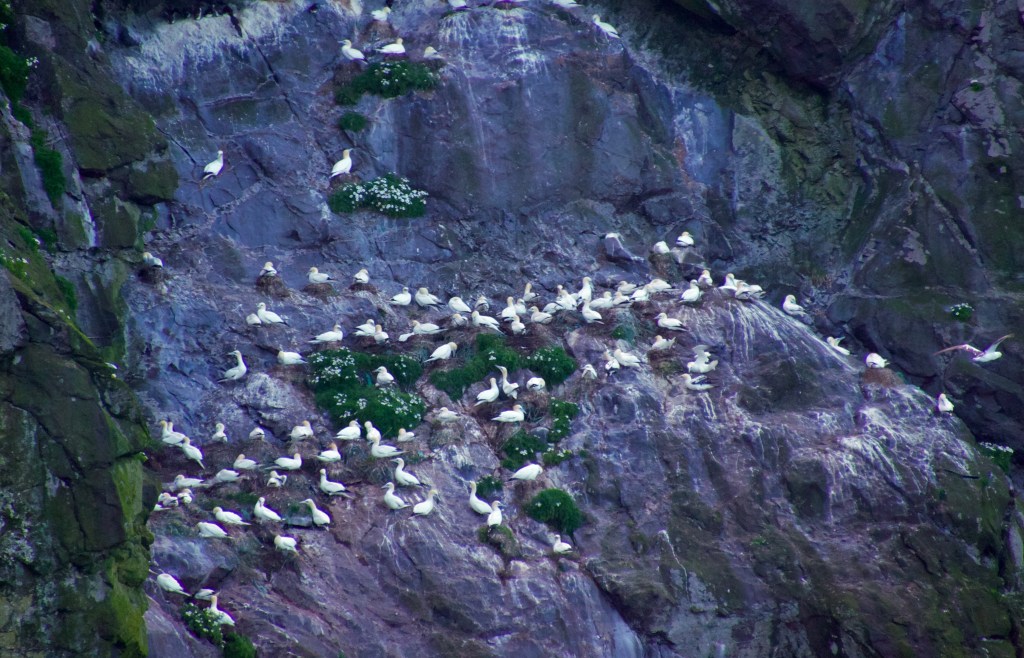
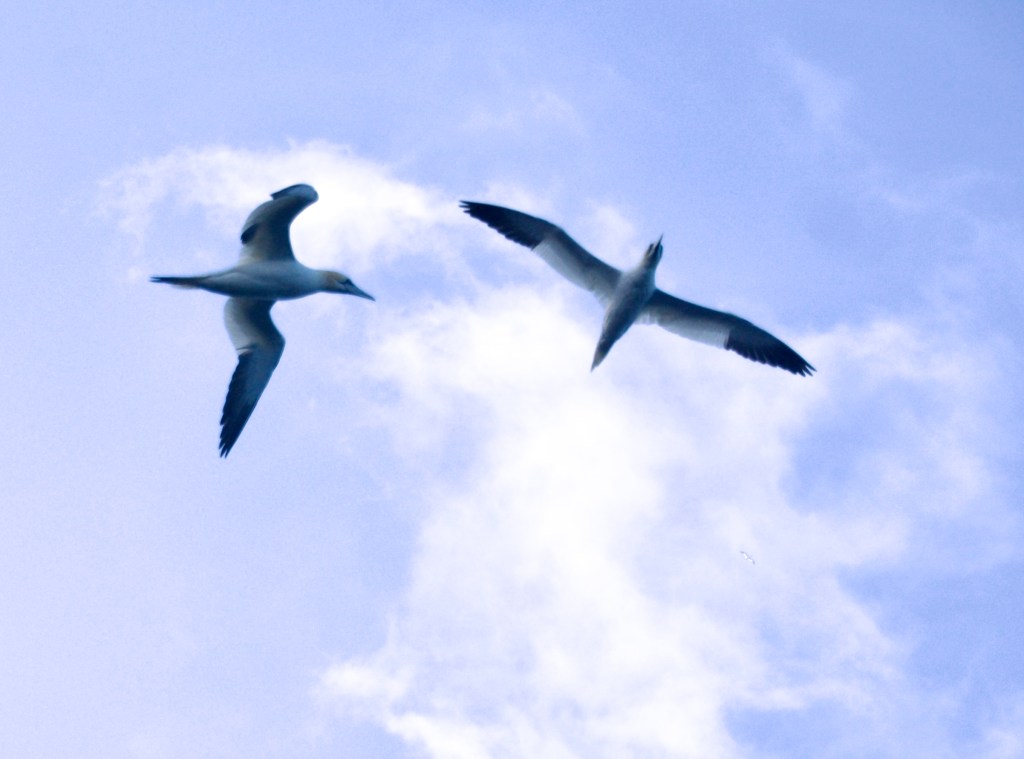
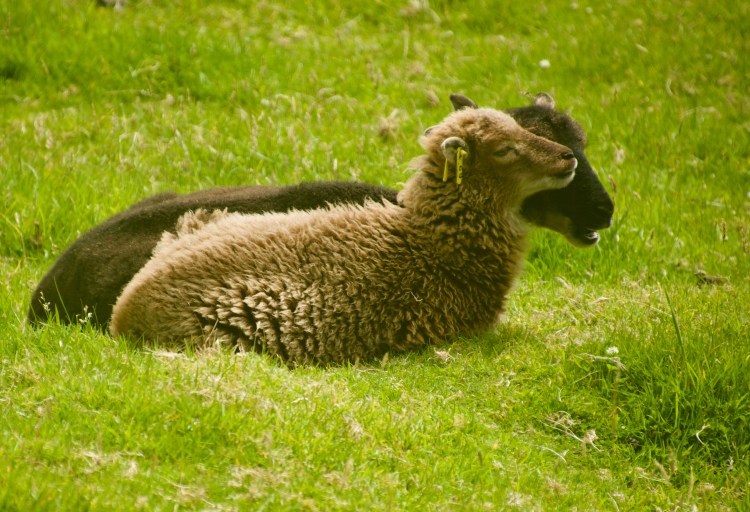
Today Herta only hosts visiting military contractors and wardens of the National Trust for Scotland, owner of the place. The islands are famous for hosting the largest seabird colony in Europe (above left), with about million birds at the height of the breeding season, including gannets (above right), fulmars and puffins. Feral sheep roam the islands – they belong to a subspecies that developed here over the centuries – smaller and darker than its mainstream cousins (below).

The Golden Fleece – still kicking

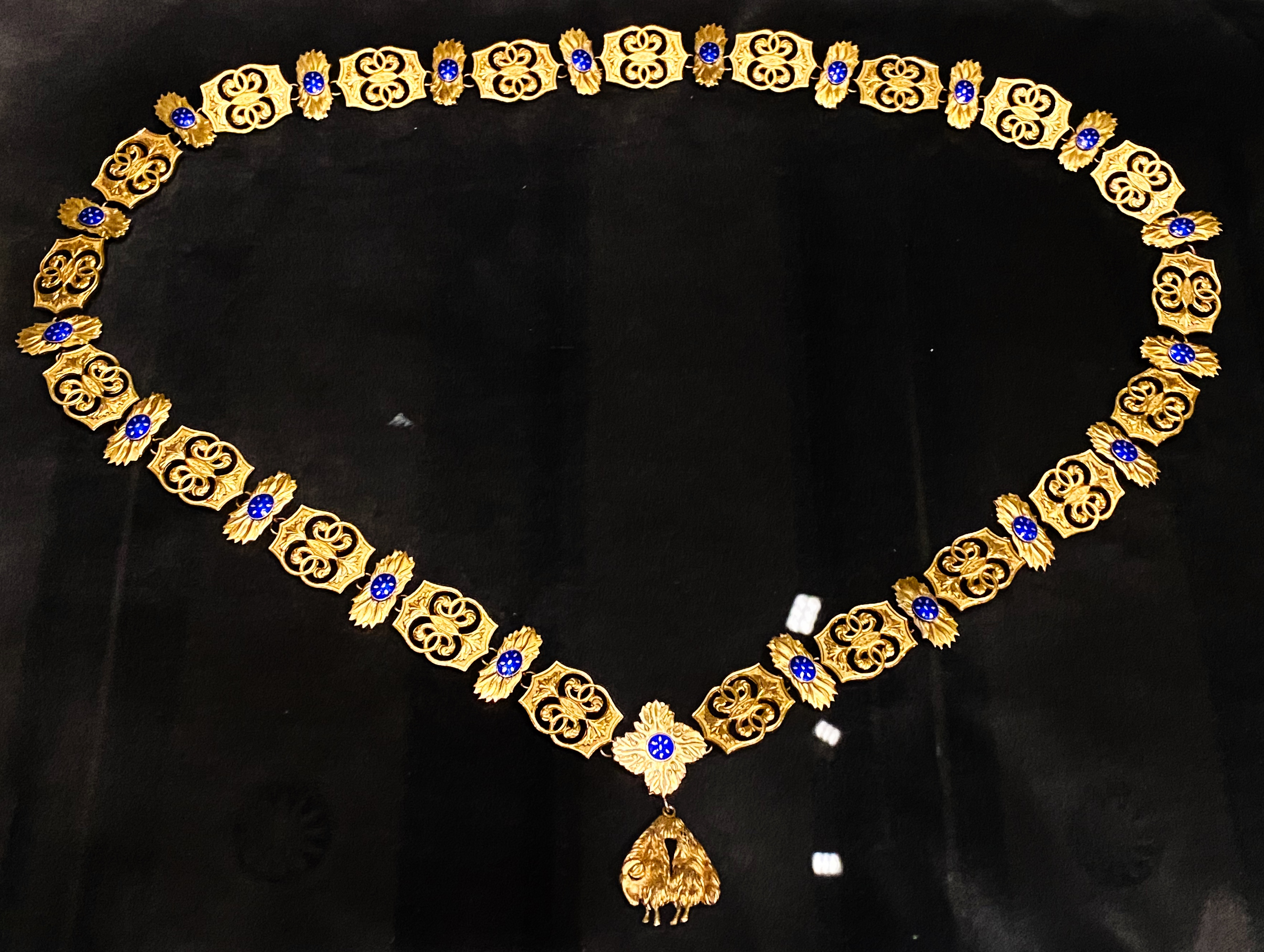
All self-respecting medieval princes needed a prestigious chivalric order that they could bestow to their friends and allies – the best known of these is the Order of the Garter, bestowed by the English monarchs. The Dukes of Burgundy, for their part, had the Order of the Golden Fleece (below left, the chain of the order).

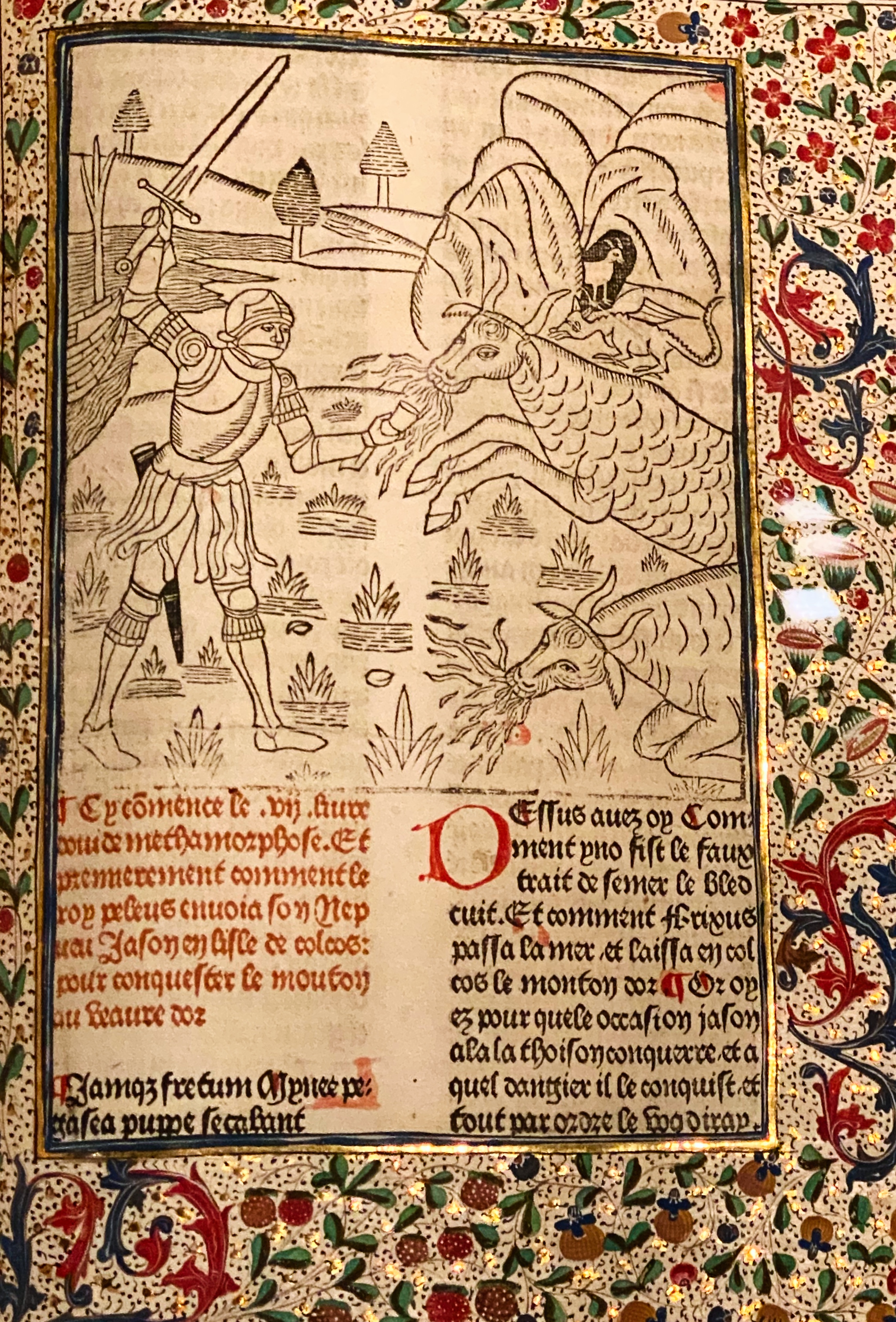
In Greek mythodology, the Golden Fleece came from a golden-woollen winged ram and was the symbol of authority and kingship. According to legend, it was chased and stolen by Jason and a band of 50 Argonauts (above right, a medieval manuscript illuminating these events).

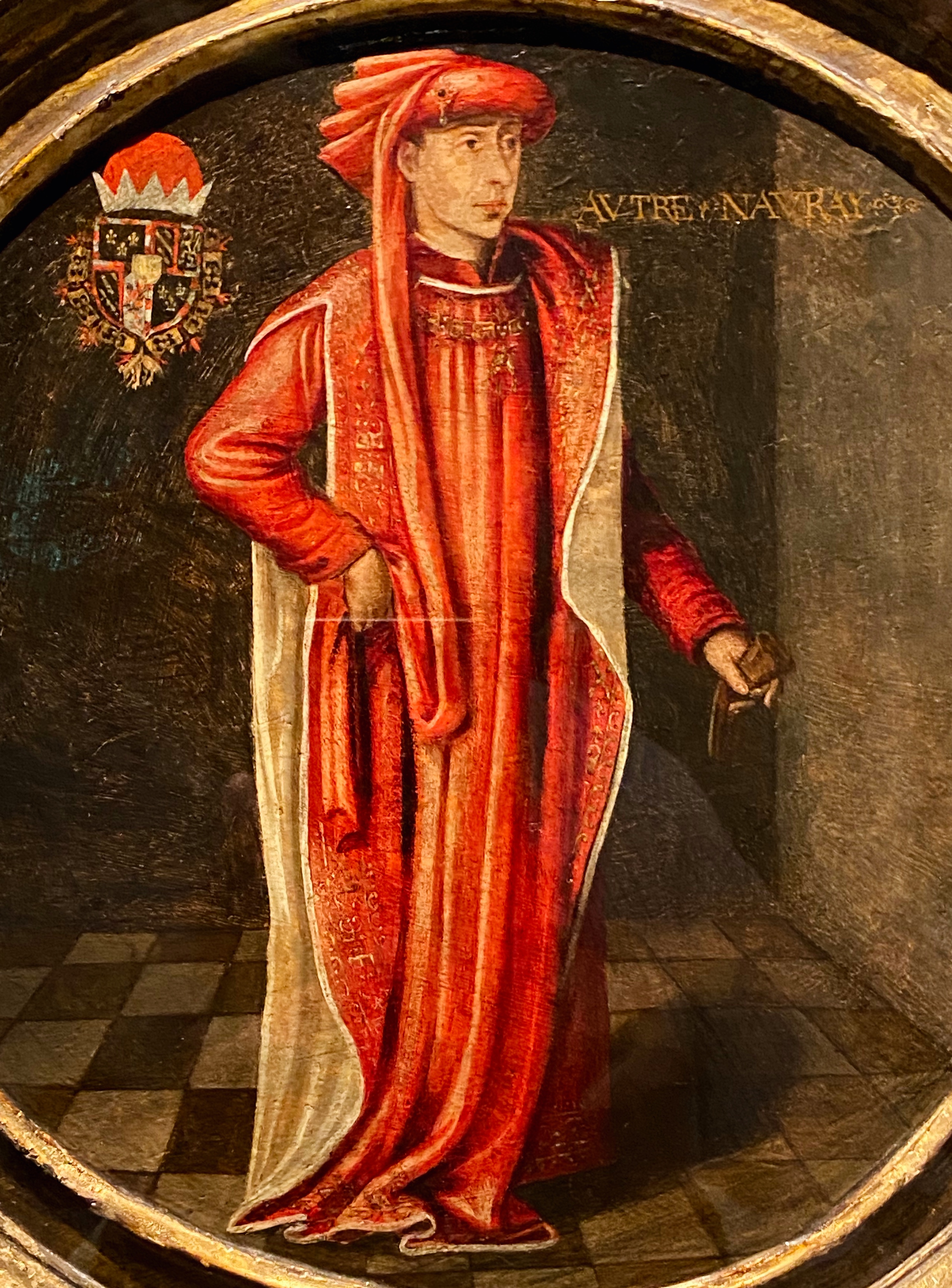
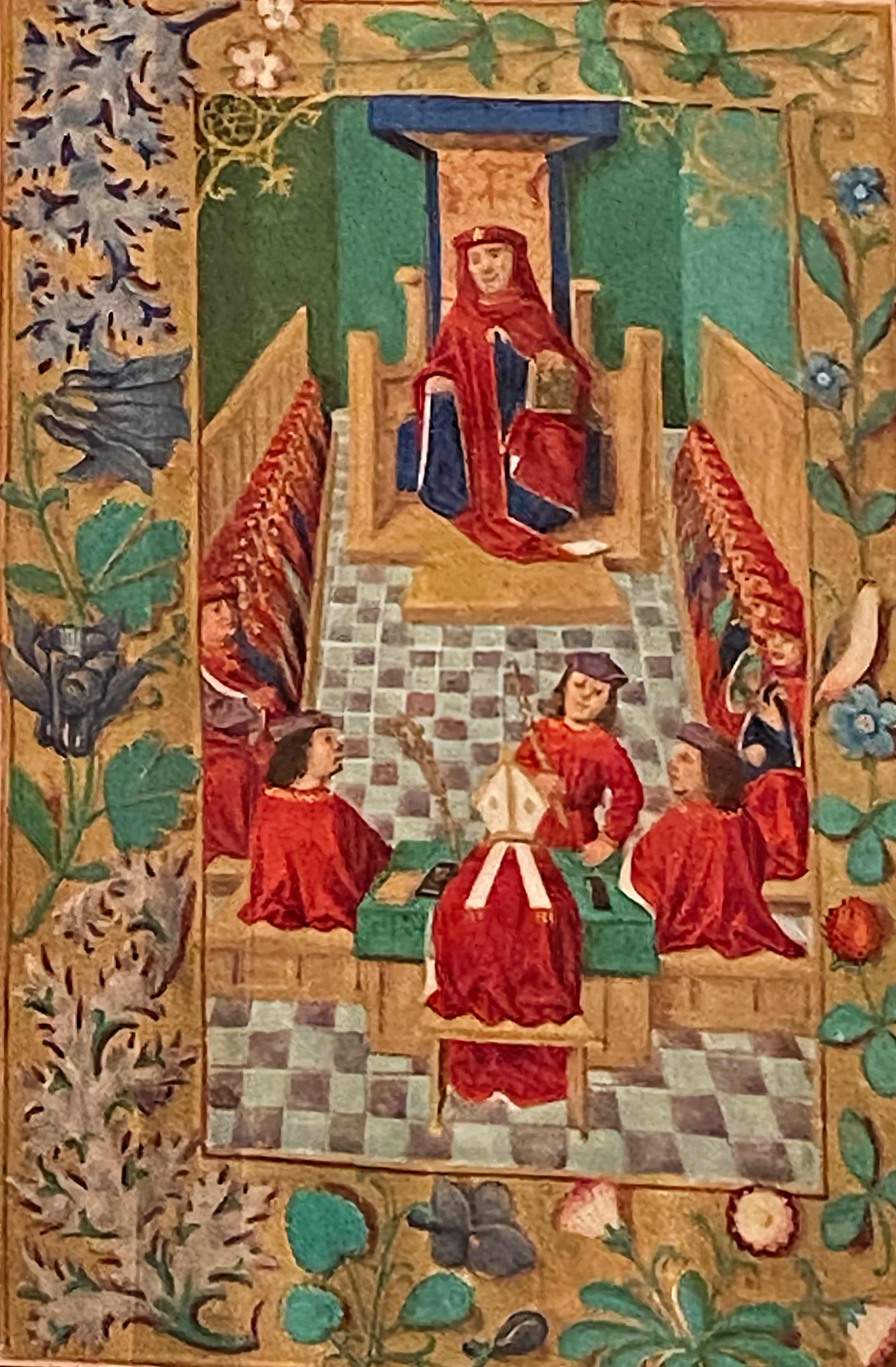
Philip the Good, Duke of Burgundy, founded the Order of the Golden Fleece in 1430 to be given to 30 knights (he is depicted in the habit of the order above left). However, he had difficulties finding enough worthy recipients and the numbers were deficient for a long time. Besides, in many cases the recipients did not even bother to be present in the knighting (the title image depicts a knight receiving the Golden Fleece). The knights were supposed to meet yearly, but most did not bother with the travel – especially when they were kings and princes of far-off territories (the picture above right is an imaginary meeting of all the knights).

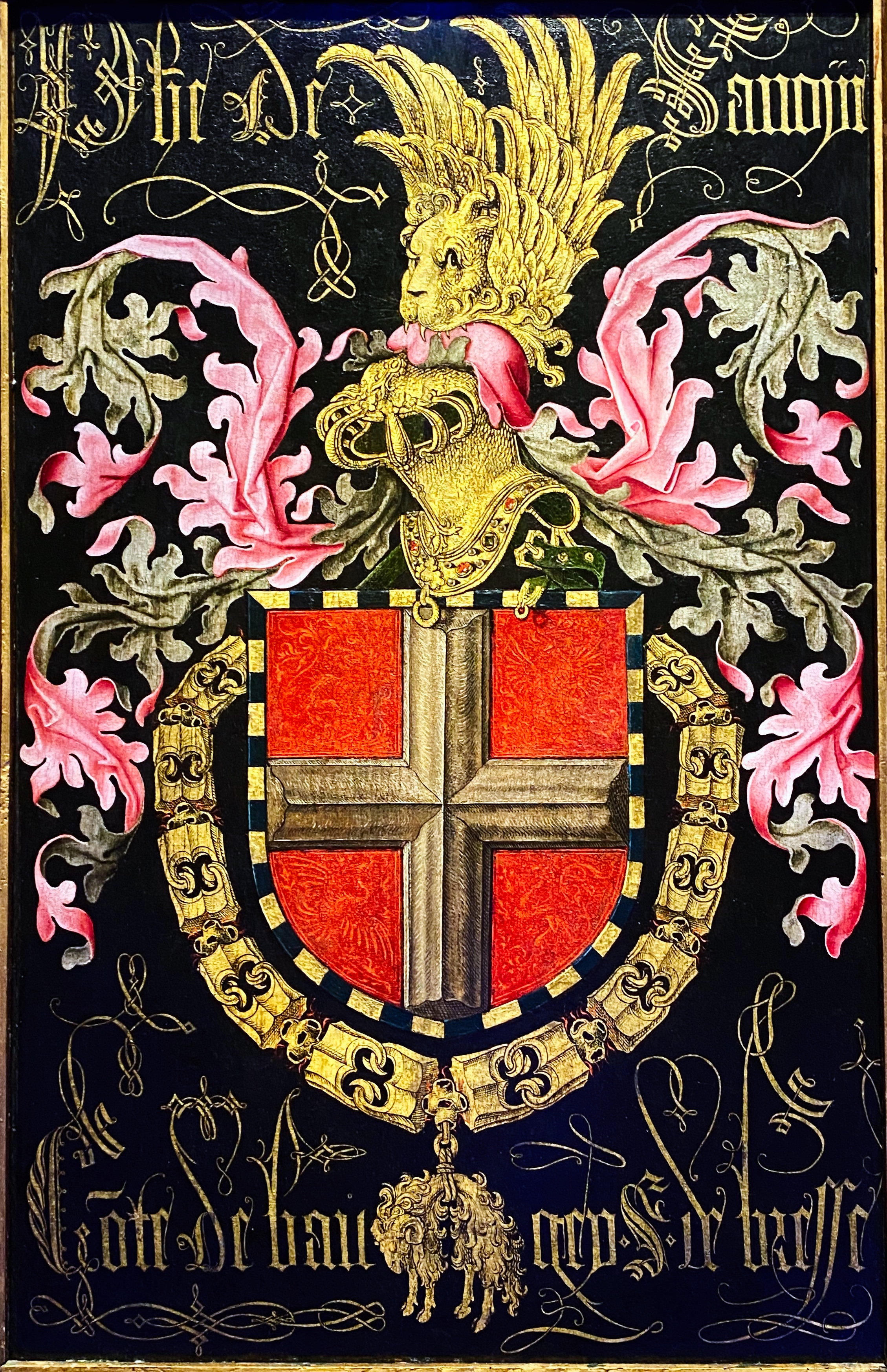
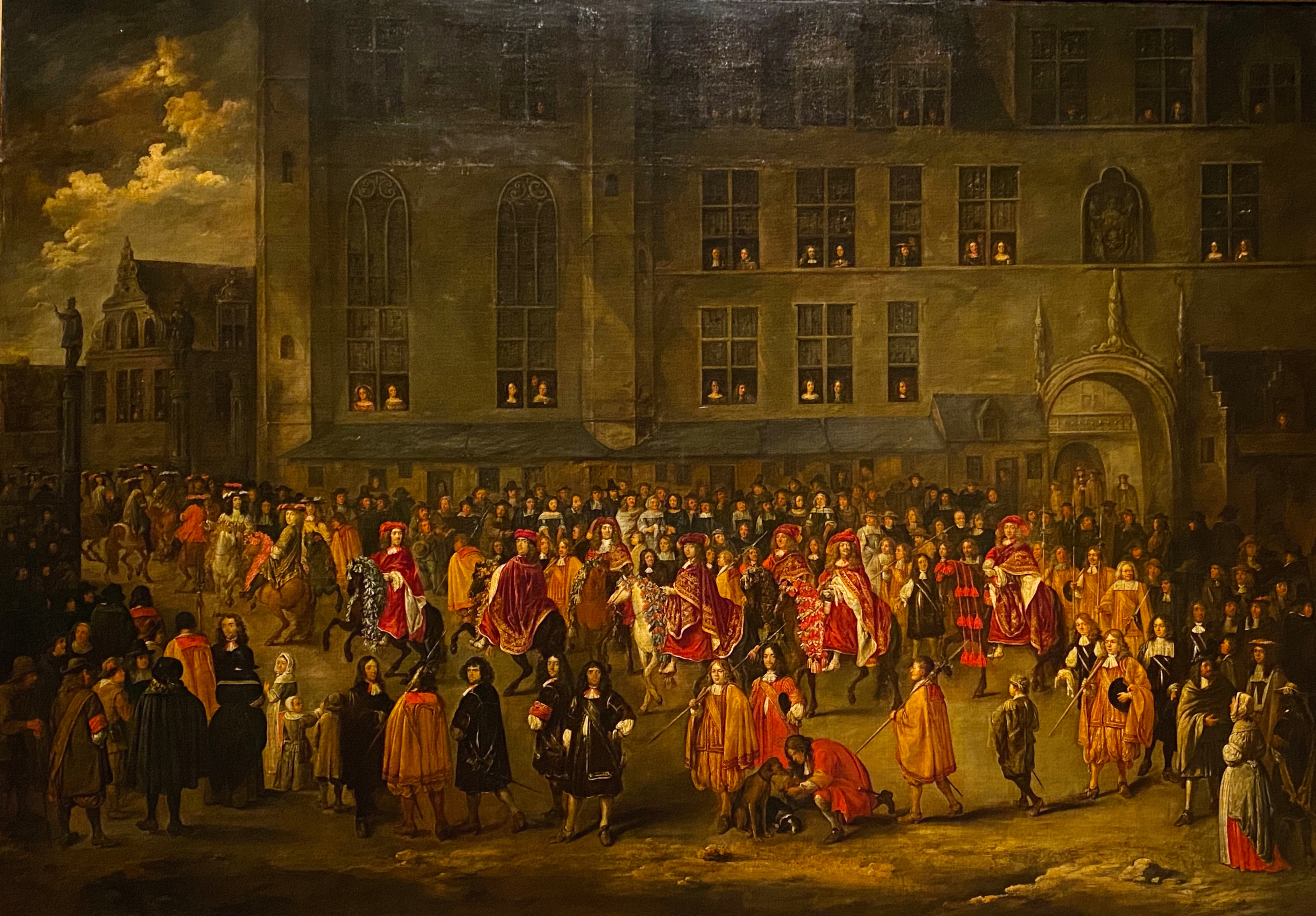
As is still the case with many sovereign orders, the coats of arms of the knights were prominently displayed in a suitable venue (above left, the coat of arms of the Duke of Savoy). Showing off for the public was part of the image, and above right is a procession of the knights leaving the palace of Brussels in the 17th century.

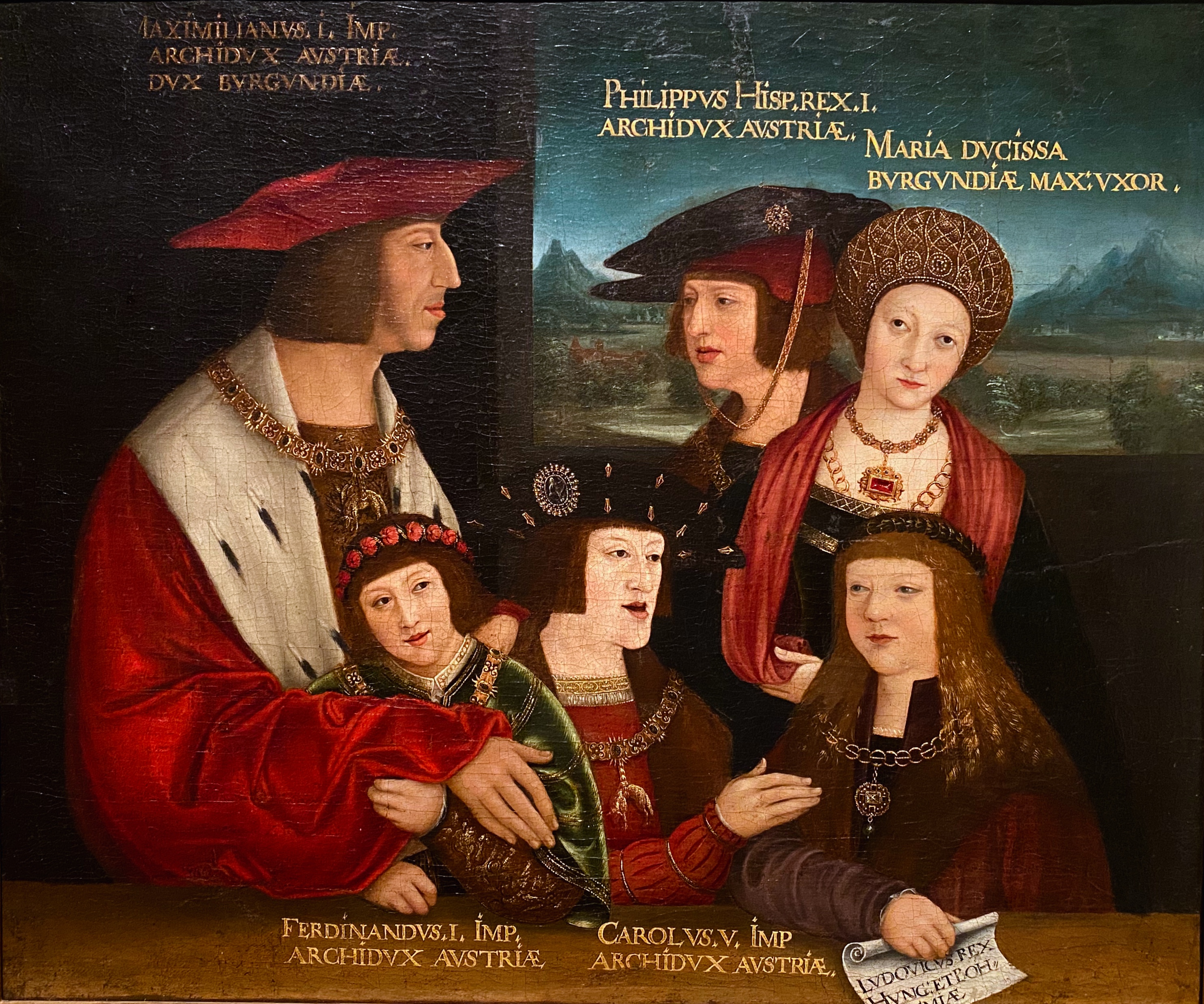
The glory days of the dukes of Burgundy lasted until the end of the 15th century, when the last heir of the dukes, Mary of Burgundy, married Maximilian of Habsburg and the Habsburgs took over the Burgundian territories. The resulting ultimate power family is depicted above: emperor Maximilian I, Mary of Burgundy, their son Philip I, king of Castile, and grandsons emperor Charles V and emperor Ferdinand I; and finally the brother-in-law of these two, Louis II, king of Hungary and Bohemia – all the emperors with their Golden Fleece prominently displayed).

The Habsburgs themselves had dynastic problems due to their unfortunate habit of marrying close relatives – the inability to produce heirs meant that they lost the Spanish crown in 1700, and the Order of the Golden Fleece was divided into Spanish and Austrian branches. Somewhat surprisingly, both branches of the order still exist.

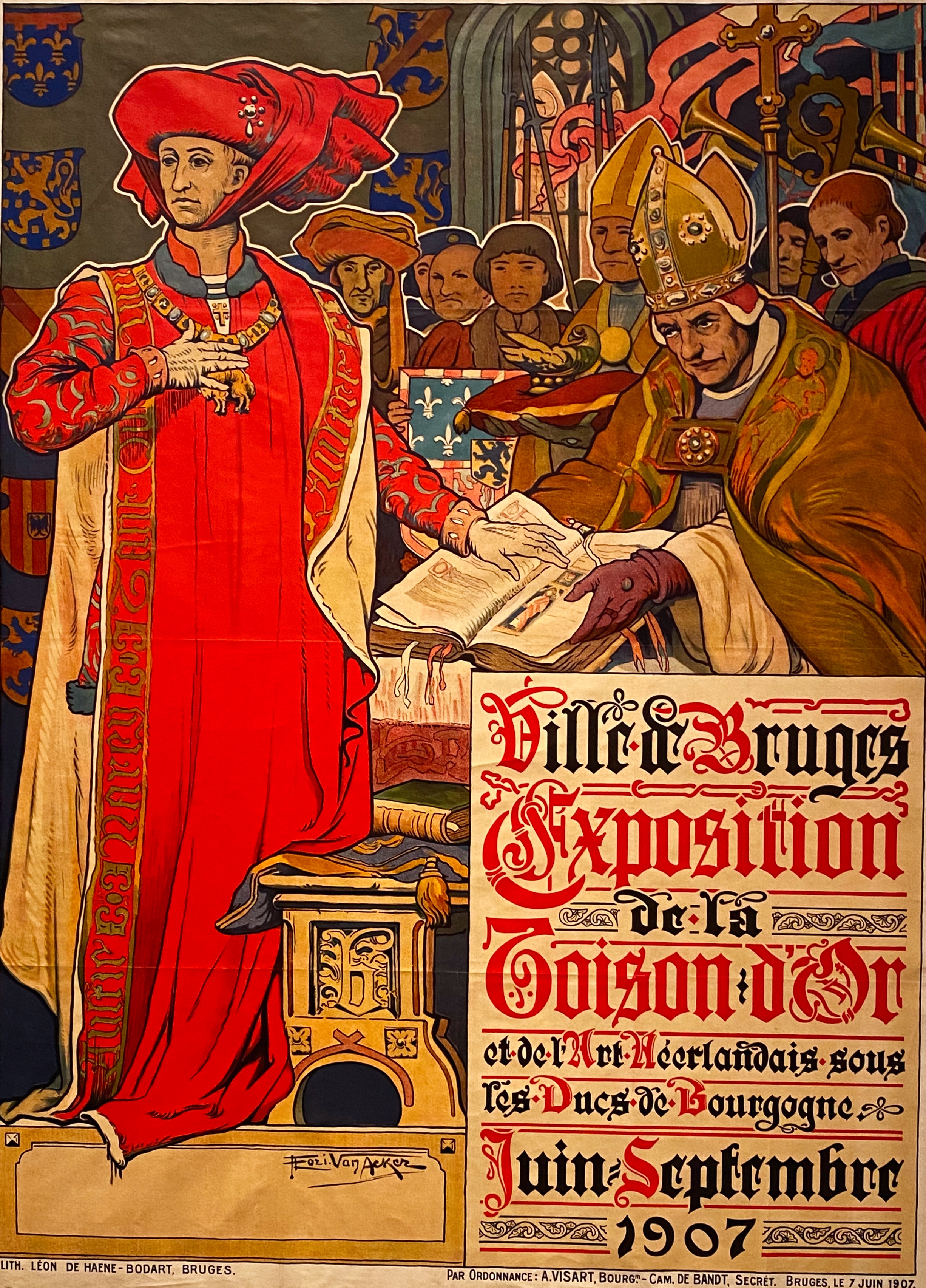
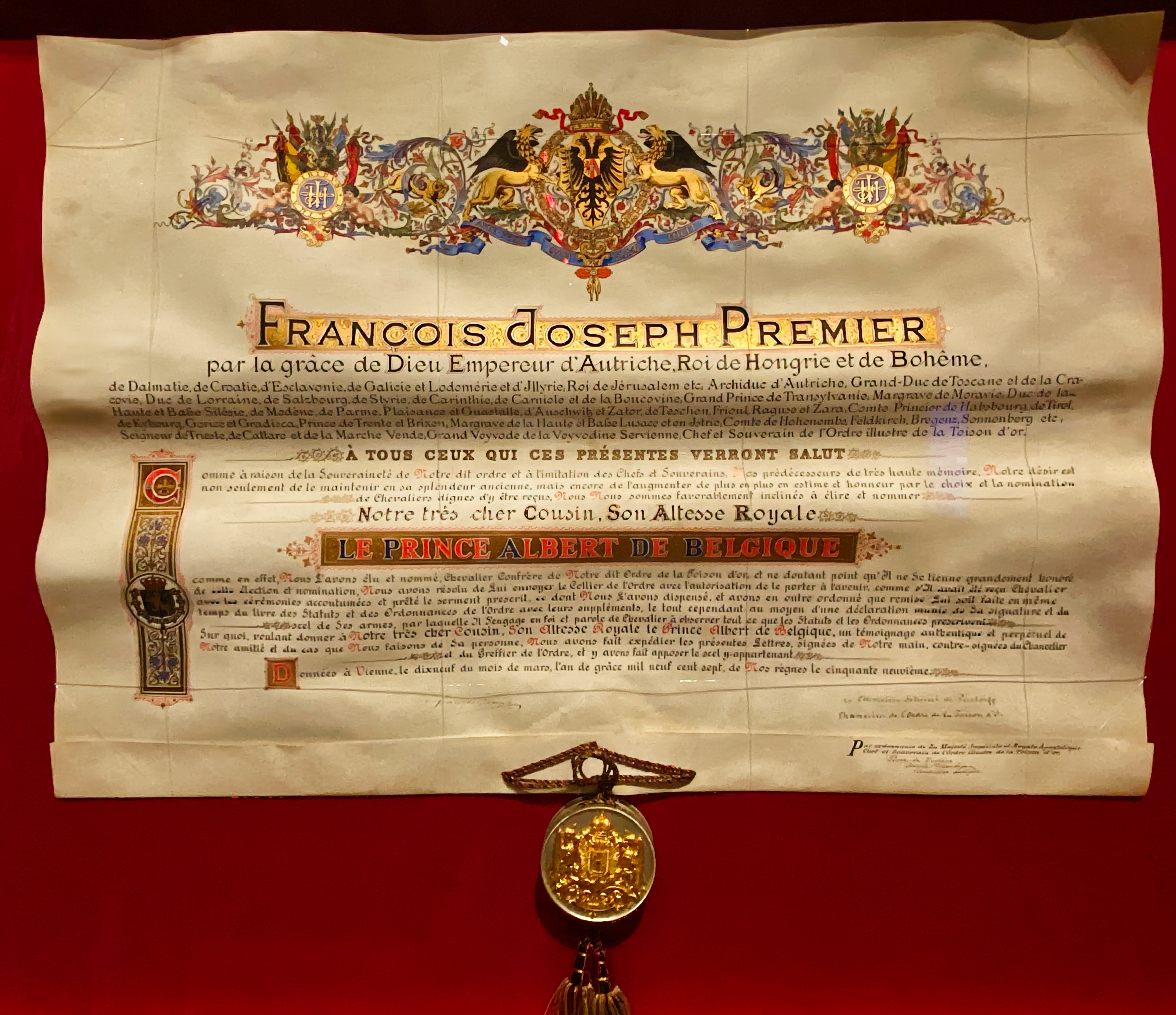
The Belgians, after independence, sought to appropriate the history of Burgundy to build their own nationhood (above left, an exhibition poster from 1907). They have been keen to uphold the legends of the Golden Fleece, and the Belgian kings have been its knights (above right, the certificate of prince Albert, later king Albert I). Also the current king Philippe is a knight of the Golden Fleece.

All images are from the exhibition ‘Knights of the Golden Fleece: a brilliant myth unravelled’ at the Museum Hof van Busleyden in Mechelen until 3 June 2024.
Monastery leftovers

In the Middle Ages, Europe was full of monasteries, one mightier than the other. Since then, reformation, revolutions and modernity have put an end to most of these, leaving at times behind impressive ruins. The charterhouse in Villeneuve-lez-Avignon was once the largest in France, with three cloisters (the main one is below left), a papal tomb and a chapel with sumptuous frescoes (below right).
However, the revolution put an end to all of this and the whole charterhouse was sold off in lots to citizens. As the respect for historical monuments increased, the building complex of Chartreuse du Val-de-Bénédiction, as it was known, has gradually been renovated over the last 120 years (the current entrance is below, with the Fort of Saint André in the background).

The Carthusian order was founded in 1084 and the charterhouse in Villeneuve was founded by pope Innocent VI (pope number 199) in 1352 – and it was he who got buried in the church (below left the church in its current form – sans one wall). However, he did not stay but travelled around after the revolution and his bones were only returned to the tomb in 1960 (below right is the the tomb that had been restored and returned the year before).

The former monk habitations are more than cells, as they were supposed to do manual work on top of reading, writing and praying, so they deeded a workspace (reconstructed sleeping quarters below left). Several of these habitations have been transformed into artist workshops (a corridor giving access to these is below right). The renovation of the complex is ongoing, as its size has meant that a considerable part of the town was built inside it.

Aigues Mortes, dead waters

Aigues Mortes has preserved its medieval character because it was important back then, but not afterwards. It was the only Mediterranean port of the Kingdom of France in mid-13th century, and king Louis IX and his knights left for their crusades from here. The name of the town is Occitan and comes from the marshy and low grounds around the town, with the Rhône bringing fresh and the sea salty water. The growth of algae can be seen around the moats (below left). Salt water and low grounds have facilitated the production of salt over the centuries (still going on, below right).

As Saint Louis wanted to have his own port to serve as the starting point, he constructed a road and a garrison to facilitate access, and used the port to embark for the seventh and eighth crusades. As these were hazardous exercises, he died during the eighth in Tunis, but looks still down from his pedestal in town (below left). The well-preserved walls of the town took thirty years and two further kings to finish (below right).

The fortified town served the king as a prison and interrogation point for the knights of the Temple after the organisation was declared illegal in early 14th century. Many were burned alive here. However, gradually the town lost its importance as the Rhône silted and other ports opened up.

During the religious wars of the 16th century, both catholics and protestants were thrown into prison in turn. In a later flaring-up of violence, nationalists killed seven and wounded 50 Italian immigrants in town as late as 1893, but these days it provides a much more peaceful image with its houseboats (below left) and tourist services (below right). These days the whole region is an important nature preservation area.